
All Posts By

Vas Sladek

Don’t wait, take action!

By | landscape maintenance, Pruning | No Comments

Lists, really?

I like lists. I make them because I have lots to do in my personal life but I dislike them at work. I prefer to take action immediately or as soon as possible. Big tasks that require approval from bosses and strata people must be recorded but small tasks, not so much.

It happens more than I like to admit. When I show up on a site and the foreman or landscape worker tells me about simple tasks they have been thinking about doing, I cringe. Why wait? Take action!

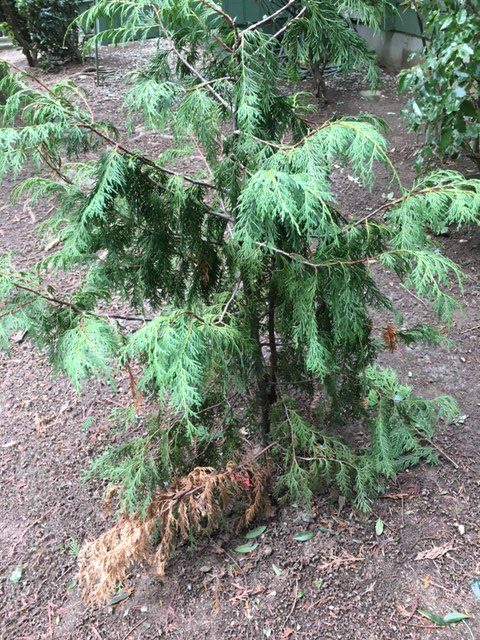
Just last week, while filling in for a dude on vacation, his regular helper told me about a dead cedar they’ve been thinking about pruning out. It was brown, dead and (horror!) visible from the road so yes, let’s prune it out. I picked up a hand saw and made literally two cuts. That’s not even a warm-up for a certified arborist.

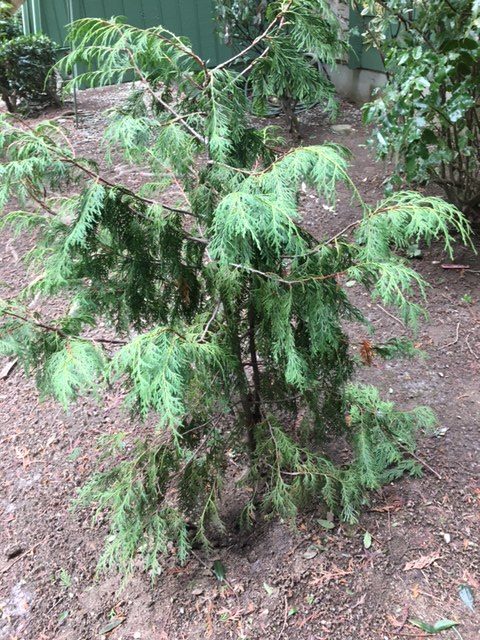
One part of the native cedar (Thuja plicata) was still green and healthy so I left it alone; I hauled away the other two dead parts. Done! In minutes! No lists.

After pruning, only the green healthy cedar remains.

Classic obstruction

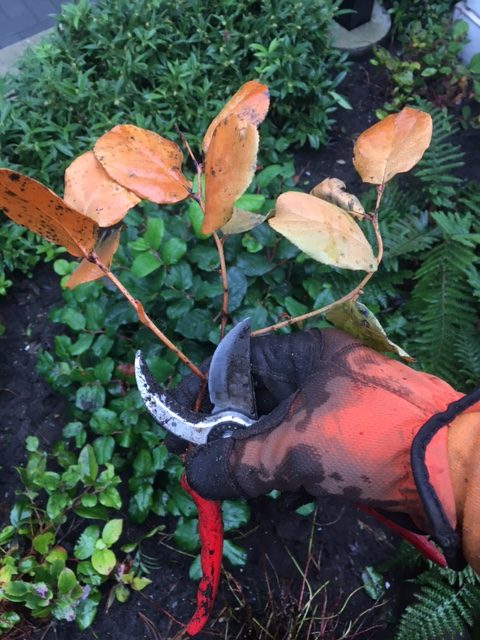
This second example was even easier. Again, while I was filling in for the regular foreman, I discovered cherry tree branches touching the wall of one unit. This makes insurance agents upset; and homeowners often wonder what the noise outside is when winds kick up at night and branches slam into their unit.

So, I carefully jumped on the wall and used my snips (always on my hip!) to make three to four cuts in like one minute. Problem solved! No emails from owners to strata to bosses; no lists, no time wasted. Just quick action, the way I like it. Be like Red Seal Vas. Take action.

Before pruning, cherry tree branches on the building.

Summer blow job strategy

By | landscape maintenance | No Comments

Hot weather clean-up

When I was blowing yesterday I could see the man on the patio from the corner of my eye. Hands crossed over his chest, he stared down at his convertible collector car as I approached with a blower on my back. In my dreams people like this rush down and raise the roof on their car so I don’t have to stress. But this was Langley, BC and the man wasn’t about to leave the protection of his awning.

Expectations

Many homeowners know that clean up blows are sketchy on hot, dusty days. It doesn’t make sense to chase every leaf and create dust clouds. Some homeowners are more anal so we educate them.

What really scares me are AI look-alike landscapers who blow dust clouds all the way down the block. Of course, I’m not one of them. As soon as I cleared the convertible classic car, the wind changed direction. Ok, no problem. The noisy machine usually drowns out my bad language. Then, when I finally made it to the end of the road, people were moving stuff into their mover truck. It wasn’t my day. So you give up on perfection and leave it for next week. No big deal.

The key is to use your head and not behave like a robot. Yes, I would love to pick up every dry leaf off the site but in dry, dusty conditions it doesn’t make sense. By the way, this approach works with everything else you do in your garden. You’re bound to run into exceptions; sometimes you just have to let it go and relax.

Landscape testing

This blog post shows the advantage of going through landscape testing. One of the practical stations I had to pass was on blowing. In that fake scenario, the site was littered with garbage (pick it up first, before you blow), there was an expensive car nearby and the fake walkway was covered with high schoolers in uniforms. Obviously, we leave the car clean and we stop for every passerby. Use your head. It doesn’t make sense to anger people.

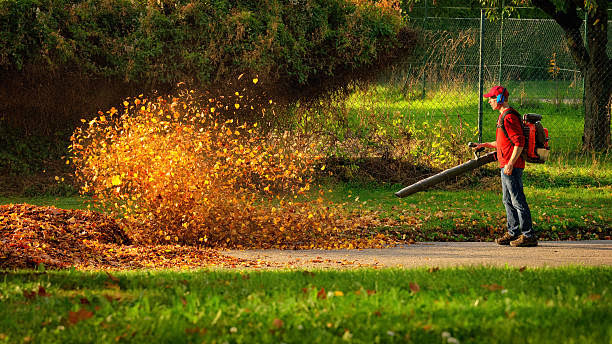
Man operating a heavy duty leaf blower: the leaves are being swirled up and glow in the pleasant sunlight

Lawn jockey meets Berberis

By | Plants, Pruning | No Comments

Plant ID

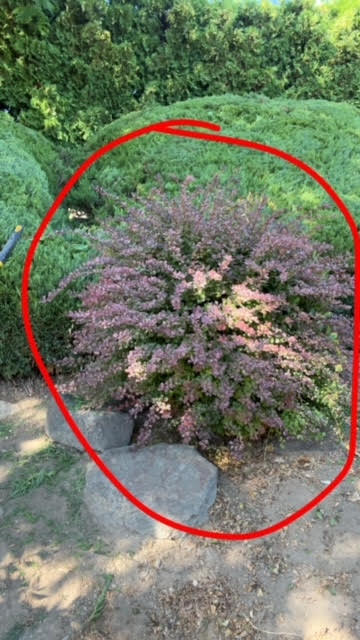
As often happens, full-time lawn care dudes get asked to do extras, such as pruning. They like the extra cash but it’s a bit scary when you don’t even know what the shrub is. Identification is the first step. In step two you can Google it or go on Facebook to ask your lawn care buddies. That’s what the dude who snapped the picture did. And good for him, he isn’t afraid to ask for help. So let’s help him.

Berberis

In our BC landscapes we often plant Berberis thunbergii which has the same burgundy color and sports light prickles. They are sharp enough to remind you that peeping into people’s windows is wrong but not stiff enough to draw blood and cause swelling. For that we have Pyracantha.

They also do well in hot weather which is important as July 2023 marks the hottest year on record globally since record keeping started. And they also flower which is a nice bonus; and the fall colors are fine, too. There’s lots to love about Berberis.

Pruning Berberis

The specimen in the picture doesn’t look like it requires pruning. It’s doing its thing sending out shoots and splashing them on all sides. Now if the owners insists on clipping it, do it lightly, especially in summer. I don’t like hot weather pruning because it just increases the stress on plants.

Of course, Berberis is very forgiving. If your shave it hard into a ball it will recover by sending out new shoots. Personally I prefer to keep Berberis shaggy which gives it a softer look. I’m not a fan of tight formal balls.

Conclusion

Even as a Red Seal journeyman horticulturist with years of experience, I find that there is lots always to learn. I like how the lawn care dude went online to ask his buddies for help. Additionally, it’s a good hint for him to learn more about plants. It looks like it might be good for his bottom line.

Because the dude lives in the United States I didn’t offer him a copy of my e-book on the first 100 landscape plants you should know if you live and work in the Pacific Northwest. Check it out on Amazon Canada.

Berberis is a great plant. Use it in your garden if you get a chance.

How landscapers stay busy on cold winter days

By | gardening, landscape maintenance | No Comments

There’s always work

If you live in a strata building and look outside at your landscapers with suspicion, fear not. They’re busy even though it’s cold outside. Let’s see what they’re doing.

Garbage

There’s no point making a site look beautiful when there is a pile of garbage on the lawn. You might as well pick it up, otherwise it will detract from your overall maintenance presentation. This will also take the pressure off your building caretaker.

Deep-edging

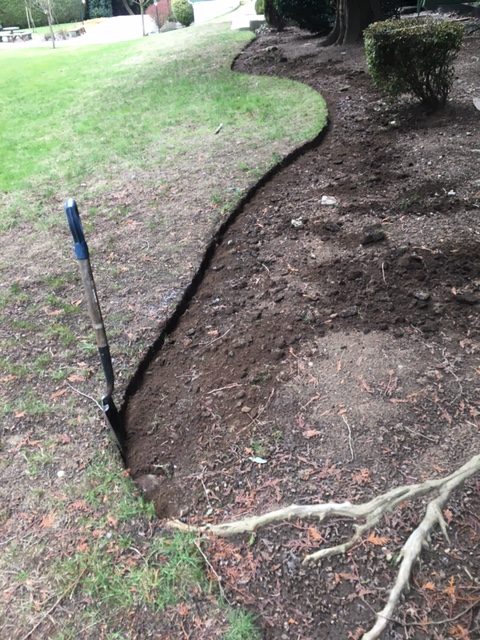
Assuming your edges aren’t frozen solid, you can re-establish your deep edges with an edging shovel which is flat on the bottom. Make sure the edges are sharp ninety degrees and remove any dislodged grass chunks.

Edging gives our beds nice definition, it will help guide our lawn care edger machines, and it’s best done now in winter when we’re not busy cutting grass.

Dead out

Now is a great time to snip out dead foliage out of our plants. Often people are too busy during the season to stop and deal with this. Not deep into January: I snipped out dead branches from trees, dead out of Salal and evergreens. We should aim for beautiful, healthy landscapes. Dead foliage looks awful so snip it out.

Salal

Add soil

If there’s budget, adding soil amender to tired, depleted beds, is also a great winter time task. The warm soil might even warm you up. New soil looks great immediately and you won’t have to weed for months. The plants also appreciate the new soil.

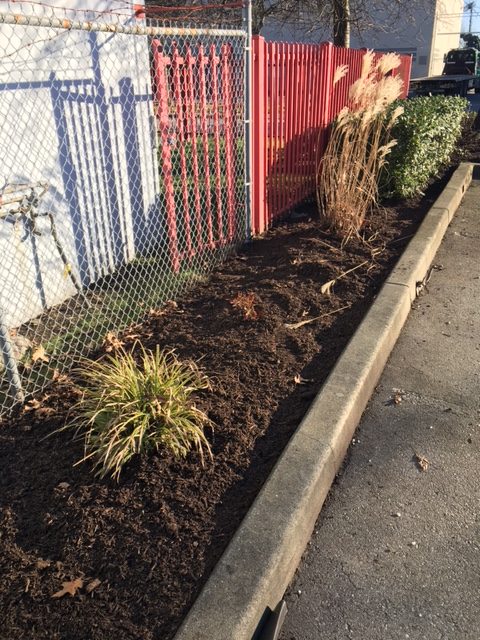
My commercial site in Coquitlam.

Note the Miscanthus sinensis ornamental grass. Since it’s still beautiful and upright, I’m leaving the cutback closer to spring. It’s important to cut it back before new foliage starts to emerge in spring. But for now, enjoy it.

This bed usually requires cultivation but now, with new soil installed, I shouldn’t have to touch it too much.

Conclusion

Yes, the winter is a slow season but we still have work to do. We can add new soil to tired, depleted beds, snip out dead foliage from trees and shrubs, prune roses and deep edge our beds. And don’t skip garbage picking.

Yes, trees can kill you!

By | Company News | No Comments

RIP Jed Walters

Arborists go down every year in North America. One of my LinkedIn contacts shared this statistic: tree workers in the United States are fifteen times more likely to die on the job than workers in other industries. Sadly, Jed Walters became a statistic on January 20, 2023. We’ll get back to Jed soon but first let’s see my “redneck” tree work.

Targets everywhere

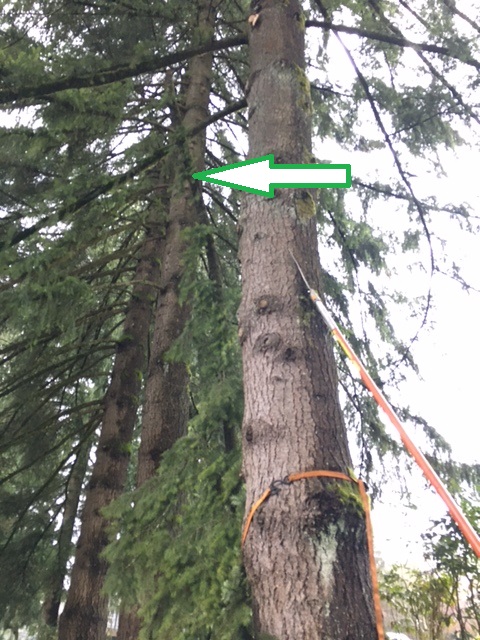
Douglas fir (Pseudotsuga menziesii)

Since I was on site to do landscape maintenance, not tree work, I had to improvise a bit. Below this broken branch is a parking lot full of cars so there were too many targets for me to ignore it and walk off.

Considering the size of the branch, I had to strap it to the tree first before cutting it loose. I couldn’t be sure where it would land. And once I cut it loose, it just sat there, propped up by other branches. So, I made one more cut and the heavier top part crashed down with limited guidance from me. Even a branch this small generates huge forces. Forces large enough to kill you.

Deadly snags

Last summer, a girl from the school board showed up and cut down blown-over trees. Unfortunately, the tops broke off and lodged themselves over the fence in our maple tree. Incredibly, the girl didn’t inform us of this, I just happened to notice it later.

You can’t leave dead pieces of wood in another tree’s canopy and walk away. As soon as people walk out to enjoy their patio, they’ll become targets. So, I dislodged the loose snags and hauled them away, cursing.

Bigger scale

Jed Walters was a professional arborist with his own YouTube channel: Guilty of Treeson. Last week he was clearing away trees felled by a storm. Two fir trees had crashed into a maple so the idea was to drop the maple, which would automatically take down the firs. Except, things didn’t work out as planned.

Jed and his crew didn’t notice a snag, hanging in the maple tree. It might have been the chainsaw’s vibrations that sent it crashing down. It hit Jed in the face and killed him instantly!

So, let’s give trees and arborists lots of respect. I always encourage my readers to prune their own small trees; and to hire professionals for bigger specimens. It’s better to pay the hefty charges than to become a statistic.

Jed leaves a wife and two kids and there is a GoFundMe page set-up if you want to help.

Stay safe!

Jed Walters

Let the monkey puzzle tree surprise you

By | Trees | No Comments

Living fossil

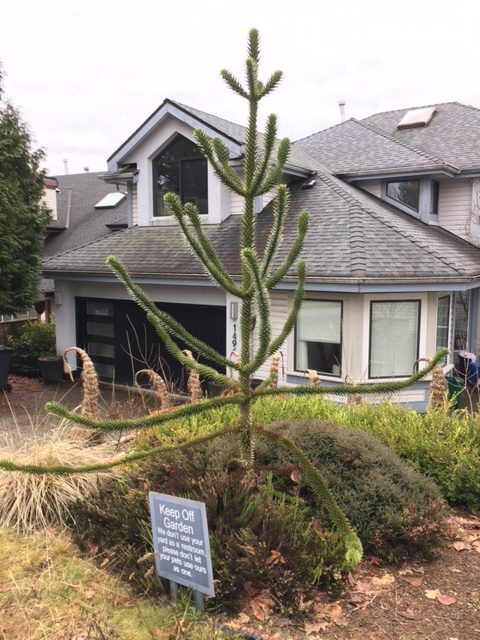
The monkey puzzle tree (Araucaria araucana) is a living fossil. Because it’s a tree adapted to a different earth, seeing it in our landscapes is a memorable experience. Now, I’ve seen the trees before and I knew they had a bizarre look to them; but I never really looked them up, until now. The trees we see in our landscapes are native to Chile.

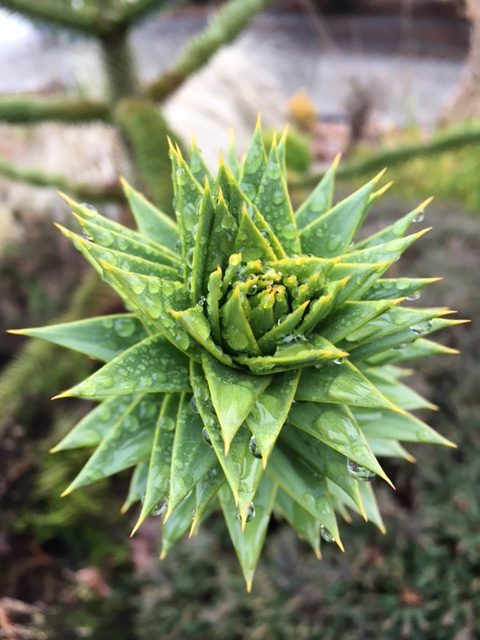
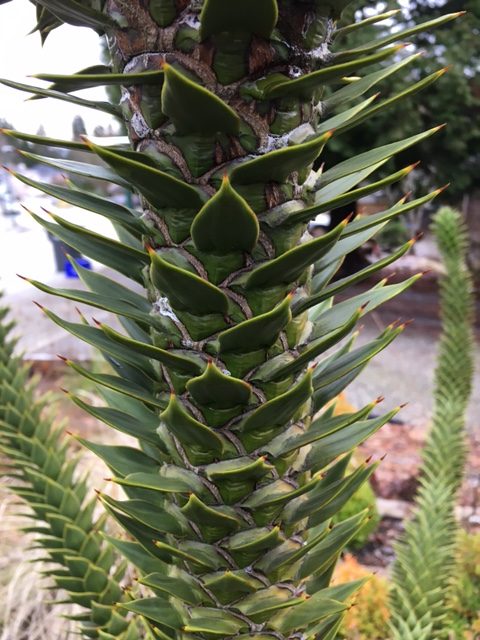
Young specimens are spindly and their foliage is made up of spiky triangular leaves that openly advertise to every passerby and animal to stay away. Even the stems are covered in spiky leaves which makes me wonder how people plant the trees. I’m sure you need heavy duty gloves and goggles.

A young specimen of Auracaria araucana.

Branch tip

Stem

The young monkey puzzle tree above is well planted because there is ample space for it to develop. It will grow to 30-40 m and it will also get the full sun it likes in this spot. Remember to always consider the mature size of the trees you are planting to avoid future problems.

The monkey puzzle tree is slow-growing. It takes years for cones to develop so until then, it’s difficult to say if this tree is male or female. The cones will tell us.

Maturity

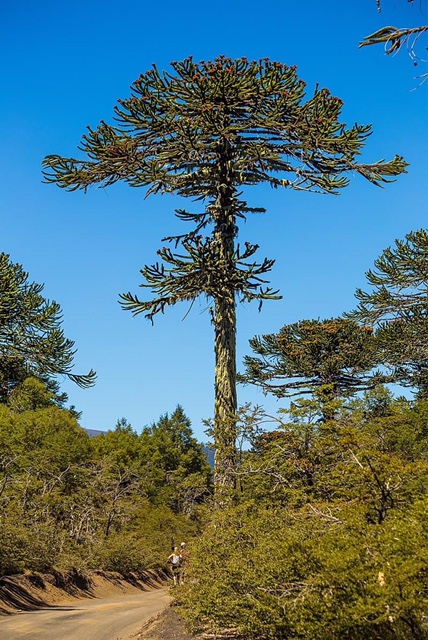
Mature monkey puzzle trees lose their lower branches and flatten out on top, which gives them an umbrella shape. Self-pruning is common as lower branches are shed. I didn’t know what the tree looked like at maturity until one of my Facebook friends posted a series of photos online.

A mature monkey puzzle tree.

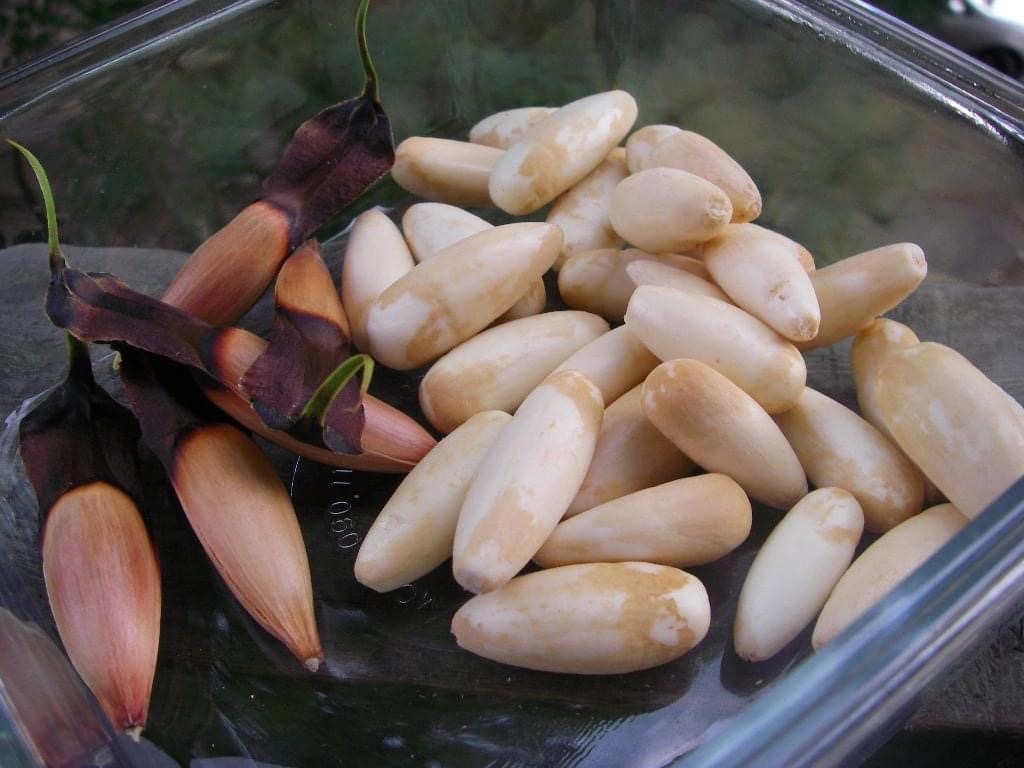
I was also surprised to learn that the trees produce edible nuts. I would love to try one. Allegedly they taste like a cross between cashews and pine nuts but I have no idea what pine nuts taste like. If indigenous people in South America harvest them, they must be good to eat.

Monkey puzzle trees, like ginkgos, are living fossils and I enjoy seeing both species in our parks and gardens. The monkey puzzle tree has a bizarre look with its spiky triangular leaves. Interestingly, it transforms into an umbrella shape as it sheds its lower branches with maturity.

If you have space and time, you can plant one in your garden and give your visitors a memorable experience.

Do you know the new rules of networking?

By | Education, Magazines | No Comments

New networking rules

When you go to a networking event or work party, it’s normal for people to ask “What do you do?” But this will only lead to work talk and it’s unlikely you will find out any details about your new contact. You will miss out on what David Berkins calls “multiplex ties” in his Harvard Business Review article (Special Issue, Fall 2022, pp.26-27).

If you ask better questions, you can find out that your new contact goes to the same gym or plays online chess on the same server. Perhaps your kids go to the same school or you both like stand-up comedian Bill Burr. These multiplex ties connect you better and can lead to a deeper connection.

Better questions to ask

Here’s a list of questions you can ask instead of the tired “What do you do?”

What excites you right now?

What are you looking forward to?

What’s the best thing that happened to you this year?

Where did you grow up?

What do you do for fun?

Who is your favorite superhero?

Do you support a charitable cause?

What is the most important thing I should know about you?

Meeting Red Seal Vas

Now let’s pretend you’re meeting me at a party and you ask me the second question on the list: what are you looking forward to? I will happily tell you that my day-job boss is moving his landscaping company to a four-day week. It’s a bit of a test but why not try something new? There’s logic to the move.

The four work days will run longer to nine hours per day. If I show up on time and my attendance is perfect, I will get paid for forty hours. Workers who slip up, call in sick a lot or show up late won’t get the full forty hours.

The most exciting part is having three days off. In summer, I suspect this will be gold. I can go visit my sister on her ranch outside Kamloops and drive back on a Monday when traffic is lighter.

I’m also excited about having more time for my landscaping side-gigs. Last year when it got busy with weekend activities and clients demanded service, the weekend was packed. Now with the extra weekday off, there will be less pressure on the weekend. And the potential to make extra income will go up. Now that’s something to look forward to.

The company’s truck fleet will rest for one extra day and there will be fewer staff on the payroll which should improve the company’s finances. The only question mark is how the workers will handle a slightly longer day physically.

Conclusion

Memorize all or some of the questions above and use them next time you meet new people. You could discover that your new contacts have a lot more in common with you.

Why hiring apprentices can make employers rich!

By | Company News | No Comments

Hire an apprentice

Ok, so maybe the headline is slightly exaggerated. Hiring an apprentice will not make a landscape company boss rich, but it’s a great move. Of course, I didn’t find this out until recently. My job is to train apprentices, not to recruit them.

I recall someone asking a New Year’s resolution question in a Facebook group and one response was related to apprentices. Specifically, why weren’t landscape companies sending more apprentices to school? Good question, especially when you consider that companies can get $5,000 cash for sending a male to school for 6-8 weeks.

In a recent move, female apprentices were re-classified as “under-represented” and the cash paid to employers doubled to $10,000. Not bad at all.

Apprentice Linda, who is now a proud mommy!

Win, win

I’ve written about the apprenticeship program before but never from the employer’s angle. Obviously, anyone sent to school must be deemed a decent worker; and their commitment is much appreciated. So, everybody wins.

Yes, the worker loses a bit of cash while at school because unemployment premiums only cover a fraction of their regular pay. However, this is a small price to pay for Red Seal trade papers. I think it’s a great investment. Because I had enough work hours I was able to challenge the exam without going through all four levels. Back then I had two little kids at home and 6 weeks on unemployment scared me. Incidentally, employers prefer job candidates who have gone through all four levels. Now you know.

As for employers, they get cash up-front. Because the school sessions are in winter, the apprentices aren’t really missed in the field. Some companies even lay-off many workers between winter holidays and February.

It’s also fun to see apprentices coming back from school full of confidence. And we also know that they will make fewer mistakes in the field; and, if we’re lucky, they will share their knowledge with their co-workers.

Yeah, occasionally the schooling goes to their heads but overall, it’s very positive. All employers and employees should consider investing in the apprenticeship program. Trust me, Red Seal Vas knows!

Groundcover barricade fail

By | Installations | No Comments

The plan

When I do landscape installations, I usually follow exact specifications and I rarely have anything to do with the planning. Strata managers create the plan and I execute it. In this case, the plan was to install groundcover plants to cover up bare soil; and to deflect people from their unauthorized pathways. It didn’t work!

Residents ignore the signs every day because this pathway is the most direct downhill access to their homes. Nobody wants to go around. Nobody. And the same goes for passersby who know that this path will take them down to the road and nearby NewPort village. Once people form their habits, it’s a fight. My kinnikinnick plants never had a chance.

Heavy labor

Scraping off compacted forest floors is heavy labor. Once I got a nice layer removed, I installed new garden soil mix, mowing it up slope, which also involved heavy labor. Luckily, I had a bit of shade.

Last came the planting of many specimens of kinnikinnick (Arctostaphylos uva-ursi). Sadly, I couldn’t locate any water hoses nearby so I just shook my head and prayed.

Always water-in your newly installed plants.

Months later

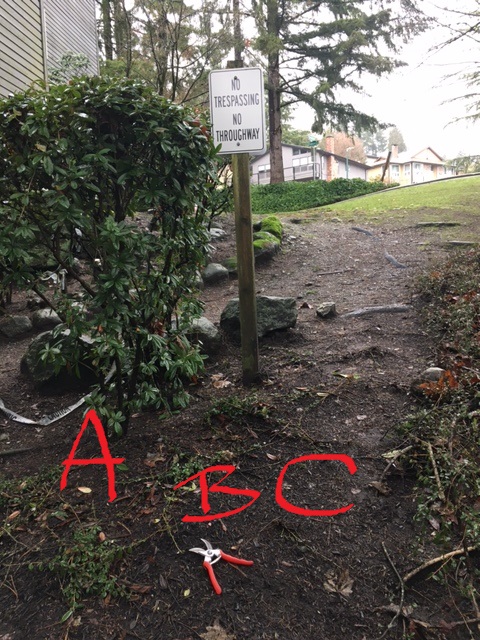
Now, when I showed up on site last week, I could see that the groundcover plants were trampled by foot and pet traffic; see (C) in the photo above. The poor plants are barely holding on; they never had a chance. Slightly off to the left, the plants are doing fine (A). I left my snips (B) in the photo for scale.

Now what? Replanting seems crazy unless you place a full-time security guard on the lawn. Clearly, not all projects work out well. We tried to green up the open pathways but the plants couldn’t handle the foot traffic. I can’t wait to see what the strata council members think of next.

Ox-days: notes from winter landscapes

By | Seasonal | No Comments

Ox-days

I’m not a fan of winter, which probably shows my advancing age. My Swedish ultra-trail runner friend calls her winter days “ox-days”. It’s dark and cold outside but training doesn’t stop. You just put your head down and work until spring arrives. Now that’s how I approach things: I do my best in the landscape and count the days towards spring and warmer days.

I’ve assembled some notes from my ox-days for you. What did you observe in your own gardens?

Hellebores

I left my Hellebores alone until new flowers and foliage started showing. Then I clipped off the old leaves hugging the soil. I just hope we don’t get any more crushing cold temperatures.

Trees at work

Trees work hard at closing pruning wounds. Otherwise, they risk inviting decay and deadly fungi.

It can take a few years for the tree to cover up a wound.
All covered up!

Thin mulch

Thin mulch application.

I’m not a fan of thin mulch applications. In the above photo the red and black colors clash. A better approach would be to either give up and keep the original dark soil, or, apply a nice two-inch layer uniformly across the bed.

It’s important to remember why thin mulch applications are bad. They don’t keep weeds down because light can still reach them; and they still trap moisture, which then allows the weeds to thrive. Put down at least two inches or give up.

Give up on cedars?

It’s fairly common now with drier summers to forget replacing cedars (Thuja occidentalis) with more cedars. Some people are stubborn and still do it; others give up and plant laurels or yews which seem to do better.

You can see one example above. The cedars didn’t do well under mature Douglas fir (Pseudotsuga menziesii) trees and the site managers weren’t brave enough to plant more cedars. Instead, they opted for English laurels (Prunus laurocerasus). I would do the same considering our recent dry summers.

Conclusion

Get through your winter ox-days and your reward will be warm spring.