
All Posts By

Vas Sladek

What landscapers do in winter

By | Pruning | No Comments

Winter work

Every year I get asked one question: what do you do in winter? And the answer is cedar shearing. Miles of cedar hedging. In all kinds of weather.

Classic winter shot.

Always start with sharp shears. I detest shearing with dull shears so much, I carry my own set with me every day. Using dull shears is extremely frustrating: it’s slow and the tops get all shredded. Sharp shears fly through the cedar and leave the top looking razor sharp. Trust me.

Bonus: Thuja plicata hedges give off an extremely pleasant odor when cut!

When you take lunch, bring your shears with you and put the cover back on. Keep it on when the shears are in the truck to eliminate accidental cuts.

Try to lubricate your shears after every use.

Keeping a full jerry can close by is also mandatory. Walking back to your truck to re-fuel is extremely inefficient. Bring your fuel with you and move it along.

If you’re lucky, your company uses Aspen fuel which is much cleaner than regular gas.

Morning coffee is optional, of course, but I like to warm up in the morning. Your water bottle, however, is a must. Keep it close by and re-hydrate as you prune. If you do it right, you will sweat and your cheeks will be rosy.

Procedure

Always prune bottom to top, not the other way. This way you minimize the chances of putting a hole in your hedge. And remember not to go too hard on the sides: the hedge should still be green when you’re done.

The tops should be pruned harder so we have a nice laser line on top.

The sides are still green and the top is sharp!

Before you start a new hedge, consider how much time you’ll need for pruning and clean-ups. Don’t rush this work. I prefer to start a new hedge fresh on a new day.

Great cedar pruning is an acquired skill over several seasons. Start on lower-profile hedges and watch more experienced landscapers. Eventually you’ll get to do high-profile hedging at entrances and club houses.

And the best news? There is no shortage of work! And that is great news during a nasty pandemic.

Obstruction pruning

By | landscape maintenance, Pruning | No Comments

Favor for friends

It’s always nice to get a call from your friends during a pandemic. It allows you to catch up and feel some sort of connection. It’s even nicer when you know your buddy has extra work for you.

Now, normally this would be a headache because my buddy, let’s call him Sam, lives deep in Vancouver. And driving for forty-five minutes to do a small job isn’t appealing. Sam knows this so he pays me well.

So, I solve his problem and I earn some extra money during a sketchy pandemic time. With COVID-19 raging on, it would be insane to turn down extra work on a Saturday. Take the work while you can because it’s not very clear what 2021 will bring.

The problem

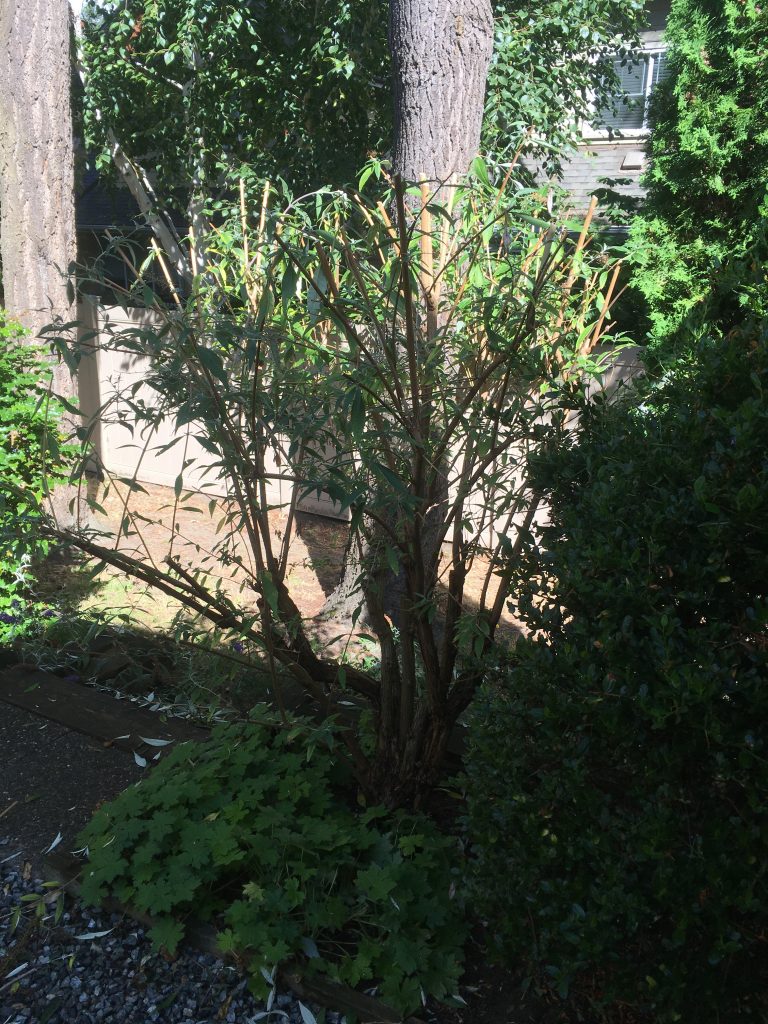
Sam’s bamboo badly encroached into the sidewalk and it was only a matter of time before a neighborhood Karen complained about it. So I drove in on a sunny Saturday morning to take care of it.

Incidentally, I waited until ten o’clock to start. Municipalities have different by-laws but ten o’clock is a standard start time for Saturdays. Always be careful in mature, well-to-do neighborhoods.

The shearing and clean-up took me exactly fifteen minutes. I used sharp shears and the green waste filled up one tarp. Then there was some touch up work with my hand snips where the bamboo encroached onto the sidewalk.

I did my clean-up blow quickly with the smallest gas-powered backpack blower, designed for noise-sensitive environments. By ten thirty the street was full of landscapers with heavyweight Stihl blowers on their backs. Of course!

Later, Sam stopped by the house to check things out and we had enough time to catch up, with masks on. Then I casually confirmed that he would be taking care of my invoice.

Pro tip:

Do side-gigs on project basis, not by the hour. For this job I quoted a price based on pictures. The actual length of the job is my problem. Sell your service, not man-hours!

Much better.

Obstruction in the landscape is a problem that shouldn’t be ignored. Eliminate the obstruction as soon as you can.

When turf is the way to go

By | Lawn Care | No Comments

Tired of grass?

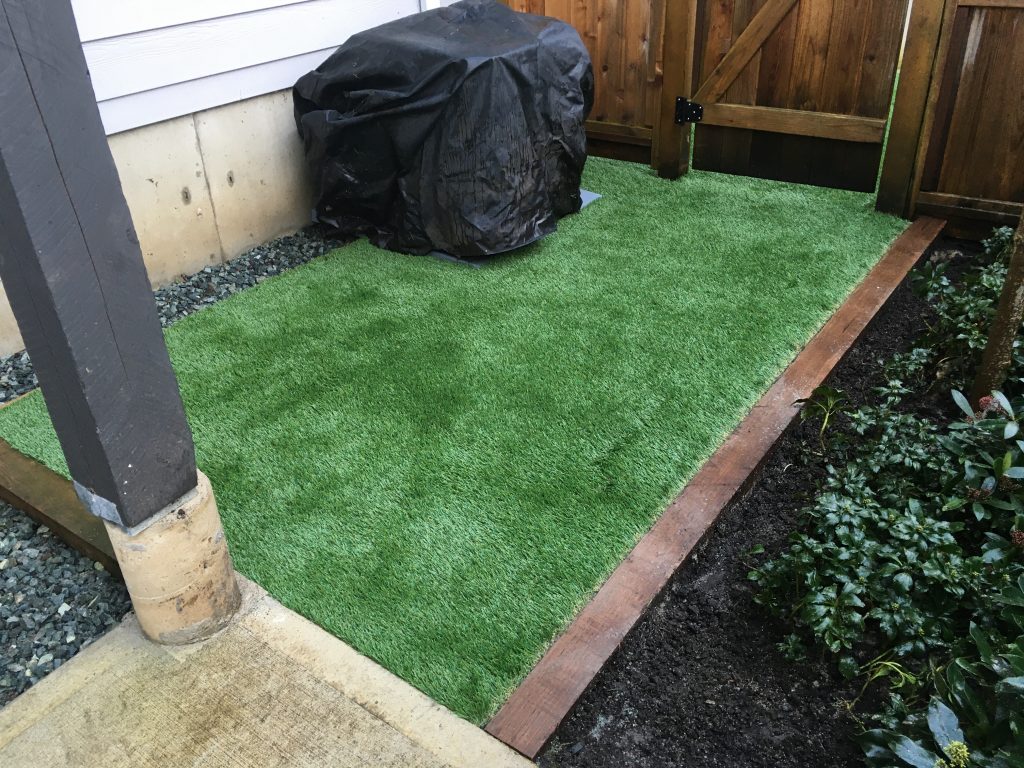
Sometimes switching from grass to turf makes sense, like in the following case. The owners had two small grass patches situated between the house and a cedar hedge so sunlight was an issue.

Since both lawns were installed inside wooden borders, drainage was also an issue. The lady described a muddy mess, made worse by her landscaper’s weekly visits.

When her grandkids came to visit they couldn’t really play on the grass; and picking up dog waste from the mud must have been horrific.

Dog owners hate to admit it, but dog urine kills grass. The cost of repairing the lawn all the time would send anyone to Google to find a permanent solution.

Plastic

Personally, I’m not a fan of plastic turf. It’s expensive, it heats up in summer, and it removes nature from cities. There is no life hiding in plastic turf.

But, in this case, plastic turf is the way to go. The owner was extremely proud of her new turf. She can easily pick up dog waste, hose off the turf and let her grandkids run on it. Kiss goodbye top-dressing and over-seeding.

She got all this for C$1,800.

The procedure

Do you ever wonder how turf is installed? I did.

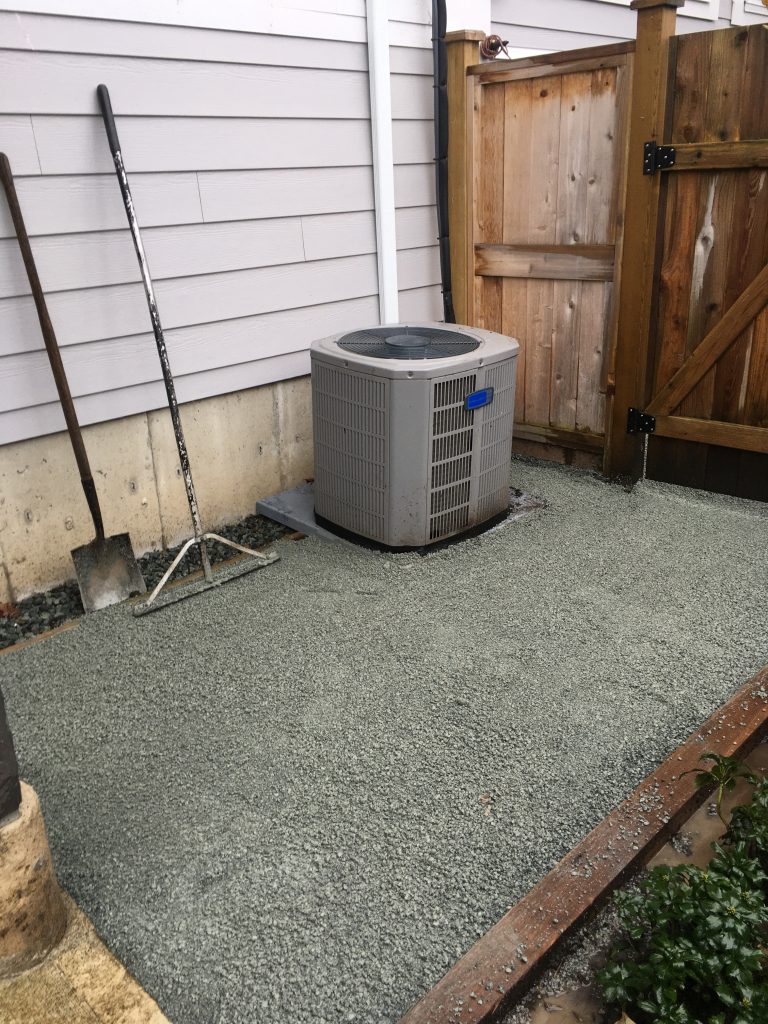
  1. Remove the old grass and grade the soil. It sounds easy but the installers had to go up and down 15 stairs. Access can affect the quote.
  2. Install rock base. If I heard correctly, for this job they used 3/8 pressure fines. Again, it was a nightmare for the young dudes to negotiate stairs with heavy wheelbarrows.
  3. You have to compact the rock base with a machine. I was surprised how gentle the compactor looked. Make at least three passes over the area to properly compact the rock base.
  4. Install turf. There are many options and the owners here selected a “pet-friendly” model. Pins secure the carpet at the edges. Here the patches were quite small. For larger areas, the carpet pieces are zipped up together on the underside.
  5. Enjoy! Now you have your instant lawn to enjoy.
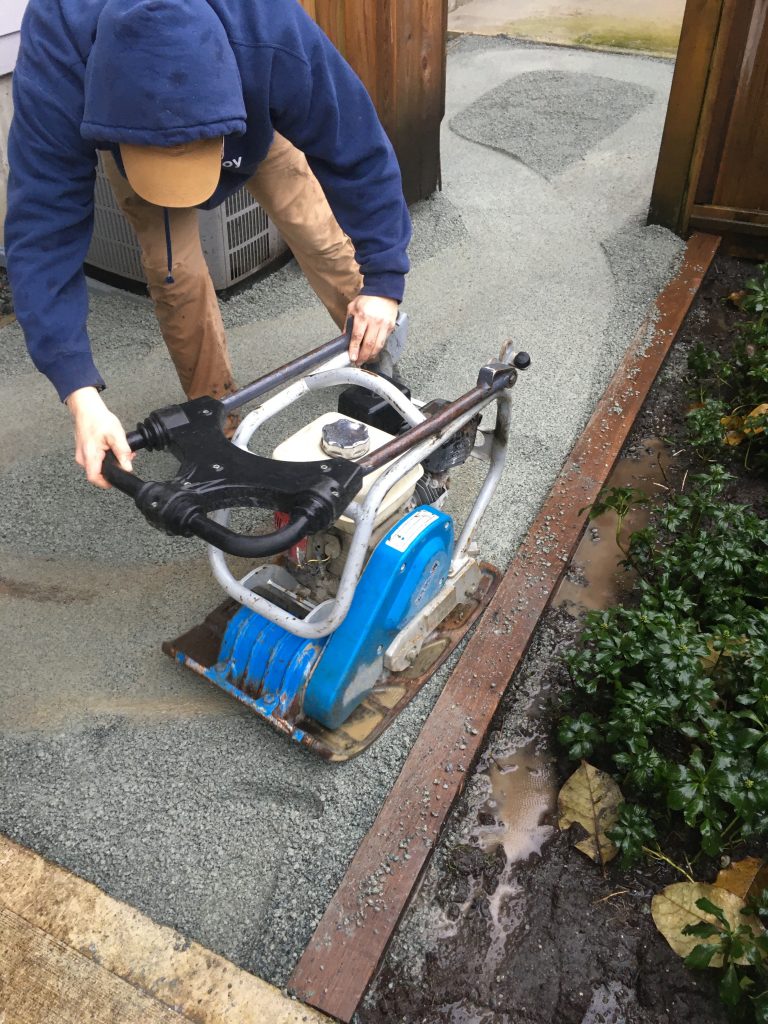
Compaction is a critical step!
The rock base is down.
All done!

Conclusion

I make a living with lawn care so I rarely recommend switching to plastic turf. There are many problems with it. But, in some cases, it makes a lot of sense to switch. Just be ready for a hefty bill.
When your first lawn cut is in October

By | gardening, Lawn Care | No Comments

Strange COVID times

Previously I have written blogs about my friend who hates gardening and pays me to knock down his lawns when his neighbors start whispering. Over the course of one season, I will visit his “meadows” five to six times. His house is every low-baller’s dream.

Now, let’s talk about my new client. To make the first lawn cut at a house in late October is unusual but we also live in unusual times. Thanks to the pandemic, the house owners are stuck in Taiwan; and their son worked, until recently, as a consultant in California.

Now back in town, the son wanted a little fall clean-up done. And I happily gave him one reasonable number for the work.

Fall clean-up

Lawns

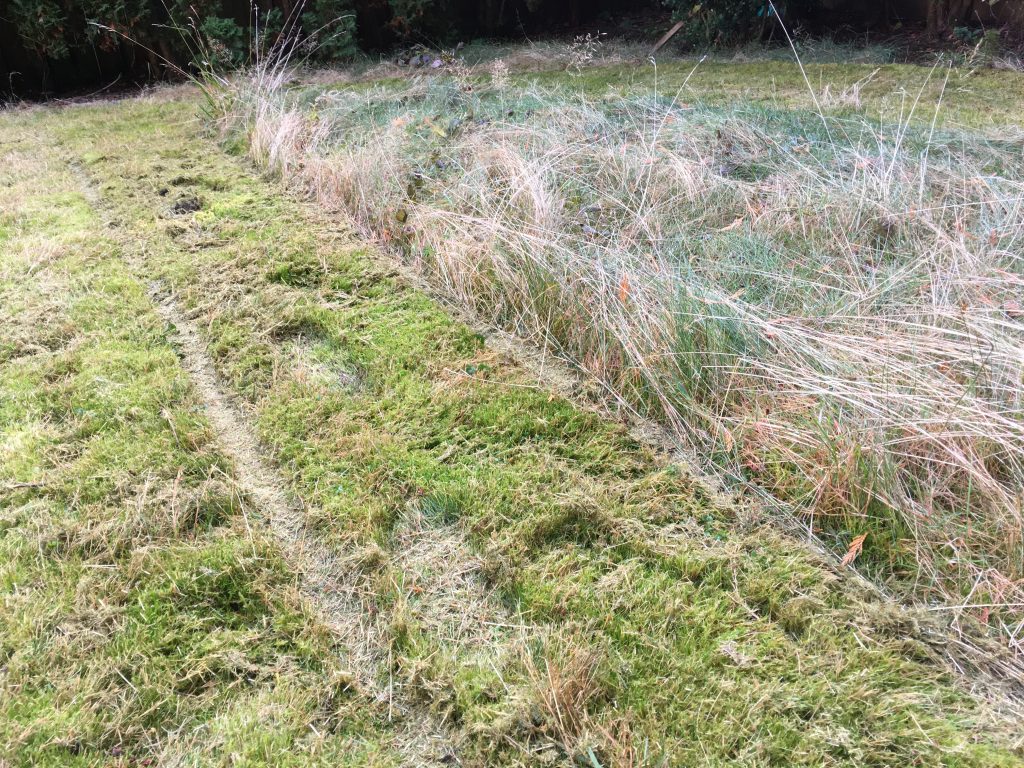
Normally the consultant cuts his own grass but his mower wasn’t strong enough to cut through a frosty meadow. Grass this long has to be cut twice or knocked down with a line trimmer first.

My commercial Honda model made it in one pass, albeit slowly. The lawn is obviously in rough shape so I applied fall lawn fertilizer. Edging completes the work and this is where most homeowners fail. Many don’t even own commercial grade line trimmers.

A sharp blade edge on the street side gives the home a sharp look and, when done late in the fall, it should hold for months.

The first lawn cut of 2020 in late October.

Pruning

Next came pruning and a bit of finesse work. Daylilies and peonies are made for fall cutback when the show is long over. I took out my Felco snips and went to work.

Flush cut your perennials and let them pop up next year

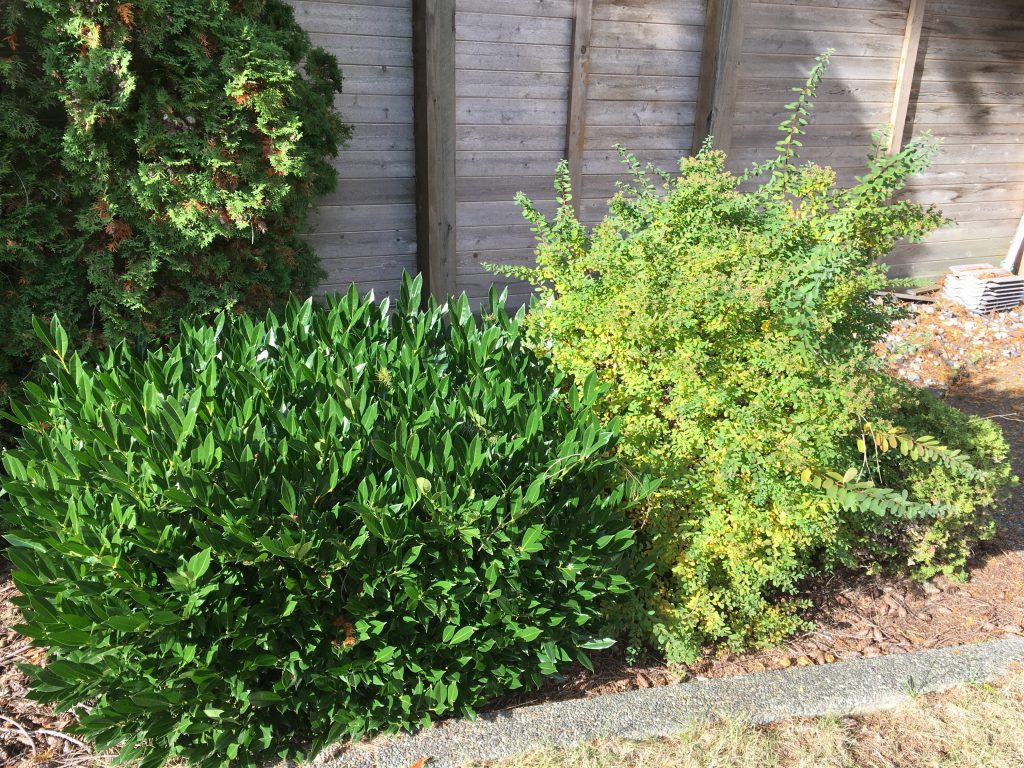
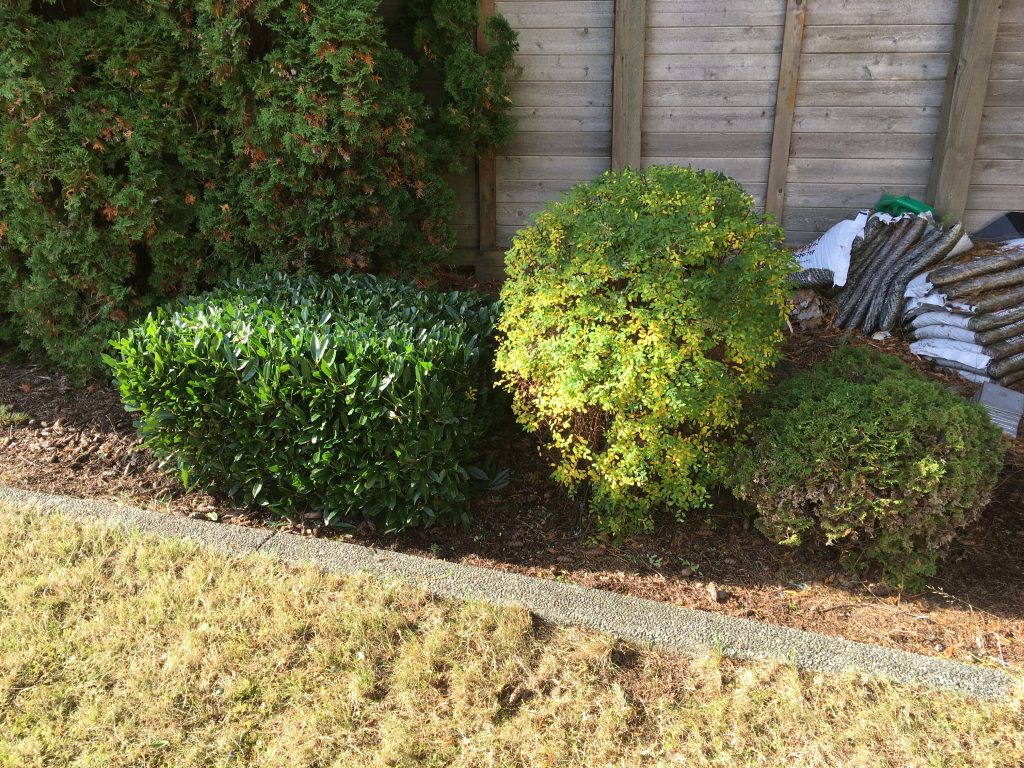
Laurels, boxwoods and Spireae got clipped with power shears to control their growth and give them a more formal shape.

Shaggy shrubs
After power shearing

I used hand snips for Rhododendron and Pieris shrubs. Both were too big for the consultant’s liking.

Then came a quick scan through the cedar hedges for out-of-control morning glory (Convolvulaceae family).

The final step always involves clean-up and in this case, my weapon was a backpack blower.

Now that the consultant knows about my great, affordable service, I have a feeling we’ll do business together again in 2021. He knows I can help him and, considering the way the pandemic is dragging on, it will be nice to generate some extra income.

3 West Coast lawn issues

By | gardening, landscape maintenance, Lawn Care | No Comments

Season over

Now that the regular lawn care season is over, it’s a good time to recap some of the issues that came up in 2020. Let’s examine three issues: one is comical, one is frustrating for me and the last one isn’t going away anytime soon.

Bend over!

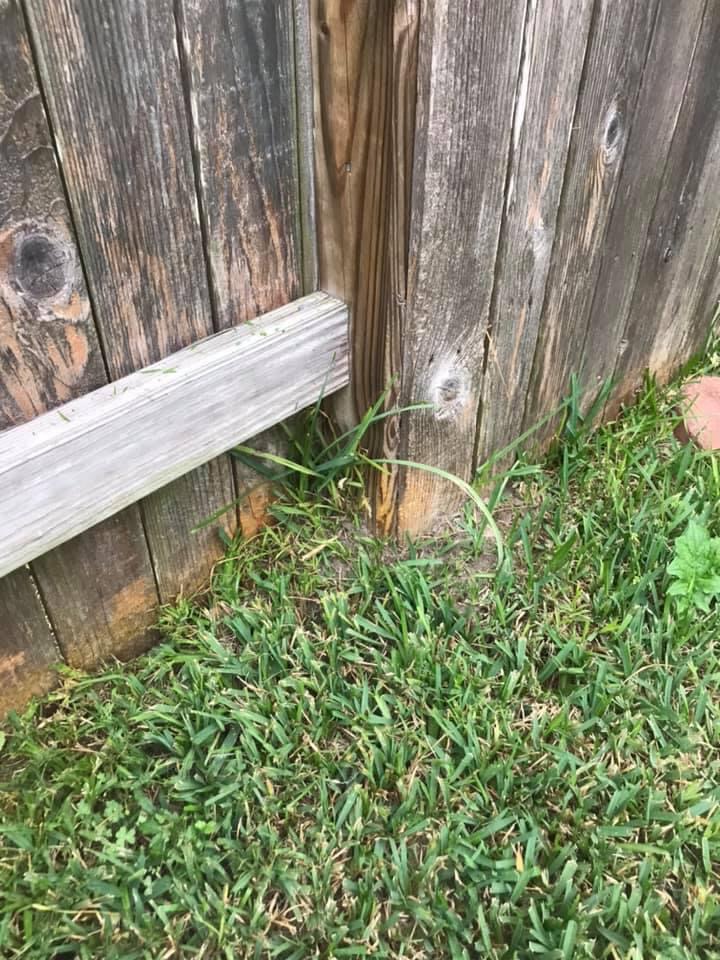
This issue came up in a Facebook group. The lawn care operator was asking for a good machine or technique to remove the shaggy bit of grass in the corner. The light wood is clear evidence that they’ve tried removing it with line edgers but the geometry didn’t work out.

Sometimes you just have to do it the low-tech way: bend over and rip it out.

Tree or lawn?

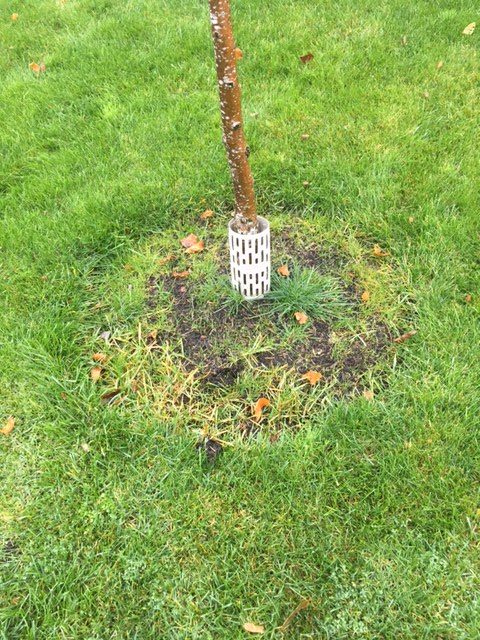
This looks just like another neglected tree well; it’s full of grass and lacks a sharp, ninety degree edge. But, it’s actually a misunderstanding between the unit owner and maintenance staff.

Landscapers are trained to keep tree wells weed-free and well-defined with sharp deep edges. The plastic guard on the tree is extra insurance against tree abuse from lawn care machines.

Unable to keep the tree well clean, it finally came to light that the owner had been over-seeding the tree well in order to eliminate the tree circle. He wanted a nice uniform lawn with the tree in the middle. Thus the plastic guard.

There is just one problem with the homeowner’s approach. Young trees often get outcompeted by turf. They struggle and often die because turf is an efficient competitor and lawn care machines are bound to take some liberties with the bark.

If you want to keep the tree, keep the tree well.
Chafers aren’t going away

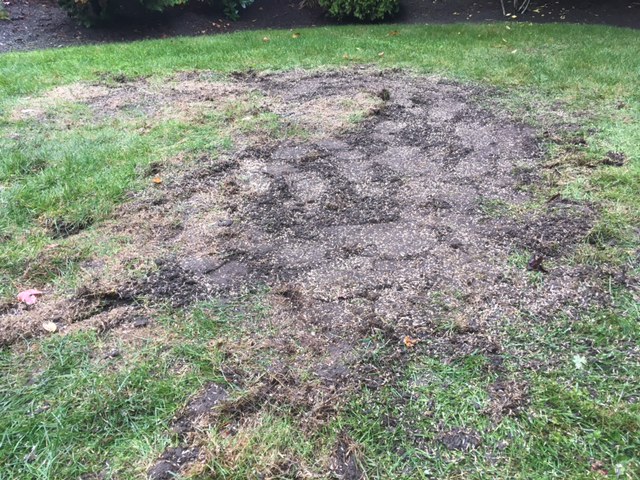
When animals dig up your lawn in late October looking for European chafer beetle grubs, it can be a shocking site. The strata president tracked me down looking for help but by late October there isn’t much I can do. The grubs in the soil are juicy and, I presume, delicious.

I raked up the damaged turf chunks and peeled back whatever was still attached. Then I added soil and over-seeded it with good renovation seed mix.

The treatment window for chafers is in late summer after the females deposit their eggs in lawns, but there are now new treatments coming in. So, check with your local garden center. They will be happy to take your money.

Search for my European chafer beetle blogs on this website.

Female European chafer beetles. Only one is really dead!

5 lessons from 8-hour leaf pick-up

By | landscape maintenance | No Comments

8 hours!

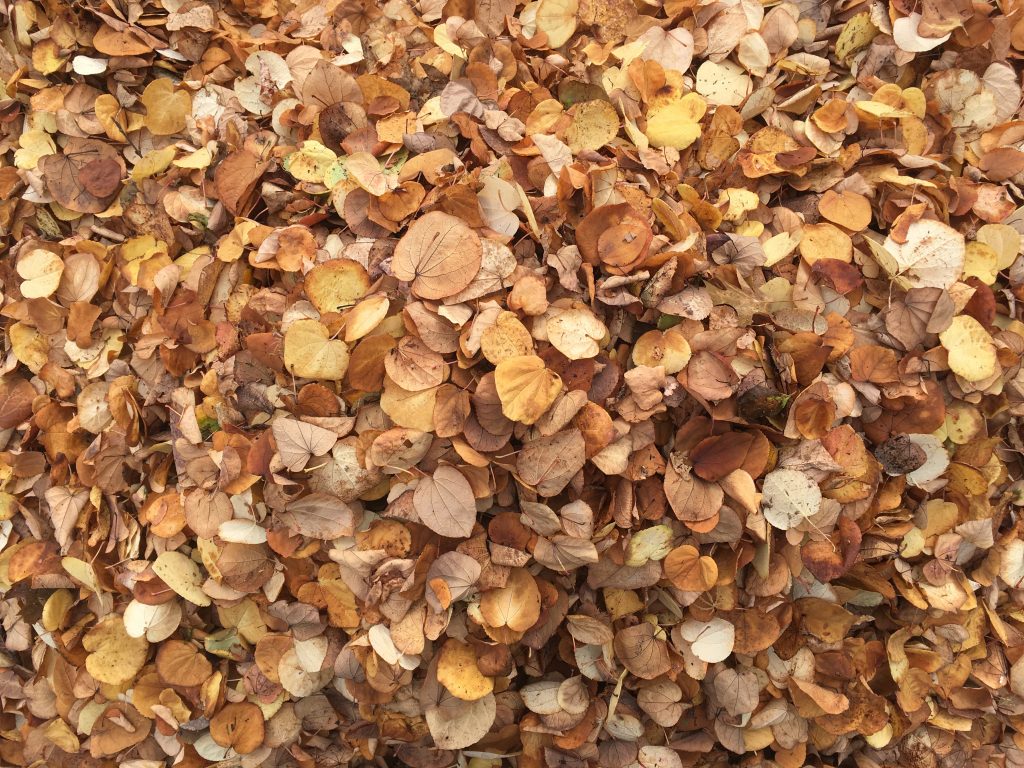
Eight straight hours of leaf pick-up is nothing unusual for West Coast landscape professionals in mid-November. Some strata sites have many mature trees and they drop a lot of stuff. So, you can expect to have some fun.

Here are five lessons to take away from good West Coast leaf clean-up.

Lesson 1: Tools

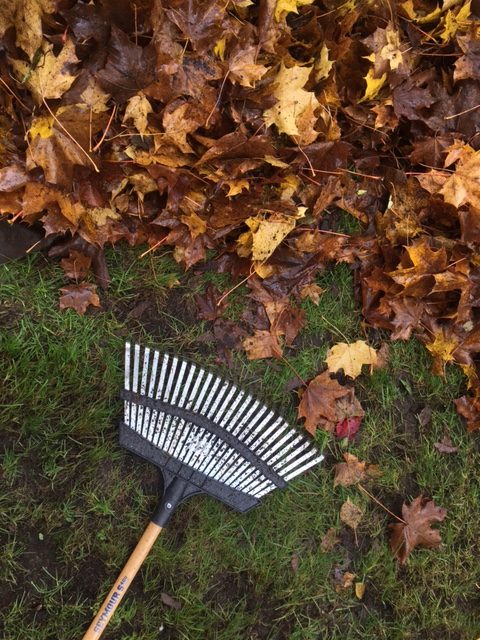
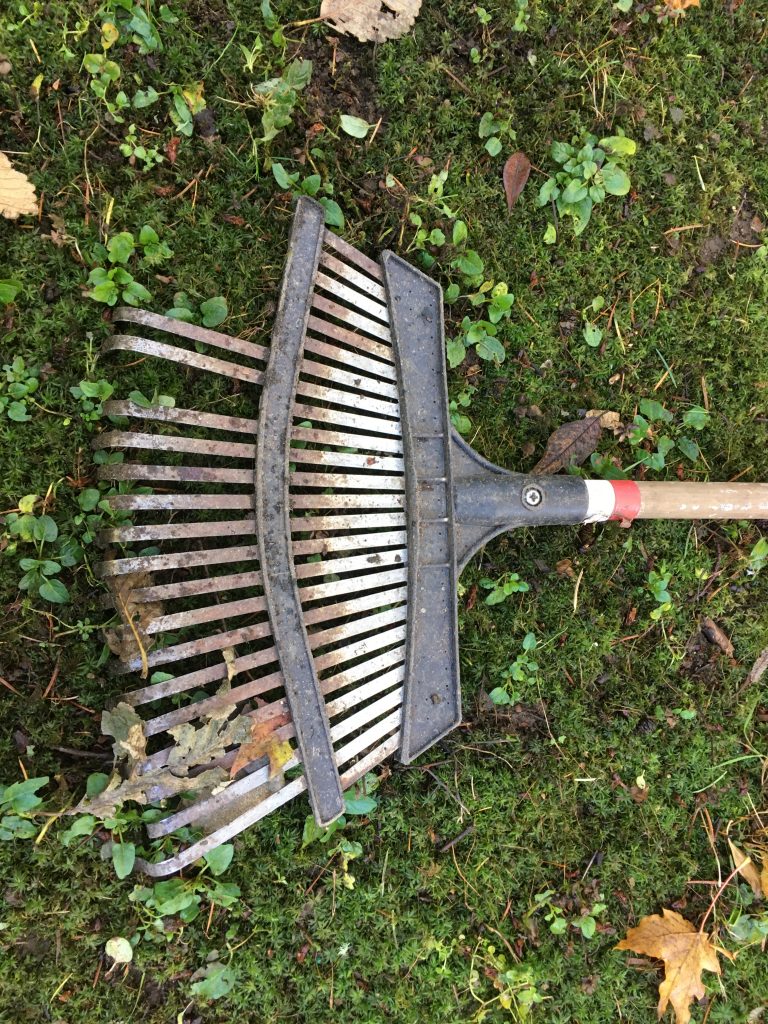
Always start with proper tools. When I’m asked to help out on a site, I expect to use proper tools. The rakes should be in good shape. Don’t even ask me to use rakes with many missing tines. Use great tools!

Most companies have budget for new tools. Take advantage of it. It’s borderline insulting asking a certified professional to use sub-standard tools.

Are you kidding?

Lesson 2: No pyramids

If you expect to rock leaf clean-up, forget pyramids. This goes for blowing and raking. When you blow, don’t overdo it. Blow the leaves into a decent pile and move on.

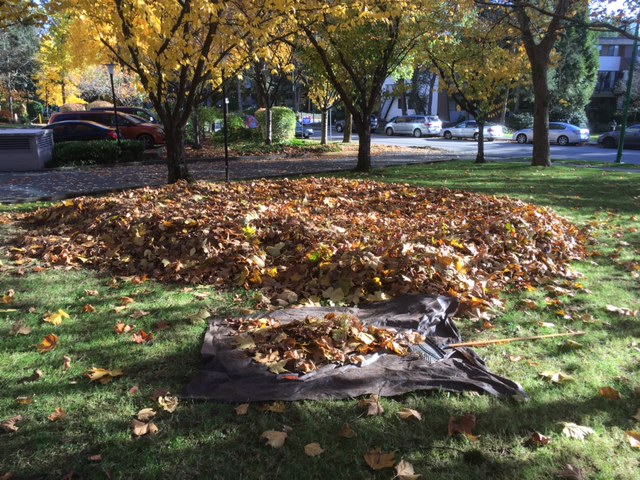
When raking, the same rule applies. Bring your tarp close and rake the leaves into it. There is no sense creating a perfect pyramid. We need the leaves in a tarp and taken away. Nobody is scoring points for making nice looking pyramids.

With huge piles, put your tarp right into them and rake or kick the leaves in. Easy. And always rake with purpose. I expect to see rosy cheeks!

Lesson 3: Tarp slavery

Lugging heavy tarps on your shoulders should only be done if you’re close to your truck because it’s the least efficient method. You can avoid tarp slavery by using a wheelbarrow or bringing your truck closer.

Note that some workers will happily walk down the block with one tarp over their shoulder just have a little break. To rock fall leaf clean-up, you must break this habit. Send them away with a full wheelbarrow if there is no truck access.

Lesson 4: Look up!

Since you’re not responsible for removing one hundred percent of the leaves on every visit, relax and do your best. Before you start stressing, look up! Is the tree above done dropping leaves or not? If not, don’t stress about every leaf on the ground. Wait until all of the leaves are down before doing a thorough clean-up.

Lesson 5: Enjoy fall!

Enjoy the fall.
This should be easy but it’s not. I often see people standing under trees blasting away at their crowns with leaf blowers. Why the rush? Enjoy the fall and its many colors.
If you struggle with this, think of the miracle that occurs inside the leaves you detest so much. Photosynthesis is a miracle that keeps all people alive and it happens inside leaves. The leaves are actually beautiful mini-factories; and they entertain us with their colors.

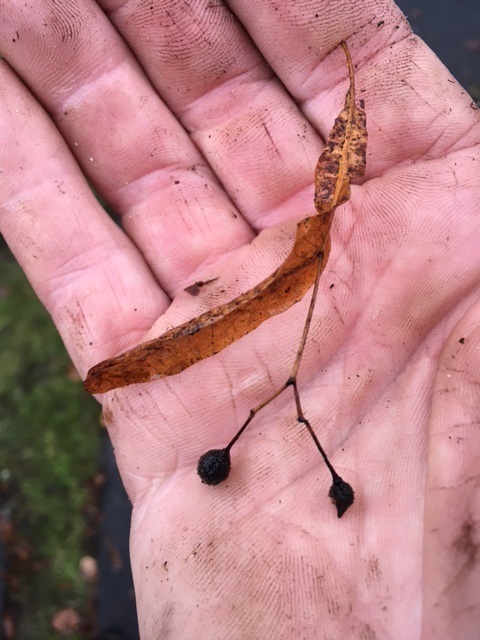
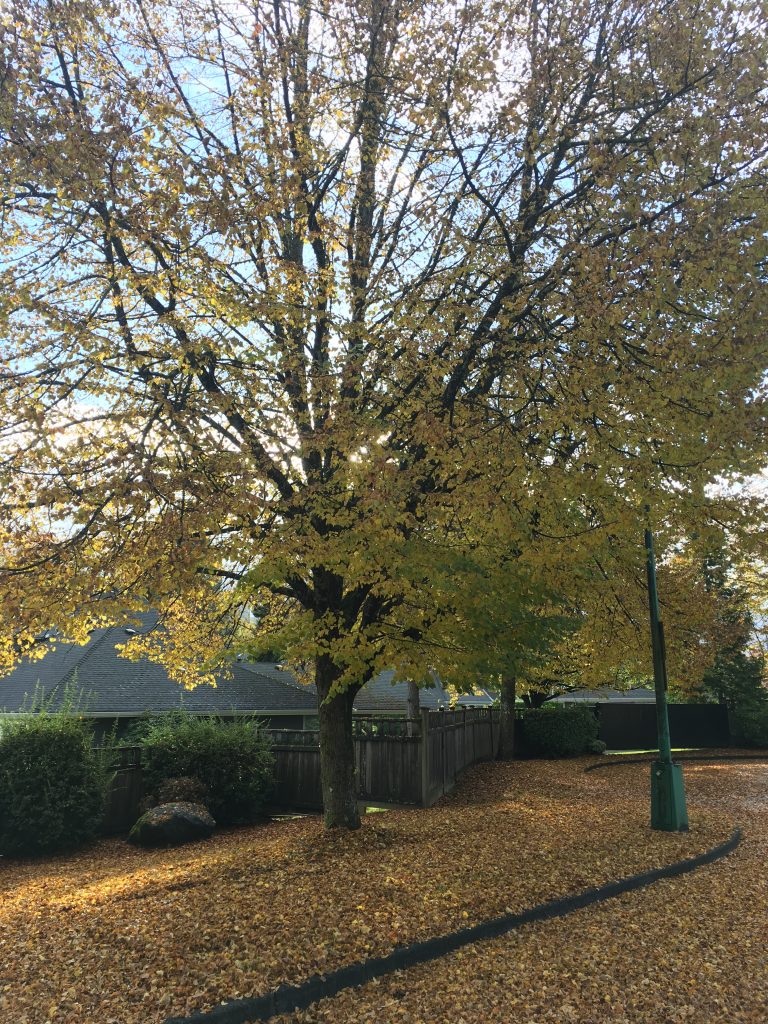
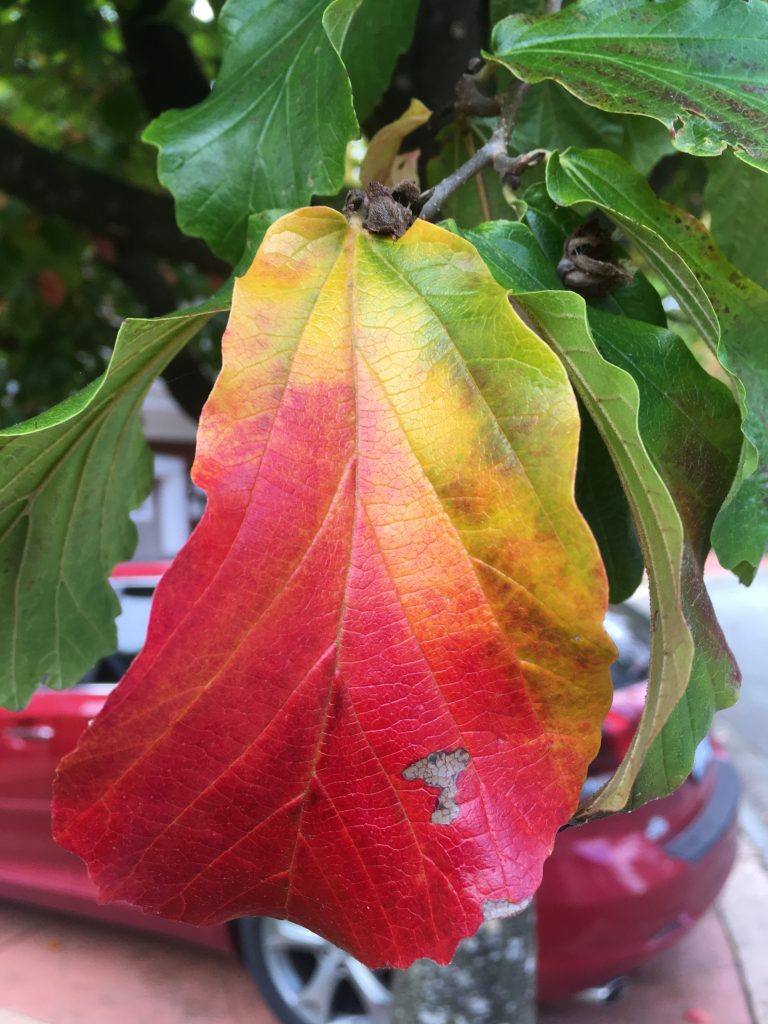
Tilia cordata
Persian ironwood

Logger for a day

By | Trees | No Comments

Have some fun

Here’s the problem: a tree comes down at the back of a strata property and ISA certified arborist Vas gets a phone call from a panicked foreman. Yeah, of course I will come take a look. Why let full-time tree dudes have all the fun?

I harp on this all the time: all landscape professionals should get ISA certified so they can do some of their own tree work, add value to their companies and get extra job security. All you need is three years in the field -and you don’t have to work with trees full-time-to sit the ISA examination. Unlike my Red Seal, which is an experience-based examination, the ISA examination tests your knowledge. Then comes experience as trees come down on your sites.

Don’t be a cowboy

Full-time tree dudes have fancy protective gear and cool-looking helmets. Be like them, don’t work like a cowboy. I also made sure my chainsaw had bar oil and proper chain tension. Safety first!

Pro tip:

If you’re freaked out about chainsaws, put the chain on personally.

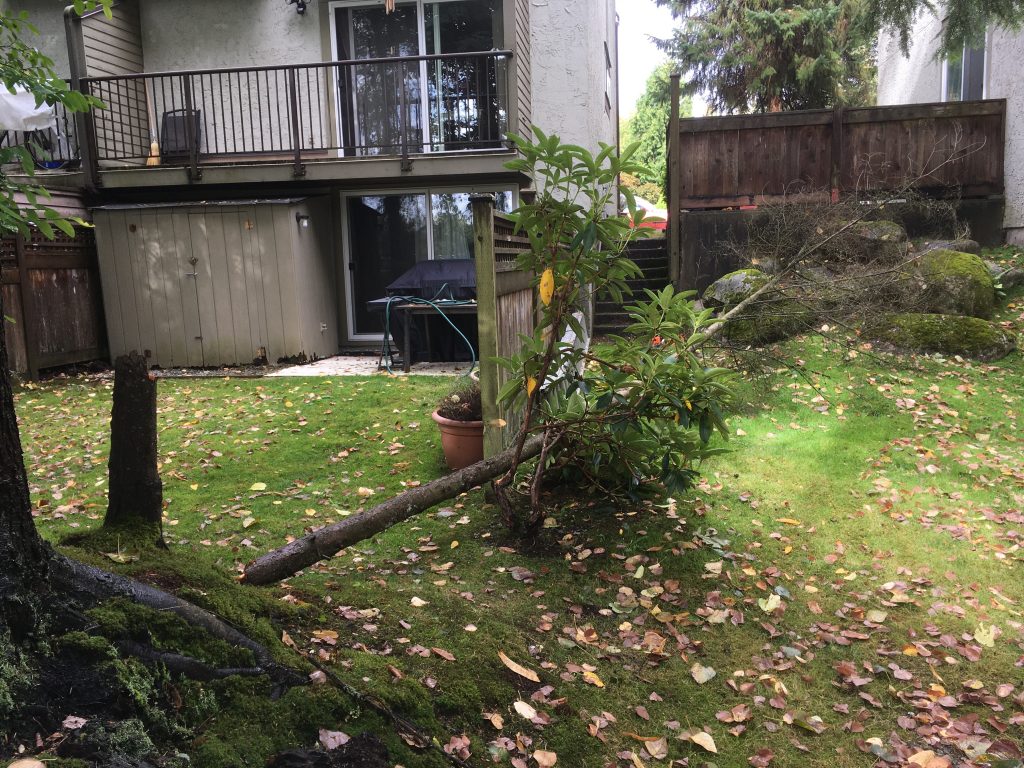
The problem!

This tree was clearly in the way. It’s always a good idea to clear downed trees quickly and clearing this baby tree was a delight.

If you need chainsaw practice- and many landscapers do!- cut the tree into smaller sections. I like to take slices out of the remaining stump; I just don’t talk about it in front of my boss.

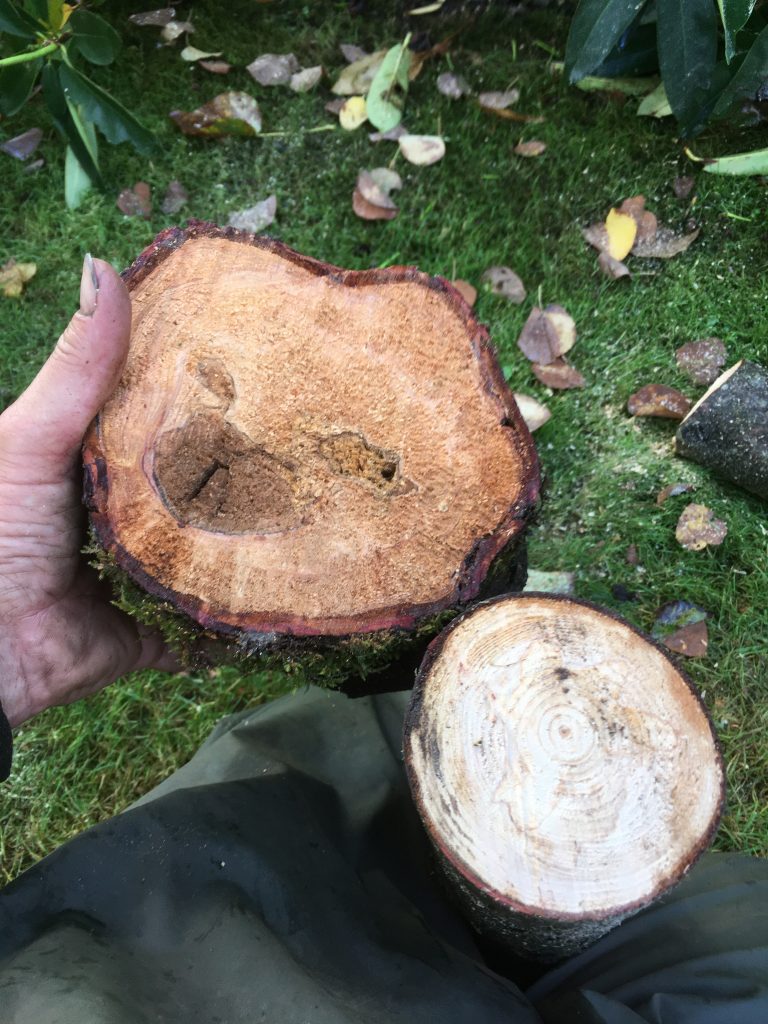
The stump came down very easily which means the base was decayed and the recent wind storm made the tree snap. You can see how the stump cross section sports cavities and it’s brown compared to the upper sections. My chainsaw flew through the stump better than a hot knife through butter.

Decay at the base made this tree snap in a wind storm.

That covers the stump.

As for the trunk, simply remove the side branches and then make cuts into the stem without cutting into the lawn. Then, kick the stem over and finish your cuts. This should give you nice manageable logs to take away.

Easy does it

This clean-up job was actually quick. So quick, I was able to help the crew pick up leaf piles and check their work.

You can do this kind of tree work on your sites as well. You don’t necessarily need ISA certification but I recommend it to all landscape professionals. When you get certified, your company can charge nice coin for easy work that would otherwise be delegated to pricey, full-time tree dudes with fancy bucket trucks, confusing ropes and shiny helmets.

Don’t be intimated. You can do jobs like this. I know you can.

Landscape adjustments to consider

By | landscape maintenance, Lawn Care, Trees | No Comments

100% Vas

With landscape supervisor Vas on site, there are always bound to be adjustments to make because I love to catalogue them. Don’t be afraid to make adjustments on the fly. When tasks get pushed, they may not get done. But not when I’m on site.

Let’s see some examples.

Low branches

Pro landscapers carry good quality snips on their hips for moments like these. As I walked by, I noticed low tree branches. Since we don’t want branches to grow this low, it’s a good idea to remove them.

In the second example, we have a Japanese maple (Acer palmatum) branch hanging so low it made it difficult for me to mow in straight lines. The offending branch also affects the shape of the tree, as if it’s attempting to break away from the crown.

Since I didn’t have a hand saw, I had to put this on my list for later.

Aggressive line trimming

These developing ditches scare me. I know vertical line edging is responsible for this because blade edging is sharp and narrow. It would be OK if the crews left it alone but they don’t. They will hit it again next week and the ditch will grow wider. Then we’ll have to pull weeds out of the gap. Use a blade edger, if you can. If you can’t, vertical close to the driveway edge at ninety degrees.

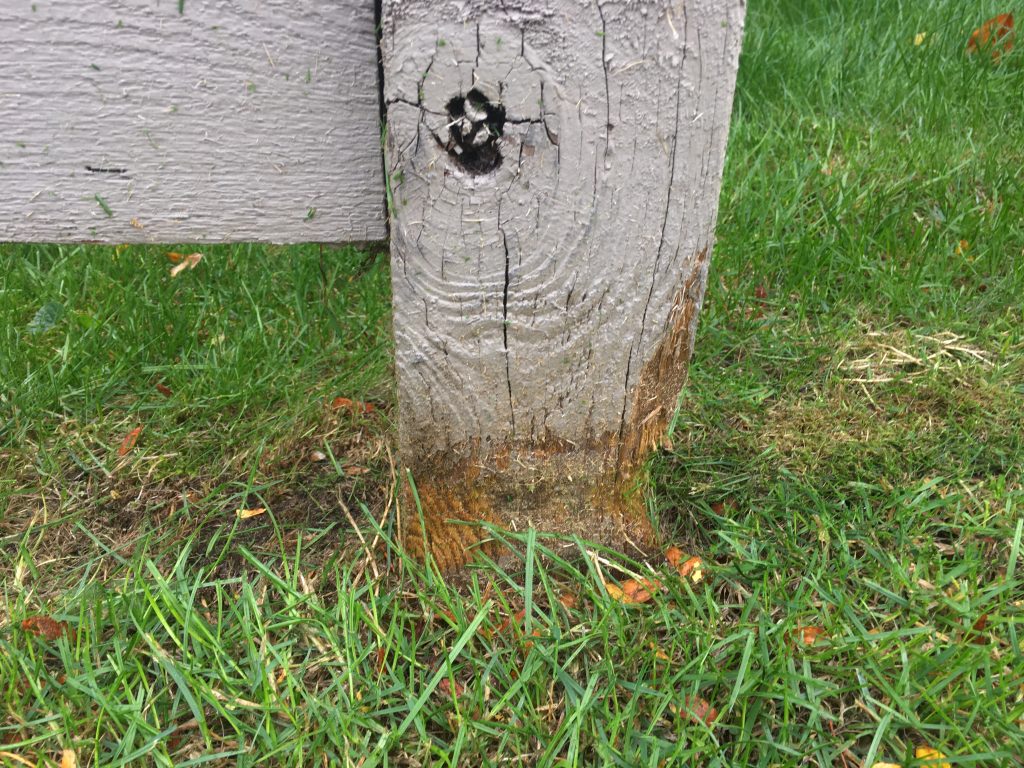
This is the classic “beavered” look and it’s not Ok. You have to slow down and touch the post without chipping it. I know we ask people to get their work done quickly and efficiently but we also need quality. “Beavered” posts invite complaints from clients so take the time to train your crews.

Don’t touch your mow lines

Here the dude was rushing to mow a missed lawn and he took the shortest route right across his mow lines. It’s not a good idea at a high-profile clubhouse used by residents from two different complexes.

Don’t cross your mow lines; and don’t be afraid to make landscape adjustments on the fly. Your site or garden will look much better.

On the art of pre-blow

By | landscape maintenance | No Comments

What’s pre-blowing?

The idea behind pre-blowing is saving man-hours on labor. Imagine you have leaf debris on your site or in your garden and you contemplate raking it up. It can be done easily in your garden; and being outside in fresh air is good for you, especially now, during a pandemic.

But on a larger scale, you can avoid a lot of extra raking by blowing your leafy debris onto your lawns before mowing. Just do it quickly. Remember, this isn’t your end of the day, thorough, clean up blow. All you have to do is push the bulk of your leafiness onto your lawns so it can mowed up.

Don’t crush your mower

Pre-blowing is effective from late summer and into early fall. That’s when the leaf drop is noticeable but it doesn’t require pile making. The idea, again, is to quickly push leafy debris onto your lawns and mow it up so you don’t have to rake.

Making and picking up piles is time consuming so it will delay your mowing. Pre-blows are meant to be quick jobs.

When the amount of leafy debris is significant, give up on pre-blowing. You can destroy your mower by forcing it to mulch massive amounts of leaves. It’s bad for the engine.

Commercial site example

Let’s consider one of my commercial sites as an example. When I pulled up on site one late summer Saturday morning, there was enough debris on site to justify a pre-blow.

I blew off the parking lot and beds full of Rhododendron leaves. Then I mowed it all up. Remember to slow down to give the mower time to shred the debris.

At the end of my service I only did a quick clean-up blow. I didn’t do any raking thanks to my pre-blow. And blowing is easier than raking.

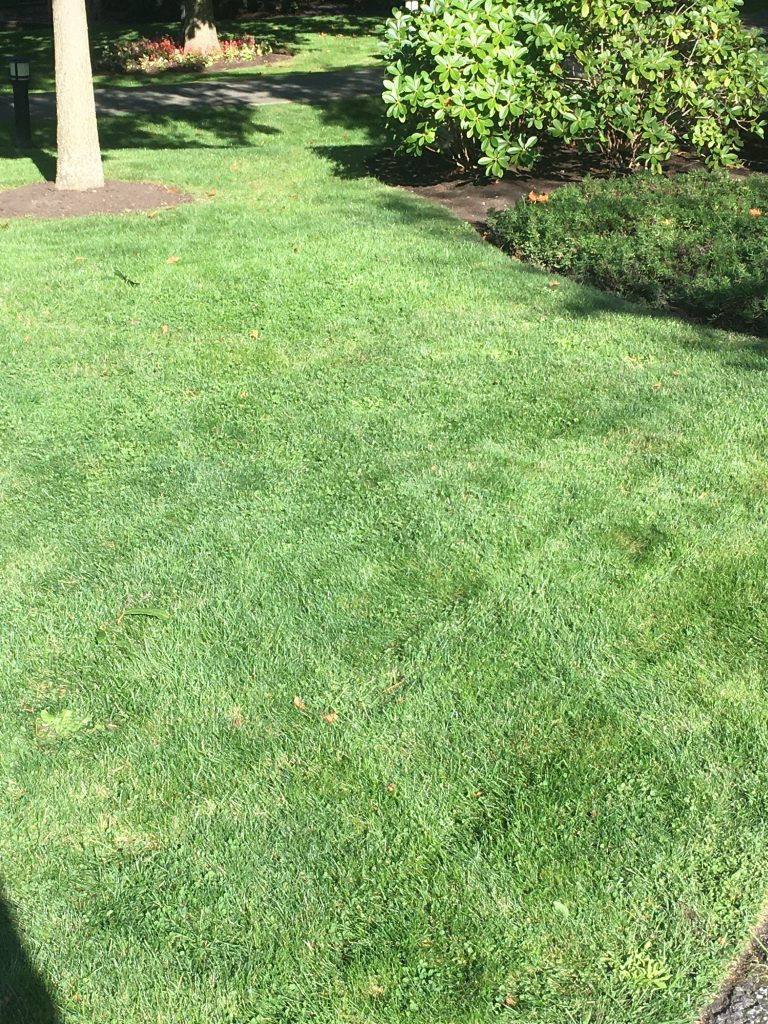
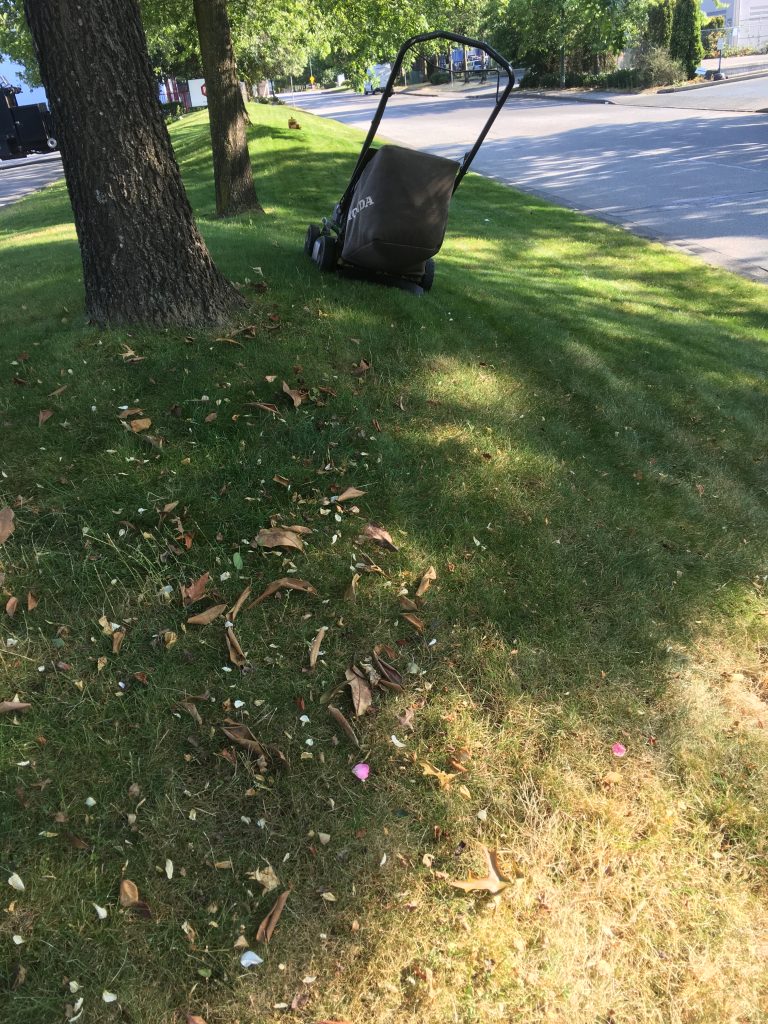
This is how you pre-blow: just enough debris to notice but not too much for the mower to shred. No piles to rake and pick up.

Give pre-blowing a try!