
Side-Job Hell….

By | Arborist Insights, Company News, Education, Landscaping | No Comments

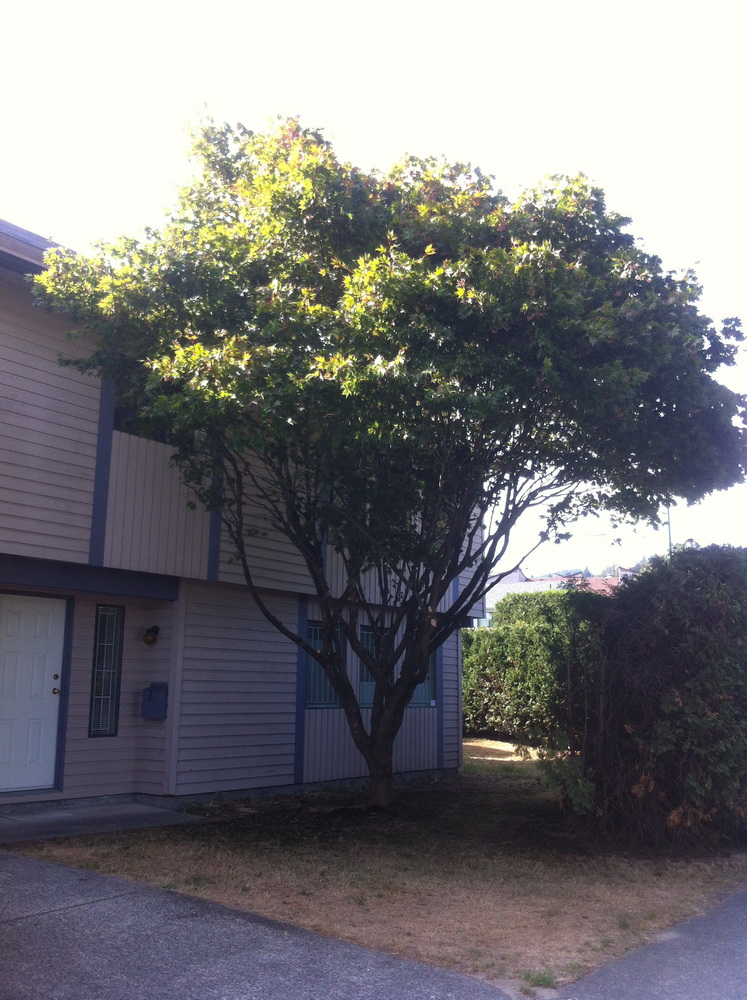
Two young landscapers arrive at a residence and make decent cash by pruning cedar hedges. We have all been there. Living the dream, making extra cash on weekends. Then the owner asks them to prune her Acer palmatum away from the house and below the gutters. Then mistakes happen. First examine pictures of the FINAL product and then consider the many mistakes that were made.

IMG_9035

Owner’s request: bring the tree crown below gutters

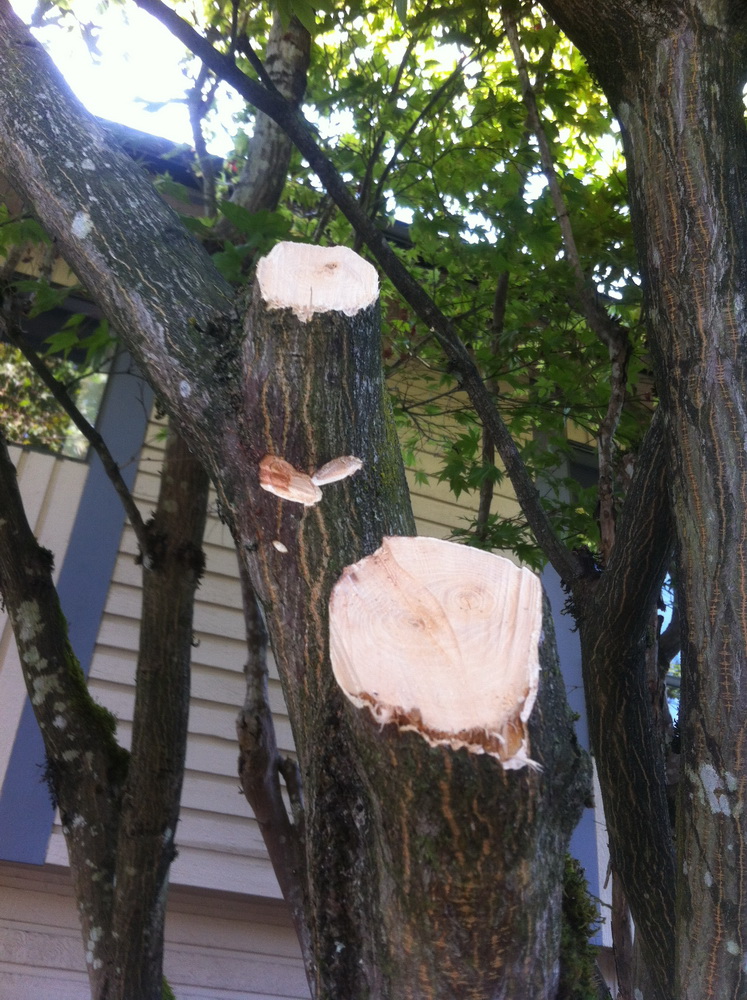
IMG_9038

Brutal chainsaw cuts

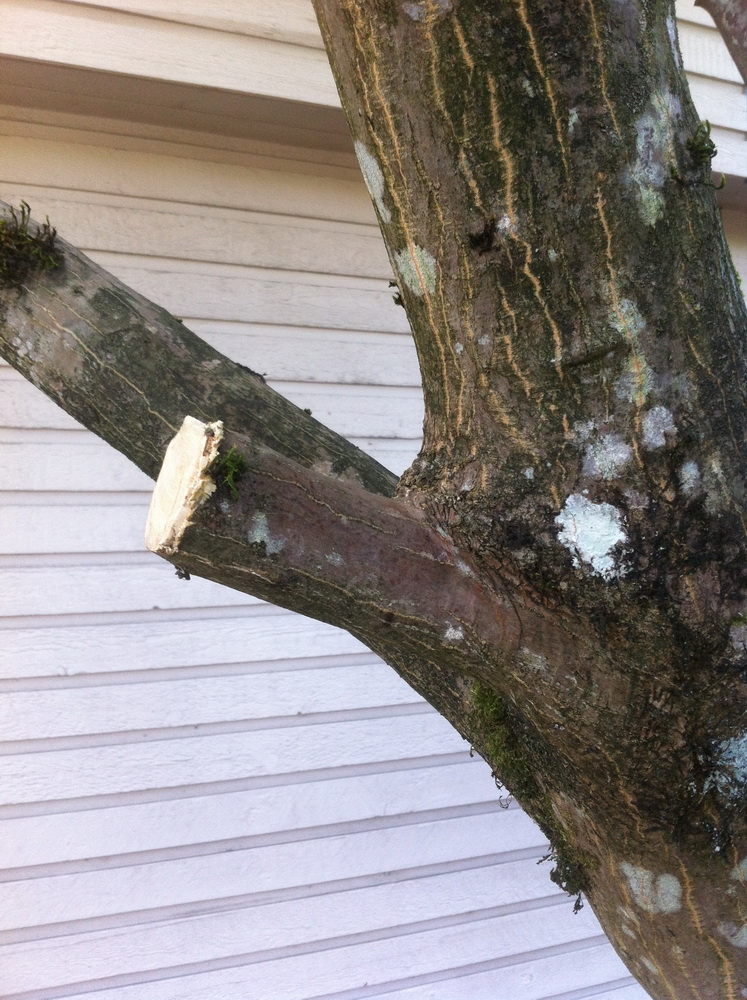
IMG_9040

Huge stubs that will die off, potentially invite disease in and give the tree zero chance of healing the wound

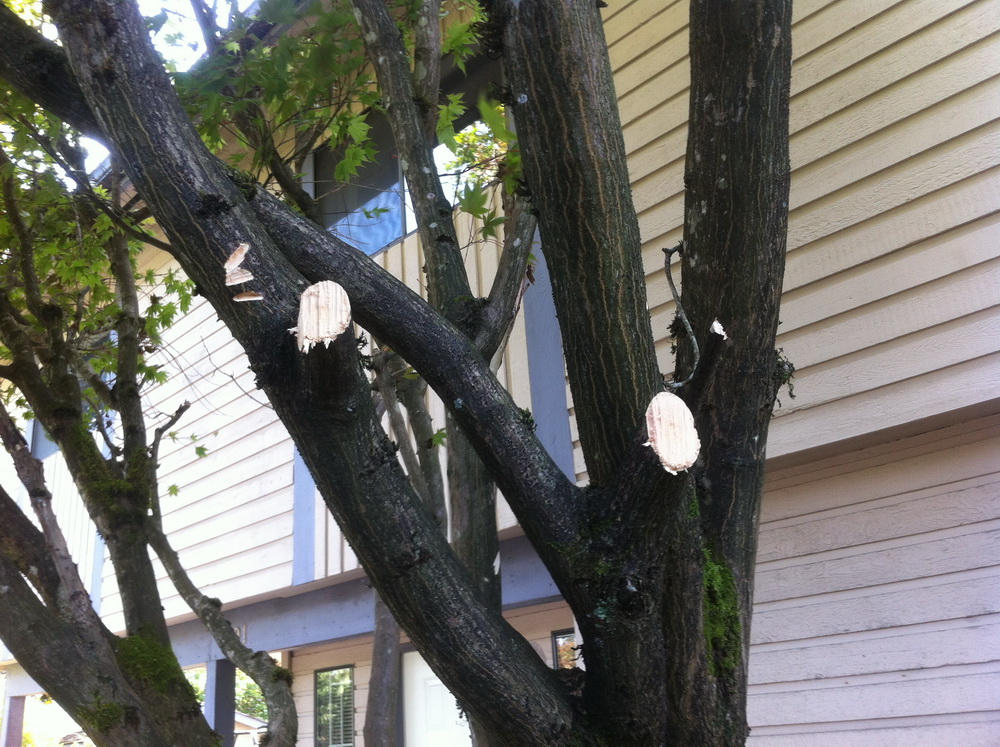
IMG_9043

Let us consider the mistakes that were made.

1) Agreeing to top a tree

The crown could be reduced but topping is not done for several reasons. Educate your clients!

2) Starving and stressing the tree

In drought conditions, leaf openings (stomates) are closed to prevent water loss. That also means that CO2 can not enter and therefore food production stops. Now the tree is forced to use up food reserves stored in younger branches. The same branches that are likely to be pruned off.

3) Bad cuts

The chainsaw work is inadequate and the stubs amateurish. We have seen in an earlier blog how to make a nice cut, one the tree can cover over and heal.
The stubs die off, can invite disease in, and the tree has no hope of covering the wound.

4) Failure to wear protective gear

Chainsaw work can be dangerous so protection is mandatory; the same goes for high-visibility clothing since the workers repeatedly crossed the road to assess their work. Work which did not get completed.

Pterocarya stenoptera (Chinese Wingnut Tree)

By | Arborist Insights, Company News, Education, Landscaping, Plant Species Information | No Comments

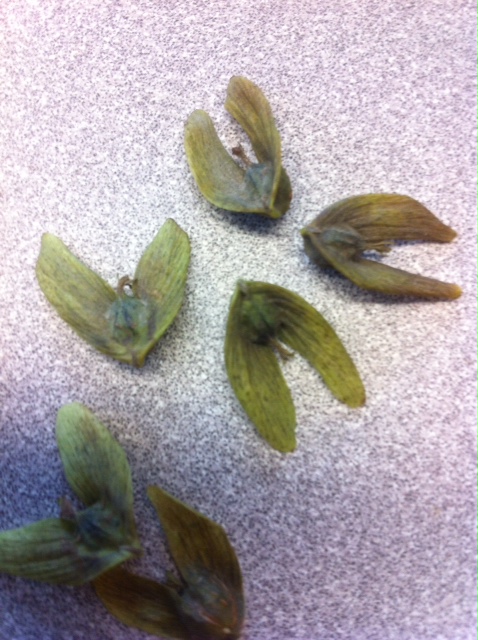
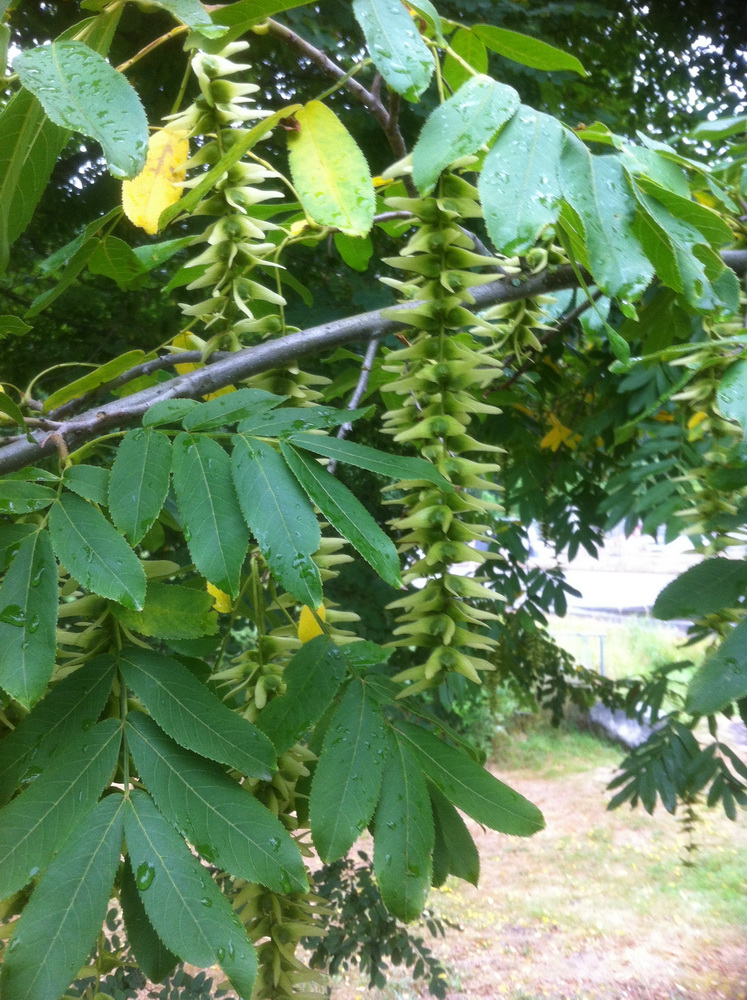
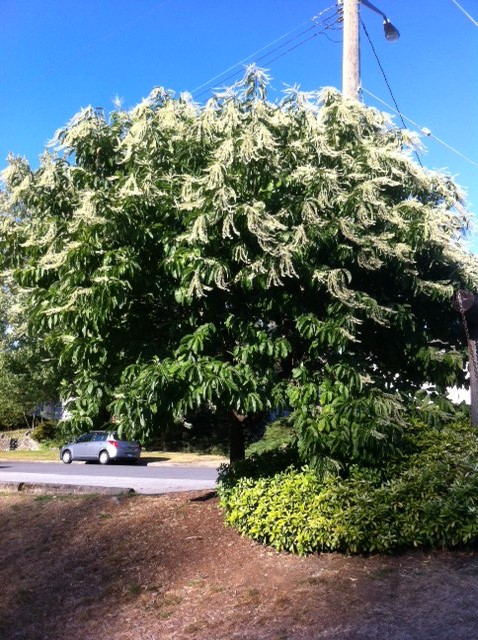
The Chinese wingnut tree is a 40-70 foot deciduous tree from the walnut family: Juglandaceae. I first encountered this tree species by the City of Coquitlam animal shelter off Mariner Way. What immediately struck me were the seed clusters, green strings of winged seeds suspended below the branches. Then there was the scientific name which required a lot of memory work.
This is a fast-growing tree which tolerates drought. It has no fall color; the winged seeds turn brown and fall. The two specimens I know well are both used for shade. Since the trees have aggressive roots they are not well suited for lawns or gardens.

photo 4 (1)

Winged Seeds

IMG_2560

Seed Clusters

Right Plant, Right Place….

By | Arborist Insights, Company News, Education, Landscaping, Plant Species Information, Tips | No Comments

photo 1 (1)
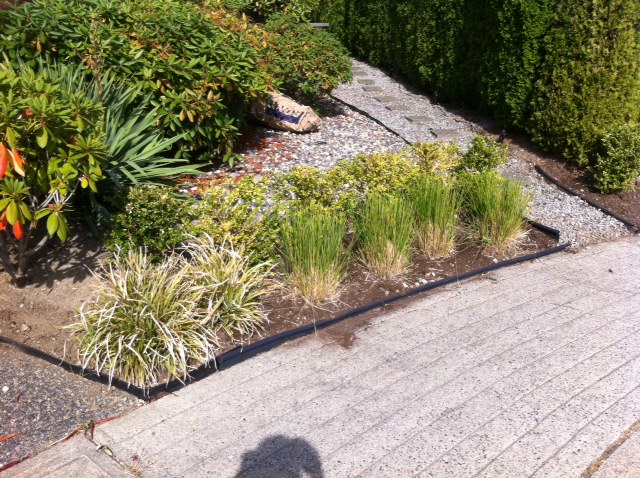
Take a look at the planting by the sidewalk. The client had asked me to take down the four tall Calamagrostis grasses, thereby eliminating its ornamental flower heads.
It turns out the client went shopping and bought the grasses without realizing their mature height. Oooops. The grasses obscured the boxwoods (Buxus)- they should be placed behind the Buxus; they also interfered with driveway sight lines and invited complaints from the neighbor. Clearly, this was a case of wrong plant in a wrong place.

Design step: what would you replace the grasses with? Feel free to submit your ideas in the comments space.

Two potential replacements for spring 2016.

Green/lime Mondo grass Ophiopogon japonicus

unnamed

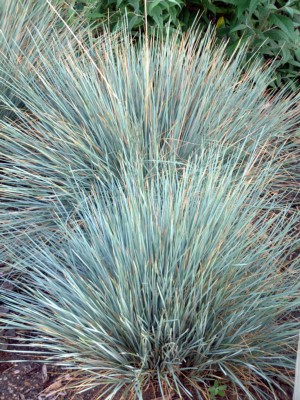
Blue oat grass Helictotrichon sempervirens

helictotrichon sempervirens -sapphire-

Oxydendrum arboreum (Sourwood)

By | Arborist Insights, Company News, Education, Plant Species Information | No Comments

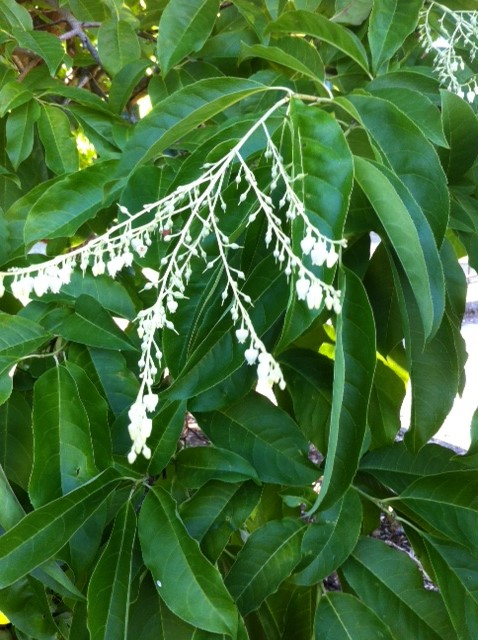
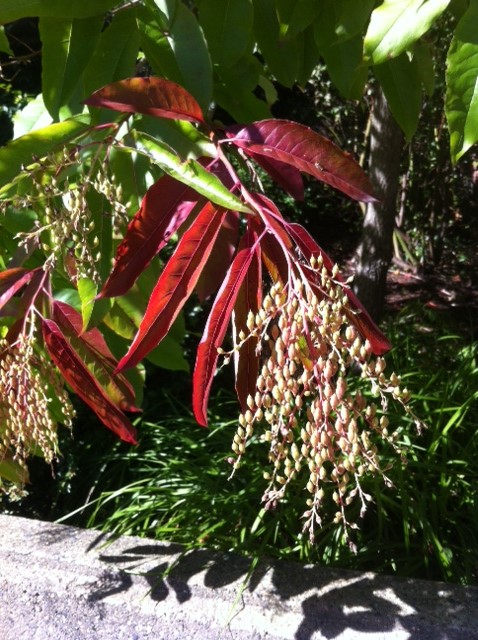
Sourwood is an East coast native belonging to the Ericaceae family. It is well-behaved, easy to care for and its small size makes it a perfect landscape specimen tree. Since it does not like to compete for nutrients it is best to mulch its base, not leave it surrounded by lawn or groundcover. Its distinct flower stalks and fruit hang onto the tree deep into fall.

photo 2

A good place for Sourwood: protected, well-drained, mulched base, and no foot traffic

photo 3

Flowers

photorr

Fall Color

Further Reading CLICK HERE

Client versus Customer

By | Arborist Insights, Company News, Education, Landscaping, Plant Species Information | No Comments

A few weeks ago, I got called to a Coquitlam home about a tree pruning job. Perfect! I love this kind of work, as long as it does not involve climbing the tree. But this turned out to be a horrible project. The Acer palmatum in front of the house had already been severely topped once in the past and the owner wanted it crushed again, even more severely. I mean massive topping cuts on all major limbs. Then the lady asked for a senior’s discount! I mentioned crown reduction as an alternative to topping, and listed some of the major problems with the practice of topping trees. It did not help. This was my order: massive tree topping with a discount.

Now what? Take the cash and run?

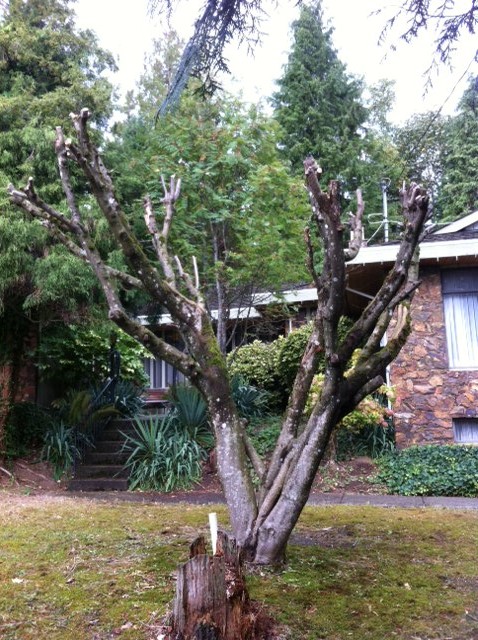
Since ISA membership requires all arborists to sign a code of conduct, the decision was easy to make. Destroying a tree also feels bad. I politely declined the job and literally days later found rhododendron reduction work without any senior discounts. Somebody completed the Acer palmatum job (see picture below) but it was not as severe as first indicated. Complete removal would have been a better option.

This then brings us to the difference between a client and a customer. We want lots of good clients, people we can educate and charge fair prices. Customers are all about pricing and insist they know what they want even when there are better alternatives leading to better outcomes.

In an Arborist News story, several years back, an arborist knocks on the door and a lady opens the door. The tree professional then tells her he got a call about a tree in the back. The owner looks at him and tells him that “hired help” uses the side gate, not the main entrance. The arborist looks at her and politely tells her that he needs new clients, not more customers, turns around and leaves!

photo 1 (2)

Finished job!? I was asked to go another 3 feet lower

Basic Lawn Care Tips

By | Company News, Landscaping, Lawn Care | No Comments

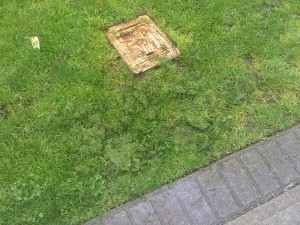
A) Only mow over grass!

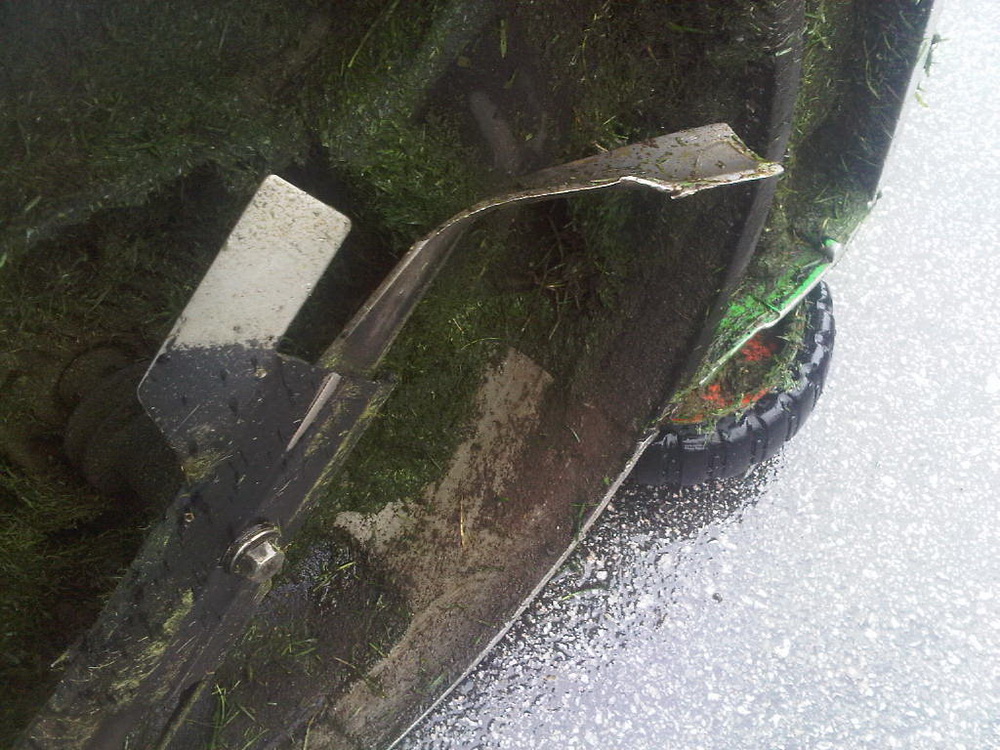
Running over fixed objects is dangerous for the operator, passerby and leads to costly repairs. In the example below, the mower blade was destroyed. But don’t forget about the mower shaft holding the blade. It costs hundreds to replace. The mower will likely work fine for a while with a new blade and then….not so much. Remember, get to know your mowing area well, clear away any obvious debris and avoid hitting fixed objects.

IMG-20110602-01154

An unforgiving fixed object

IMG-20110602-01156

About to be retired mower blade

B) You CAN line-trim backwards!

There are cases where line-trimming backwards is the way to go: close to cars, windows, tree-wells and bikini girls. The two examples below clearly illustrate how trimming backwards can save you time. The messed up tree well has to be carefully raked out; blowing would dislodge most of the new bark mulch. The clean tree well was line trimmed backwards, eliminating extra clean-ups.

photo 1

A clean tree well, line-edged backwards

photo 2 (2)

Line-edged freestyle, clean-up required

Hearing Tests

By | Arborist Insights, Company News, Education, Videos | No Comments

hearing

I had my first hearing test in 2014 and I was worried about entering a claustrophobic box inside a mobile truck. Now I am glad I did it. After sixteen loud seasons in the field, always diligently wearing ear protection, it was nice to get a picture of my hearing. That first 2014 test became my baseline. The 2015 test also showed normal hearing. Great! (Only my wife questions the results.)
The few lines below normal range (see picture) could be caused by machine noise exposure for hours before the test; and, possibly, by the friendly, heavy-set female technician coughing and moving about in the mobile truck.

Action steps:

1) Always wear ear protection!

2) Get tested – best through your employer- to establish a baseline for your hearing.

3) Do NOT abuse your headset. I use Peltors and my bad habit is sticking goggles inside them. Just like resting the headset at the top of your front truck seat, this reduces the headset’s effectiveness.

photo 4

Bad habit: goggles inside my headset

Atsushi in Kyoto

By | Arborist Insights, Company News, Education, Interviews, Landscaping, Plant Species Information | No Comments

tokyo_and_kyoto_highlightsI met Atsushi, a 20-something Japanese guy, at a Burnaby landscape company and we did a few weekend sessions together. He went through years one and two of the apprenticeship program which I thought was a great idea. Then, he surprised me (and his boss!) with his decision to move back to Japan. Specifically, to ancient Kyoto to work for a great company. Kyoto is a must-see place with its many temples and shrines. The fall colors are so spectacular, my in-laws visit there every fall! And rumor has it that Kyoto gardening companies are a bit high on themselves because they operate in such a spectacular setting.


I took the liberty of asking Atsushi a few questions.

V: What are the biggest differences between your Burnaby landscape company and your new one in Kyoto?

A: We don’t use hedge trimmers and prune with hand pruners instead. We also don’t use blowers. We climb trees even if they are over 10 meters high. We prune and take care of our trees; we don’t call tree service companies for help.

V: What does your typical day look like? Hours, breaks, etc.

A: I work 8hrs. 10 min breaks at 10am and 3 pm. 45min lunch break.

V: Who are your clients?

A: Residential, temples

V: Are young people entering the trade in Japan?

A: Yes, there are many young people in the trade.

V: What is the average monthly salary?

A: The average is lower than in Vancouver.

V: Are jobs available?

A: It depends on the company.

V: What is your biggest challenge right now?

A: To work in a completely different environment.

V: What is it like living and working in ancient Kyoto?

A: It’s only been two months so I don’t know yet.. but I’m very happy to be able to work in Kyoto.

Line-edger Head Maintenance

By | Arborist Insights, Strata Maintenance | One Comment

If you are like me, you concentrate on production and let your line-edger do its magic. Most attention goes to the engine. Re-fuel with a Proper gas and oil mix,
check the fuel and air filters, and spark plugs.

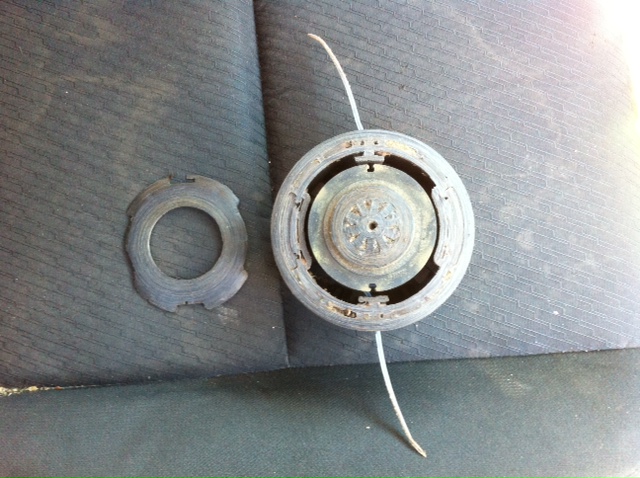
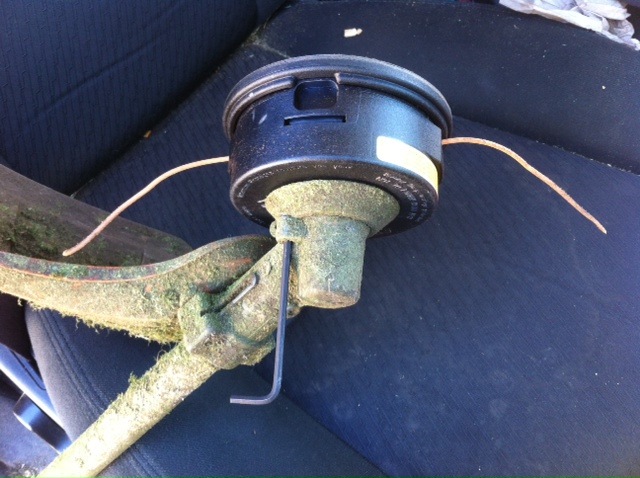
But let’s not forget about the head down below. Let’s take my commercial Stihl machine as an example.

Use good Lithium grease and Proper tools

1

Carefully remove the bolt and note the gears.

2

Pump in good Lithium lubricant and spin the head slowly as you do so

3

All done!

4

Re-check periodically, depending on how much you use your edger. A happy, well-maintained machine will allow you to provide good service all year!

Stealing Cherries?

By | Plant Species Information, Quizzes | No Comments

This always happens in the field. A resident walks up to collect his mail and wonders what the tree next to his super mailbox is? He sees Europeans in his neighborhood collecting the red ripe fruit and he wonders what they do with it. Is he missing out? Or did he avoid certain poisoning?

You, as the green professional are left to provide the answers, on the spot, no BS, Proper answers. So let’s look at the tree and the other plants in this small park.
But first a TEST. How many can you identify? Bonus point if you know what to do with the fruit in number 1.

1)
1

2)
2

3)
3

4)
4

Show Answers!

1) Cornus mas (Cornelian cherry)
The fruit is edible when it’s dark red; it’s used for jams and sauces with orange and sugar
according to the Kwantlen Plant Database

2) Sorbus aucuparia (European mountain-ash)

3) Prunus laurocerasus ‘Otto Luyken’

4) Viburnum tinus
Nice and healthy. In some places the bug Pyrrhalta viburni destroys it by chewing the leaves