
Mowing 101: pilot errors crush tree wells

By | Education, Landscaping, Lawn Care | No Comments

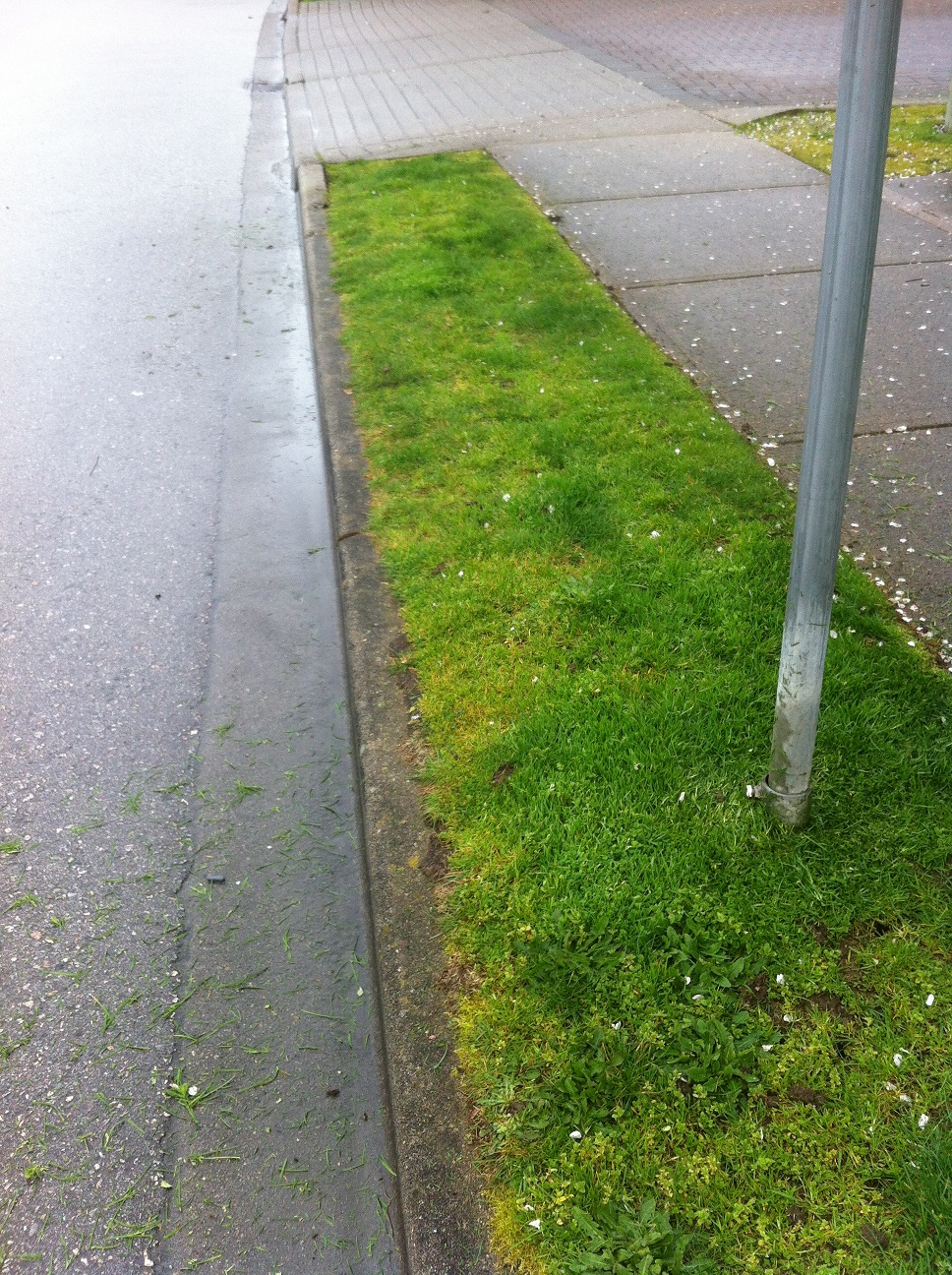
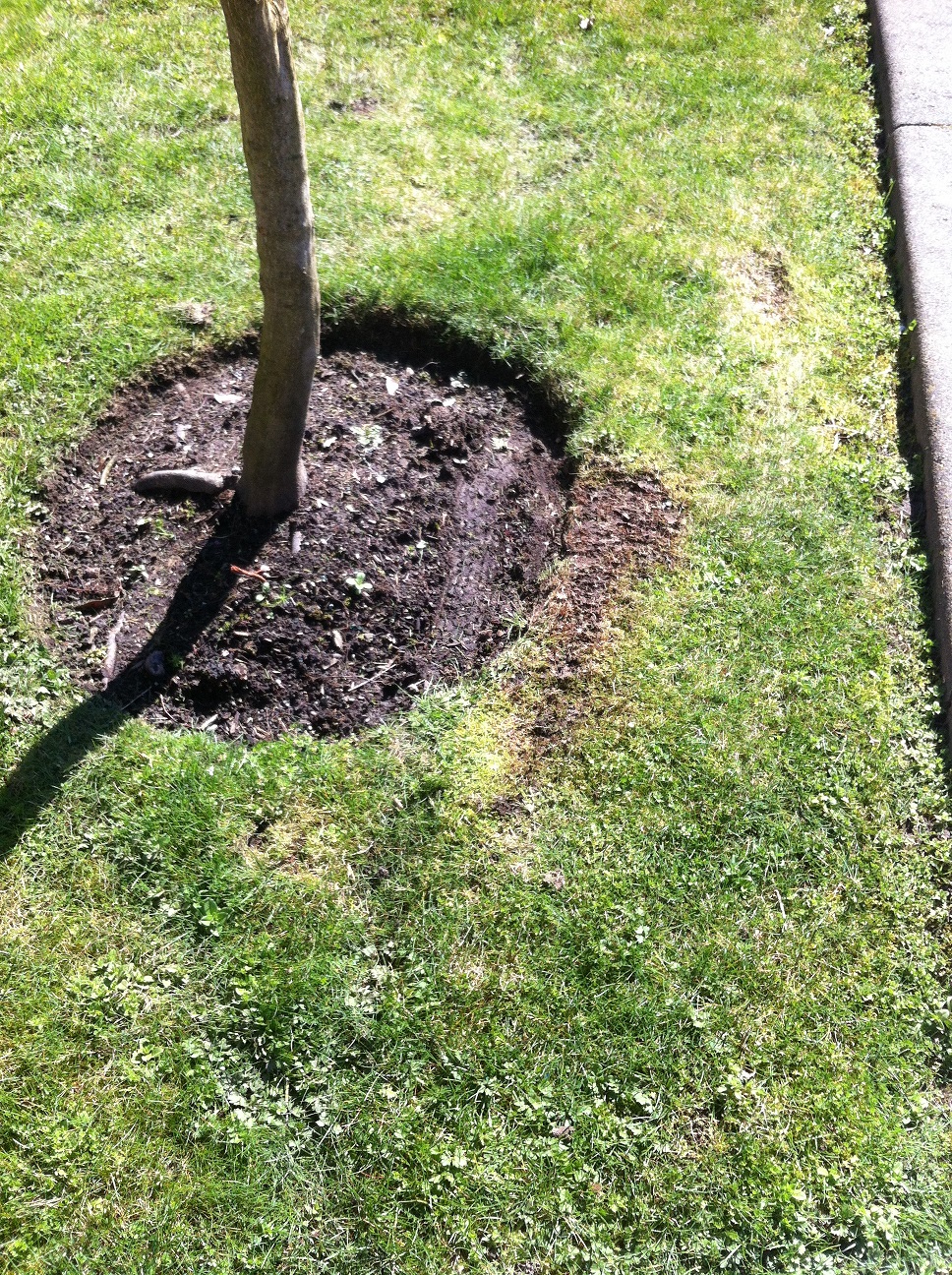
Spring is finally here – a bit early this year – the grass is shaggy and mowers are coming out. Strata members wonder when the lawns will get mowed Properly. So we send our workers out and, inevitably, blogs are born! Consider the mistakes that were made in the field today.

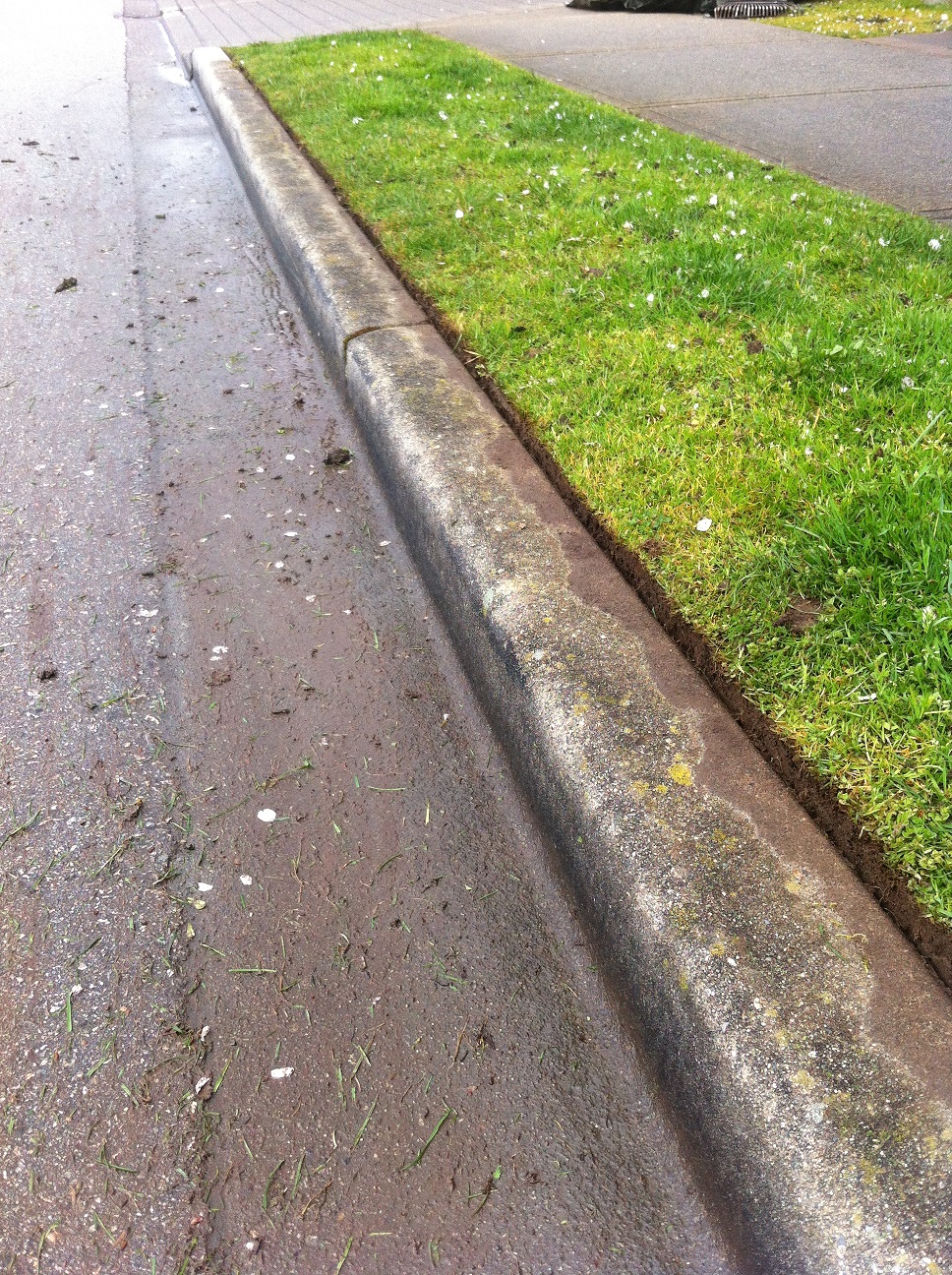
How many problems can you list?


IMG_1980edit

  1. Mowers don’t belong in tree wells, period! Go around the tree well instead of forcing the mower into a narrow spot. Line trimmers were designed to hit tight spots, so use them. This is a horrific way of saving time.
  2. Scalping is a huge, HUGE, problem. The brown zone in the photo has been scalped and will require repair; most likely over seeding. Seed is expensive and extra time will be required for repairs. Remember: grass grows from meristems located about a third of the way up a blade of grass. Grass blades don’t regrow from underground roots, they grow from meristems. This is why a scalped area will likely stay bare unless we over seed.
  3. Soil compaction is another problem. The tree well is there to channel water and nutrients into the root zone. Weekly soil compaction with mower wheels will make it difficult for fine roots near the surface to move through the soil; water will also most likely pool up and run off instead of penetrating into the soil.
  4. The mower destroys the ninety degree tree well edge we so diligently established in winter.
  5. The wheel marks are unsightly.
  6. The tree well also exists to eliminate tree v. machine conflicts. The most likely outcome of any collision is bark destruction. Open wounds invite pathogens which the tree has to fight by compartmentalization and that uses up precious energy reserves, thus reducing health and growth. Wounds also affect xylem cells which means water transport is temporarily interrupted thus compromising function and growth. Collisions with machines also cause stress and reduce growth. If the tree dies and has to be replaced we face direct replacement costs and loss of ecosystem services.


Summary:  Never run your mowers through tree wells. Navigate around the edges carefully.

European chafer beetle damaged lawn alternative, volume 1

By | Landscaping, Lawn Care | No Comments

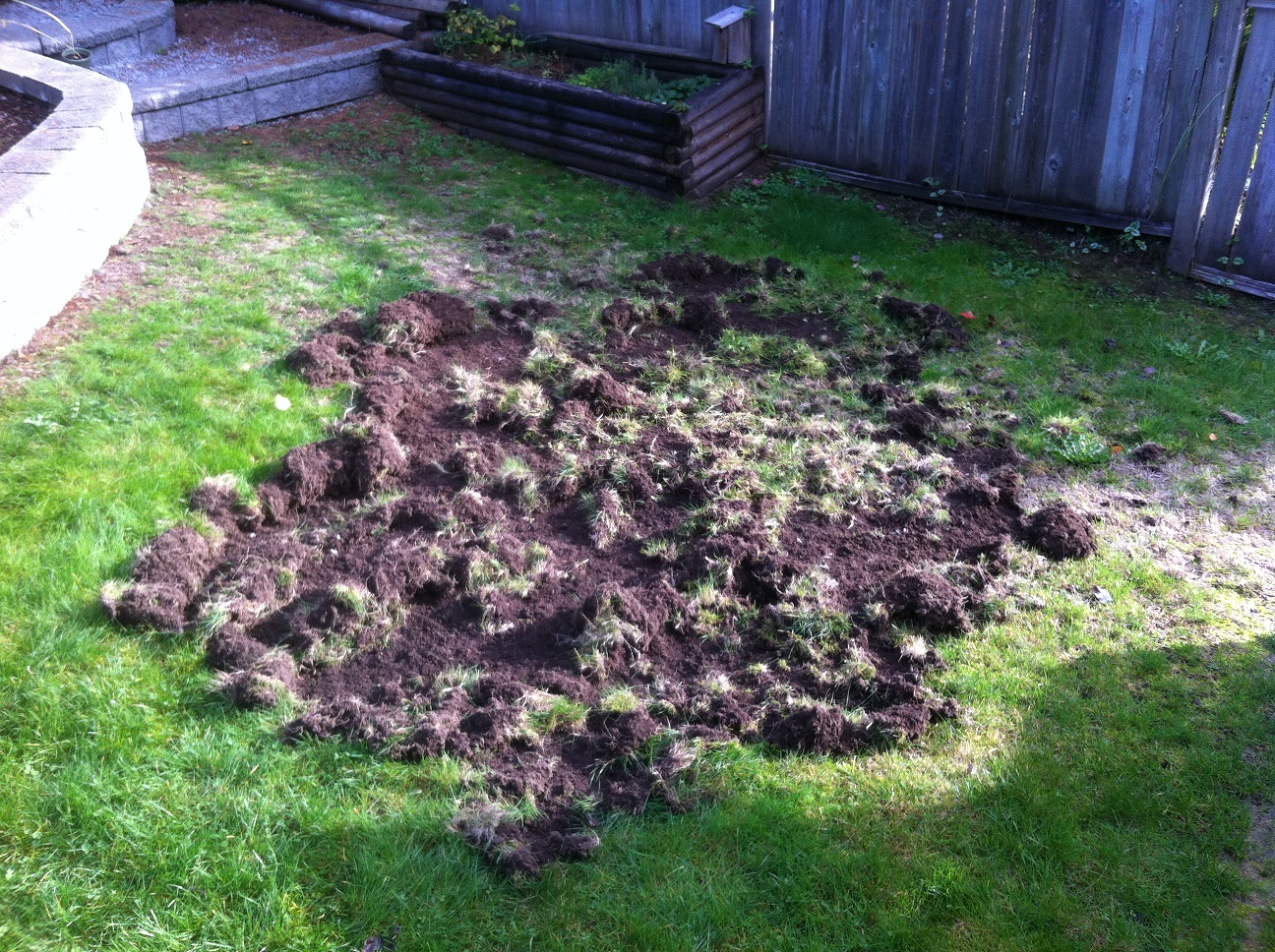
Many Coquitlam home owners, and elsewhere, are struggling with lawn damage caused by the European chafer beetle. The grubs feed on grass roots. Birds and animals dig up lawns to feed on them. My friends in Port Moody video taped two black bears in their backyard flipping turf over and feeding on chafers.


shiva

Westwood Plateau lawn damaged by animals searching for chafer beetle grubs


So your lawn has been damaged. Now what?

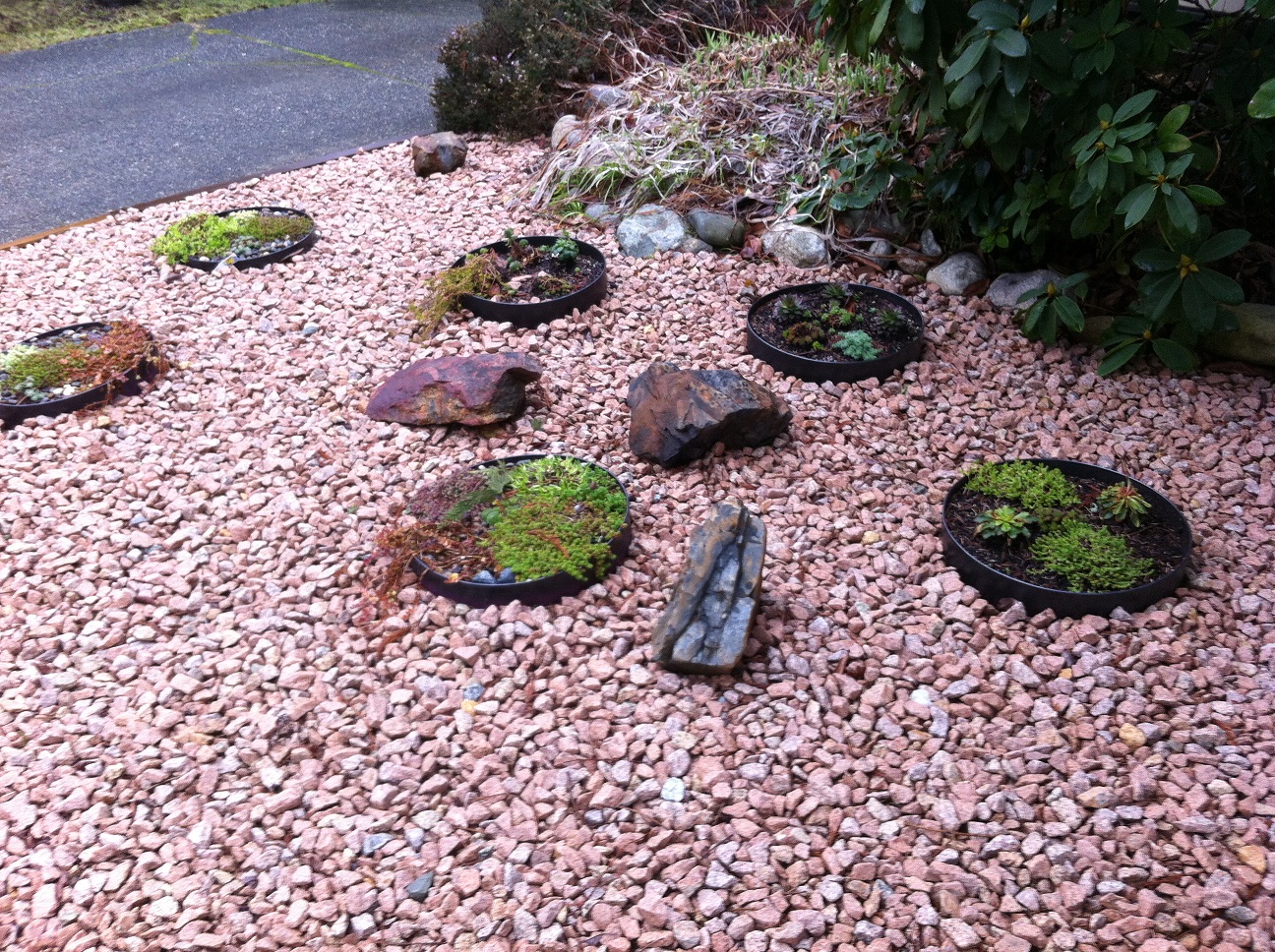
Some local residents are turning to lawn alternatives. The example below is interesting because chafer beetle damage was the last straw for this resident.


IMG_0721


Problems

  1. The owner had very little time and inclination to “baby” her lawn
  2. The large spruce tree shaded out the lawn and rained down needles on top of it
  3. dogs abused the lawn with urine
  4. foot traffic compaction

Solution

  1. dig up the lawn (this was my humble contribution to this project!)
  2. install wooden border
  3. install stones
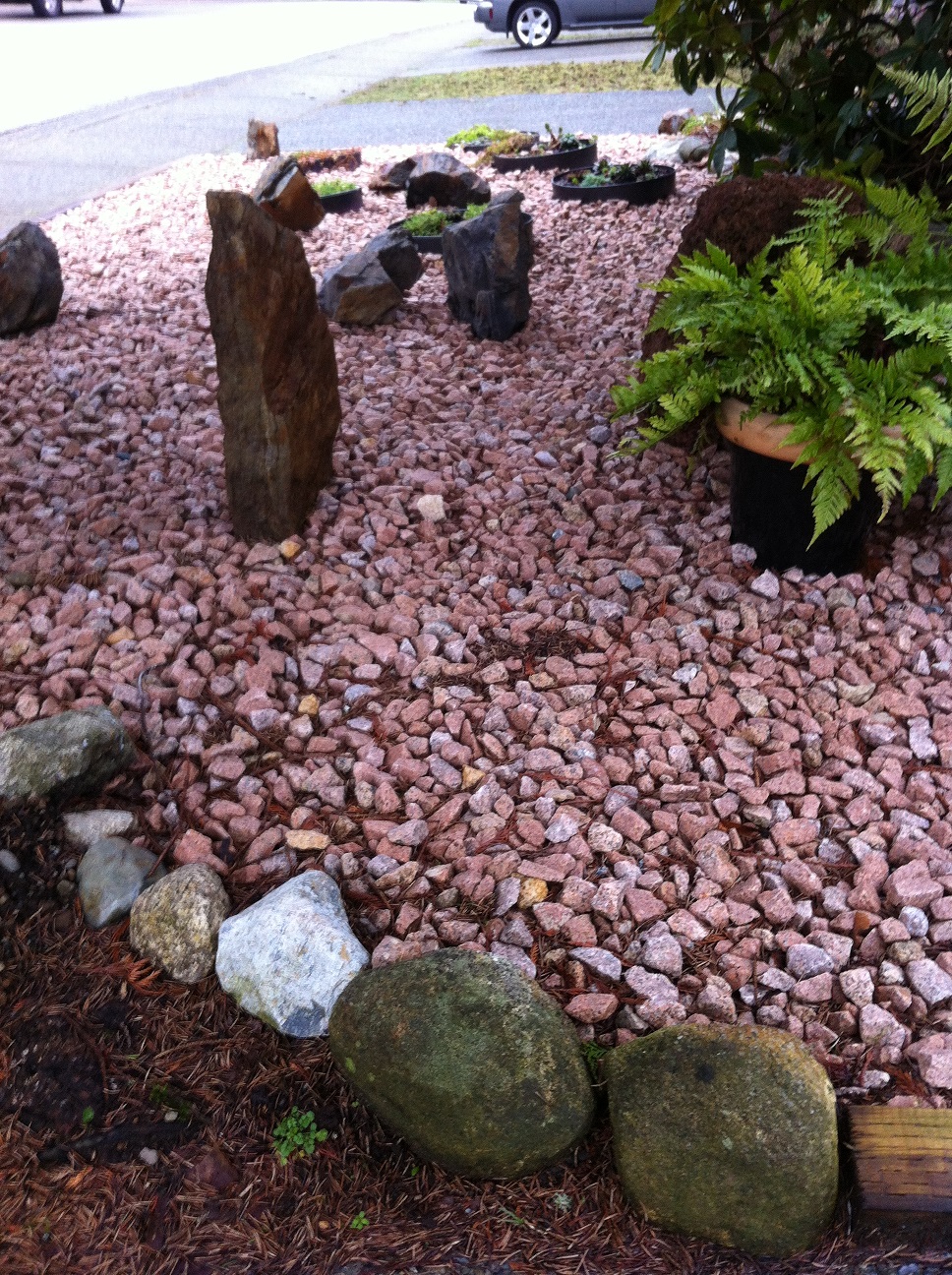
  4. decorate with rocks and pots with succulents (low maintenance plants)


IMG_0724

pots with low-maintenance succulent plants


IMG_0723


Problem solved! No more mowing, no more chafers, very little maintenance required aside from needle clean up and weed control.


Canadian Gardening ceases publication!?

By | Education, Magazines | No Comments

Excited, I picked up my March 16, 2016 issue of Canadian Gardening magazine only to discover a letter attached to the back. The letter informed me that with the current issue the magazine is ceasing publication. Really? Too bad.

My remaining issues will be substituted with Canadian Living magazine-“the magazine that will inspire you and motivate you to live your best every day.” I can’t wait. What about my garden?

Published by TVA Publications, this was their statement, published online here.

“TVA Publications has decided to concentrate on its strongest brands and will allocate the required staff and resources to keep strengthening their positioning. In that context, we will cease the activities of the Canadian Gardening magazine. The final issue will be the Spring 2016 issue (hitting newsstand on March 21, mailed to subscribers on March 8).
 
This consolidation strategy is the best way for the company to optimize the reach of its flagship titles in a fast-changing market. TVA Publications will maintain a strong presence in every segment of the industry – fashion, beauty, home decor, cooking, celebrities & entertainment. We remain fully committed to print magazines as a core component of TVA Publications’ business strategy while continuing to develop its brands on other platforms.”
My question is, why drop gardening? With the death of Gardenwise magazine, we are left with the excellent magazine Garden Making. I wonder for how long. All I can do is subscribe and cross my fingers.
Garden-Making-No-25-crop1

How to have fun with landscape edits

By | Landscaping, Species | No Comments

Editing existing landscapes can be lots of fun. Landscape maintenance can become routine so it’s always fun to install new plants in spring and fall when temperatures are favorable for proper plant establishment.

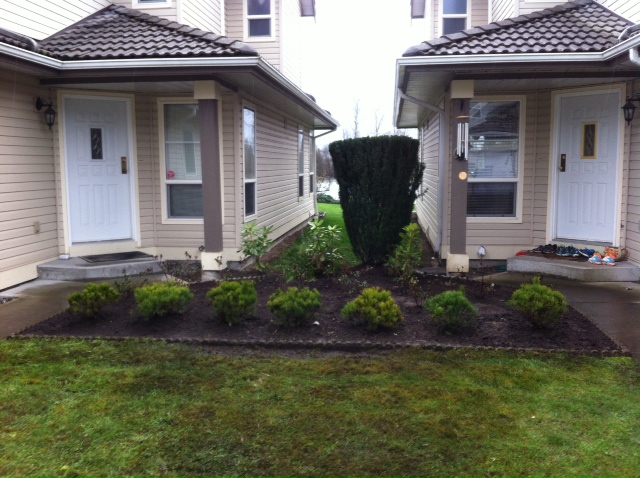
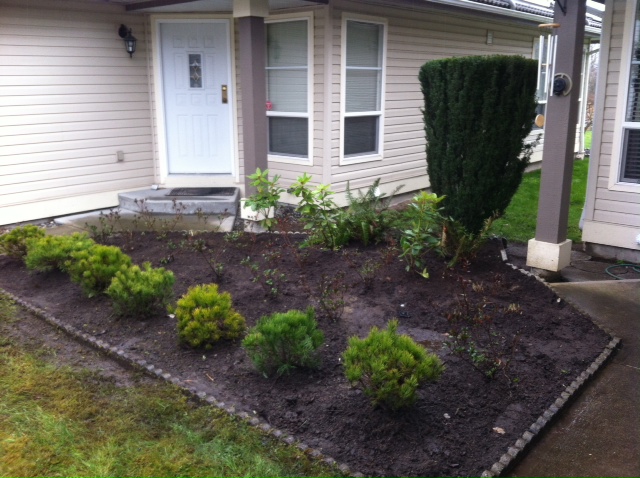
Landscapes are not meant to be static; plants grow and mature, home owners change, some plants die or wear out their welcome. Sometimes extreme weather events force changes. In the example below the Rhodos wore out their welcome, the strata president did not care for Hydrangeas and there was a push for site look consistency: low evergreens with Azaleas in behind them.

The bed below required major editing.


IMG_1278

Before


Task list:

  1. remove large Rhodos and Hydrangeas
  2. reposition large Taxus to the back of the bed
  3. move two ferns (Polystichum munitum) to the back
  4. divide Hostas and replant closer to both entrances
  5. install new plants as specified by strata


photo 3

After


photo 2


New plant species

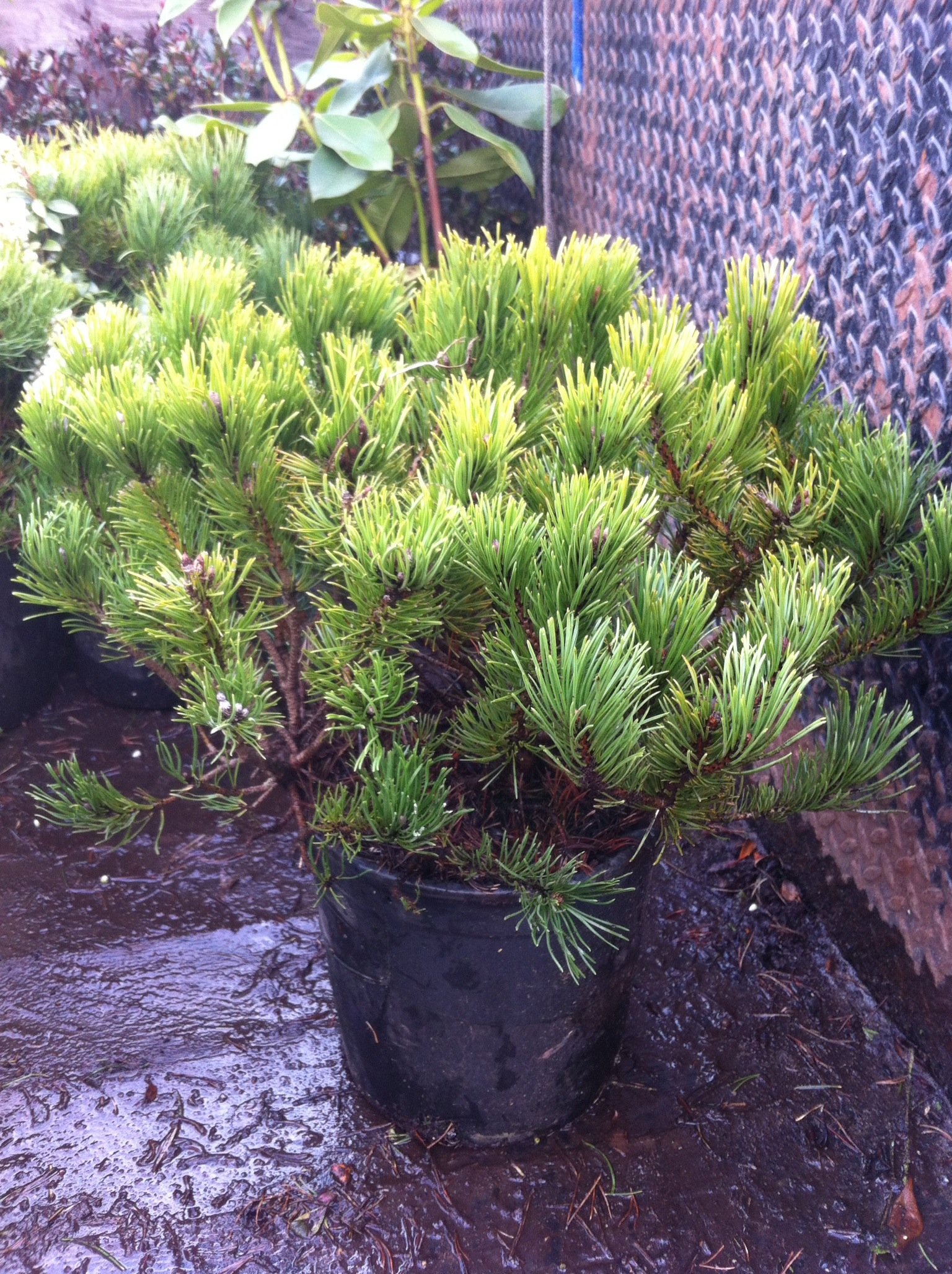
Front line: Pinus mugo ‘Mughus’

Middle: Azalea japonica ‘Girard’s crimson’

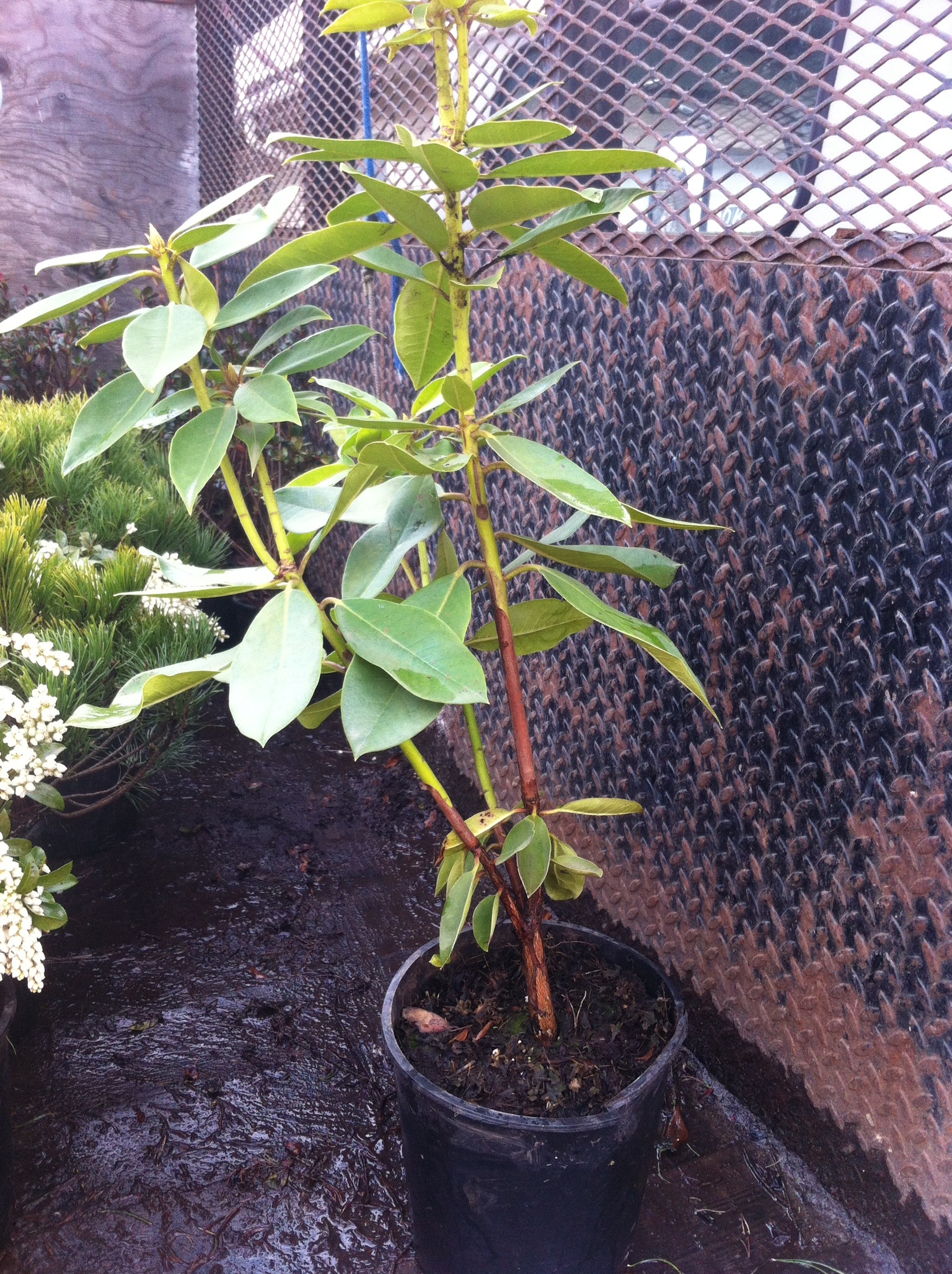
Back line: Rhodo ‘Anna Rose Whitney’

One final step not shown here is bed top-dressing with quality weed-free soil for an instant sharp, dark look. The new plants also appreciate the new soil addition. This should be a standard last step for all plant installations.

Notes for beginner plant installers:

  1. Always use the existing soil to backfill your planting holes. Using new soil sounds attractive but water will migrate into your planting holes and your plants will become joysticks. Avoid this headache by backfilling with existing soil.
  2. Don’t be afraid to rough up the plant roots so they can stop circling and grow out.
  3. Gently water your new plants in.

Your home or business should be an inspiring place to live or work in. Edit your landscape as required. Get professional help if you have to. Look for Landscape Industry Certified landscapers who are committed to their trade.


landscape industry certified technician (1)


Tree lessons from a mall parking lot

By | Arborist Insights, Landscaping | No Comments

Visiting your local shopping mall can be a fun green experience. This past weekend I dropped off my son at a gym for a friend’s birthday party and headed to a nearby mall Starbucks. While my wife enjoyed her first latte macchiato, I was more interested in the parking lot trees.

First, the good news.

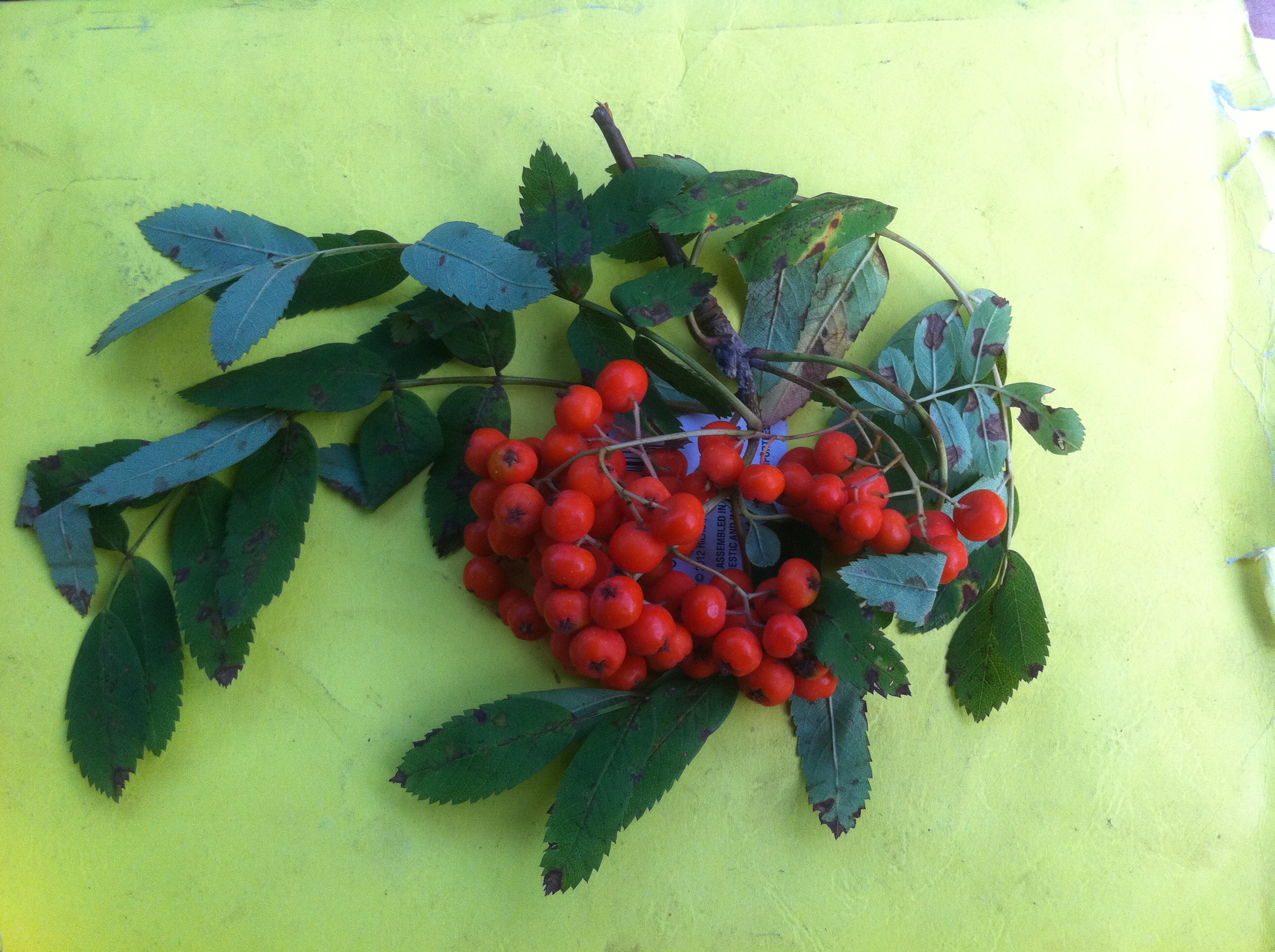
The newly planted Sorbus aucuparia ‘Rossica’ (Russian mountain ash) is a beautiful specimen tree suited for cooler climates. It has ash-like leaves but actually belongs to the rose family. It’s a pyramidal tree with lobed leaves that turn orangey-red in the fall. In mid-spring white flower clusters emerge; and in winter we get clusters of red berries. The berries attract birds and they always remind me of mountain ashes.

IMG_8865

Sorbus berries


IMG_1272

Sorbus aucuparia ‘Rossica’


Sorbus aucuparia has year-round appeal and likes full sun which it will get in the middle of a mall parking lot, plus plenty of reflective heat as the pavement heats up.

Now, for the bad news.

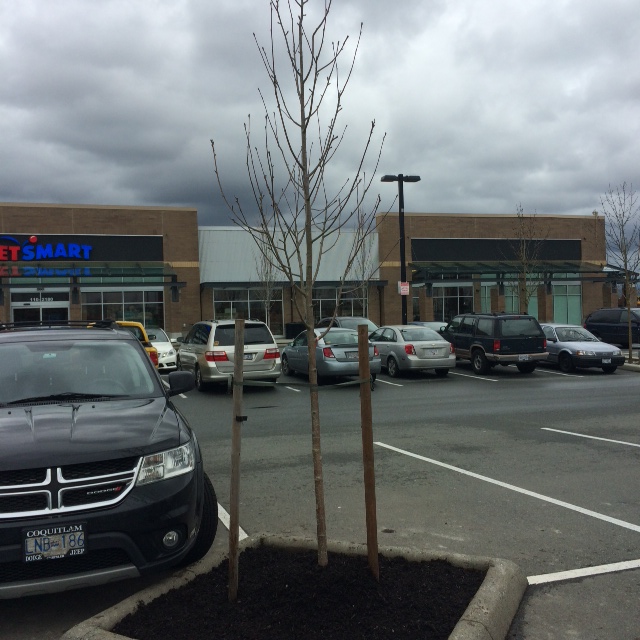
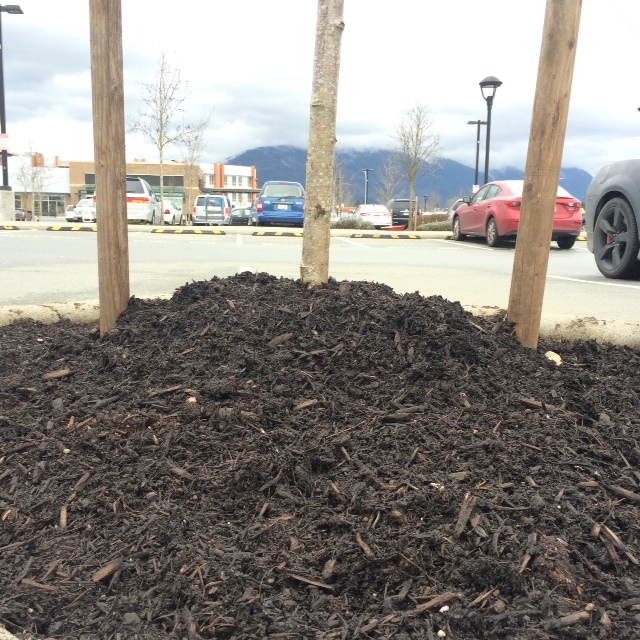
Take a closer look at the tree install. The fresh mulch is great for the tree because it keeps moisture in (soil water retention) but why the classic mulch volcano? Dr. Linda Chalker-Scott writes  that piling mulch too high creates a dark, wet, low oxygen environment to which above-ground tissues are not adapted. Fungi love these conditions and are likely to infect the tree; pests can also use the moist conditions to enter the tree bark.


IMG_1271

horrific mulch volcano


Do not create mulch volcanoes. Instead taper the mulch to almost nothing as you get close to the trunk. This creates a donut  shape which protects the soil environment and above-ground tissues. Remember: donut shape!

Still thinking about mulch volcanoes, I picked up my son at the gym where young cheerleaders ran around in VAS t-shirts. My kind of gym! Vancouver All Stars.


IMG_1227


Reading about seeds, scandal and Darwin

By | Company News, Reviews | No Comments

Reading about seeds, scandal and Darwin

The February 2016 Alive magazine (alive.com) has an interesting story on reading, “A good read” by Vanessa Annand. The article mentions research which credits reading with making us better people: more empathetic, less stressed and even healthier.

Some article highlights:

Reading just 30 minutes per week led to greater life satisfaction and enhanced social connections

Literary fiction helps us “read” people better in real life

Reading may delay the onset of dementia

Those who read for pleasure feel less stressed

Fiction scored better than non-fiction but this is a green blog so let’s take a chance. I am about to share my recent green reads. And they were a blast to read. I would disagree with the conclusion that non-fiction is for loners. Find your own favorite books and share the titles in the comments below.

The Triumph of  Seeds Thor Hanson

If you drink coffee and eat breakfast you already have an intimate knowledge of seeds. What I find fascinating is that seeds contain everything they need inside and some can survive dormant for hundreds of years! Then somehow conditions become just right and a new plant emerges.

Some seed coats are extremely tough to crack; some seeds open up from forest fire smoke, not the fire itself. This book is fascinating.


The Scent of Scandal Craig Pittman

This is a true story about a rare orchid and an international scandal that erupted around it. Personally, I think orchids are OK. They are interesting and play a huge role in the plant kingdom. I am not in love with them. I love epiphytes, those plants that live up high in the trees, not rooted in the earth. And I love good stories.

One scandal over a rare orchid species crushes people financially, personally and some even end up in jail. It’s unbelievable. And well worth reading.


The Autobiography of Charles Darwin Charles Darwin

We know about Darwin’s work on the theory of evolution but what about his life? Until now I knew very little about the man and his life. This book fills you in on the interesting details of his life. His other book on the Voyage of the Beagle is more exciting; full of adventure. I am satisfied that I now know some details about Darwin’s life. Another recommended title.

What are YOU reading?

IMG_0566


Landscape Certification Top 5 Mistakes

By | Education, Landscape Industry | No Comments

Landscape Industry Certified top 5 mistakes

Landscape Industry Certified testing has been in place in Canada since 1995. It was designed as a way to set minimum standards of skill and knowledge within the landscape industry. The CNLA News Brief (summer 2015, volume 24, issue 3) lists the top 5 mistakes made by candidates. Having gone through the testing and getting certified in the fall of 2011, I found the list interesting and correct. I took the liberty of adding my own observations.

1) Forgetting personal protective equipment (PPE)

Safety is extremely important so use whatever is provided for you on the table. This one slip can cost you valuable points and be the difference between pass and fail scores. Sadly, I found this out the hard way. Half-way through the Planting and Staking station, candidates are required to stake their tree with a stake pounder. Ear protection is required for this step. I was so caught up in the station I totally forgot about my head set. The deducted points gave me a fail mark and meant that I would have to wait until fall for my third attempt. Not really trusting myself, I wore my headset for the entire thirty minute test! Success, finally on my third attempt. Remember, this station is testing your ability to follow specifications, not just tree planting and staking. Study the diagram carefully.

Bonus hint: put your tool away safely before grabbing another one. Leaving a shovel on the ground is considered a hazard.

2) Talking instead of doing

One word: action! Take your instructions from the judge and then wow him or her. This is a practical test so just do it. I personally didn’t have this problem.

3) Second-guessing yourself on the written exam

The exam is based on what you do every day. Write with confidence. It does require some preparation. They don’t give it away easily. I didn’t have any problems on the written exams. I wrote them on Friday afternoon, did a few practical stations and then faced a full day of testing on Saturday.

4) Not paying attention during the candidate orientation

Again, I didn’t have any problems here. I was all ears and focused. One minor distraction might be former co-workers from other companies. The testing stations are timed and roll on quickly. There is no room for mistakes.

Hint: don’t watch other candidates, they might be doing it wrong. Walk in there and kill it your way.

5) Getting too nervous

Who enjoys tests? I openly admit to feeling very small in the candidate tent. I ate donuts to comfort myself and then a certain prominent judge walked in and finished the rest.
Allegedly, the judges want you to pass but that wasn’t really obvious. My judges had shades on and responded to my questions with finger movements. Having former managers and supervisors stand only meters away watching was extremely distracting. Luckily, I am stubborn and able to focus. Do the same. The stations are yours to pass. You can do it!

Getting certified shows your clients and bosses that you are serious. It should lead to raises and opportunities for growth in your green career. Your boss should be able to pay the testing fees. Ask nicely.

For more information visit www.cnla-acpp.ca/certification or contact certification@cnla-acpp.ca. You can also message me if you have questions. Also visit the National Association of Landscape Professionals (NALP) www.landscapeprofessionals.org Sign up now, don’t wait until you feel ready.


295884_1567021351001_296387519_n

Testing station

380387_1625670257187_1667459786_n

Successful third attempt! Acer platanoides Norway maple

401331_1801204845442_200839541_n

BCLNA awards dinner, cleaned-up Vas on far right, Yay!!

landscape industry certified technician (1)

Soil Compaction: Don’t Forget this Silent Killer

By | Arborist Insights, Landscaping, Lawn Care, Mulch | 2 Comments

Study the dead tree pictured below. What’s wrong here?

11061787_10200999931356033_7776254739874648186_o

A heavy ride-on Deere mower has gone over the area very efficiently, riding right over the root zone. That means less line trimming. Perfect for the municipal workers maintaining this park. The operator does this every ten days or so. But wait. What about the tree itself? The tire tracks point to a deadly condition: soil compaction! (The pictured tree is dead. Was it soil compaction that killed it? Or bored ball players from nearby baseball diamonds? Campers building illegal fires with poached tree branches? Line trimmer damage?)

The 4th edition of Arboriculture defines compaction as the breakdown of soil aggregates. Compaction decreases total pore space in the soil. When large pore spaces are compressed, the resistance to root penetration increases.

The results of compaction?

  • Slow water infiltration
  • Poor aeration
  • Reduced drainage
  • Impaired root growth and activity
  • Increased erosion
  • Mycorrhizal activity declines

Basically, with compaction the tree struggles to obtain water and oxygen, roots can not grow as easily and since water can’t penetrate it runs off, causing erosion on the surface.

The top 4 inches of soil are usually the most affected; the greatest compaction occurs about 0.75 inches below surface.

At the September 2015 Can-West Horticulture Show in Abbotsford, Dr. Kim Coder relayed to us a story about a group of green activists who campaigned to save an ancient tree. They assembled at the base and did what they had to do, never noticing the serious compaction they were responsible for over the root zone. If I recall the story correctly, the tree declined and eventually died.

Think about soil compaction and avoid it! It’s hard work rehabilitating compacted soils. For best results create a nice tree well and mulch it with arbor chips. Many tree companies are happy to donate their wood chips. Problem solved.


Tree Born to be a Landscape Specimen

By | Arborist Insights, Landscaping, Plant Species Information, Species | No Comments

While blowing a strata site on a recent sunny December afternoon, I almost tripped on a huge cone. Intrigued, I smuggled it home past my wife in a lunch bag.

Using my trusted Sibley guide to trees by David Allen Sibley and Google, I found out it was a female Cedrus deodara cone. Deodar cedar is a Himalayas native. According to the Arbor Day Foundation website, www.arborday.org, this tree was born to be a landscape specimen. It has elegant pendulous branches, attractive coloring, pleasing shape and interesting branching patterns.

Tree guru Michael Dirr calls the deodar cedar “the most graceful cedar”. It tolerates drought but it’s not really suited for cold zones. The needles are bluish-green or silvery with sharp tips usually borne in clusters, smaller toward twig tips. The needles are shed in spring as new growth appears.

The cones are upright like in firs (Abies) but stouter and they disintegrate over winter, leaving an upright central spike.

photo 2 (2)

Needles in clusters

photo 3 (2)

Female cone, upright

Red Seal Vas on periodicals

By | Arborist Insights, Landscape Industry, Landscaping, Magazines, Resources | No Comments

As the 2016 season approaches, I try to finish my dusty magazines from last year. Below are the key periodicals I read. Because my budget is limited, I subscribe to some and buy interesting issues from the others. What do YOU read?

Horticulture Magazine (USA)

It has nice detailed plant and how to articles. I get the digital version because shipping for paper copies to Canada is too high. Lee Valley sells paper copies in the store

HC1SI

Arborist News (International)

This comes bi-monthly and is included with your ISA membership. It’s the main magazine for arborists. Includes quizzes, scientific tree articles and book reviews.
Warning: ISA also publishes a book catalogue full of great but pricey books. I never seem to have the budget for everything on my wish list.

photo 5

photo 4

Gardenwise, Canadian Gardening and Garden Making (Canada)

Good coverage of Canada. The best part of Gardenwise is the chores page that outlines what to do in your garden for a particular month. Garden Making is the newest and prettiest of the three. It has nice how to articles and lots of plants.

photo 3 (1)


photo 4 (1)

Fine Gardening (USA)

Great photos but this magazines can seriously add to your food bill as you throw it into your food cart. Covers all of USA so my interest is in the Pacific Northwest. I enjoy the how to articles on pruning. Plenty of botanical names.

photo 2 (1)

Landscape Management (USA)

A magazine for landscape company owners and managers. The most interesting issue is the one with top annual revenues. The numbers will blow you away.
You can get it for free if you own a landscape company in Canada. You can also check out the online version at www.landscapemanagement.net.

photo 1 (1)

Success magazine (USA)

Every issue comes with bonus audio CD. I listen to it on the way to my sites. Articles cover important topics related to business and personal success. I am also a fan of publisher Darren Hardy. His book “Entrepreneur Rollercoaster” is a must read. Darren also has a daily blog you can subscribe to. Available at local stores.

photo 5 (1)

What do YOU read?