
All Posts By

Vas Sladek

Flannel flower

By | Plants | No Comments

A tattoo

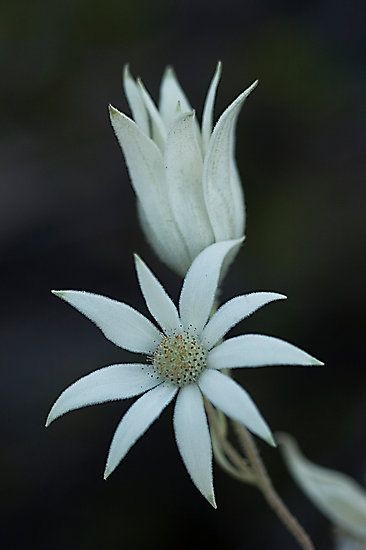
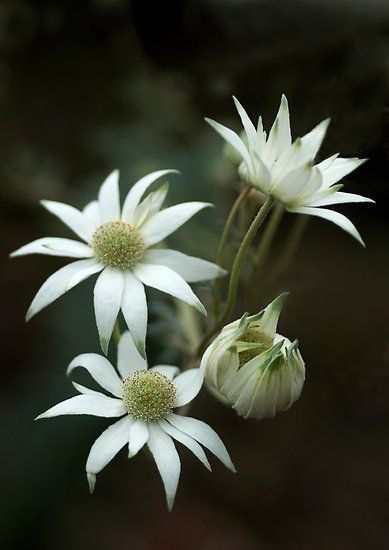
It all started with a tattoo I saw on a young summer helper’s arm. You don’t often see flowers on young men’s arms so I asked a few questions, like any other plant geek. The flower in question was the Flannel flower (Actinotus helianthi). The genus Actinotus means “furnished with rays”.

Why put it on your arm? What’s so special about it? I did some research on Google to find out because the dude is no longer employed with us and I don’t recall what exactly made him choose the Flannel flower. I just remember that his father was from Australia and when they visited the country, the dude must have noticed the flowers around Sydney.

The Flannel flower is a symbol of purity used in festivals and religious ceremonies.

It’s also adaptable and enduring which is why it’s able to survive in the bushland around Sydney.

The daisy-shaped flower is also beautiful and strong which is why it’s Australia’s national symbol for the promotion of mental health awareness. The dude’s tattoo was OK but I didn’t see the beauty until I saw pictures on Pinterest. Now I understand.

Botanical notes

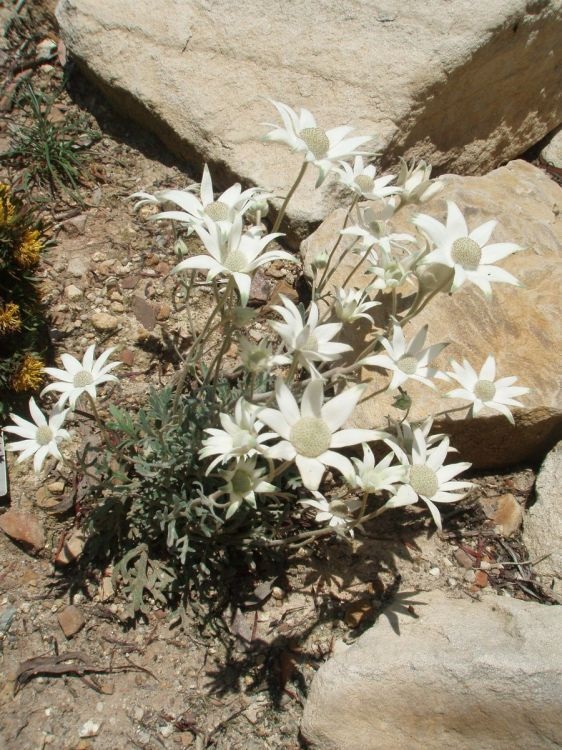
The Flannel flower is actually very interesting because its stems, flowers and leaves are all grey in colour; and they’re all covered in soft downy hairs. Thus the flannel name.

We know that hairs are an adaptation for avoiding water loss. That’s why the flower can survive in the bushland; and why it’s a good plant for a rock garden.

The flowers appear in spring; you can grow them from seed or cuttings and plant them in well-drained, sunny locations.

Plant lust

I think every plant on Earth is interesting and the Flannel flower definitely fits. I’m glad I asked my co-worker about his tattoo because it inspired this blog post. If you ever find yourself in Sydney, you will be ready to explore thanks to my blog post.

How trees love me back

By | landscape maintenance, Trees | No Comments

Tree hugger’s good karma

I love trees, and recently I found out that they love me back. Let me explain. When a new residential client contacted me, she specifically mentioned blowing her driveway clean every 2-3 weeks. This didn’t completely make sense until I met her.

Since the lady runs a mobile detailing service and does a lot of work in her driveway, she wants to have it nice and clean. Now, if you stand in her driveway and look up you’ll see giant Douglas fir branches coming over from the neighbouring lot.

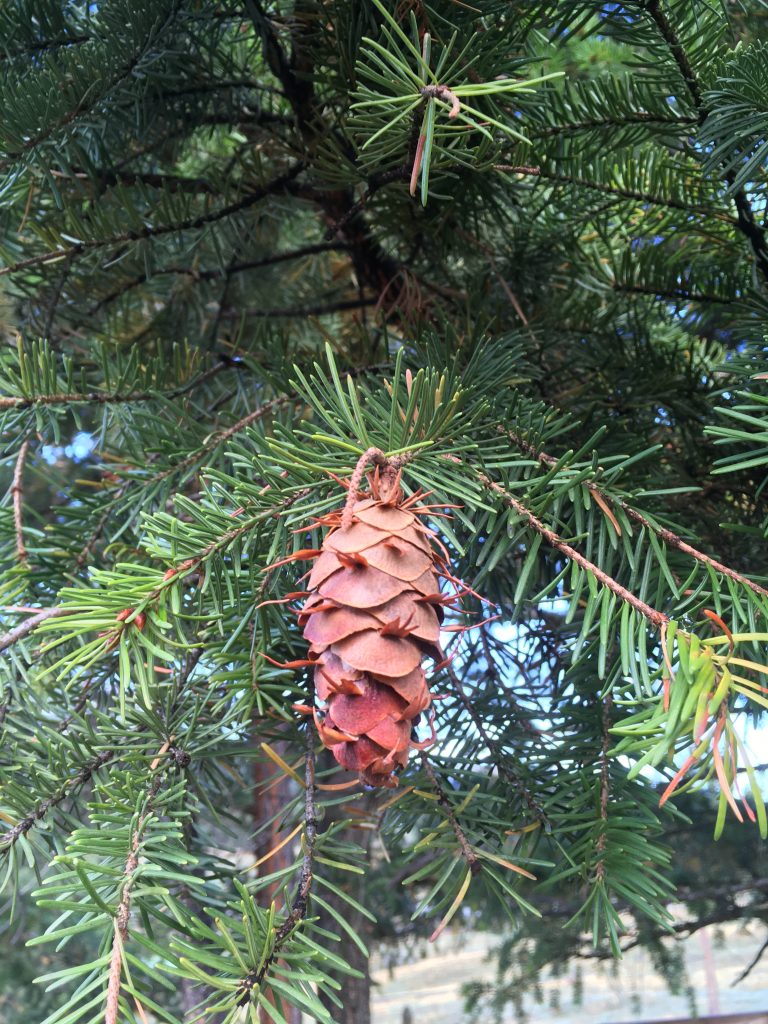
Douglas firs (Pseudotsuga menziesii) are native trees in British Columbia and they’re easy to identify because their cones have unique bracts. Many specimens on Vancouver Island are very old. Harvey Rustad’s book “Big lonely Doug” is about a Douglas fir 66m tall and about 1,000 years old. I highly recommend this book.

Pseudotsuga menziesii

Needles!

Douglas firs drop a lot of needles and branches all the time. Incidentally, you will never catch me calling trees “messy”. Trees do what they do.

What this means is that the lady will need my help all year; and thanks to this tree species’ habit of dropping needles and shedding branches, I will make some spare cash all year. It’s like a constant side-hustle money machine. No, it won’t make me rich but my work does solve someone’s problem. And the lady is really nice. She’s a true client because she’s not afraid to listen to my suggestions and act on them.

Customers only care about price and will drop you for Tom, who is $1 cheaper.

When I drove home that day, I was convinced trees loved me back. Who knew trees could drive a side-hustle operation without getting cut down and turned into toilet paper?

Here we also see one of the benefits of doing side-gigs. You learn new things and meet interesting new clients. It isn’t always about money.

Take care of your trees and who knows, one day they might show you their love!

Horrific UK tree planting

By | Trees | No Comments

Lessons from the UK

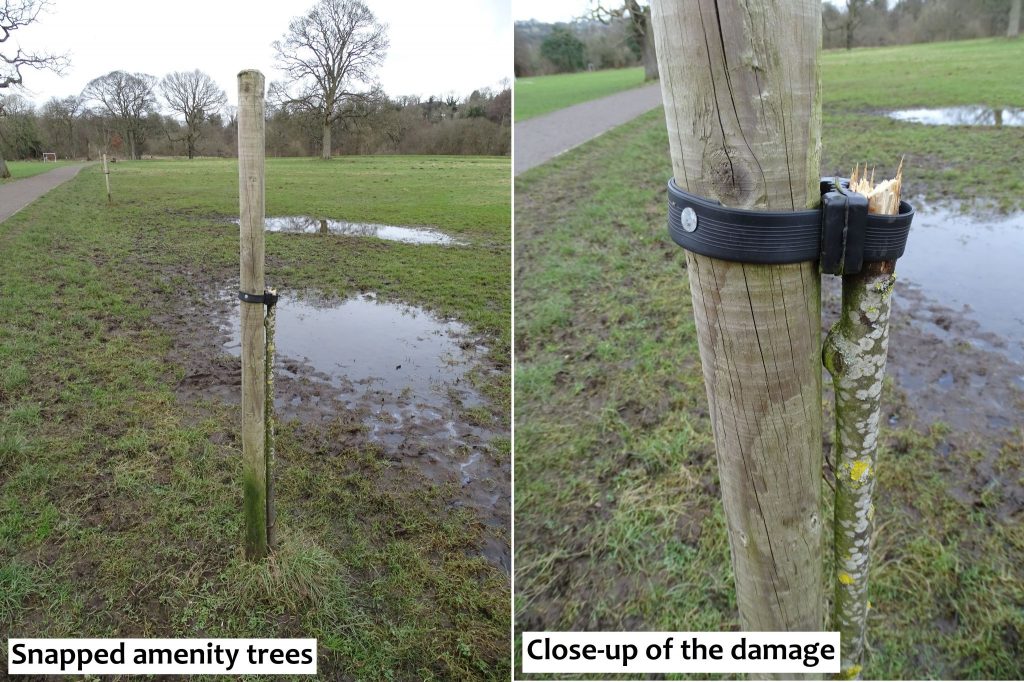
Tree planting is a science. It’s not just a quick, dig a hole, put plant in, affair. And here’s some proof from the United Kingdom. I got the photo from Dr. Duncan Slater through LinkedIn.

Take a look and see what you think is wrong.

Lessons

There are three main lessons from this tree planting fail and they transfer nicely from the UK to Canada. Let’s take a look.

Lesson 1: stakes

Having one, extremely tight stake doesn’t work. Clearly the top of the tree snapped off in a wind storm because there is no “play” allowed for the tree trunk. You can solve this problem by installing two stakes with arbor tie which allow for movement and subsequent development of reaction wood. It’s like lifting weights: the more you life, the stronger you get. Held super tight, the tree never develops this reaction wood and snaps in a severe storm.

This is what also happens when stakes are left on for more than the recommended fourteen months.

Lesson 2: tree wells and mulch

The absence of tree wells is very noticeable. Young trees benefit from tree wells and mulch. The tree wells channel water into the root zone and protect the tree from lawn care machines. Inevitably, someone will come along to take care of the shaggy grass near the trunk, and the bark will get slashed. Possibly weekly.

We know that turf is a stiff competitor for new trees. They might live but they won’t thrive. Having an established tree well definitely helps.

The mulch keeps moisture in and benefits the tree as it breaks down.

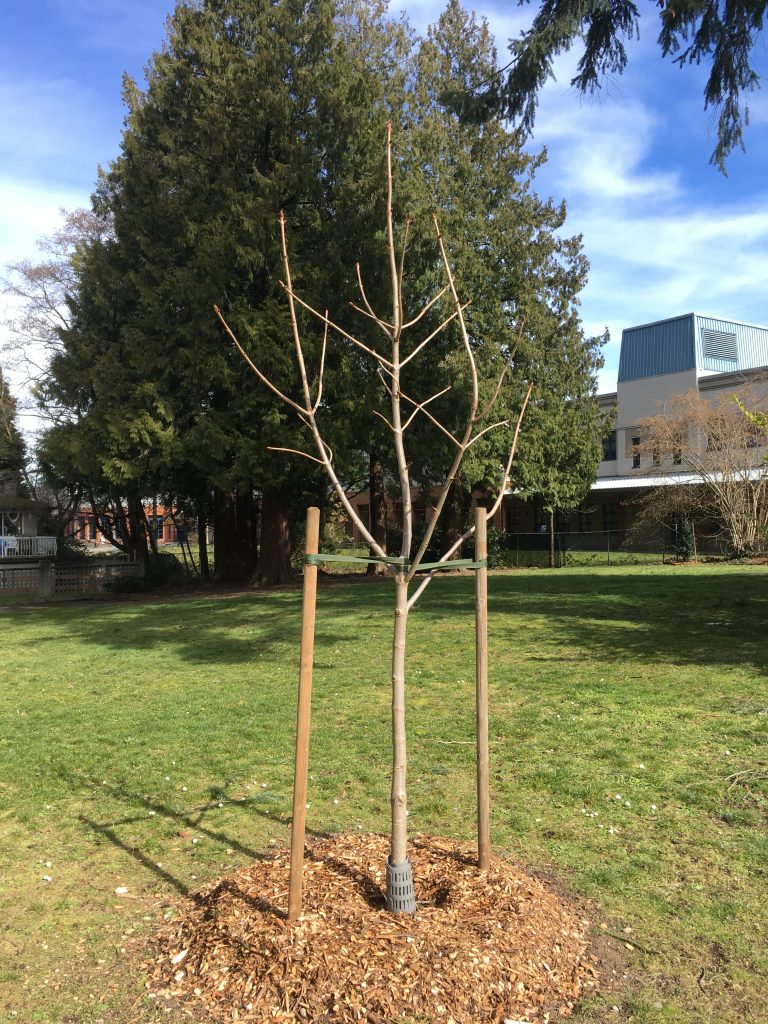
This is how the City of Burnaby does it. Two stakes and mulch.


Lesson 3: location, location, location

Location matters in tree planting. The puddles visible in the picture mean that there is poor drainage. Since water displaces oxygen, our new trees can struggle and will most likely suffocate.

Conclusion

Tree planting is a science and it should be done with care. That’s the only way we can ensure that the trees will survive and thrive. They’re expensive to buy, install and replace. We need them to live for a long time and provide us with their many free ecosystem services.

Abused by an algorithm

By | Trees | No Comments

A rare slip

I always try to post normal, family-friendly stuff online. Especially on the Proper Landscaping website. I’m more like a permanent guest blogger here and this is family-friendly place. Unfortunately, last week I slipped. Luckily, it wasn’t a post on this blog, and I had no idea for a while.

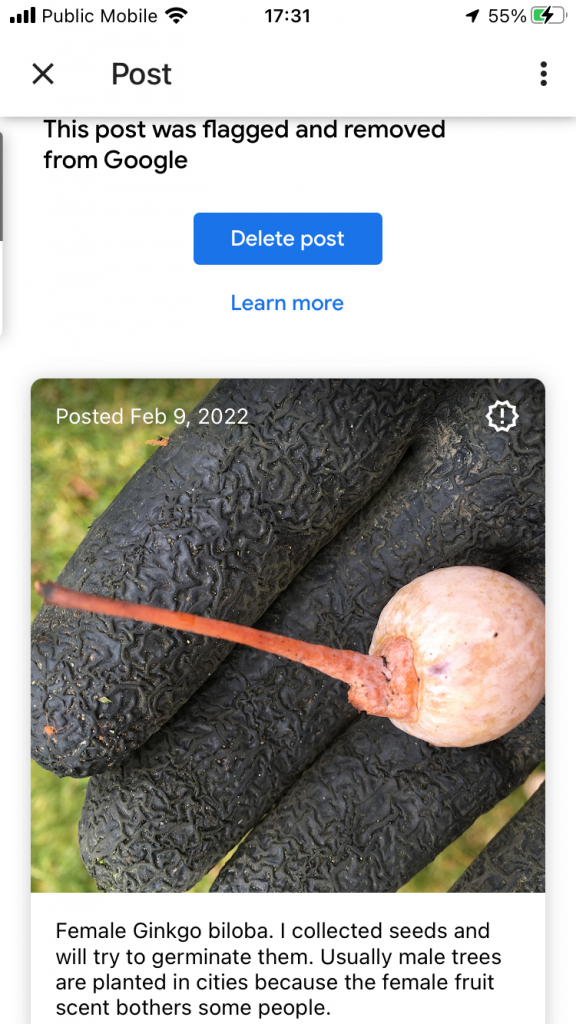
While scrolling through my older posts, I noticed one about Ginkgo trees that was flagged and removed by Google. Presumably by a strict algorithm. What? I admit I was a bit surprised.

But first, take a look to see if you find it offensive.

Now, the botanical facts are, to my knowledge, completely accurate. The female Ginkgo fruits produce a strong odour. You can Google the scent description; I have no idea how to describe it. It’s not pleasant but it’s hardly overwhelming.

I’ve used the fruits in several pranks and to date I don’t recall any hospitalizations. Just hate mail through WhatsApp.

The specimen where I collected the fruits and seeds sits on a private property and the landscape architect deserves credit for fearlessness. Google algorithms are much stronger today.

Male Ginkgo trees dominate on city streets for a good reason. Imagine city sidewalks covered in fruits that produce an unpleasant odour. The seeds themselves are big enough to send senior citizens to hospital with bone fractures.

Careful!

You’ve been warned. Watch the way you word your online posts because Google algorithms are merciless. My Ginkgo post got flagged and removed for comparing females unfavourably to males. I am no misogynist; I was comparing male and females trees. And I stand by my removed post. There was nothing malicious about it.

A machine algorithm doesn’t know that. And one day it might take revenge on me when I get into a self-driving car on my way to a tree lecture.

How to recycle Hydrangeas

By | Company News | No Comments

Unwanted plants

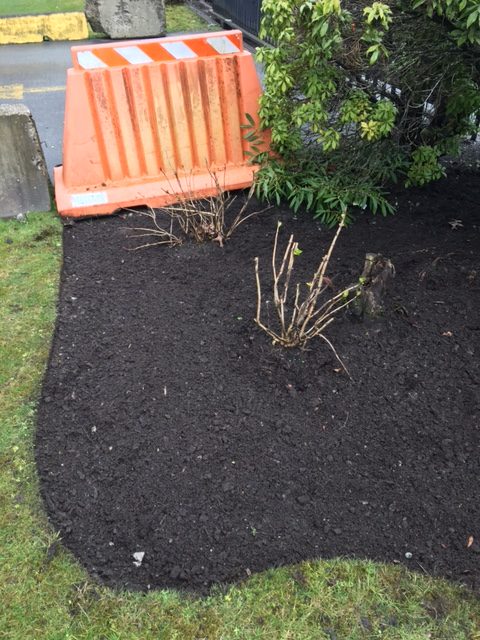
I love rescuing unwanted plants, selling them, giving them away or finding homes for them. This is how I recycled unwanted hydrangeas on one of my commercial sites.

Now, I must confess that this was round two in this particular bed. Previously, I had installed two sedges (Carex) in this bare spot in an attempt to cover up a stump. Unfortunately, without irrigation they failed to establish and died.

Hydrangeas

Both Hydrangeas show signs of life!

This is a back gate area at a major commercial construction company work yard. It isn’t much but two unwanted Hydrangeas are better than a bare spot. I’m determined to cover up the visible stump to save me the hassle of removing it.

It was nice to see growth on both shrubs. It means they will grow and hopefully bring some colour to this low-profile gate area. The owners pay for basic landscaping service to ensure that the business looks decent on the outside.

The lawns are cut bi-weekly and the bed work is done as well. But there is very little input or budget. Bare spots might stay bare. That’s where my recycling comes in. I get to have some fun while I cover up bare spots that would otherwise get weedy.

Save and share

I love rescuing unwanted plants, the same way some people look after unwanted pets. In the back of my vehicle as I write are two clumps of vinca and one Christmas cedar tree in a pot. Now I’m looking for new homes for them.

Gardeners constantly share plants and seeds; and advice. That’s what makes gardening fun.

Last year, when I gave away hundreds of unwanted Crocosmia corms, I got to meet many women of a certain age. Many happily came to collect their corms late at night. I just wish I could see their Crocosmias in full bloom.

Don’t dump your unwanted plants. Find a new home for them, sell them or give them away.

Rebel Rhododendron rehab

By | Pruning | No Comments

Sheared rhododendrons

This isn’t the first time I have written about power-sheared rhododendrons. Please see my blog post on a Rhododendron massacre.

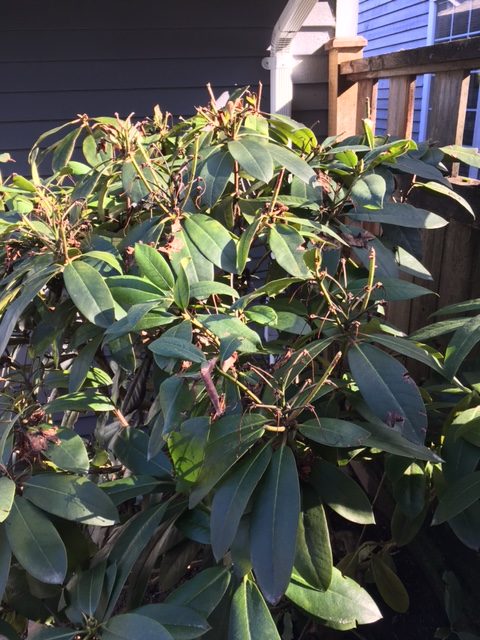
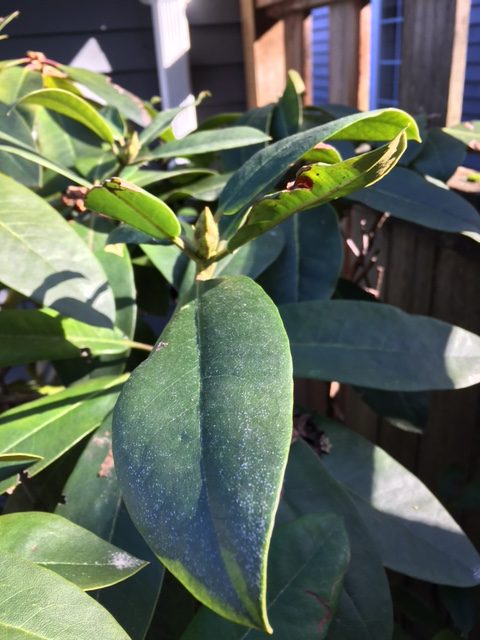
In large scale commercial landscaping work, there isn’t enough time for hand snipping. So, when several larger specimens need to be pruned, out come the power shears. Unfortunately, the result isn’t pretty. A woody plant like a rhododendron isn’t really made for power-shearing. It makes me cringe every time.

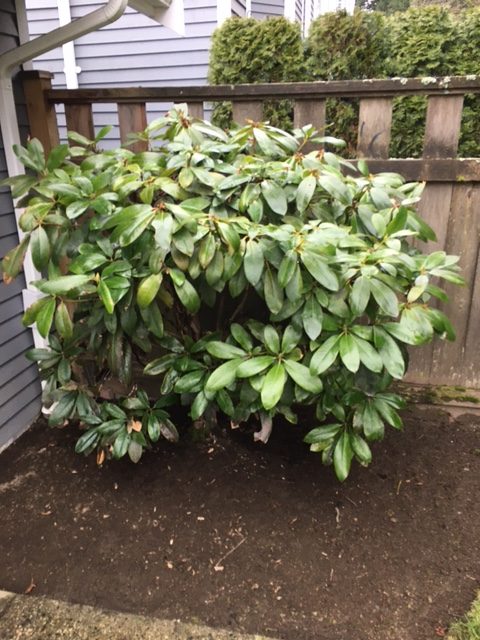
Recently, I found one of these abused rhododendrons in a corner; it was easily accessible and I had time to do some corrections by hand. That’s what rhododendron rebels do when they’re working alone. It felt like a rescue and therapy all in one.

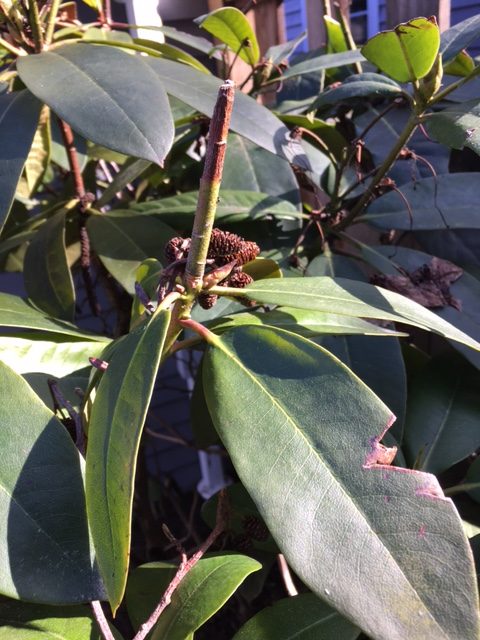
Note stubs and spent flowers.

Bonus if you recognized the Alder (Alnus) cones.

The tall stubs and shredded leaf margins are clear evidence of past power shearing and they don’t look great.

Much better after hand snipping

Corrections

I hand snipped out the tall stubs carefully so as not to damage any buds. I also pinched off the spent flowers, which is another task there often isn’t enough time for. This is especially true with bigger specimens.

Note that pinching off the flowers means the plant won’t waste energy on seed production.

I couldn’t do much about the shredded leaves.

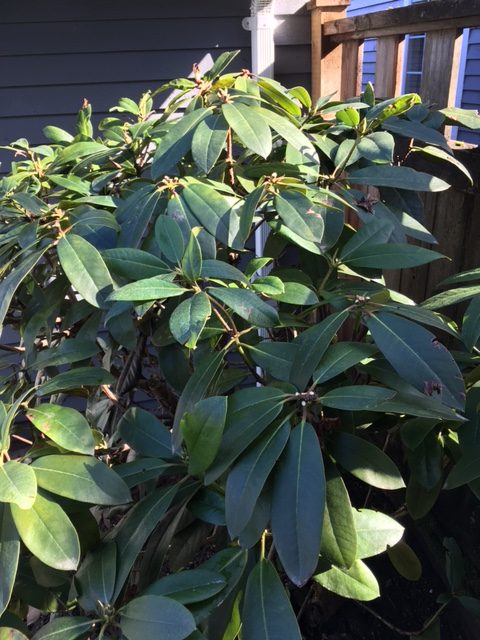
Beauty!

Finally looking like a regular rhodo

This is much better. All of the stubs and spent flowers are gone and it didn’t take very long. You can easily get away with work like this in late winter, before lawn care starts. Especially on a smaller and easily accessible specimen like this.
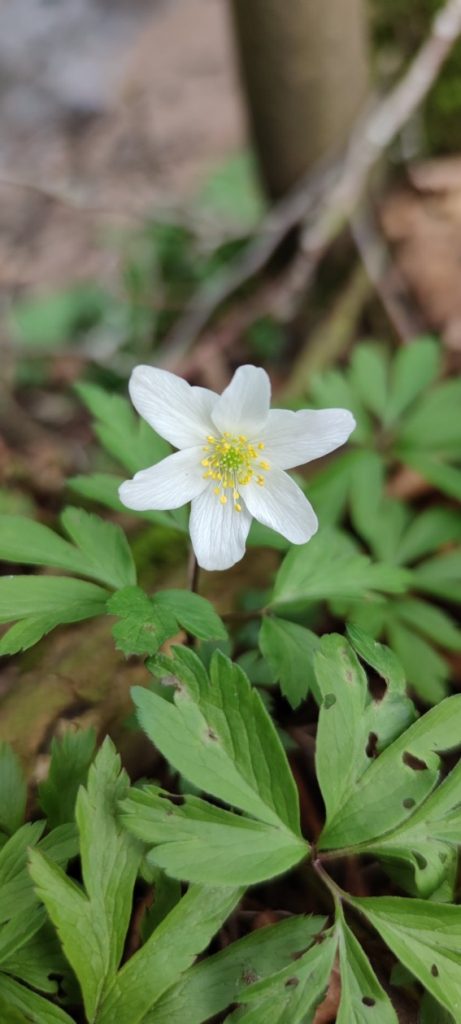
Judging from the spent flowers I found, this rhododendron flowers nicely.

Conclusion

If you can, avoid power-shearing rhododendrons. It leaves behind shredded stems and foliage, which look awful. Instead use your hand snips and enjoy your time in the garden. You’ll be rewarded when your rhododendron flowers nicely.
Late winter photo essay

By | Plants | No Comments

Almost spring

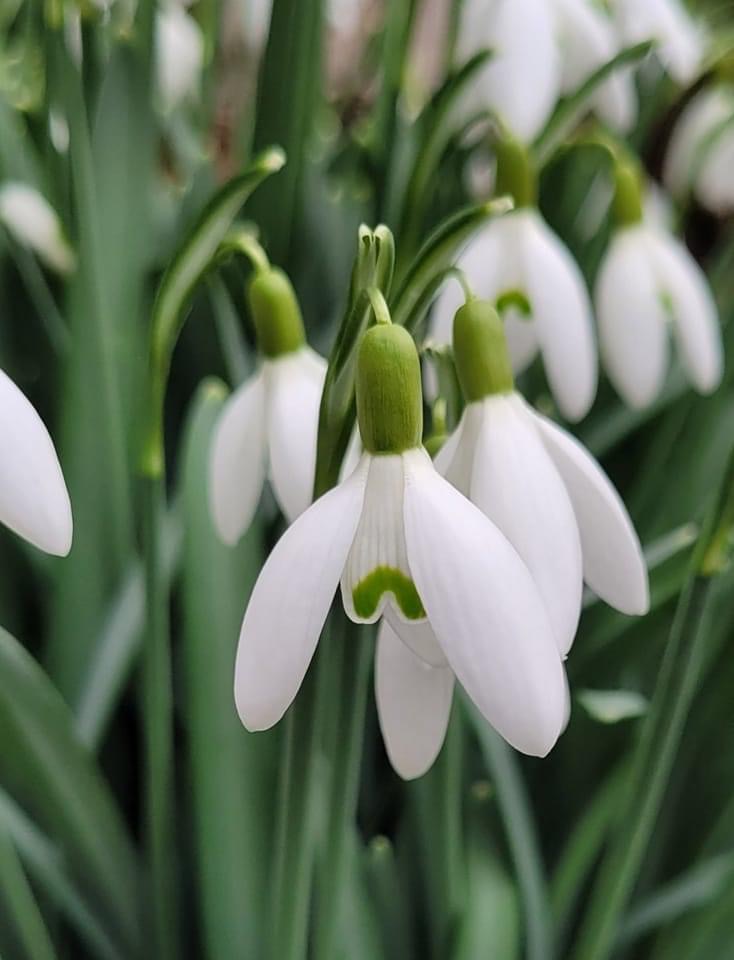
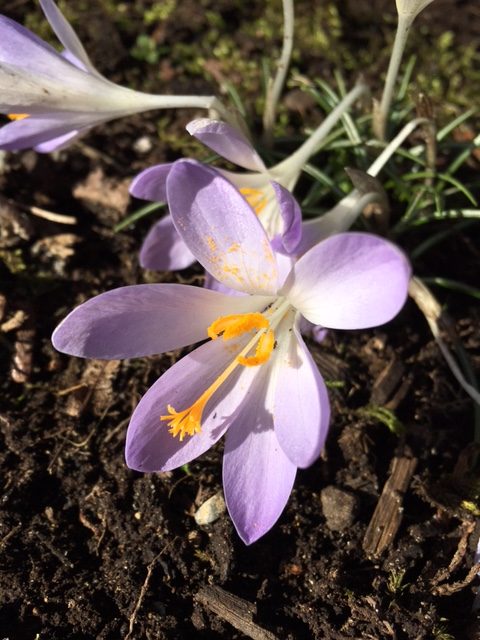
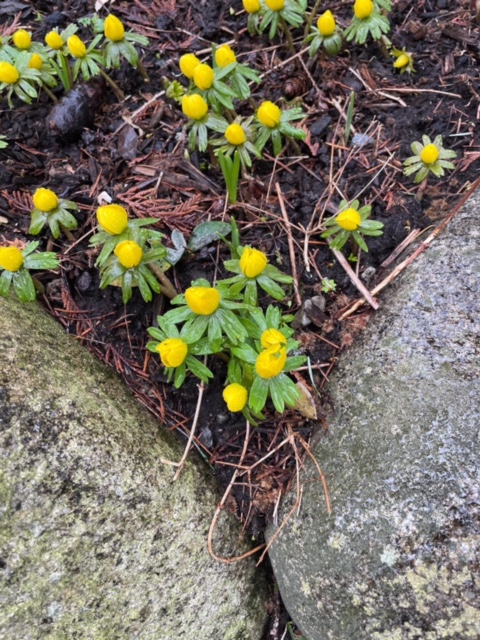
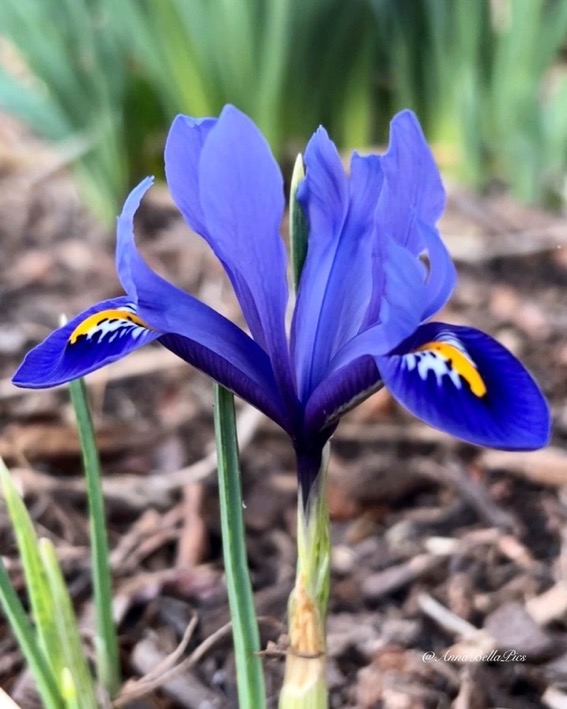
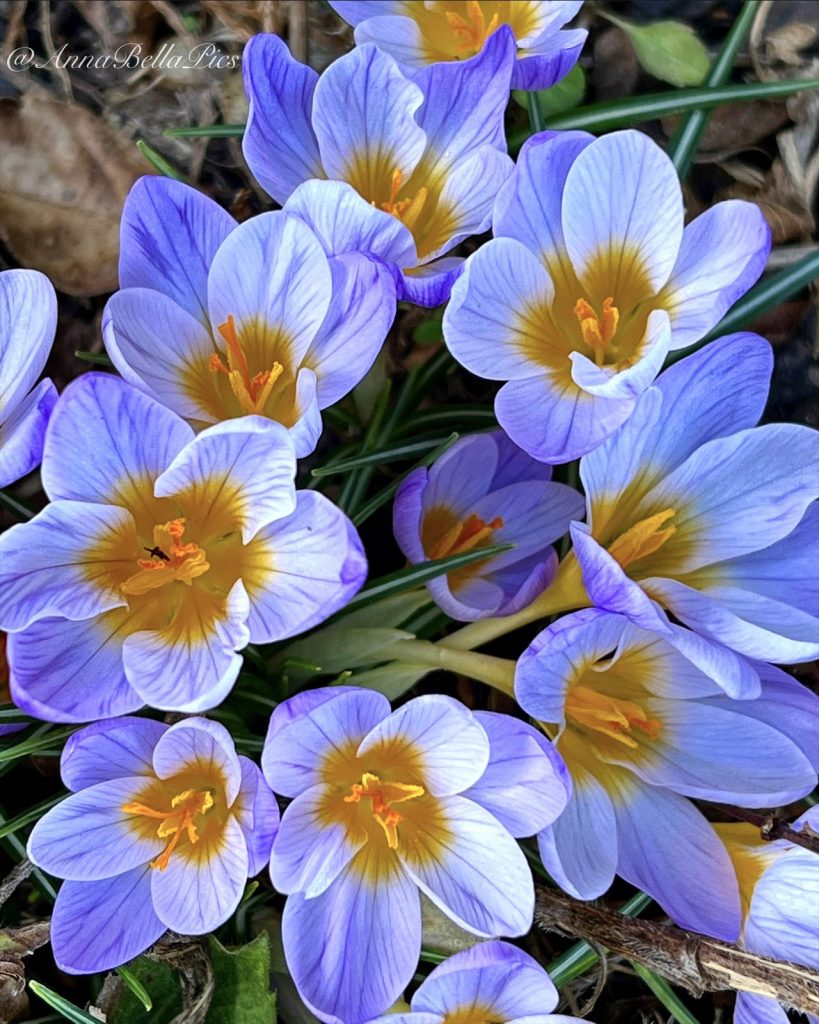
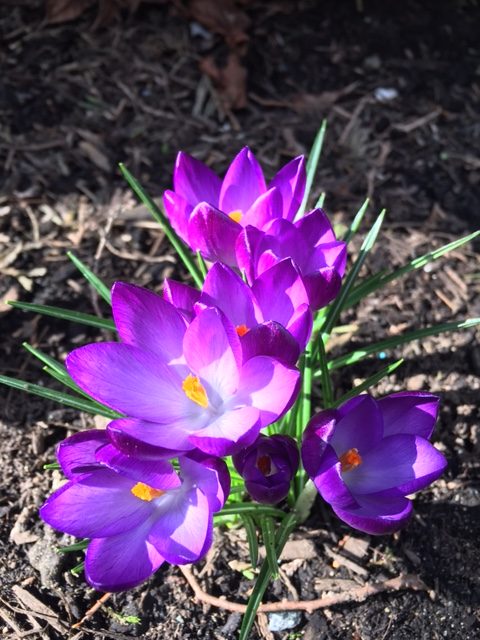
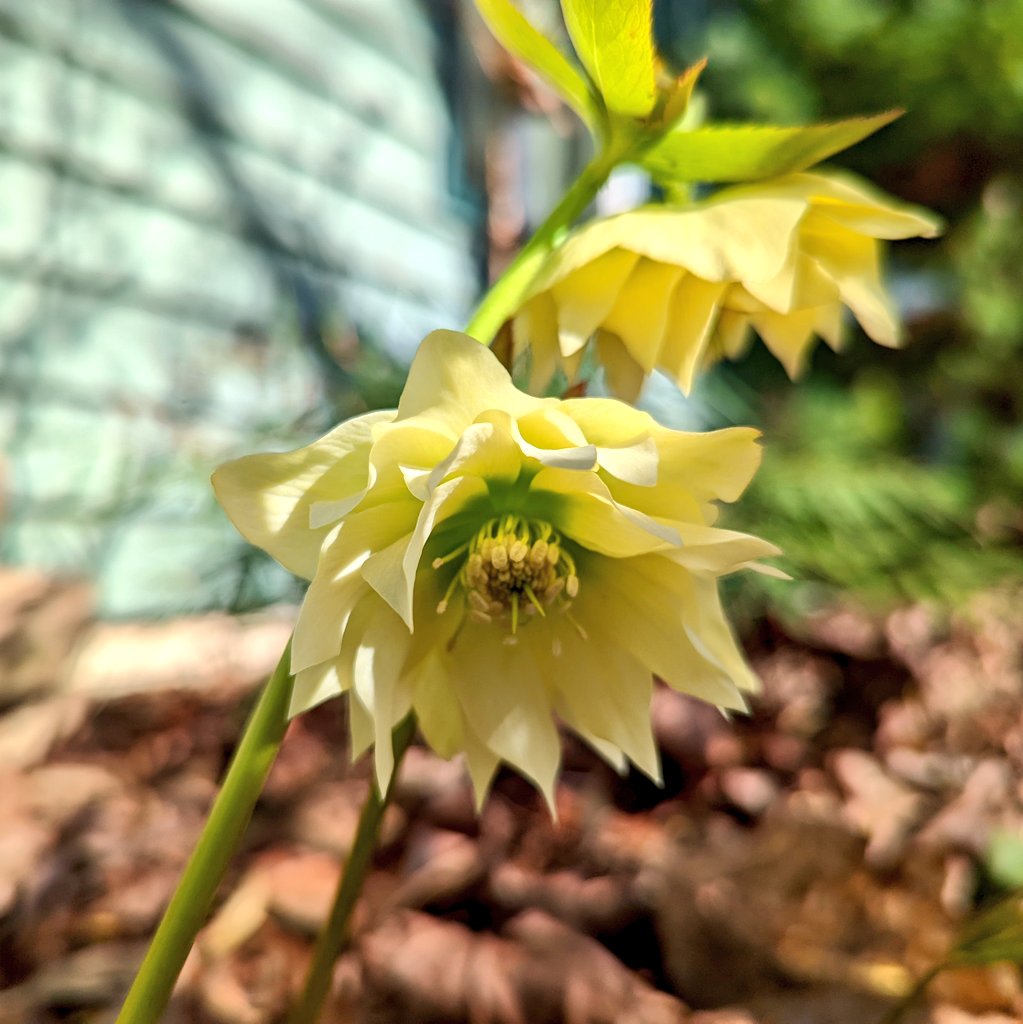
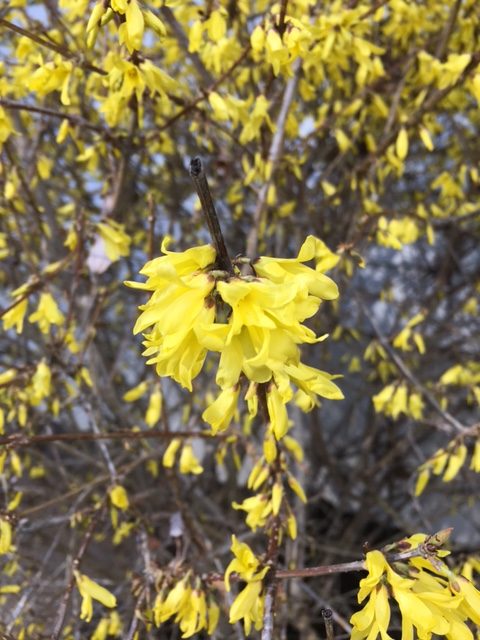
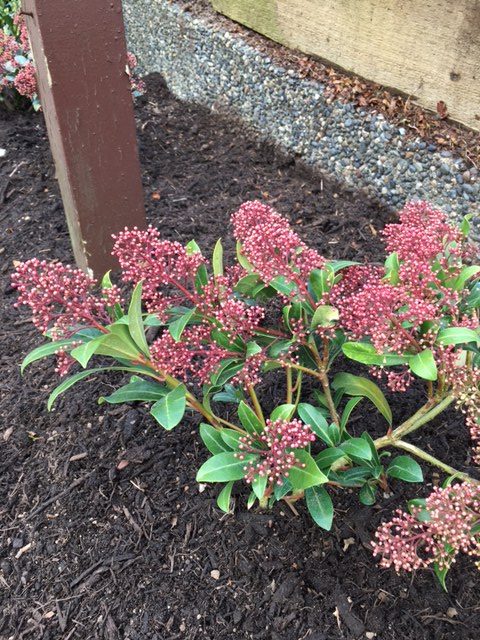
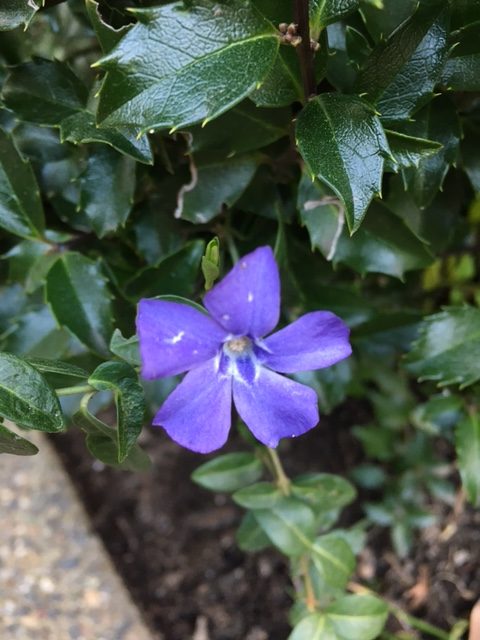
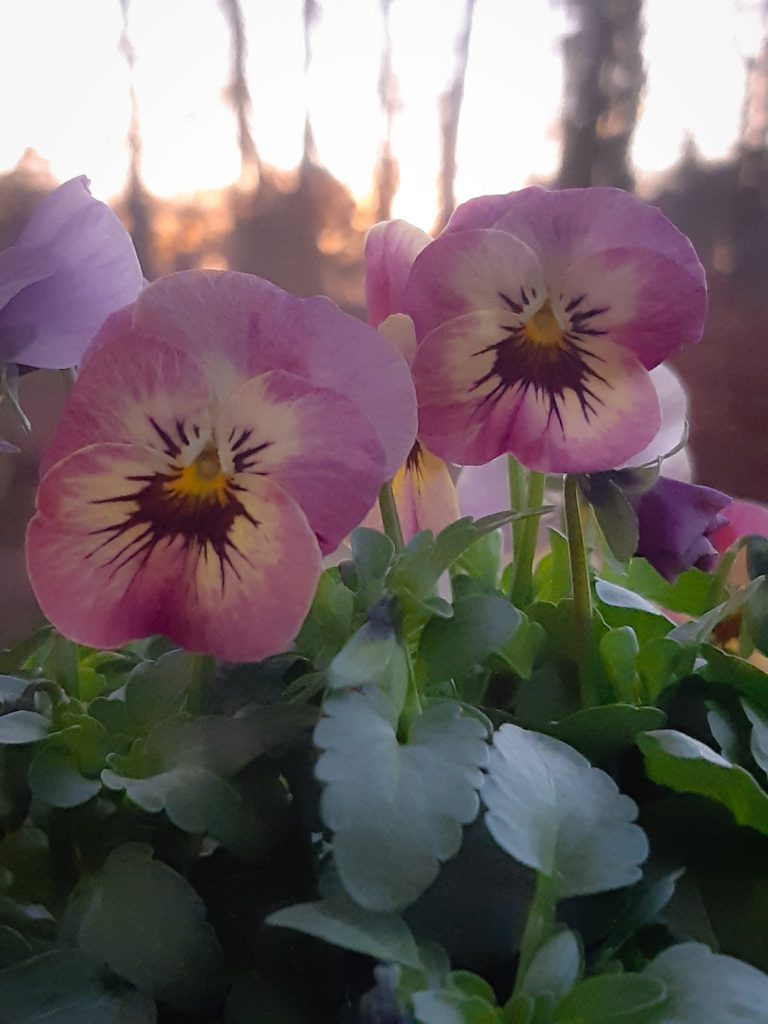
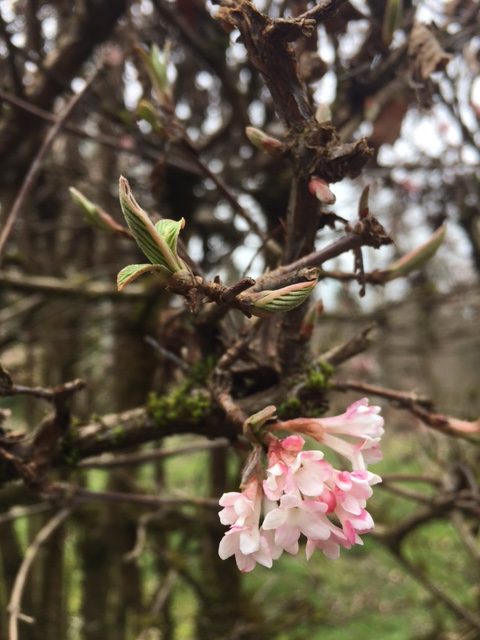
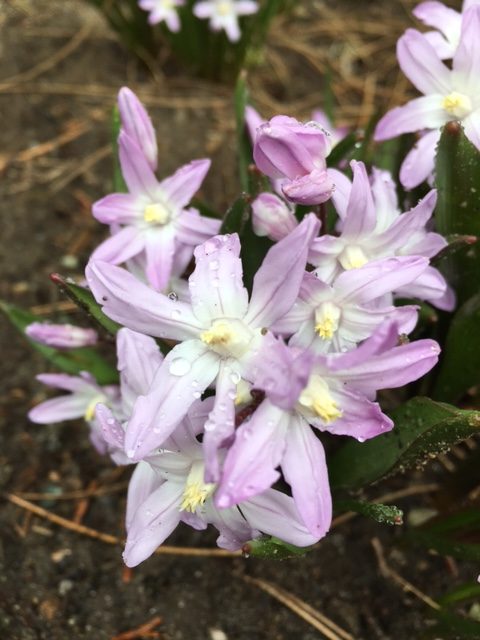
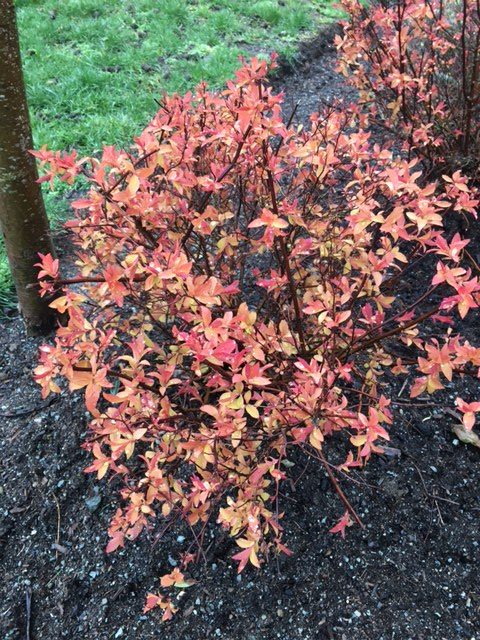
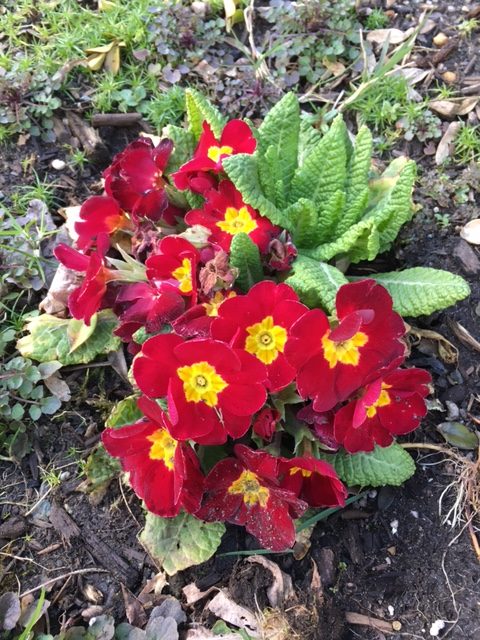
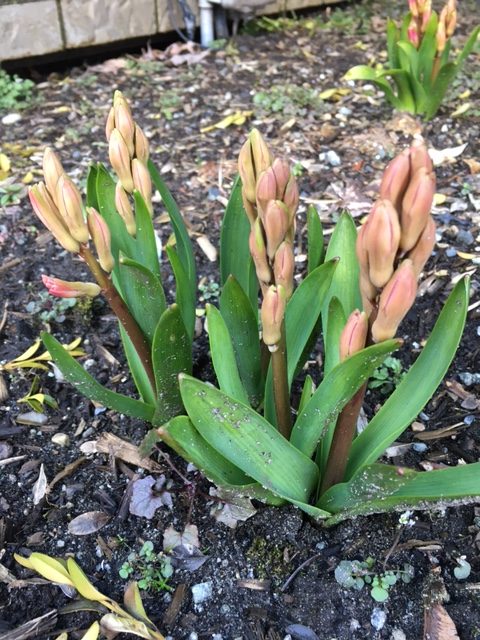
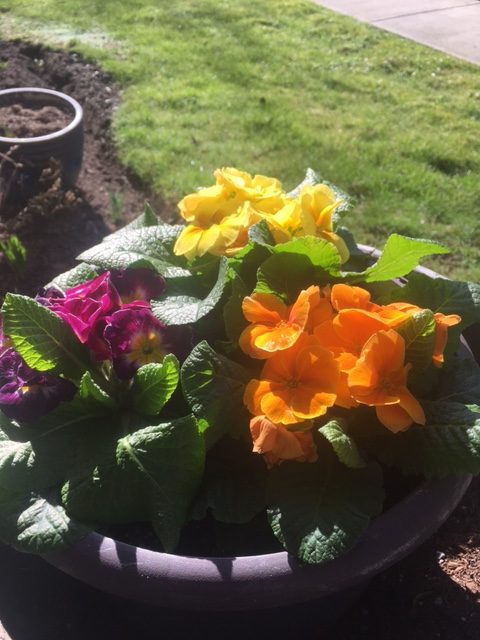
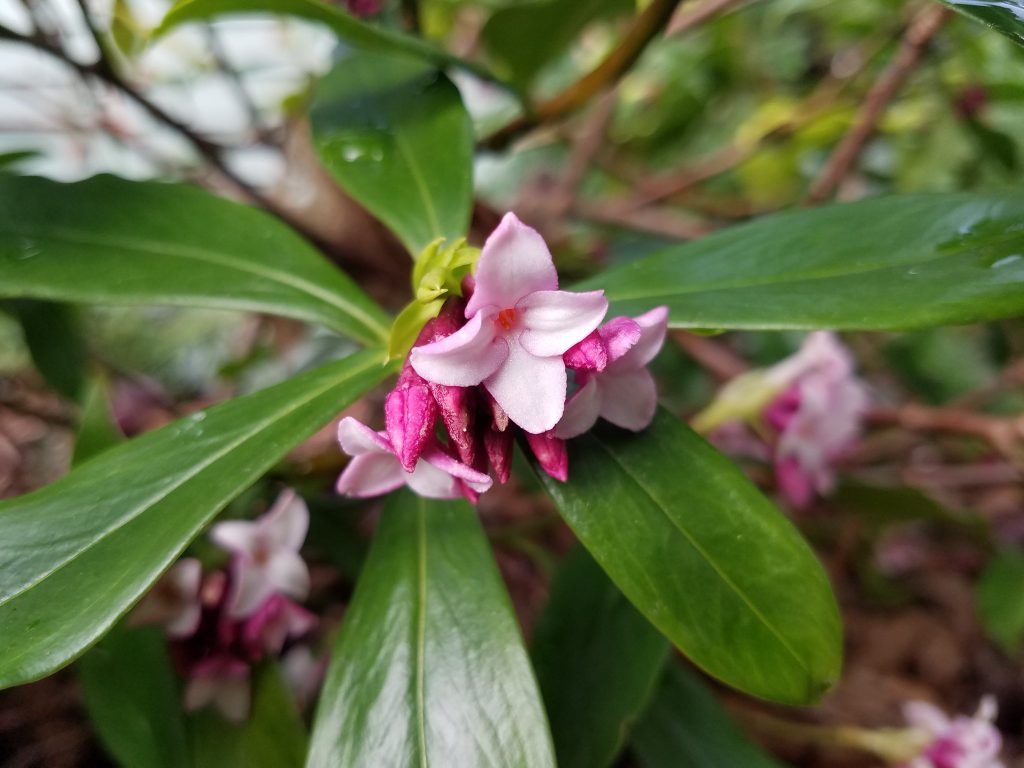
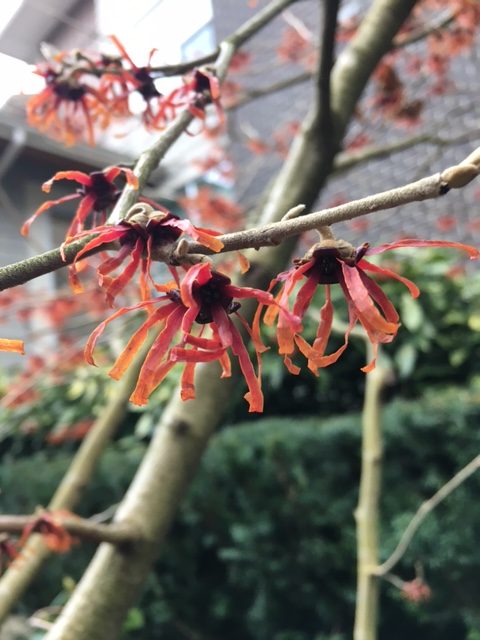
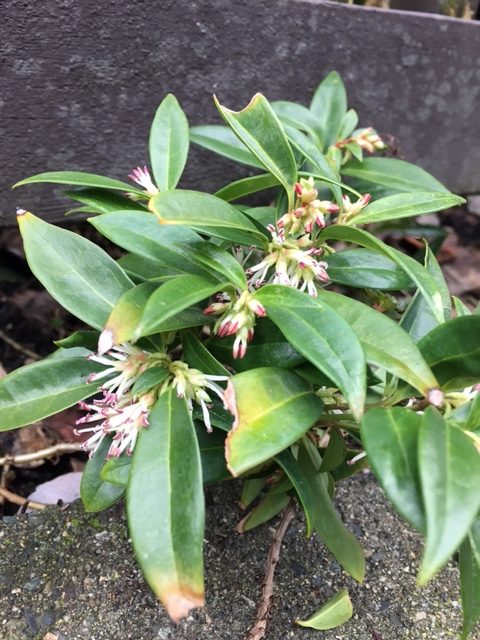
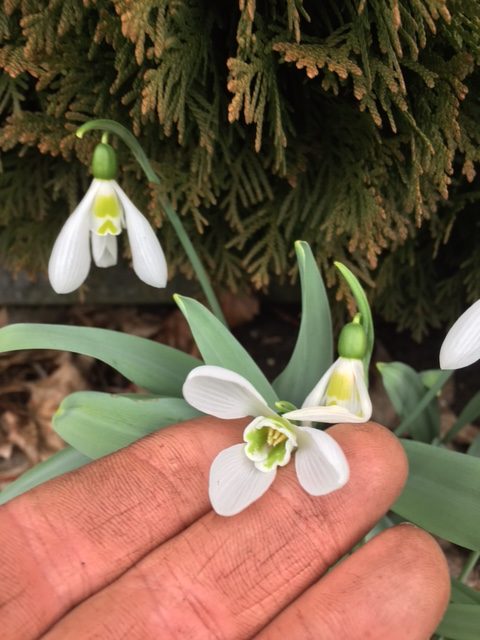
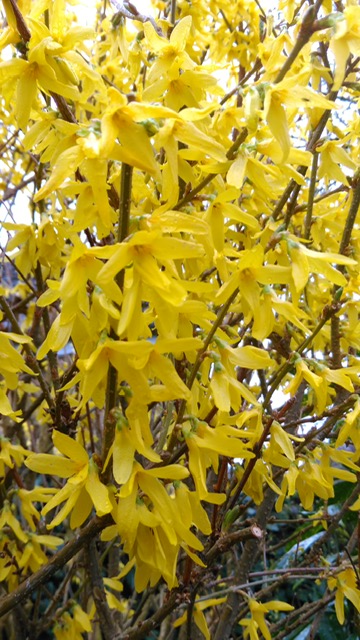
The older I get, the more I hate winter and cold weather. So, to cheer myself up I’ve put together a little late winter photo essay. Most of the plants are well-known in our landscapes. Only one was new to me, the fourth picture down.

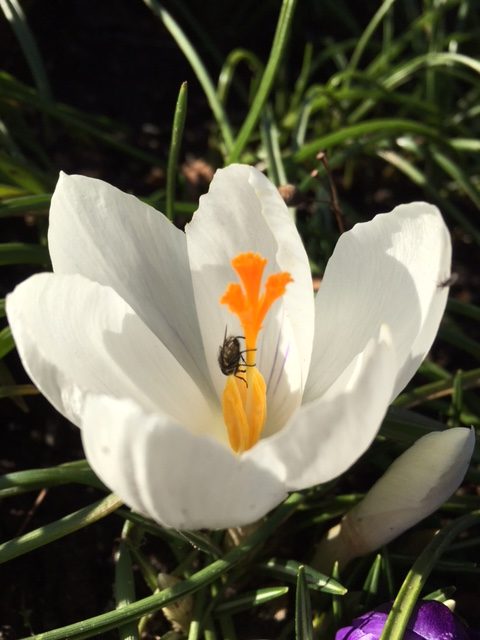
Winter Aconite (Eranthis hyemalis) emerges before crocuses with bright yellow flowers, then come green, lobed leaves.

Enjoy!

Beware of frugal husbands

By | Pruning, Side-hustle | No Comments

Quote accepted?

Frugal husbands can cut into your landscape company’s revenue. Take this example from last week.

I knew something was up when I tried to schedule pruning work with a residential client recently and there was no reply. Last year we settled on a quote and agreed to do the work when it got warmer in 2022. Now I was ready to go.

So, this week I stopped by to aerate the lawns and the pruning work had obviously been done by someone else. No wonder my kids often go hungry…..

Aeration first

If you don’t do anything to your lawns all year, at least aerate them in spring. This allows more water and oxygen into the root zone and should lead to a healthier lawn. Since this residential client is a referral from a friend, I did the aeration for $50, which includes a courtesy clean up blow. I also blade edged the front lawn edge to give the lawn a sharp look.

Then, when the lady came out to talk to me, she quietly mentioned that her husband brought a friend over and they did the pruning themselves. To save some money.

Beware of the frugal husband!

As an aside, she mentioned that the men were a bit shy about pruning the evergreen cones because of their phallic shape. I smiled politely. I’ve seen worse.

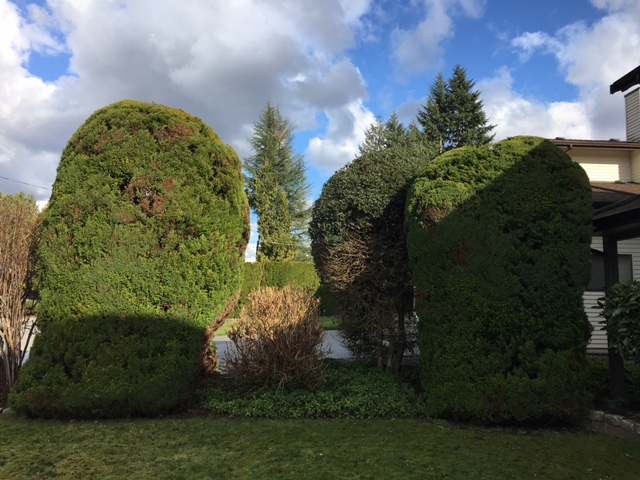
The frugal husband’s pruning work.

A lesson for homeowners

Homeowners can do great work. Yes, Red Seal Vas is a proud professional but I’ve seen homeowners plant and install mulch quite well. It’s nice to see them outside, doing physical work and saving a bit of cash.

That’s why I love to work with clients because you can teach them something and develop a long-term relationship. Customers only care about pricing and will drop you for anybody who is slightly cheaper. I try to stay away from them.

Allegedly, our frugal husband did some of the pruning from his roof, which I don’t recommend. But let’s be honest, he did a decent job and he saved himself a bit of cash. I told his wife, “we’ll keep him”.

A lesson for landscapers

There is a good reason landscape contractors love multi-family (strata) complexes and commercial properties that go all year and come with set contracts: they get paid monthly. Residential clients on the other hand, can decide they don’t need you one week or they save money by doing some of the work themselves.

All good!

I did lose a bit of cash on this pruning job but, at the moment, there is no shortage of work. I did squeeze the lady for aeration and it gave me a great blog post idea.

Homeowners can do decent work on their properties. It’s all good.

One big reason landscaper gives up on his business

By | Landscape Industry | No Comments

Wait! What!

Recently I heard of a local landscape company owner who is ready to walk away from the business. Now, ever since I started landscaping in 2000, I always thought that starting your own company was the goal. Be your own boss, set your own work hours, exploit some workers, etc.

Proper Landscaping Inc was born with a dream like that and now the company provides great landscape maintenance services throughout the Lower Mainland. There’s no walking away.

Why quit?

So it’s interesting to hear about the owner of a small, but established, landscaping business is ready to call it quits. Why?

Because he can’t find any good people to rely on to scale his business. he wants to expand and, perhaps, ease up a bit. He wants good people to do good work without him being there all day.

That’s the dream: build a good team and then you make a great living. But the job market landscape has changed with the pandemic. People stayed home and got a chance to re-evaluate their lives. Why would someone go work for a small landscaping company?

The Landscape Management Network (LMN) says that in the US, 92% of landscape companies struggle with hiring, training and retaining staff.

My own work life in 2022 is hybrid: I have a full-time job as a landscape manager but I also blog for a living and I have many private side-gig clients. Small residential clients. But it’s clear what my day-job boss is offering me.

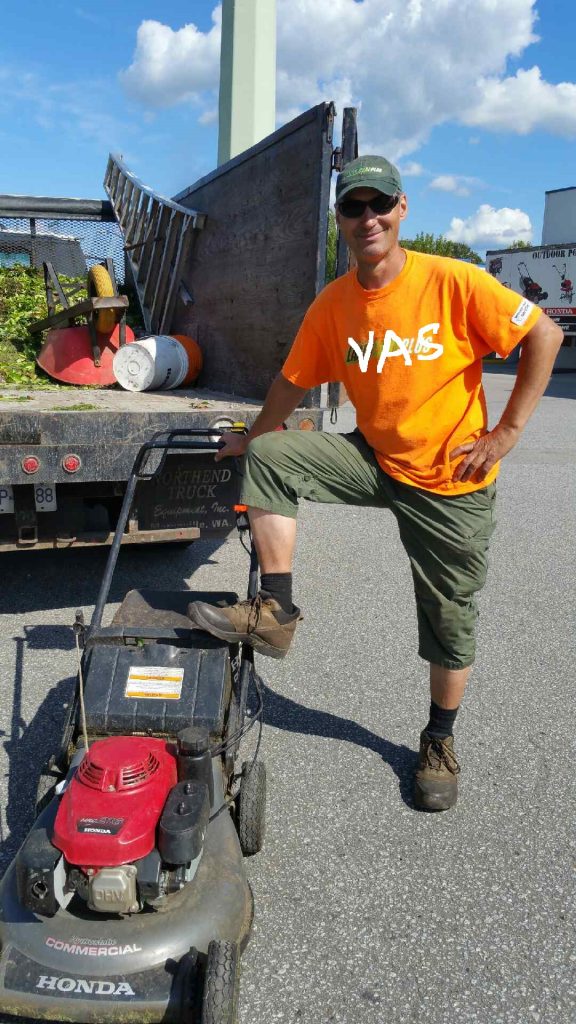
Red Seal Vas, trained and experienced, ready for action!

What are you offering?

What’s our landscape company boss offering, exactly? According to the Landscape Management Network (LMN), people can get a paycheque anywhere. How does working for a small landscape company enhance my life? Is there a way for me to develop personally and professionally? What’s my future pathway?

If it’s just a paycheque, our small business owner will continue to struggle in his talent search. There aren’t many great landscapers available in the Lower Mainland, and lots of companies are looking as well. It looks grim.

You can’t just pay me some cash to take your truck, deliver great service and maybe rarely see the boss. That’s a silly dream for a small company. So, what are you offering? Great pay, benefits, education support, on-the-job training, nice work sites? I know that it is a long year out in the field. The work is physical, in all kinds of weather and the weather is getting more erratic. How many summer heat domes will it take for people to walk away? My fear is getting stuck in a winter vortex with weeks of super cold temperatures.

Conclusion

I can’t wait to see how this thing plays out. Will our local landscape company owner quit or will he find the star performers he craves so much? He needs a great team in order to scale his business and make great money.

I just want him to think beyond a simple paycheque. I want my life to get better; and I want to develop personally and professionally.

Garden lessons from a new residential client

By | gardening | No Comments

Lessons

I love meeting new clients and getting to know them and their needs. I really love it when it becomes obvious I can help them. And during the garden assessment, you can take a look at the place and see what condition it’s in. When I meet the people I obviously don’t tell them they will be my next blog post topic.

What I see

If you read my blogs regularly, you will know that I hate landscape fabric. But if it’s already installed, then at least bury it with several inches of mulch or soil. This garden had lots of fabric showing so I recommended adding two inches throughout to keep the weeds down; and to give the planted bed a uniform look. Otherwise, they would see there more often, weeding.

Exposed root flare and landscape fabric.

Pro tip: Best case, your landscape fabric will delay weeds. Even with two inches of mulch installed, weeds will still drift in with animals and the wind.

I love gardening and I think people should bravely experiment in their gardens. Here, the owners planted lots of single plants which works best for specimens. Like having one weeping Japanese maple in the middle of the bed. More on this soon. But for perennials, multiples are better.

For example, one tiger lily doesn’t have the same effect as, say, 5-7. Instead of having two Bergenias, I would go for 3, 5 or 7. Planting more also means more competition for weeds which love open bed spaces.

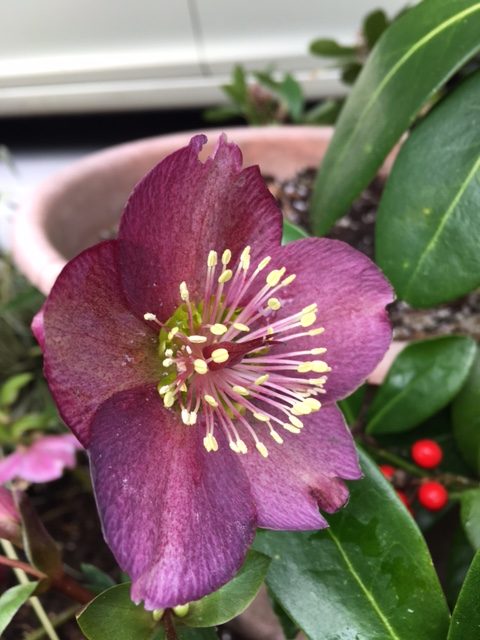
One Hellebore and two Bergenias. You could add two or four Hellebores and at least one Bergenia.

Pro tip: plant in odd numbers. Three is better than two. Five, seven, etc.

Proper tree planting is also important. I really like that this client gave it a go. When I told her the maple was planted a bit low she smiled and said something about learning. That’s right, she has the right attitude.

I uncovered the root flare and created a quick tree well so the stem didn’t rot in the soil. The tree should be fine.

The outside boulevard also needed some attention. It was still leafy from the fall and it was covered with cherry pits. And the lawn edge also required blade edging. Now it looks much better.

Blade edged and blown clean.

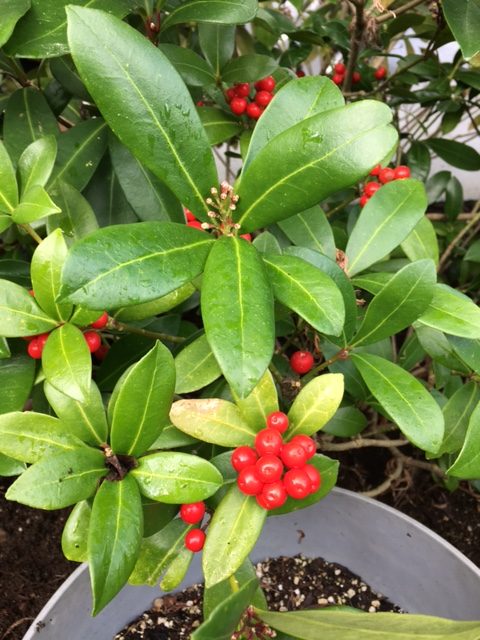
Normally I would be tempted to make some inappropriate joke but, since these were brand new clients, I just mentioned in passing that their Skimmias were all female. It’s always nice to plant males nearby.

The future

The beauty of having clients is that you can teach them while you make money. Customers, on the other hand, only care about prices and rates, don’t care to learn and will dump you for Miguel who charges $1 less per hour.

I expect to work with this couple all year and beyond. Since the owner loves fragrant plants, I’m looking forward to transforming their garden into a semi-shade oasis. It might generate a few more blog posts this year.