
All Posts By

Vas Sladek

8 steps to becoming a landscape maintenance professional

By | Education, Landscape Industry, Tips | No Comments

Yes, you can become a landscape maintenance professional. Just consider the following eight steps. I originally published this list in a post on LinkedIn. This is a new, improved version. It came to life as I arrived at a crossroads early in 2016 and had to make a decision. Do I continue with my temporary full-time municipal parks laborer position or accept a better paying, full-time senior supervisor position in the private sector. As I reflected on my own sweaty 16-year journey from rookie at a landscape maintenance corporation to Red Seal Journeyman Horticulturist, the list was born. Feel free to add comments or ask for help.


Practice, practice

New landscape maintenance workers inevitably mow miles of lawns but the idea is to get it down quickly and then move on to all of the other machines. Edgers, blowers, bedwork and power shears. Ask for training. Face your fears. Gain skills and confidence. Add value to your company. The goal is a quick progression from mowing to all of the other skills.


Plant ID

Don’t dismiss this crucial skill. Start on day one. Keep a notebook, take pictures with your smartphone. Learn only botanical names. Some plants have multiple common names so don’t waste your time. All nurseries deal in botanical names. Tests use botanical names.

Plant knowledge is critical for proper care and pruning. To get you started I created an eBook called “Common strata plants, A Guide for West Coast Landscapers“. Message me for a copy.

 

IMG_0437


Get tested

If you live in Canada or the US, you can get tested and become a certified landscape technician. The test validates your skills and shows employers and clients that you have the required minimum skills to do a great job for them. Going through the written and practical tests is a humbling experience. Getting my certificate felt great! It will boost your confidence and your income. Get your employer to cover the fees.

I invite all prospective Lower mainland candidates attempting the ornamental maintenance module to contact me for a private review session at very reasonable rates. Save money and time by not making the same mistakes I did.

 

landscape industry certified technician (1)


Hug trees

You only need two field seasons to qualify to write the ISA (International Society of Arboriculture) exam. It’s recognized internationally and prepares you to care for trees in our landscapes. Proper pruning and avoiding conflicts with landscape machines are two critical issues. So is safety. Plus trees are beautiful and provide numerous ecosystem services for free. They deserve a hug!

 

cert_arb

Mentors

Remember, the goal is quick acquisition of new skills. Get your foreman and senior workers to help you. I spent one season working under a brilliant municipal gardener and I learned a lot. It took one nice comment from her for me to walk into my Red Seal Journeyman Horticulturist exam challenge with confidence. I also read the works of brilliant horticulture professionals. Look for mentors from the beginning.

Industrial athletes

Your body is a money-maker so take care of it. Everything is neatly summarized in this ISA article. Read it. Study it. Green workers may not think of themselves as athletes but consider the daily physical output required on the job. I would just add a regular exercise program based on sports you enjoy. I take part in road and trail running races. Find your favorite sport and do it. Regularly.

Seal it with Red

Landscape horticulture is a Red Seal trade in British Columbia. The recommended procedure is to sign up for an apprenticeship with a good company. Learn the trade in the field and complete schooling in winter. Four years; 9700 hours required. This is consistent with the 10,000 hour idea developed by Anders Ericsson and made famous by the writings of Malcolm Gladwell. See the latest book by Ericsson. Make the hours count.


41rJVsU7tJL__SX331_BO1,204,203,200_

If you possess the required documented hours in the field, you can challenge the exam. I did. It wasn’t easy but with field experience, one day preparation course and some study, I passed. You will too. Journeyman status is critical to your career success. Municipal park departments now demand it. In private industry you separate yourself from other workers and management is a possibility.

Kaizen

Kaizen is a Japanese term for continuous improvement. Never stop learning. Read new books, attend conferences, subscribe to journals and stay in touch with your mentors. Keep reading this blog. The goal is to be better than you were yesterday.

Follow the steps above and enjoy your green career!
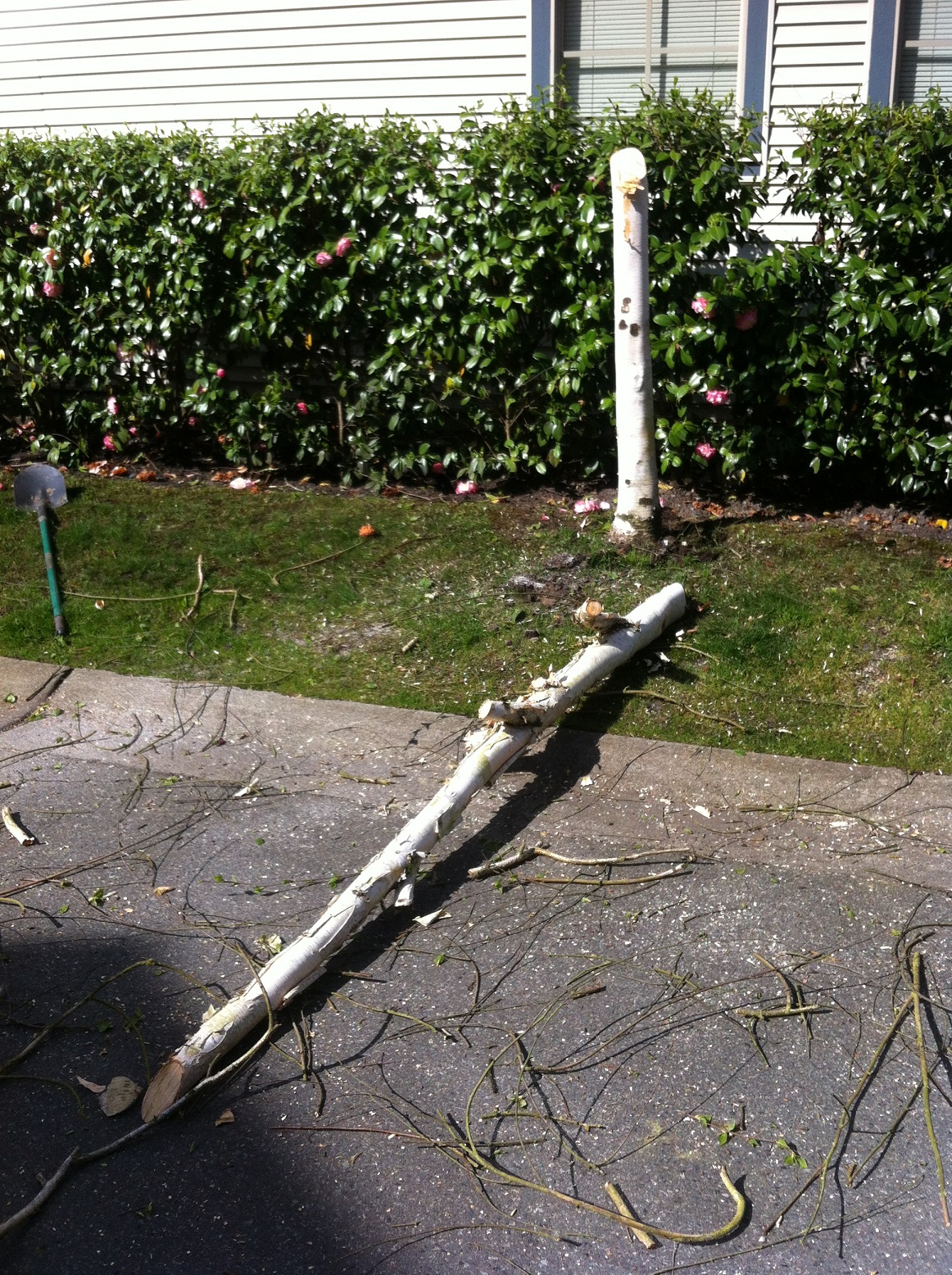
Redneck tree removal

By | Arborist Insights, Landscaping, Strata Maintenance | No Comments

It’s always sad to see trees die on site. Any site. In this case we had three birches (Betula papyrifera) killed off by the bronze birch borer. Birches are shallow rooted and can suffer in heavy heat of late spring and summer. At this site the birches had little room and suffered from reflected heat as well. Drought can lead to dieback at the top of the tree and the bronze birch borer is an expert at detecting  weakened trees. Weakened trees are very attractive to this urban pest. Once the tree is attacked, there is very little hope of saving it.

I was on site to install cedars (Thuja occidentalis ‘Smaragd’), Cotoneaster dammeri and Hemerocallis ‘Stella d’Oro’. The heavier tree work was left for last.

Since birches are shallow rooted and the ones on our site were not extremely mature, we decided not to bother with stump grinding. So here I introduce redneck tree removal. Don’t try this at home. Hire certified landscapers or arborists. Please.


Step 1

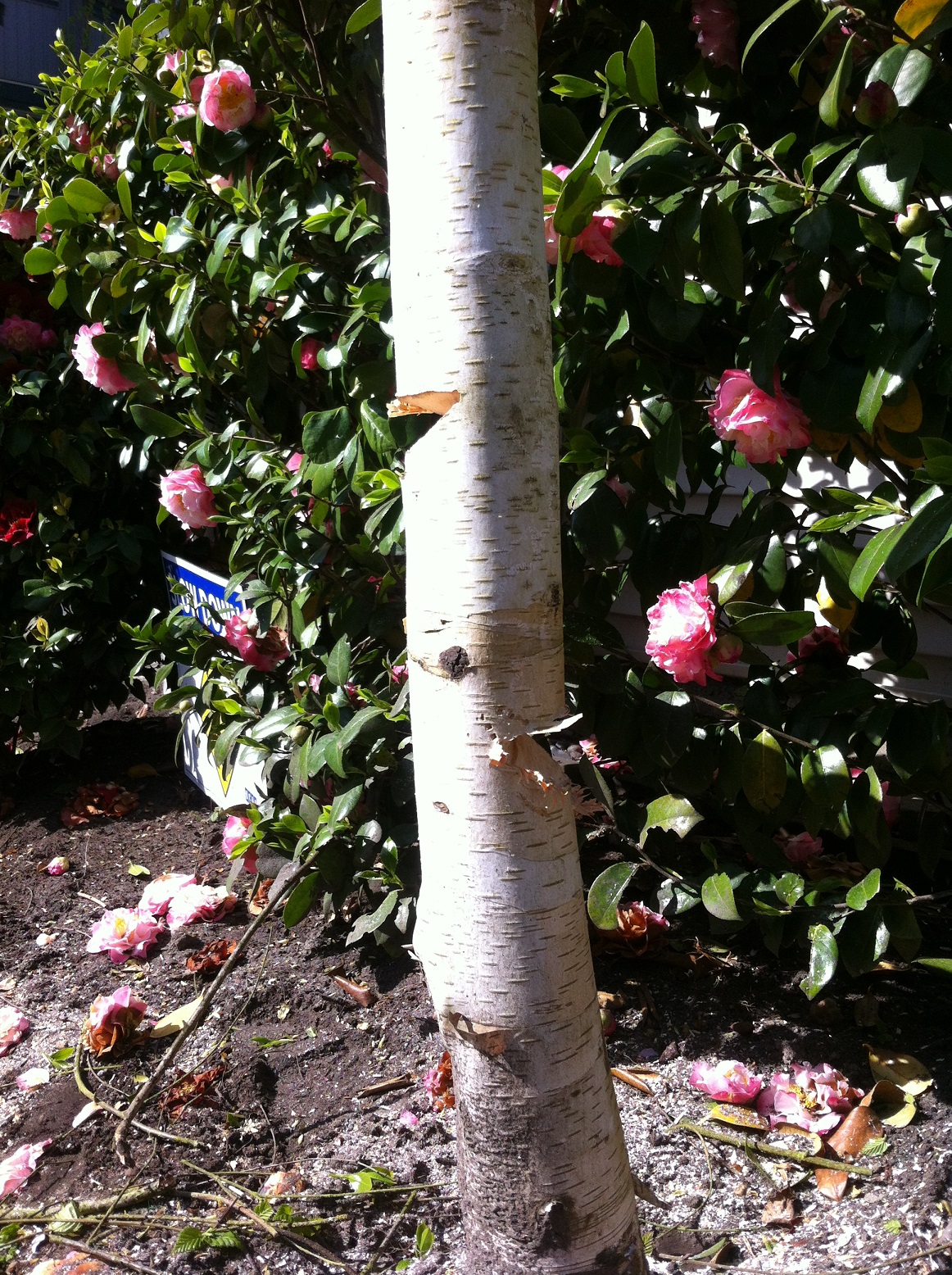
Remove most of the crown with chainsaws or handsaws. Safety is important here! This strata complex corner was used by cars, residents were washing their cars and kids were playing outside. Wear proper protection if you choose to use chainsaws. Always.


IMG_2260edit

Step 2

Cut notches into the tree so the chains have some place to bite, otherwise they will just slip off under pressure

IMG_2261edit

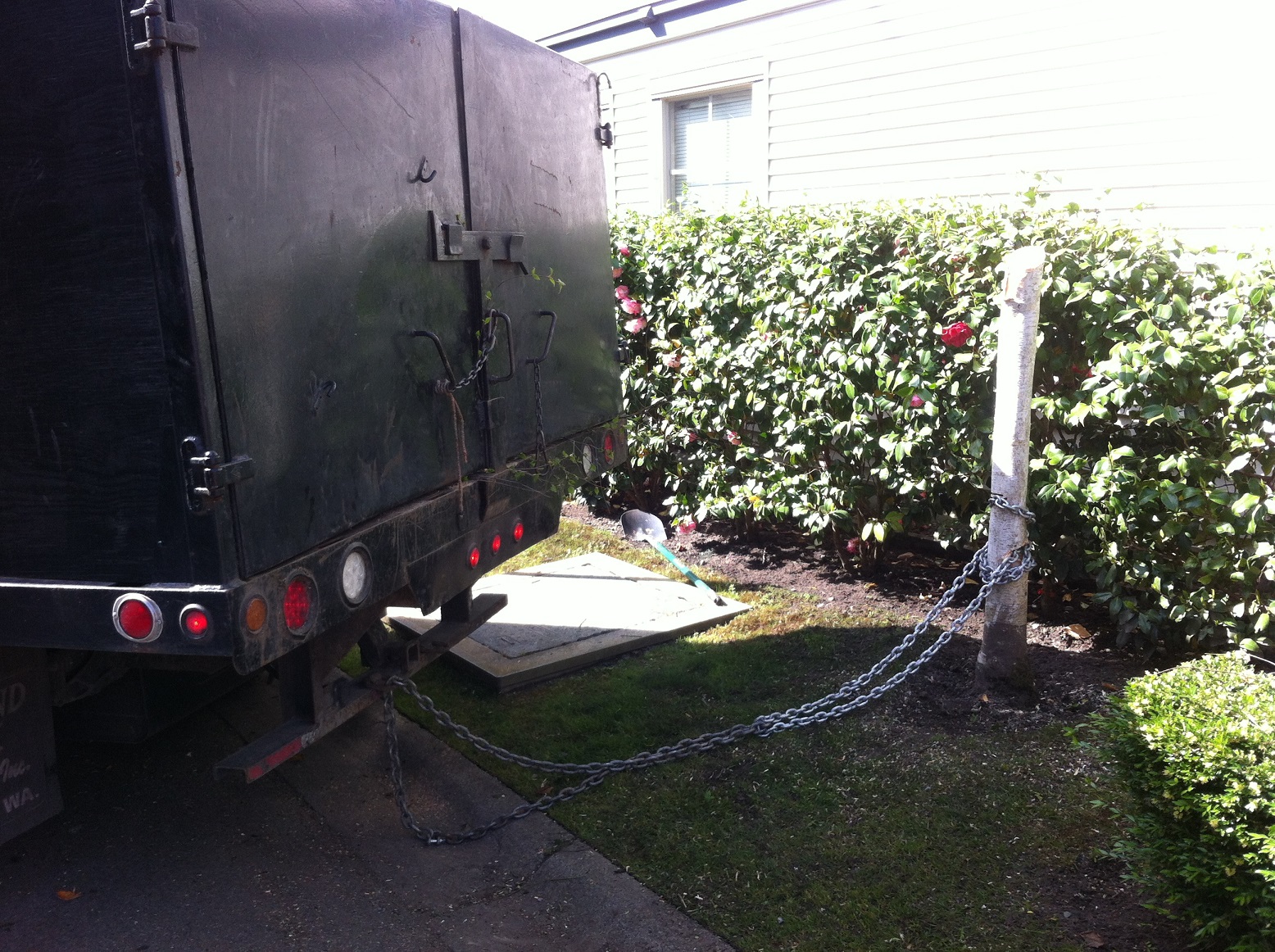
Step 3

Attach chains to the tree and to the back of your truck, then drive very slowly until the stump is completely out. Use good chain link fasteners. Common locks could blow out.


IMG_2269edit


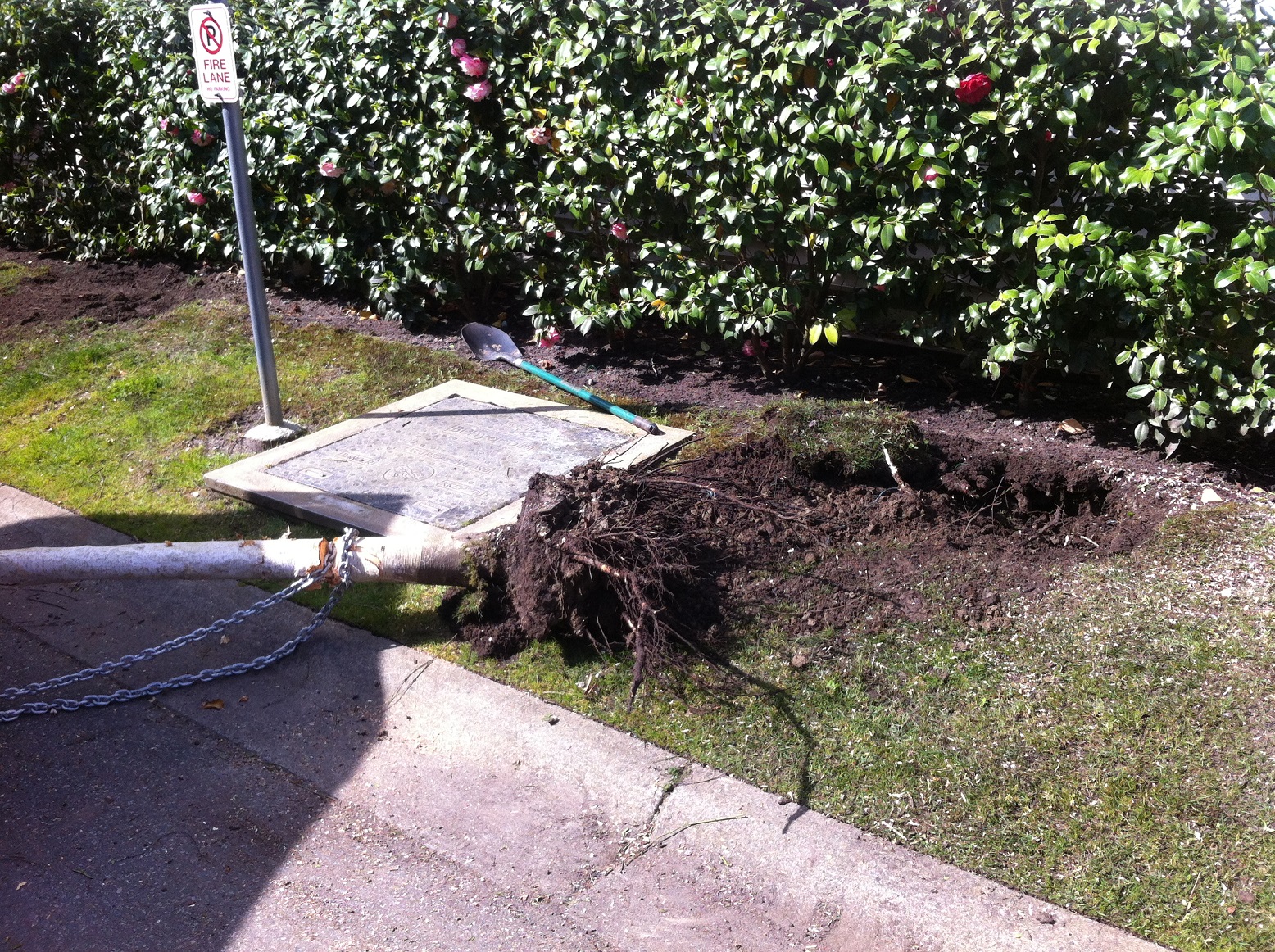
Step 4

Remove all stumps and fix the lawn area. We used lawn and garden mix soil from a landscape center. Good quality seed also helps.


IMG_2271edit


Mission accomplished. The site will miss the many ecosystem services the birches used to provide, especially summer shade for the adjacent unit.

Free garden and landscape seminar May 11, 2016

By | Education, gardening, Landscaping, Lawn Care, Mulch, Seasonal, Tips | No Comments

Free seminar

A free gardening seminar in Port Moody within walking distance from my place will take place on Wednesday May 11, 2016. It sounds great already! Remember, this is in line with our goal of continuous improvement. Free education is awesome.

Master Gardener Dr. Linda Gilkeson will talk about “Naturally resilient gardens and landscapes.” Come learn how to make your lawns and gardens more resilient to variable weather patterns; and about year-round natural gardening, native plant selection and natural pest management. Also discussed will be gardening methods for drier and warmer summers, water shortages, and other types of extreme weather. This is very topical. I am in. Notebook in hand. Are you?

When: Wednesday May 11, 2016

Where: Inlet Theatre, 100 Newport Drive, Port Moody

Admission: Free!

A Sedum solution

The theme of this seminar reminds me of a recent strata complex case in Langley. The complex boulevard beds are exposed to the sun and the original planting didn’t survive. Planted between Acer campestre trees were Skimmias and Heathers. Many of them didn’t survive the hot summer. The proposed solution is to plant succulents like Sedums between the trees. It will be interesting to see what happens; and if we get another hot summer.


IMG_0608

Acer campestre and some surviving Heathers and Skimmias; Sedums will replace the Skimmias and Heathers.


Surviving annual winter landscape tasks

By | Landscaping, Strata Maintenance | No Comments

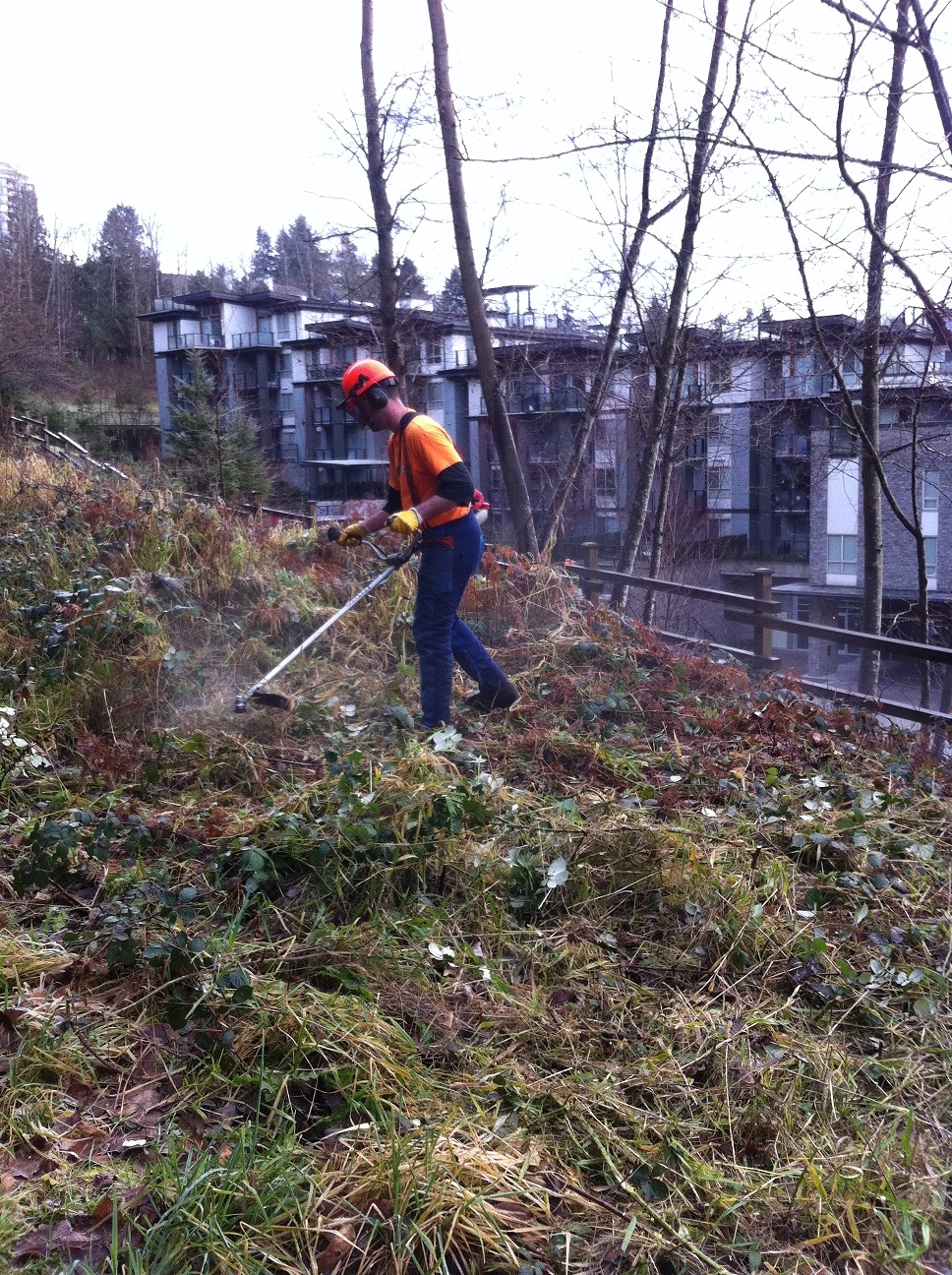
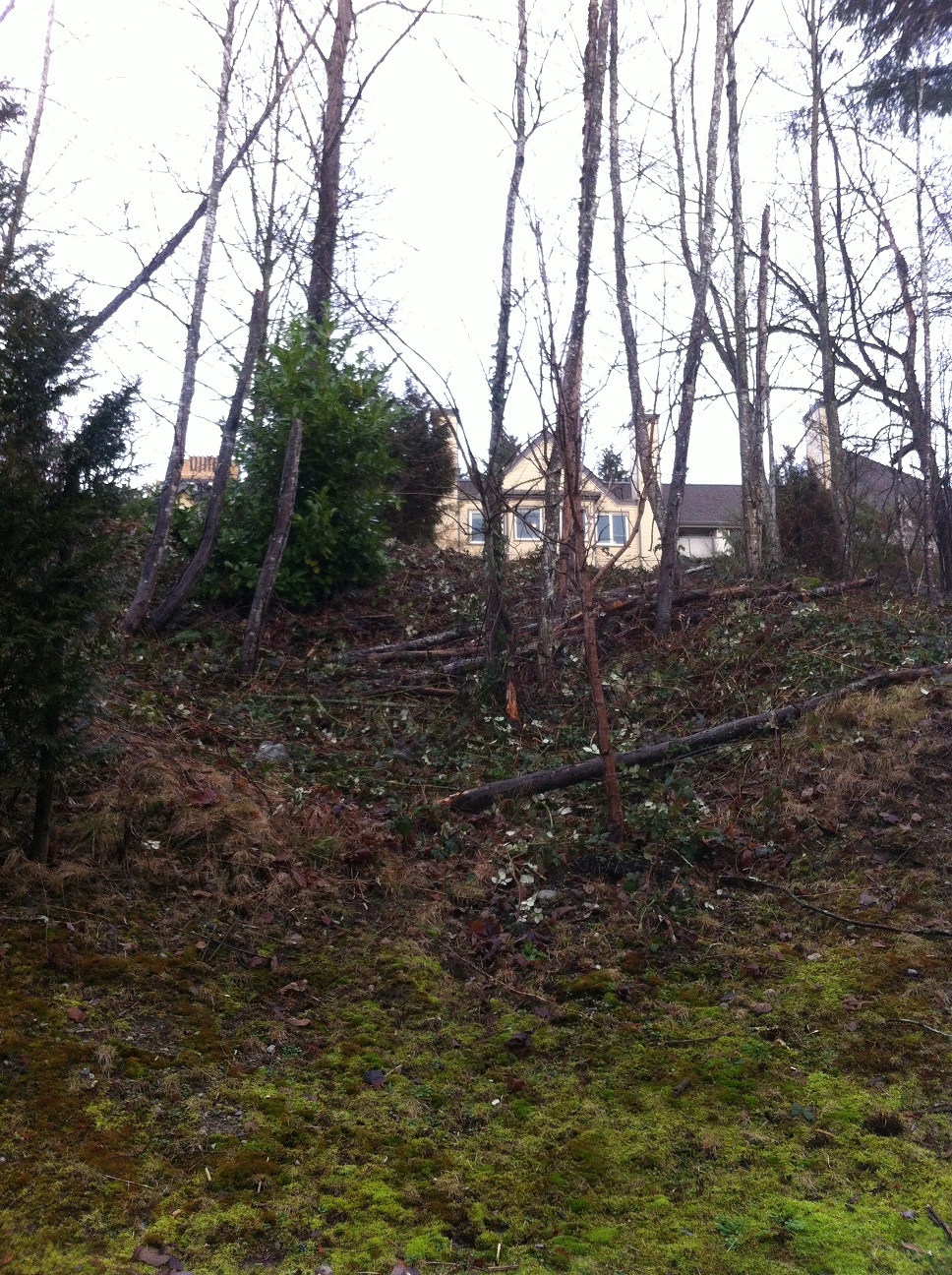
Landscape maintenance work is normally a lot of fun. You get plenty of sunshine and color, plant installs break up any monotony, and the lawns are green and beautiful. But sometimes we face the dark side; annual tasks that are not very pretty and are attempted during the slow winter months. (Or in summer: see my 8/21/2015 blog on summer annual cuts). One just has to stay safe and survive them. Consider the site pictures below. The wild buffer zone has to be kept in check. It’s overrun with Himalayan Blackberry (Rubus armeniacus) and other weedy species.

Complicating this annual landscape task is the unknown amount of garbage, rocks, metal and small animals hiding in the weeds. Staying safe and looking out for the safety of all passersby is of utmost importance.

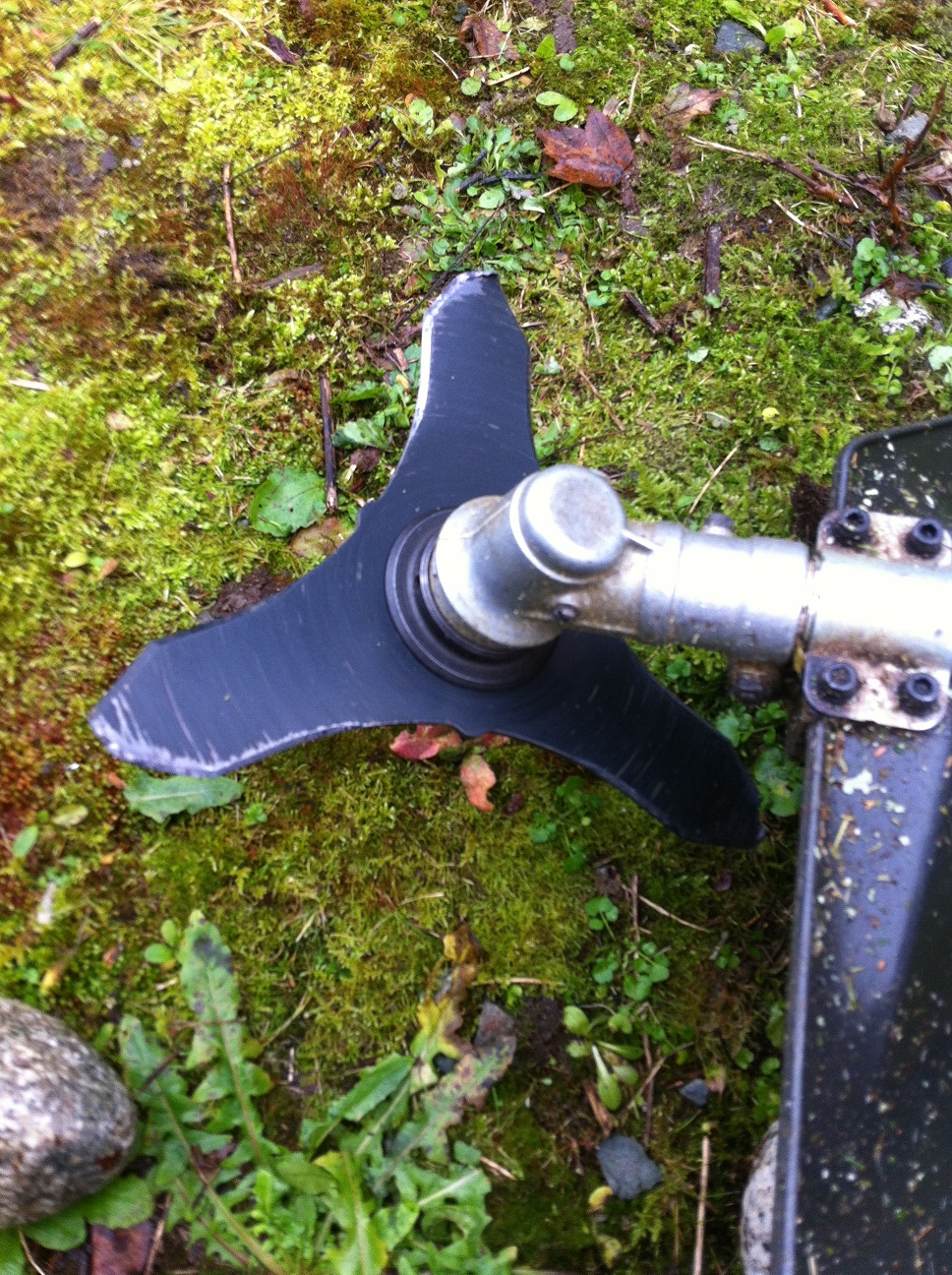
For the worker, steel-toe boots, good work pants, gloves, goggles and face shield are all mandatory. The idea is to aggressively cut as low to the ground as possible without getting injured or destroying the metal disc by getting stuck on a piece of rebar hiding in the weedy mess. Properly mixed gas should be kept close by in a jerry can; along with small tools. The rotating disc works very hard and can come loose if it is not checked periodically. This was the case with this particular Shindaiwa machine model.

This annual task can also be a good training exercise for new workers not yet proficient on small machines. Proper demonstration and safety talk are mandatory before proceeding.


cut

check the disc to make sure it is tight; on this machine it would come loose after a while


cut2

head protection and gas close by for quick re-fuelling


cut4

face your fears!

We need proper balance here: aggression towards weeds and safety for the worker!

 

cut3

after picture

This area will not be touched again until winter 2016.


Final cut: remembering arborist Jody Taylor

By | Arborist Insights, Events | No Comments

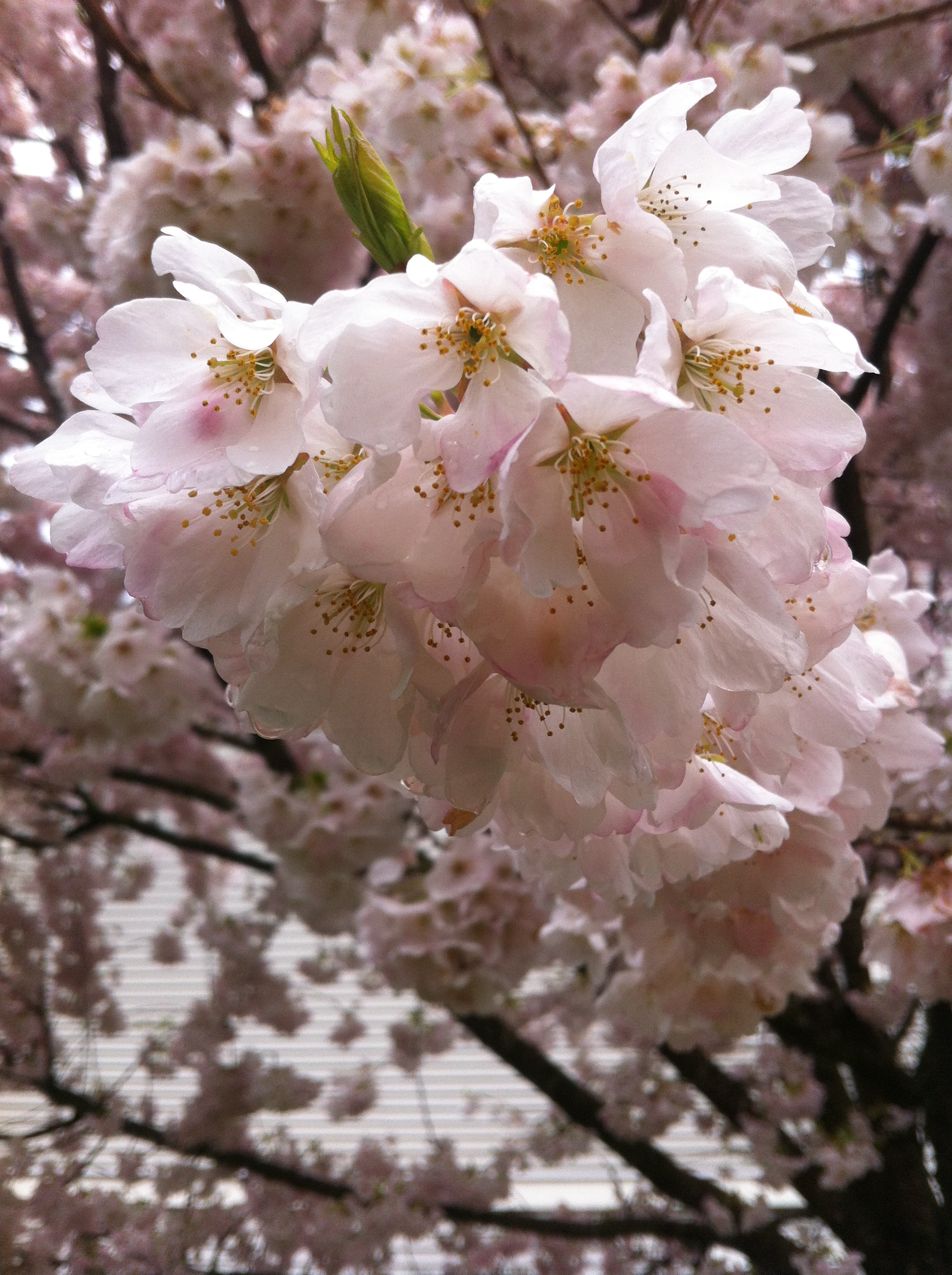
Cherry blossoms are bittersweet. They are beautiful but they don’t last very long. Like life. Out on a walk with my kids one day, I snapped a photo of  spent cherry blossoms on top of moss and the bittersweet idea popped up again.


12928313_10201523403122500_5019502408594078909_n


Then the news broke. The City of Vancouver lost one of their most experienced arborists in a work place accident. I never actually met Jody Taylor (1974-2016) but I know people who had worked with him for years; and they are sad. Devastated. He was a total tree professional. The City of Vancouver arboriculture department will never be the same. As a certified arborist I feel their pain. It’s a tragic loss for all green professionals.

Sometimes a cut can go wrong. I don’t fall trees personally but let us say there are two cuts to make. The front notch and the back-cut which drops the tree. When everything goes well, the trees falls over and crashes to the ground. Done. Next.

But as I recently found out, when the cut goes badly the tree can “barber-chair“. When the back-cut is nearing completion, the tree cracks and splits, sending the back end violently up. The tree then snaps at the end of the initial crack and who knows where it falls.

Speculation was that Jody’s back-cut didn’t go well. Pruning Catalpa trees in an elevated bucket, it would appear, from what I heard, that Jody’s branch was most likely too big. It didn’t fall down, it barber-chaired, the back end shot up, the branch snapped and rolled down the bucket arm all the way to the bucket. It crushed Jody in the bucket. He was rushed to hospital but succumbed to his injuries. He leaves a ten year old daughter. I believe there was a fund established to help her pay for future schooling. Contribute if you can.

When you go outside to work remember Jody and stay safe. Municipalities have regular safety meetings; private sector companies are encouraged to conduct regular tail-gate meetings to discuss safety. Sadly, sometimes things go wrong.


PlantSomethingBC initiative

By | Education, Landscape Industry, Landscaping | No Comments

BCLNA-logoplant-something-expanded-logo-215x300


The PlantSomethingBC initiative was launched at the recent BC Home and Garden Show. It is run by the BC Landscape and Nursery Association (BCLNA) and the BC Government’s Buy Local program. I’ve been buying plants from local nurseries for years so the idea is nothing new to me but it’s well worth plugging in this blog. Promoting the sale and use of BC grown plants helps everyone; it supports BCLNA members and non-members in the landscape industry from landscapers and growers to garden centers. Getting listed on the PlantSomethingBC website is free for BCLNA members. Non-members have to pay $150. You can also purchase your annual BCLNA membership. The fee is based on your company’s revenue. Check out the list of member benefits.


Key points from the PlantSomethingBC website:

  1. Live local, buy local:  People who live in BC have intimate knowledge of our local plants, how to grow them and take care of them, what diseases affect them
  2. Feel better: Green environments are great for people, they reduce stress, lower blood pressure and calm nerves. Gardening leads to healthy eating habits and active lifestyles. Not convinced? Read this: 518GHfv0+cL__SX329_BO1,204,203,200_
  3. Chill out: Planting trees on the south and west sides of your house can reduce your air-conditioning costs by up to 30%
  4. Air: Plants can clean your indoor air, trees produce oxygen-for free!-and add value to your property
  5. Money: A Properly landscaped yard may increase your home value by up to 20%. Hire Proper Landscaping for your strata complex; for residential work hire Landscape Industry Professionals

All of the recent projects I worked on involved locally sourced plants. Usually the nursery-landscaper relationships are deep, benefitting both parties.


IMG_1639

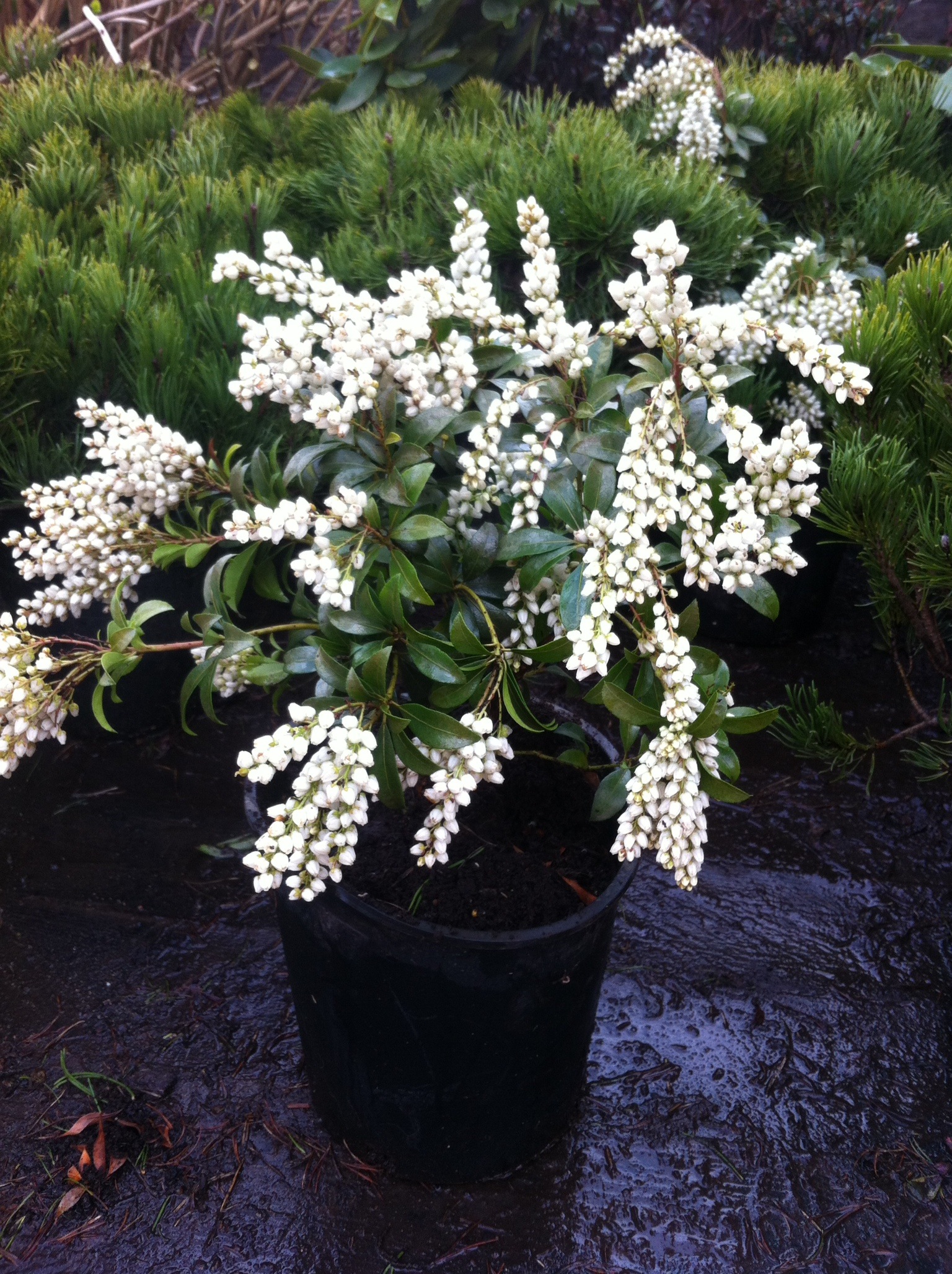
Pieris japonica


IMG_1640

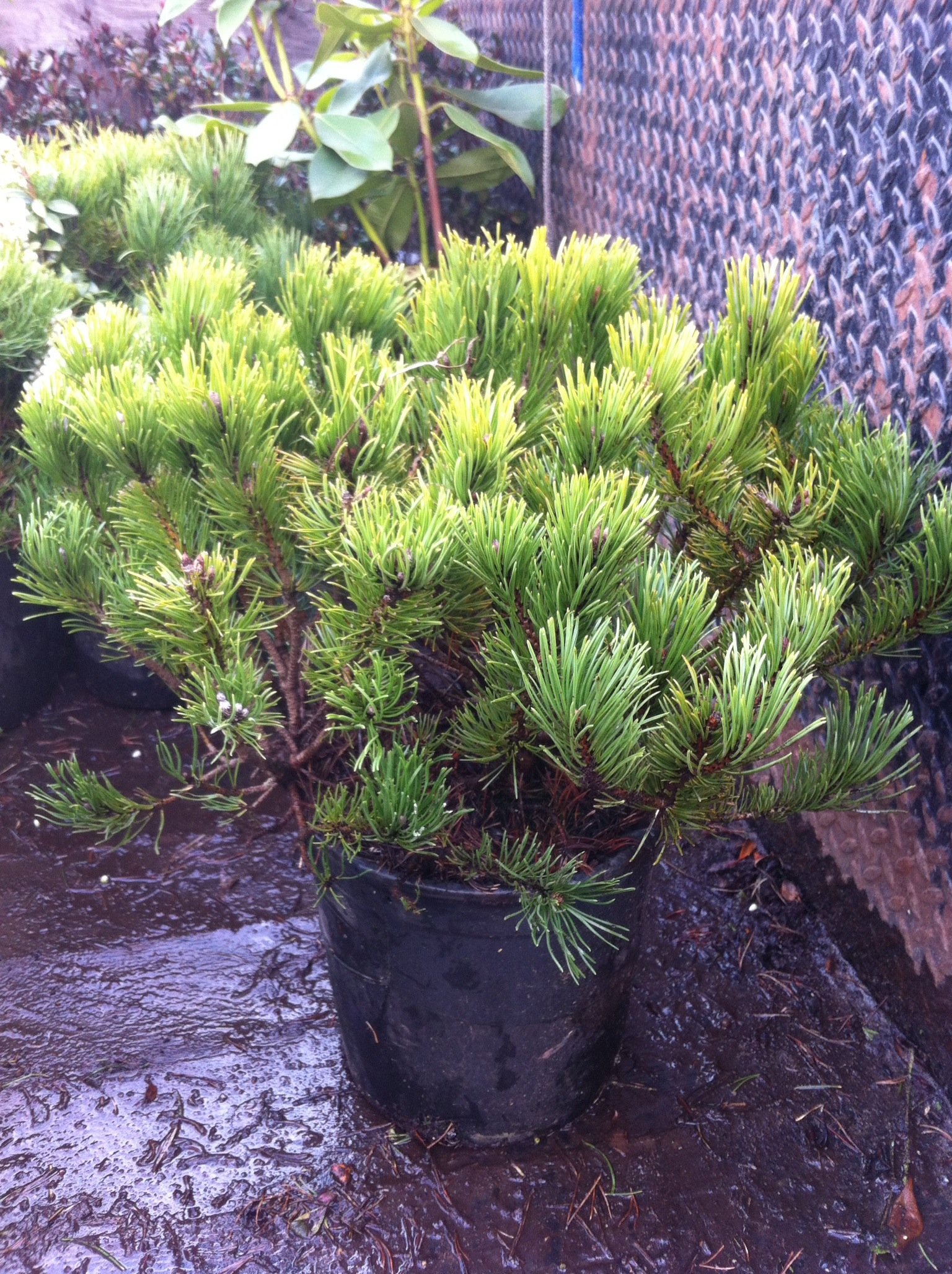
Pinus mugo


IMG_1641

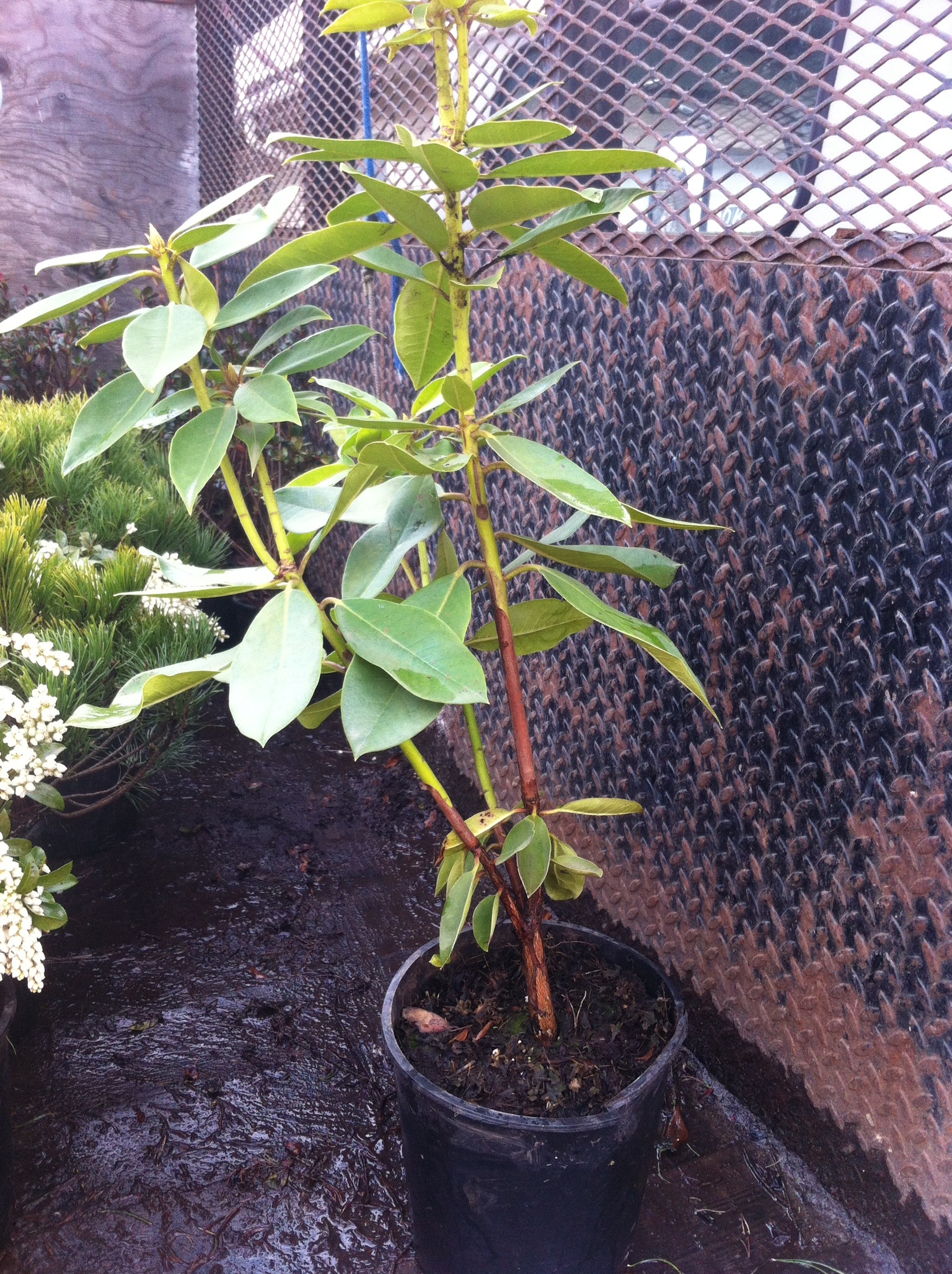
Rhododendron


IMG_0991edit

Prunus lusitanica

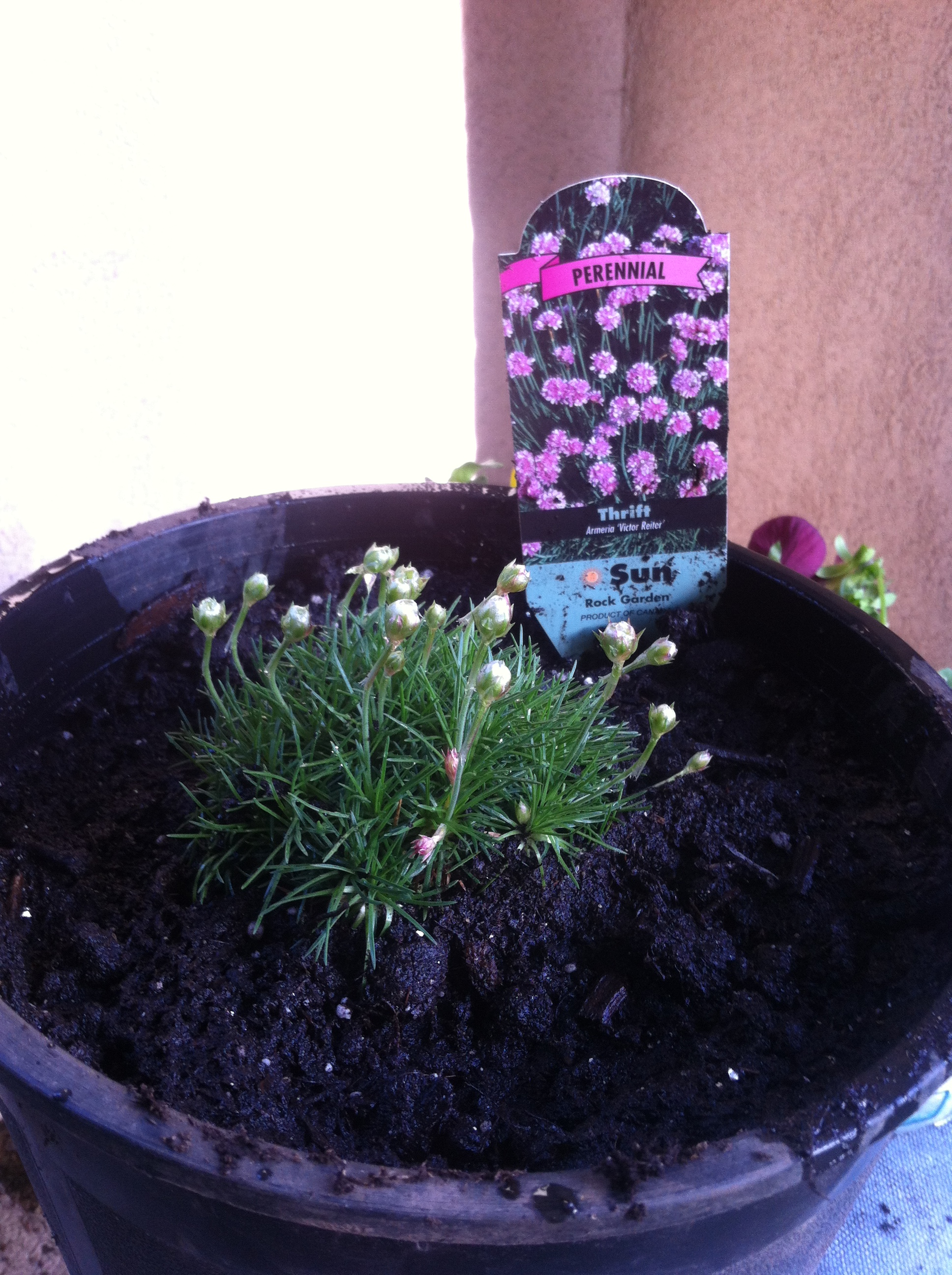
I also had some fun on my patio, planting up pots with the kids with BC grown perennials.


IMG_2001

Armiria maritima

Support your local growers, garden centers and landscape professionals by using locally-grown plants on your next project! It makes a lot of sense. You’ll be glad you did.

 

Feeling happy with spring color

By | Education, Landscaping, Seasonal, Species | No Comments

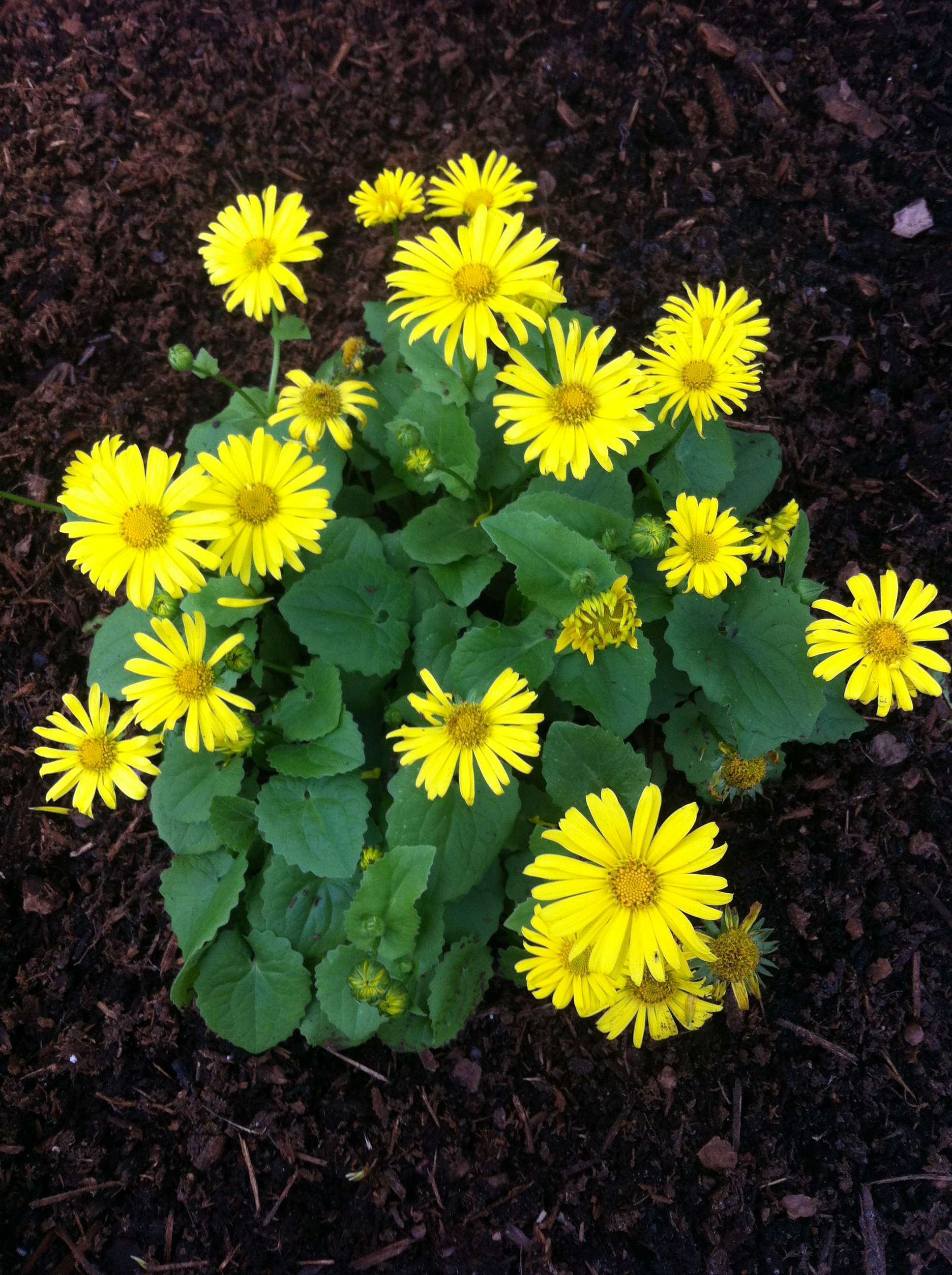
Spring is here and it feels fantastic to leave winter behind. Walking home with my son from Menchie’s- side trips we don’t tell mom about- I noticed my favorite Doronicum flowers by the liquor store. The yellow is very warm and happy. These are the earliest flowering daisies. They are herbaceous perennials growing from a rhizome (underground stem). I first discovered them as a municipal worker by Como Lake.


IMG_1580 IMG_1583

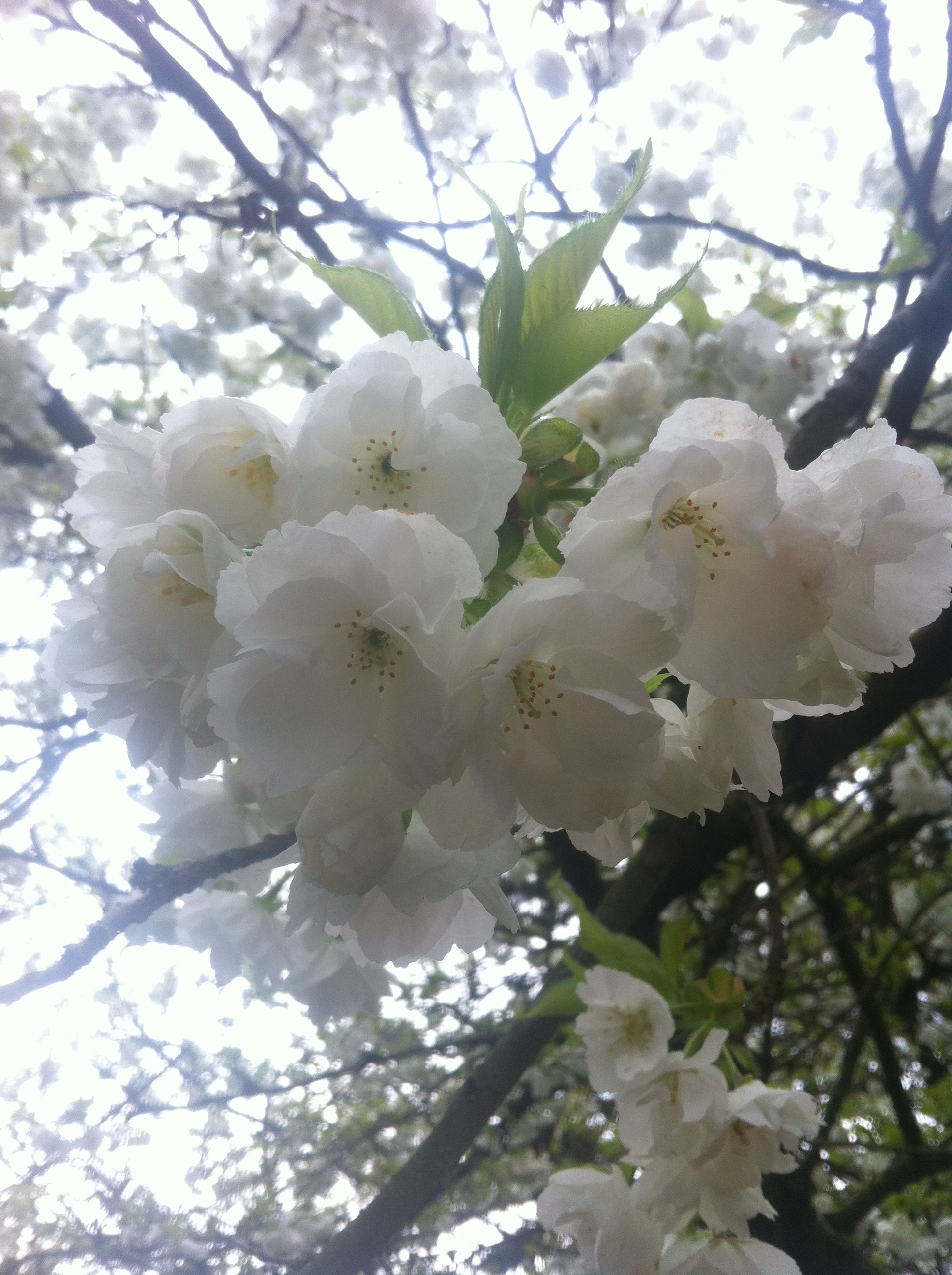
Cherries (Prunus) are everyone’s favorites even though they are bittersweet: they are beautiful but, like life, they don’t last very long. A side-note on cherries. When I lived in Japan, I got a chance to visit a revered old fuyu-zakura or winter cherry. I was blown away with the whole idea: winter flowering cherry? Really? It was true. There it stood in the middle of a snowy open field with its gorgeous flowers. Protective fencing ran around the drip line. We already know from an earlier blog what soil compaction does to trees.


IMG_1495 IMG_1570


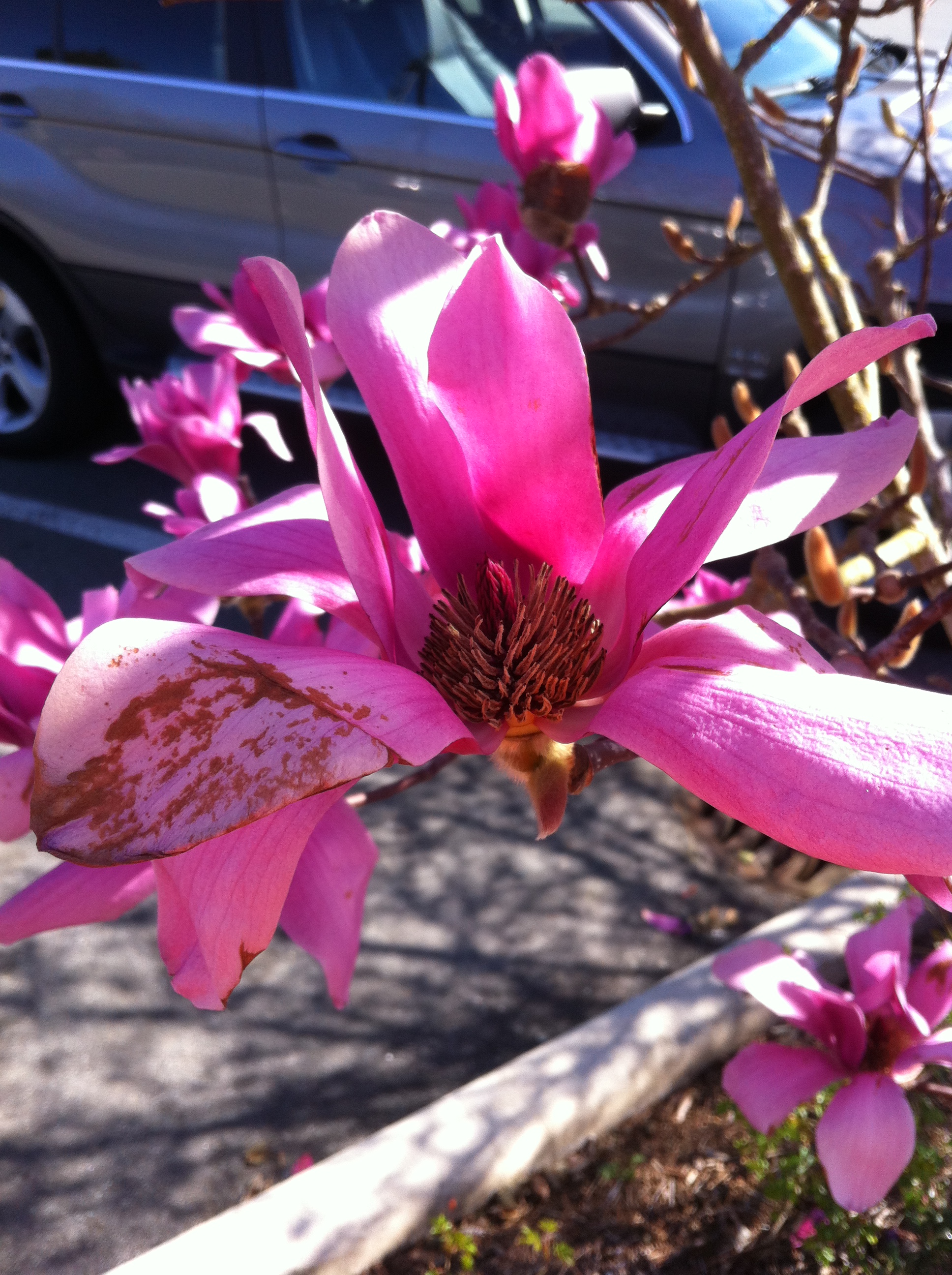
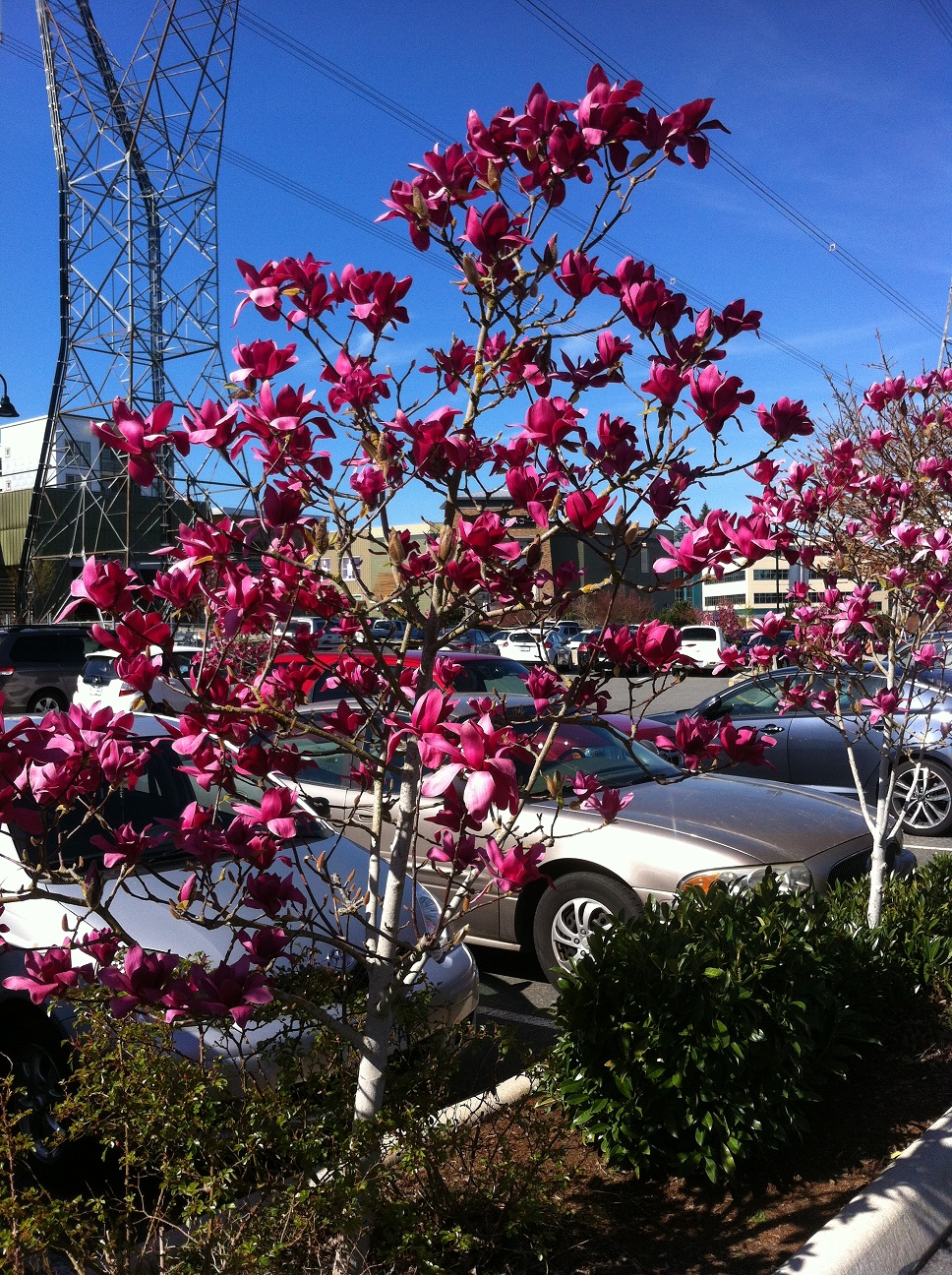
This past week I discovered deep red colored Magnolias at a mall parking lot in White Rock. The effect is stunning. It’s impossible to miss the parking lot trees.


IMG_2031 IMG_2030edit


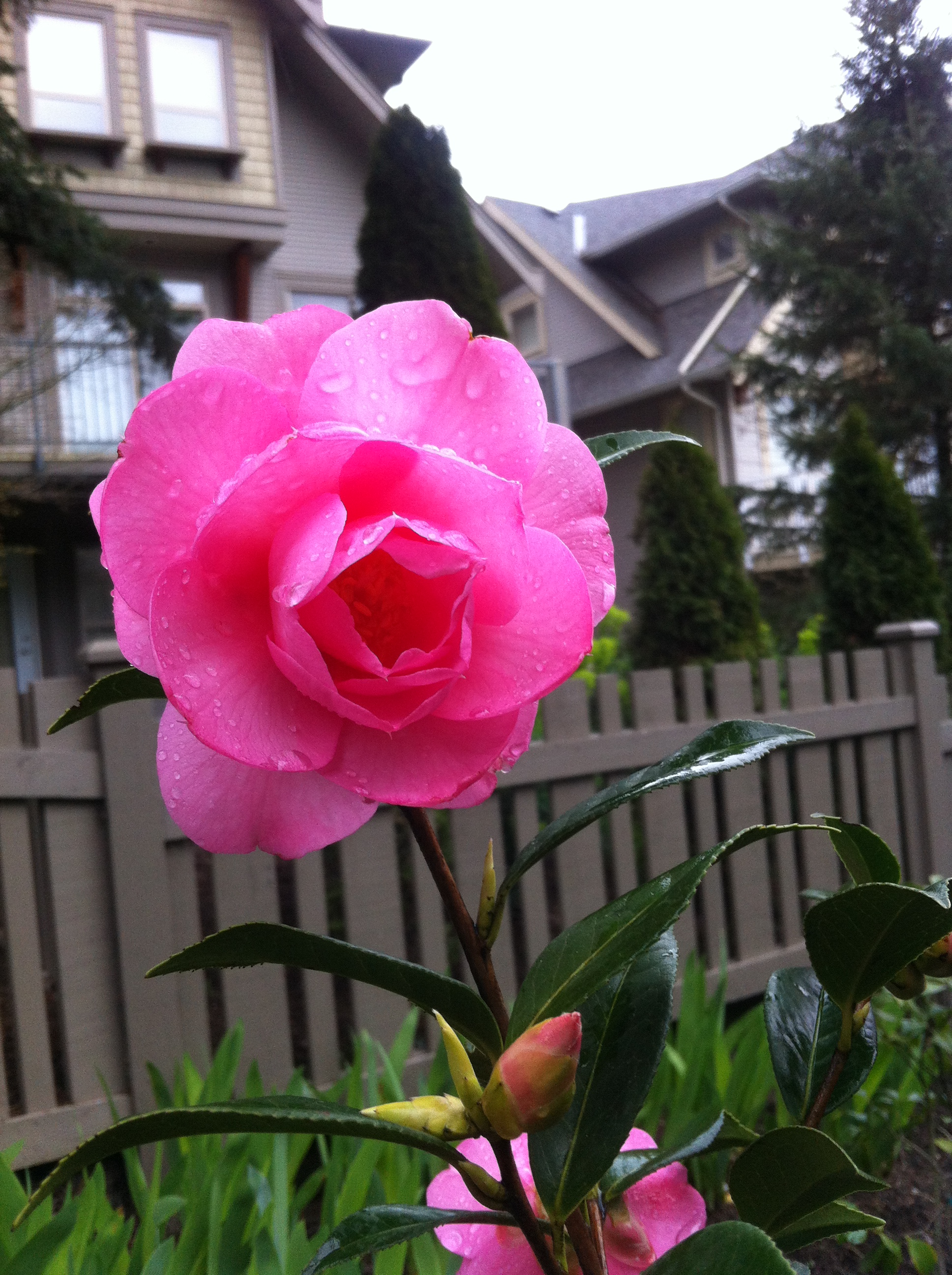
Camellia japonica flowers totally dominate gardens at the moment.

IMG_1542


IMG2222


IMG33333

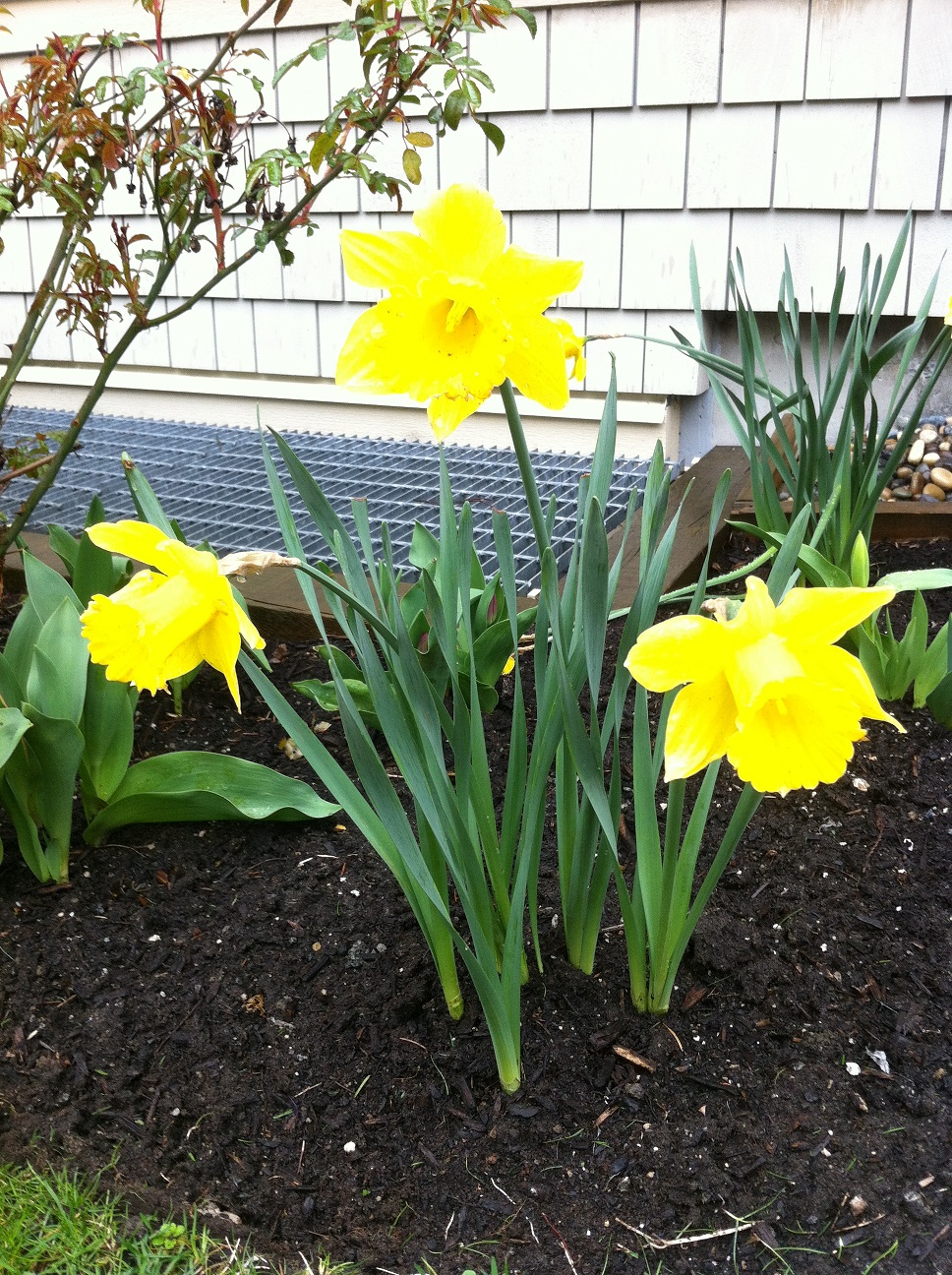
Tulips and Daffodils are perennial favorites. Tulips are good for one or two shows and then best replaced. Daffodils can be naturalized and they will keep on wowing you every spring. One such event happened in 2014 at Como Lake in Coquitlam, BC. Volunteers were recruited to plant bulbs in fall on the west side of the lake.  Many were ESL students and recent immigrants; this was the first time they planted anything. I hope they got to see the result of their work.

Bulb planting tip: look at your bulb height, double it and plant it that deep. Keep the planting depth consistent, otherwise your bulbs will emerge unevenly.

What color have you noticed lately?

Why you should fall in love with blade edging

By | Edging, Landscaping, Lawn Care, Strata Maintenance, Tips | No Comments

Blade edging is a great landscape maintenance tool. It gives our sites definition, it’s relatively easy to learn, and it can be done bi-weekly on standard BC strata sites. The only downside is the cost of replacement blades. (Always recycle your used blades.)

Incredibly, not all landscape maintenance companies use blade edgers to maintain nice, sharp edges on their work sites. That’s too bad. I personally love the sharp, clean look.

Let’s consider my work from mid-March 2016 on a Maple Ridge site.

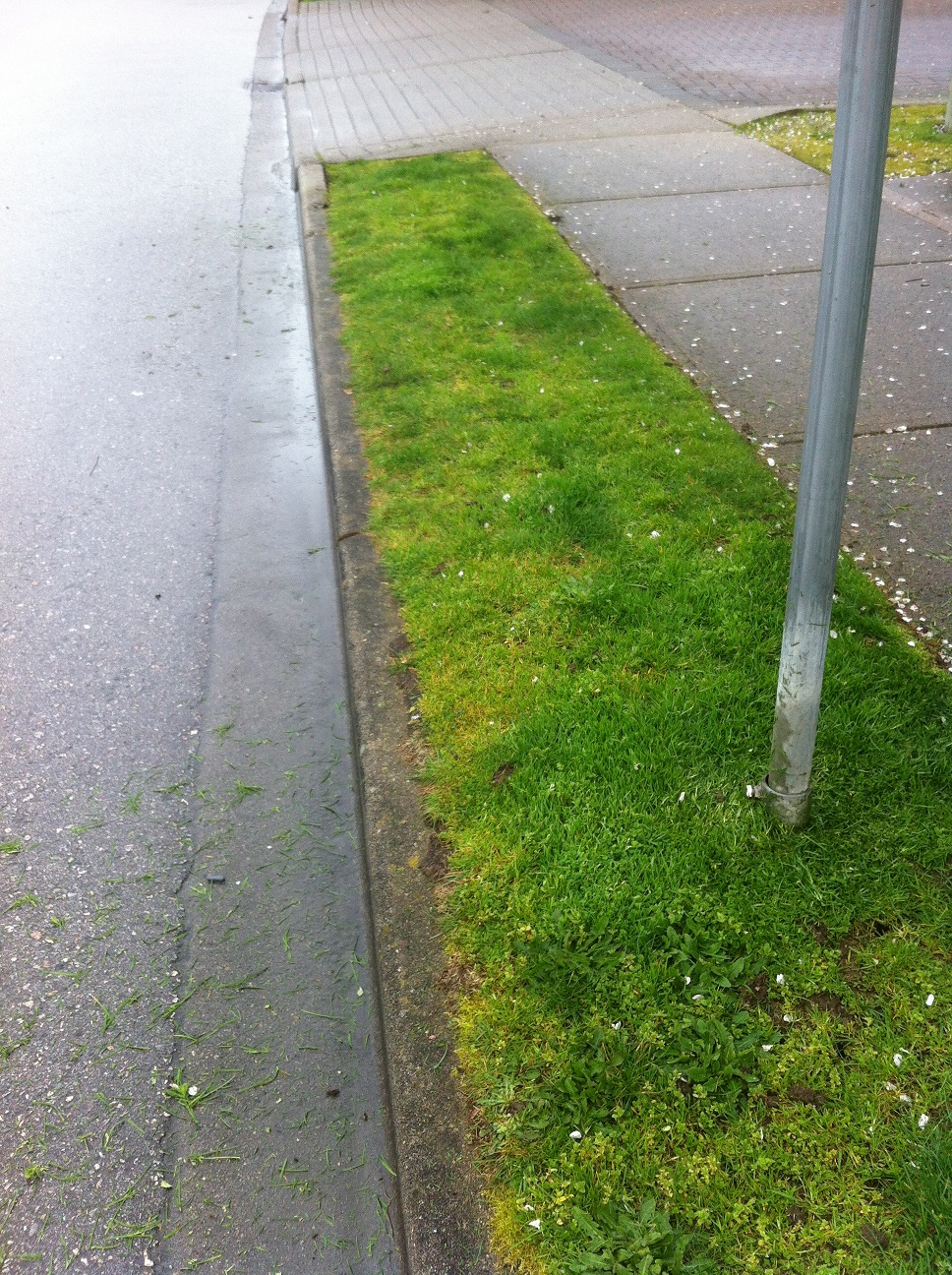
Tired looking strip


blade1


This boulevard strip lacks definition. Grass is growing over the curb and it obviously gets line trimmed which does not do anything for definition; it simply rounds off the edges which is not our goal.

Key idea: the mower, line trimmer and blade edger should work together by meeting to create a nice, sharp edge.

Show time

Let’s take a blade edger with a fresh blade and see what happens. Pants, safety goggles and ear protection are mandatory. No discussions. Always let passersby go. Try not to do this work as kids walk to school!


blade2

Neglected boulevard strips like this will require some “drilling”. Keep your blade edger at ninety degrees and stay stubborn like me. You might have to run over the entire line twice. It depends. Once the edge is re-established, regular maintenance will be a breeze. Bi-weekly blade edging will suffice. Some high-profile areas like club houses can be bladed weekly.

Clean up

blade3

Obviously, this will require some cleaning. Remove all grass and dirt chunks before your clean up blow. The lawn area must be clean. Don’t go cheap here. The machine can generate black earth balls. Even one left on the lawn will detract from your presentation.

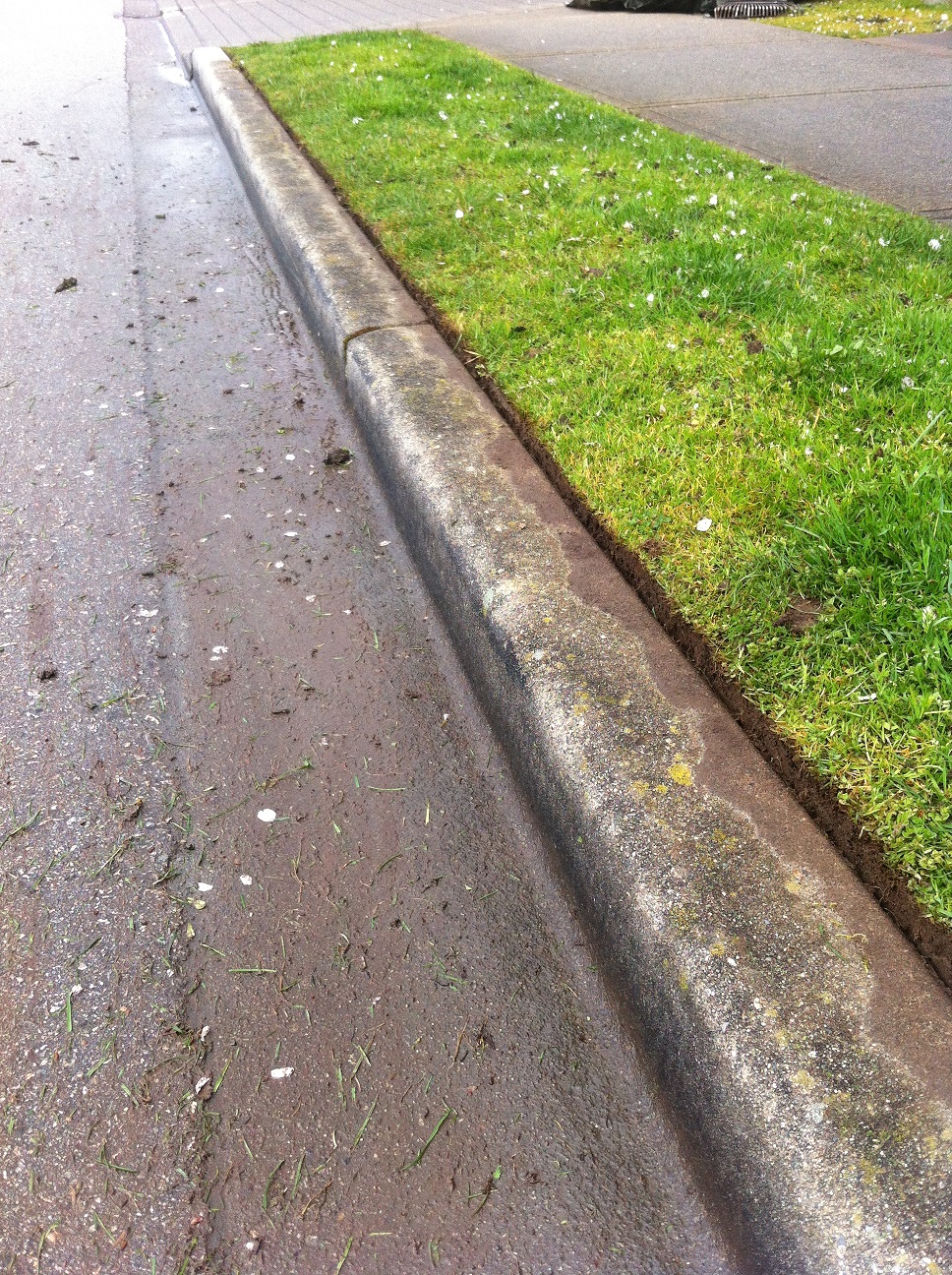
Final result

blade4

Carefully, run your blower along the entire edge. You can also blow the street assuming it can be done safely. Put on a safety high-visibility vest and do it quickly. Avoid rush hour traffic times.

No contest!

I know which picture I prefer. What about you? And your clients?


blade1 blade4

Don’t stop at boulevards. Edge your tree circles, grates and metal covers and soft bed edges. You will be glad you did.


Mowing 101: pilot errors crush tree wells

By | Education, Landscaping, Lawn Care | No Comments

Spring is finally here – a bit early this year – the grass is shaggy and mowers are coming out. Strata members wonder when the lawns will get mowed Properly. So we send our workers out and, inevitably, blogs are born! Consider the mistakes that were made in the field today.

How many problems can you list?


IMG_1980edit

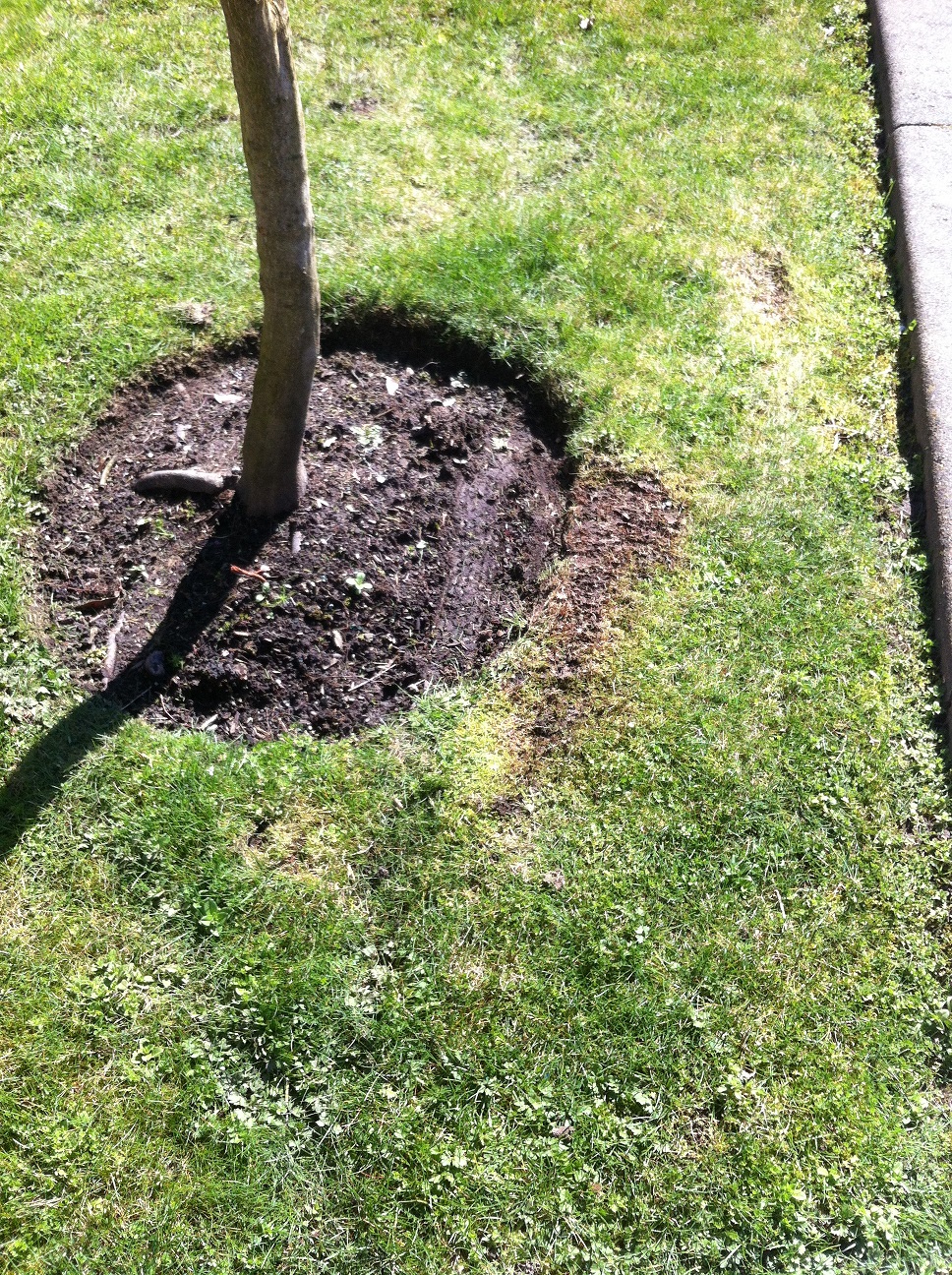
  1. Mowers don’t belong in tree wells, period! Go around the tree well instead of forcing the mower into a narrow spot. Line trimmers were designed to hit tight spots, so use them. This is a horrific way of saving time.
  2. Scalping is a huge, HUGE, problem. The brown zone in the photo has been scalped and will require repair; most likely over seeding. Seed is expensive and extra time will be required for repairs. Remember: grass grows from meristems located about a third of the way up a blade of grass. Grass blades don’t regrow from underground roots, they grow from meristems. This is why a scalped area will likely stay bare unless we over seed.
  3. Soil compaction is another problem. The tree well is there to channel water and nutrients into the root zone. Weekly soil compaction with mower wheels will make it difficult for fine roots near the surface to move through the soil; water will also most likely pool up and run off instead of penetrating into the soil.
  4. The mower destroys the ninety degree tree well edge we so diligently established in winter.
  5. The wheel marks are unsightly.
  6. The tree well also exists to eliminate tree v. machine conflicts. The most likely outcome of any collision is bark destruction. Open wounds invite pathogens which the tree has to fight by compartmentalization and that uses up precious energy reserves, thus reducing health and growth. Wounds also affect xylem cells which means water transport is temporarily interrupted thus compromising function and growth. Collisions with machines also cause stress and reduce growth. If the tree dies and has to be replaced we face direct replacement costs and loss of ecosystem services.

Summary:  Never run your mowers through tree wells. Navigate around the edges carefully.

European chafer beetle damaged lawn alternative, volume 1

By | Landscaping, Lawn Care | No Comments

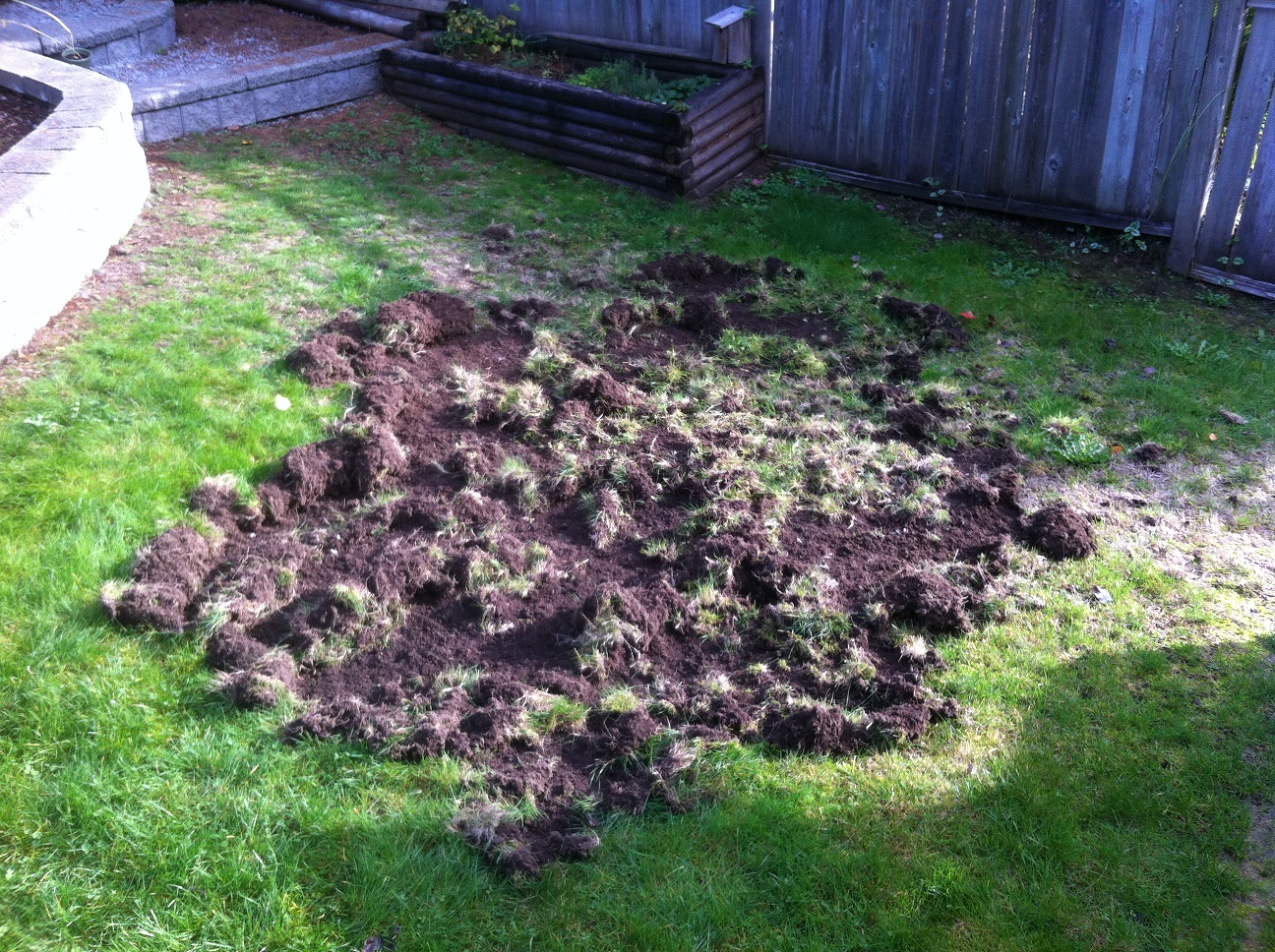
Many Coquitlam home owners, and elsewhere, are struggling with lawn damage caused by the European chafer beetle. The grubs feed on grass roots. Birds and animals dig up lawns to feed on them. My friends in Port Moody video taped two black bears in their backyard flipping turf over and feeding on chafers.


shiva

Westwood Plateau lawn damaged by animals searching for chafer beetle grubs


So your lawn has been damaged. Now what?

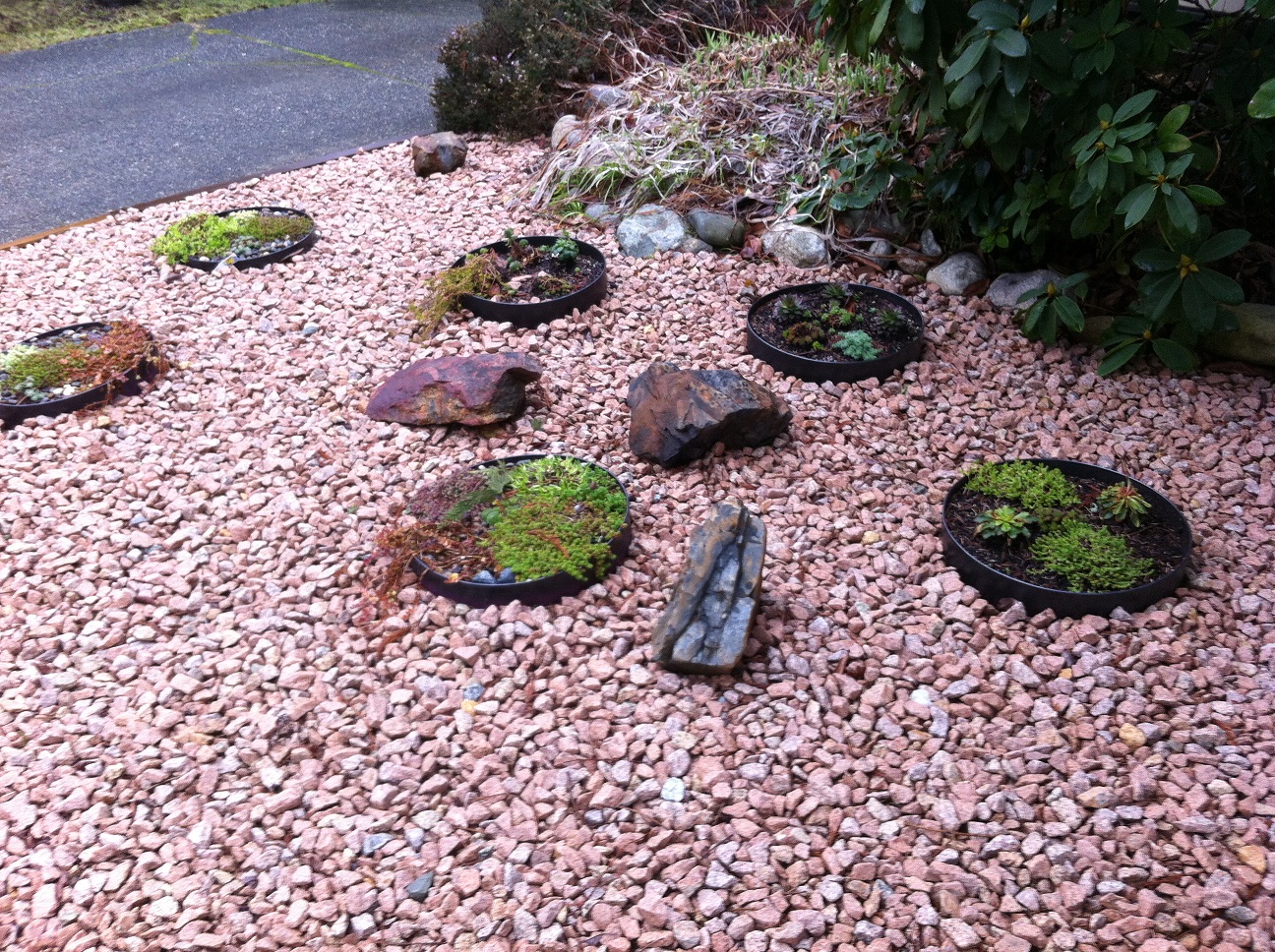
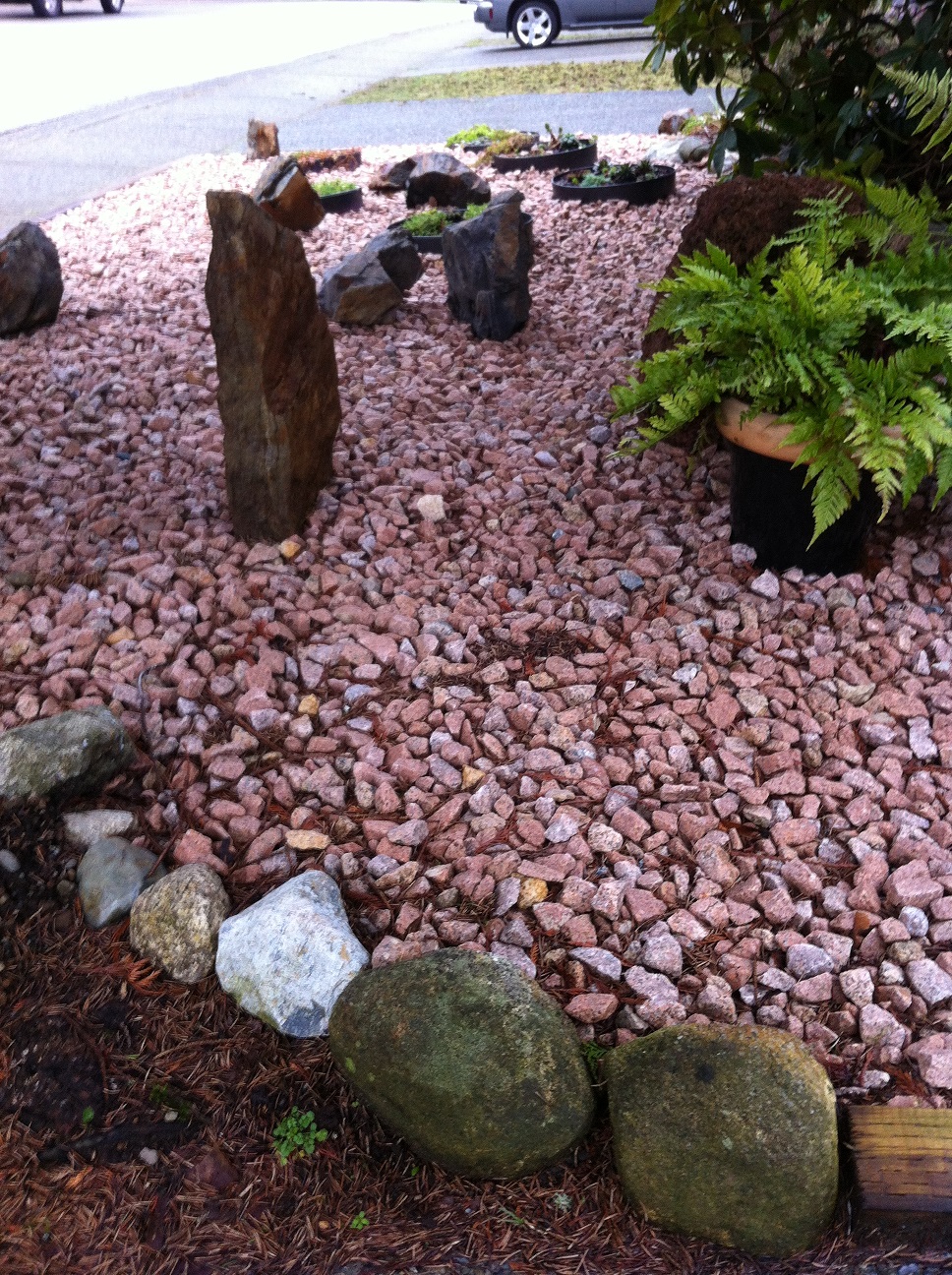
Some local residents are turning to lawn alternatives. The example below is interesting because chafer beetle damage was the last straw for this resident.


IMG_0721


Problems

  1. The owner had very little time and inclination to “baby” her lawn
  2. The large spruce tree shaded out the lawn and rained down needles on top of it
  3. dogs abused the lawn with urine
  4. foot traffic compaction

Solution

  1. dig up the lawn (this was my humble contribution to this project!)
  2. install wooden border
  3. install stones
  4. decorate with rocks and pots with succulents (low maintenance plants)


IMG_0724

pots with low-maintenance succulent plants


IMG_0723


Problem solved! No more mowing, no more chafers, very little maintenance required aside from needle clean up and weed control.