
All Posts By

Vas Sladek

Cheap landscape upgrades

By | Landscaping, Plants | No Comments

We’ve all seen garden design porn with those beautiful, elaborate designs that cost real cash and take time to pull off. I see them on LinkedIn and in magazines like Fine Gardening. They make me jealous because I don’t have the imagination, nor plant knowledge to be a full-time designer. One day.

This blog post covers a humble project that cost zero cash and involved rescue plants. It took only minutes to complete and it solved some real problems.

Gate bed
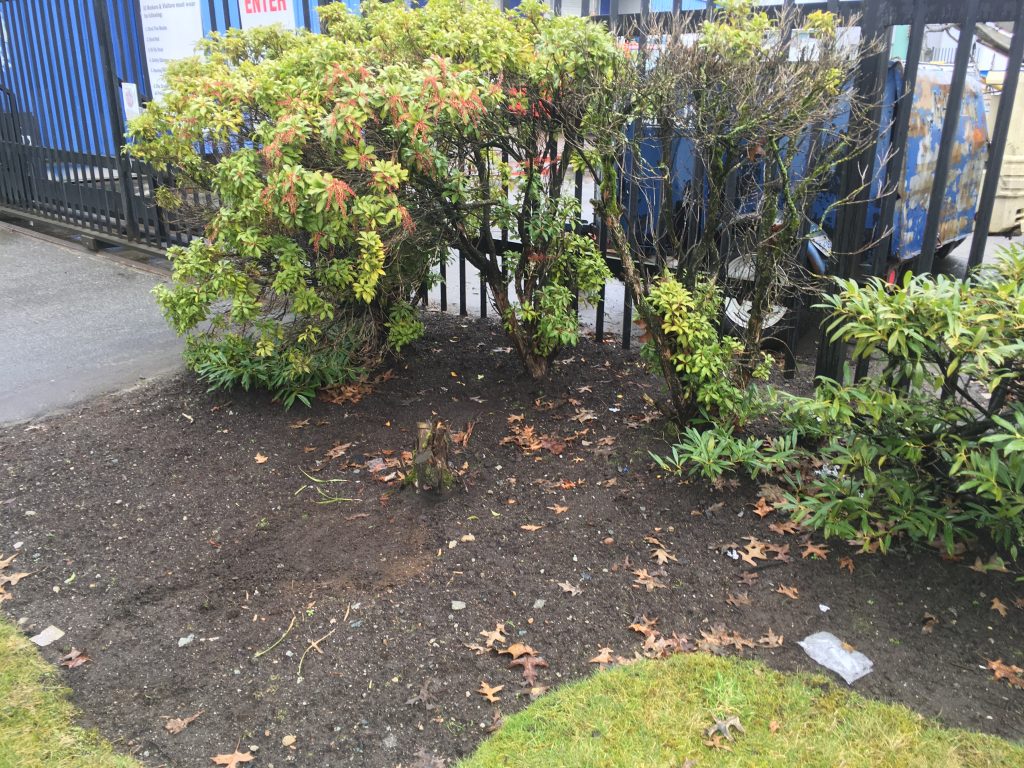
The area I upgraded is a pretty humble corner bed next to a gate. There is a dogwood stump in the middle of it and bramble grows along the fence. For most of the year this is a dusty entrance area. I don’t even know if anybody notices the bed. But I’m in charge of maintaining the site so I have to keep it clean. That’s landscape maintenance without prejudice.

Let’s examine the problems:

  1. There are empty spaces that just get colonized by weeds
  2. The dogwood stump is visible
  3. There is only one shrub plant layer and nothing below

Solutions

We fight dead space by installing free Sedges (Carex). I scored two large clumps from another site where they were rudely edited out of a water feature zone. I’m not sure why.

I sold one clump on Facebook marketplace so I could compose a blog post about it. If you’re wondering, I sold the sedge in one day for the price of two coffees at Starbucks. I hope it thrives in its new home.

Now, back to the gate bed. Since the clump was too large, I divided it into two with a shovel. You will encounter some resistance if you try this, but keep on trying.

Adding plants eliminates dead space and introduces competition for any weeds trying to get established in the bed. It also brings in a second, lower layer and upgrades the look.

I also wanted to hide the stump until I get around to bringing a chainsaw so I can flush cut it. I believe I succeeded.
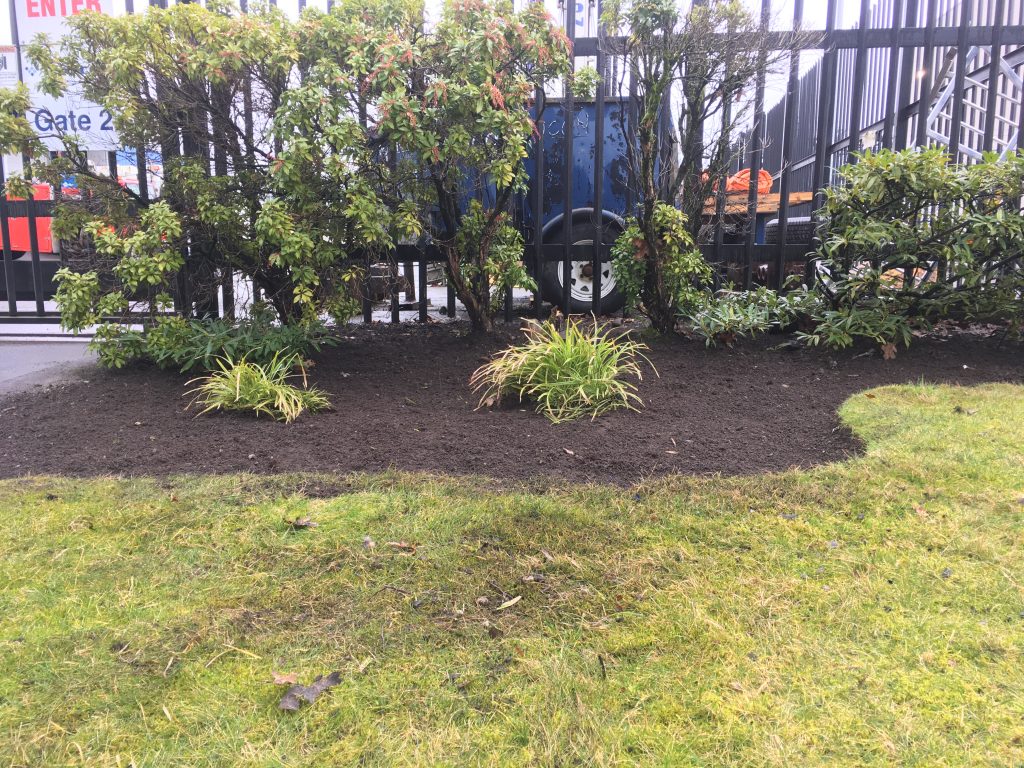
Much better.

After planting we rake and cultivate the bed (finesse work). Don’t forget to blow off the lawn edge.

If everything goes well, the sedges will grow out and one day we’ll be able to divide them again. Note that they don’t require any maintenance. Just enjoy them.

Conclusion

You can make simple landscape improvements with free plants and some sweat and time. And maybe, one day, we’ll all create more elaborate designs.
Windmill palm magic

By | Plants, Species, Trees | No Comments

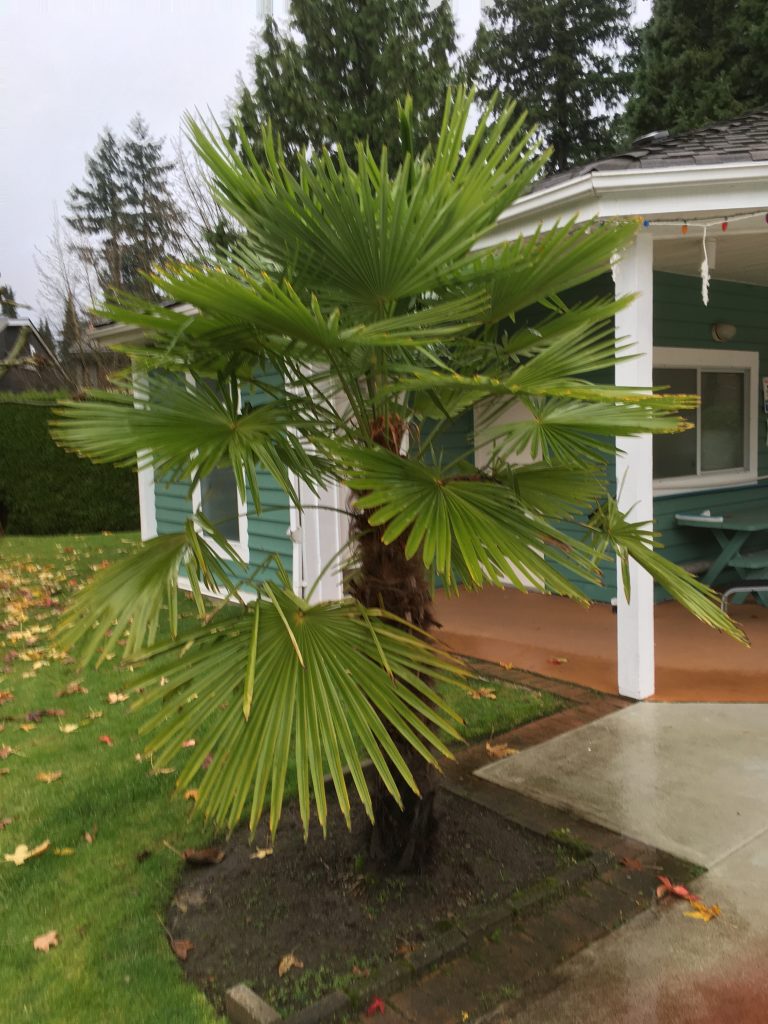
I fell in love with palms when I visited Southern California in 2019. So, it’s nice to know that we also have a palm species growing here in British Columbia: Windmill palm (Trachycarpus fortunei).

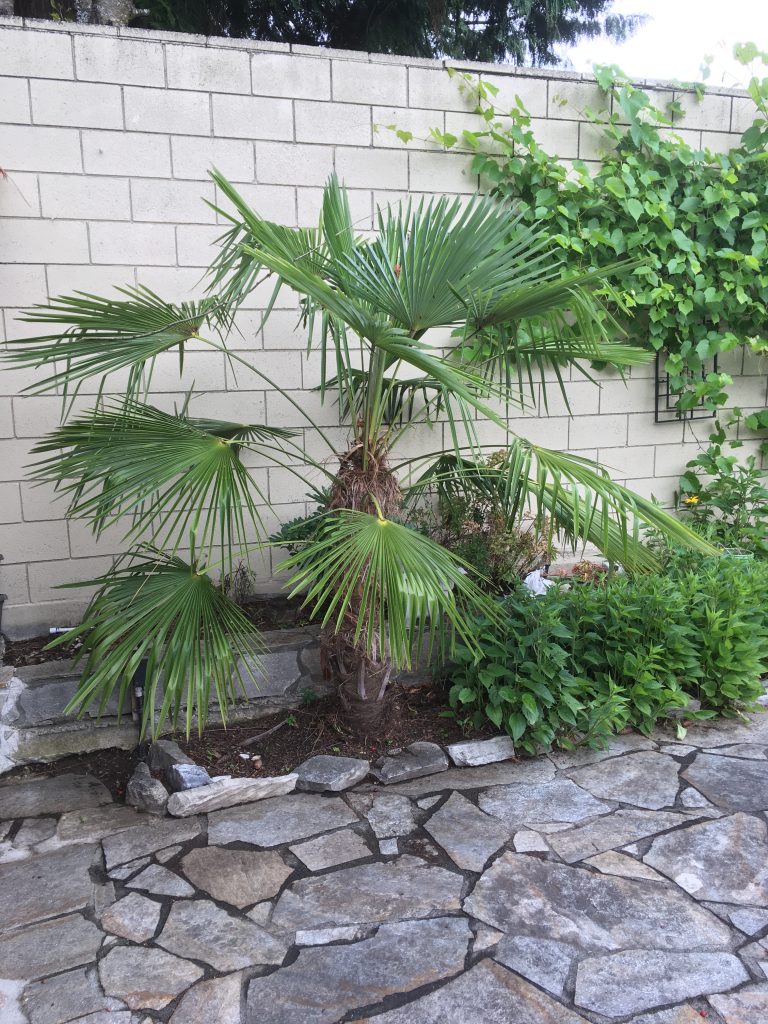
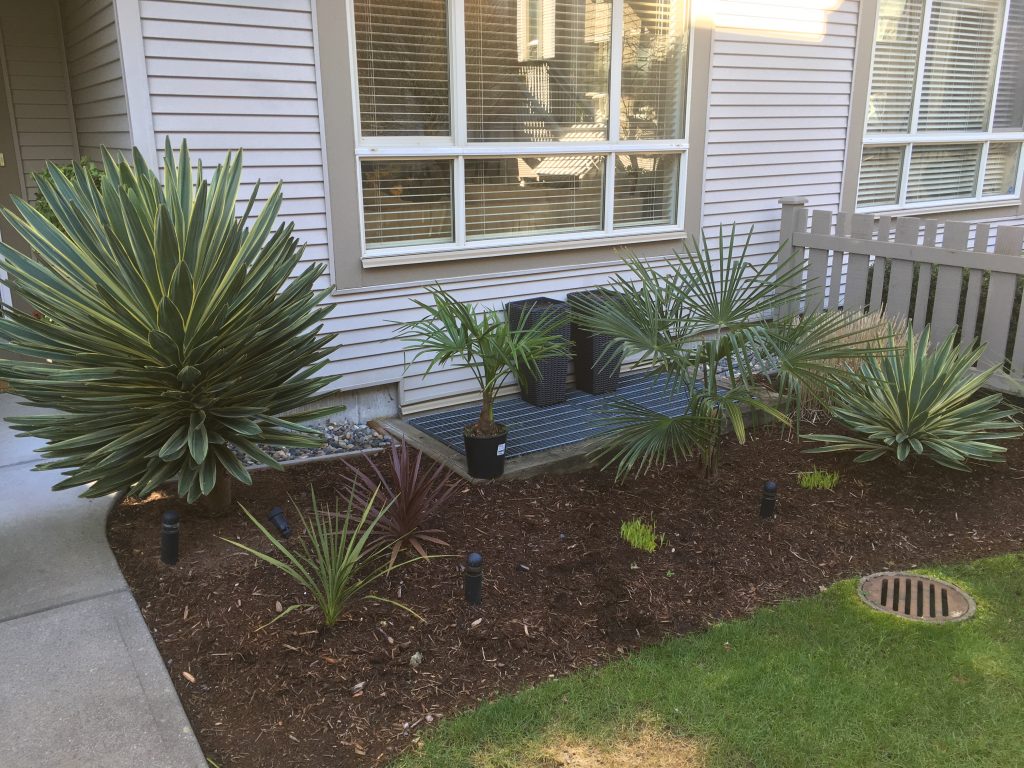
I got to see one today, still in its 2 gallon landscape pot, waiting to be planted. While the palm got me excited, I wondered about available space. Take a look at the photo and recall that mature windmill palms reach heights of 15-25 feet, and widths from 6-10 feet. Always consider mature sizes before planting your shrubs and trees.

Note the two windmill palms in the middle.

Considering the mature size of this palm species, I wonder what this planted bed will look like years from now. It could be a disastrous jungle too close to the windows or a beautiful tropical corner unlike anything else on this strata site. Personally, I love the look but I would only plant one of the palms. Not two.

Palm features

  1. The windmill palm is tree-like with hairy brown fibers covering the trunk.
  2. The large fan-like leaves are attractive but the petiole which holds the leaves has sharp points which makes pruning and clean-up tricky.
  3. It’s a good accent or specimen tree
  4. I’ve seen people wrap the top in burlap to protect it from cold temperatures. But the four specimens in the courtyard of my complex do just fine in winter. Remember, palms grow from the tip only. When the tip dies, it’s over.
  5. It looks great near a patio or pool.
  6. $40 retail seems like a bargain. If only I had space.

Strata complex pool deck specimen.

Private residence specimen between outdoor kitchen and pool.

Conclusion

I love palms! If you want one as a specimen by your patio or pool, consider planting the windmill palm. It’s an awesome palm. Just make sure you have enough space for it to reach mature size.

Guard against weeds

By | weeds | No Comments

It’s been a busy weekend so I didn’t get to read my weekend newspapers until Sunday afternoon. One short question and answer article caught my eye (Vancouver Sun, Saturday February 20, 2021, F6). It was a question about a common weed called bittercress (Cardamine hirsuta).

The answer was spot on. First, identify the weed. Some beautiful perennials look weedy without flowers so get to know your common weed species.\

Second, never let weeds produce seeds. Once you see flowers, you know it’s time to act. Otherwise, your garden will be full of weed seeds.

Bittercress is a fun weed because when the flowers produce seeds, the plant turns from green to yellow. Then the seed pods wait for you to touch them so they can explode and scatter their contents. If you get close enough, you can feel the seeds hitting your skin. Or, you can catch them in your hand. Thus the common name snapweed. Try it in your neighbor’s garden.

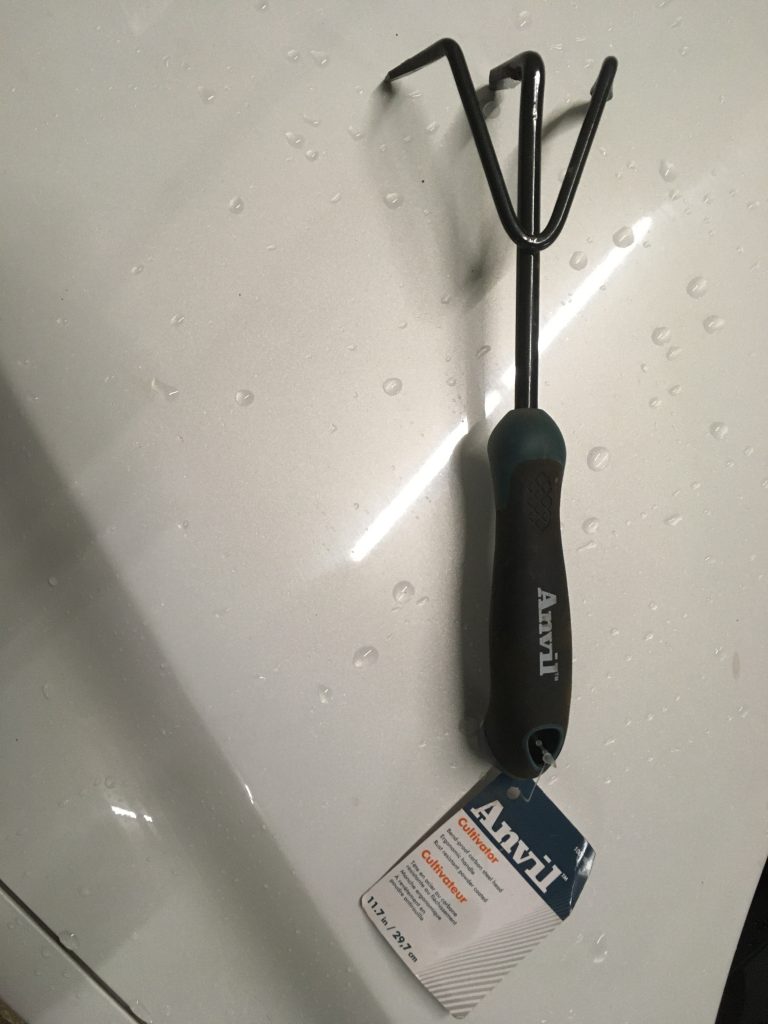
The weed is fairly easy to uproot. Use a hand tool or a full cultivator. Only use your hands if you have just a few specimens to weed out. Always try to use tools. A simple hand cultivator from Home Depot will only cost you $5.

Larger areas require full size cultivators and rakes. Once you up-root the weeds, you can rake them up and remove them. This will leave your bed area clean and fluffy.

Yes, your cultivation will inevitably bring some weed seeds up to the surface but if you stay on top of it, they won’t stand a chance. The up-side is a nice looking, weed-free, fluffy bed.

Stay positive!

People hate weeding! Dudes at work would rather backpack blow all day then finesse beds. But, you can make it fun. Think of the weeds. They’re still pretty amazing plants. They’re just not where we want them to be.

Many weeds are edible; and many are beautiful.

You can also make extra money with weeding. My client Pierre periodically calls me over to take care of his “herbs”. Herbs, right. More like mats of the same Cardamine. You can read the blog post here.

About to go missing Cardamine.

Let us grow!

By | Arborist Insights, Trees | No Comments

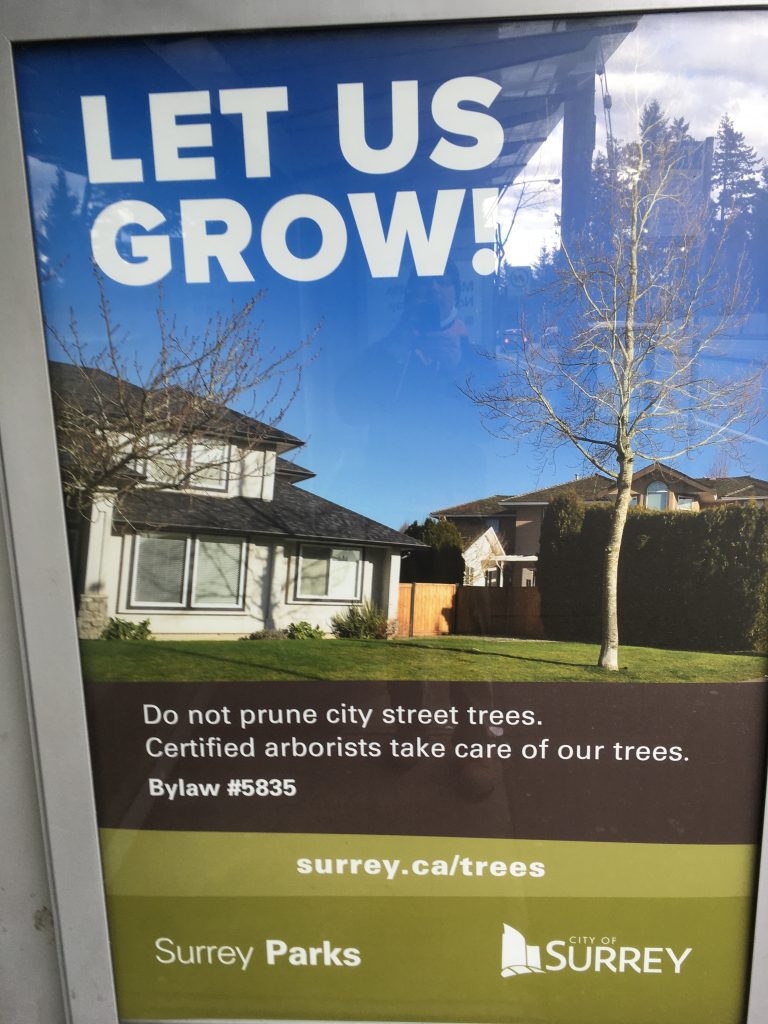
I spent a Monday working in White Rock recently, and at lunch time I walked to a pizza place down the block. Mask on, of course. As I walked by a bus shelter I noticed a City of Surrey poster. And a blog post was born.

I looked up the Bylaw #5835 and it’s a simple two page document. It says don’t touch city trees and don’t remove them, even if firewood is your family’s only source of heat. You could be fined $500. Simple enough.

A real problem

As a certified landscape professional and arborist, I attend many trade shows and seminars for education credits (CEUs) and to gain knowledge. The coronavirus pushed all of this online but learning never stops. It can’t. It continues even during a pandemic.

I mention trade shows because the presentations with the worst tree abuse cases consistently came from City of Surrey speakers. It became a running joke. As soon as I saw City of Surrey speakers, I signed up; and I can’t think of one single disappointing event.

“Pruning” by residents often meant ugly topping or outright tree removal. That might have been overlooked in years past but not anymore. Now cities care about canopy cover percentages, cooling, beauty, and ecosystem services.

Tree bylaws get drafted and workers get ISA certified so they can take great care of city trees.

Let them grow

I totally agree with the bus shelter poster. Leave street trees alone. We need them to look great and provide us with their many free ecosystem services. Let professionals do the pruning.

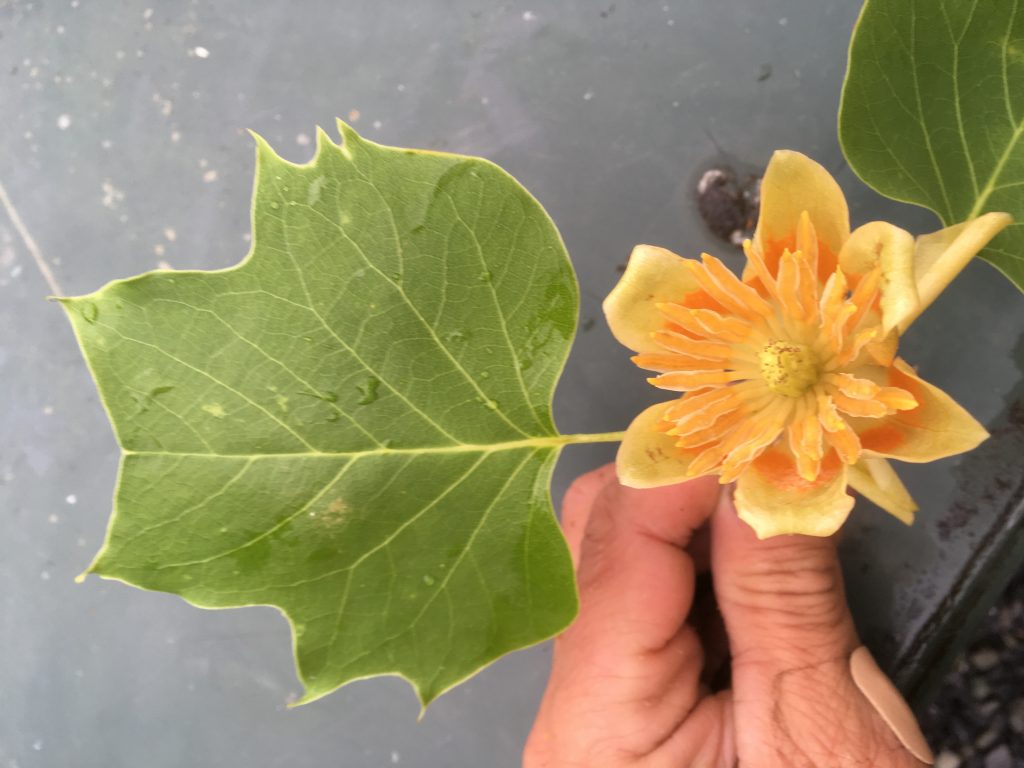
However, I do understand people’s frustrations. Municipalities can take months to respond to requests for pruning. I’ve done some pruning on city trees before but it wasn’t anything crazy. In one case, the owner was going bonkers with honeydew secreted by aphids feeding on tulip trees (Liriodendron tulipifera). Her car, sidewalk and patio were covered in sticky honeydew. Her patio was basically unusable. So, I removed whatever branches I could reach but it didn’t solve the problem completely.

Tulip tree flower

Aphids aren’t good enough reason to remove healthy trees. And we know that tulip trees come with summer aphids. Maybe some sort of cover for the patio would be a better solution.

Conclusion

Let city arborists handle city trees.

Welcome to mowing hell

By | Lawn Care | No Comments

It’s coming, I know it is. Every spring we apply generous amounts of lawn fertilizer with high Nitrogen content to get our lawns to green up. And green up they do.

Mowing hell

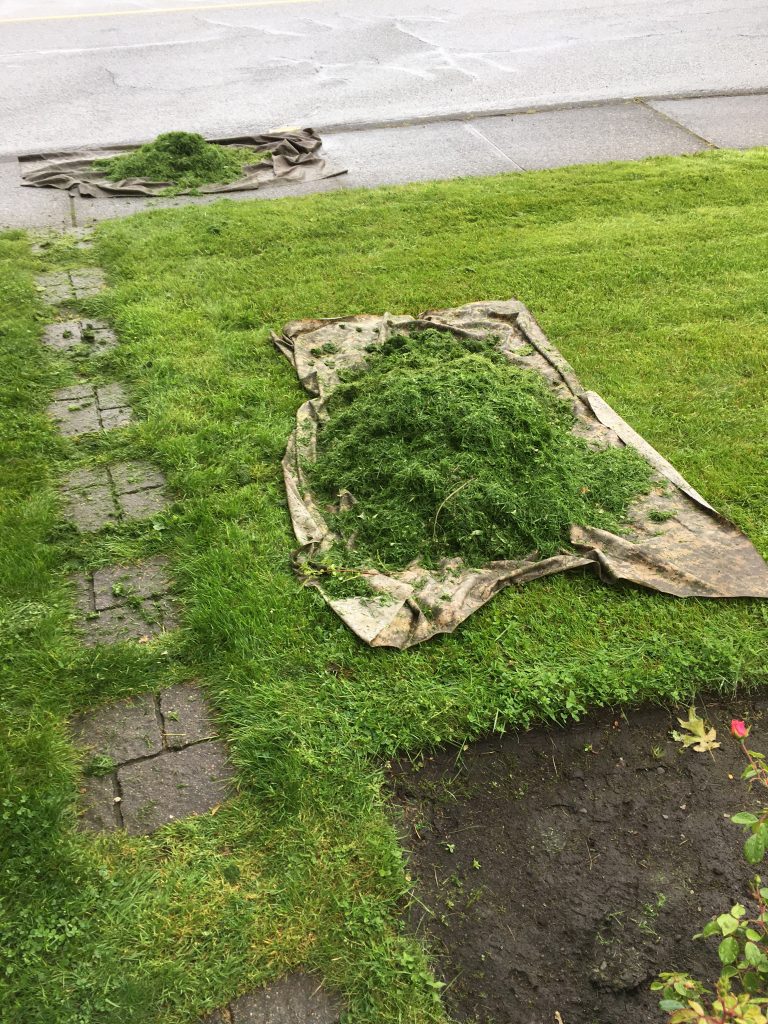
As the nitrogen kicks in, our lawns turn lush green and they look fantastic after cutting. But there is a catch. Where weeks ago I needed thirty minutes and three tarps to complete my commercial site lawns, now it’s all doubled.

And because I do the sites on weekends, solo, there is no one to off-load the mowing on. I occupy my own personal mowing hell. It seems like I have to empty my mower bag after every pass and, after a while, it gets old.

It’s usually at this point that I remind myself what a nice extra source of income this flexible gig is. Because the sites are commercial, not residential, I can start early or work late. I will never get old Mrs. Robinson complaining about how I robbed her of beauty sleep. This flexibility is awesome. For example, when my son has soccer matches, I can do two half-days. Nobody cares, as long as the place looks great on Monday.

Complications

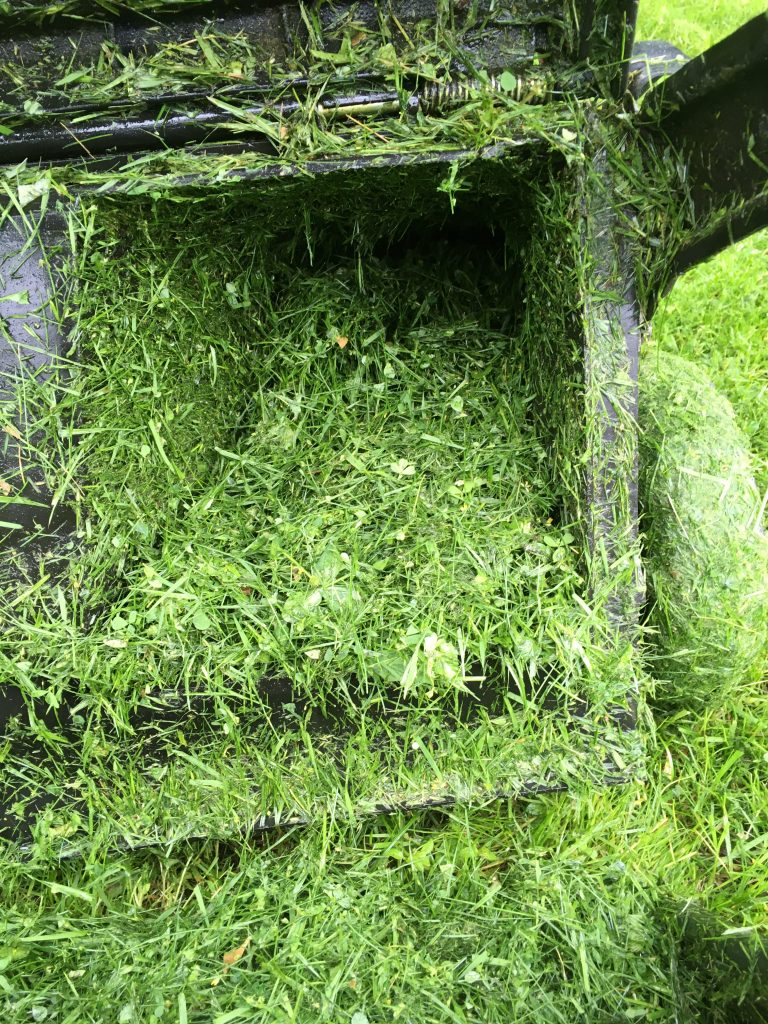
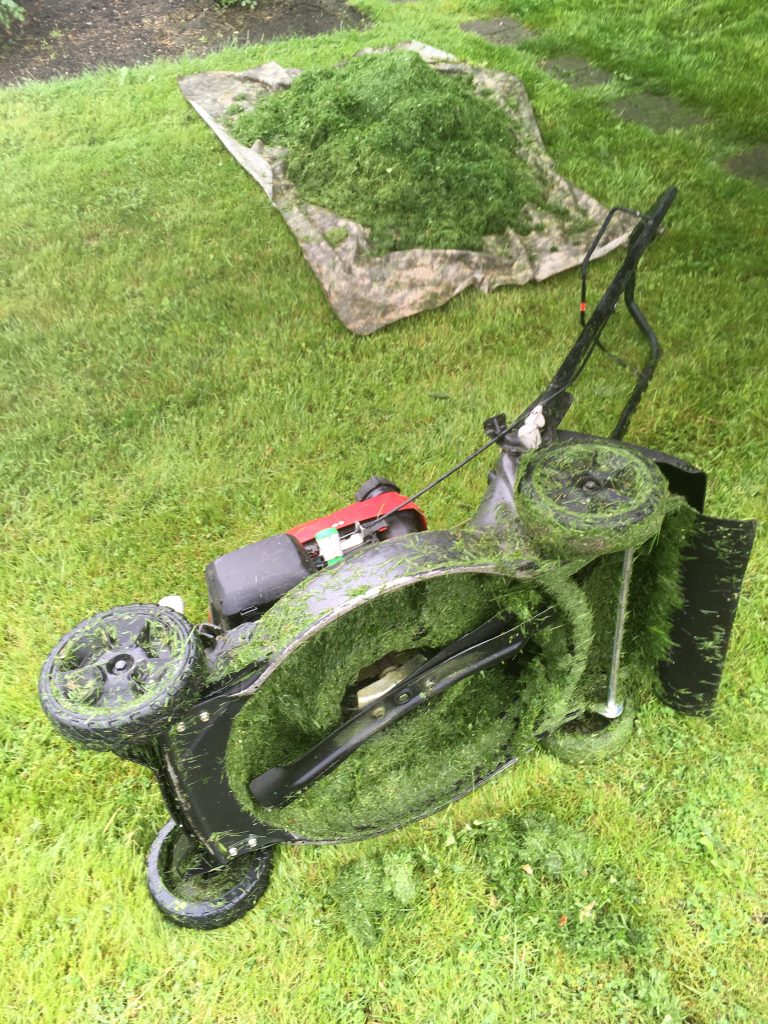
Mowing hell gets worse when your mower blades are dull and it rained the night before. Now the grass clogs up the mower chute while the bag remains fairly empty. So, you’re stuck cleaning the chute. Otherwise, the mower starts dropping grassy clumps from the deck.

Dull mower blades shred the grass blades and the wetness makes them stick to the deck, bag and chute. This requires frequent stops which is annoying because I’m not paid by the hour. When I’m done, I can bail.

Make sure the blades and engine are off before reaching in to clean the chute.

It’s also important to clean the deck carefully. Stop the blades and engine and tip the mower with the filter pointing up. Then undo the spark plug. I’ve never seen it but mowing the mower blades with the spark plug still on could bring them back to life. Allegedly. Disconnect the spark plug and clean the chute. I do this before moving to a new lawn section. If you do it with every stop, you’ll be there forever.

Conclusion

Mowing hell is coming this spring. I know it. It’s the price I pay for lush green lawns. Make sure your mower blades are sharp and bring extra tarps.

Bonus: if you’re in charge of fertilizing, you can have some fun with other crews or your neighbors. Put the fertilizer down heavy and watch them sweat.

The case of an abused snowbell tree

By | Arborist Insights, Pruning | No Comments

When strata contracts run for only ten months, the owners get two winter months to turn rogue. That’s how one snowbell tree (Styrax japonicus) lost one half of its trunk.

Because we don’t recommend “pruning” this severe, the owner probably got fed up with strata council approval requests. Requests can go from council to the management company; and from there to the landscape contractor. I’ve seen requests so old, they were completed several weeks before the contractor formally received them.

The setting

I’m not sure how the poor tree ended up so close to the owner’s patio. It might have been a wayward seed or deliberate planting. Either way, the tree is way too close to the patio. Even if the roots don’t affect the patio stones, chances are, the foliage will eventually touch the building.

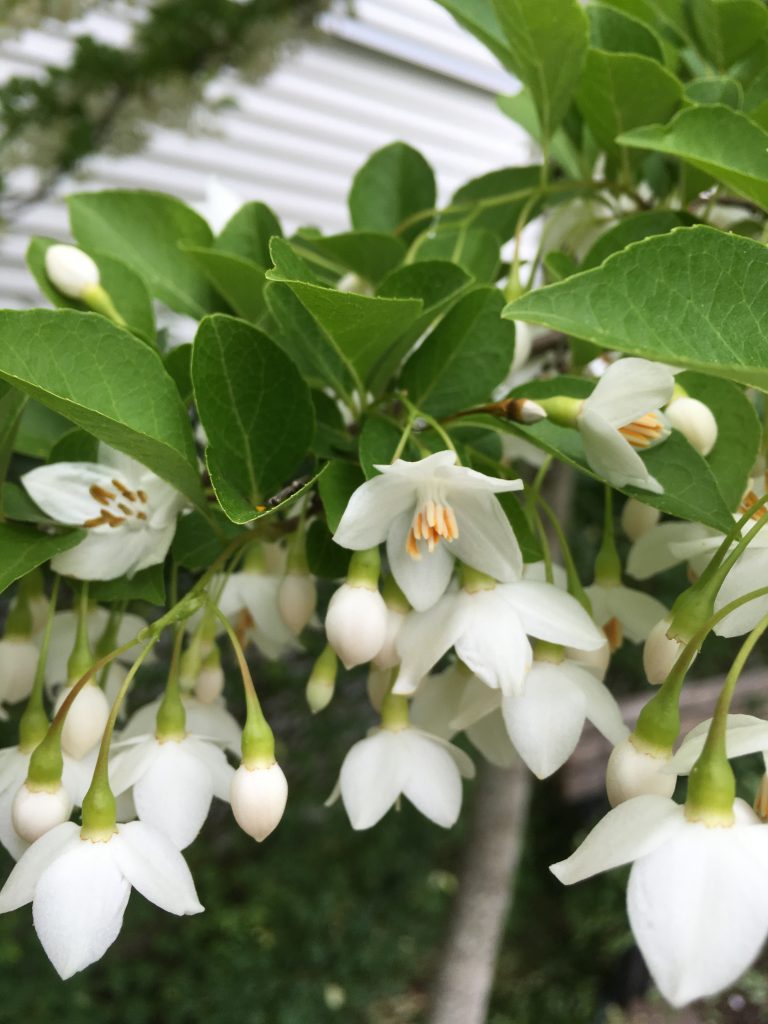
Styrax flowers are beautiful snow bells but they turn into hundreds of seeds that cover the patio and could cause the owner to slip. I’m also not sure if they wanted this much shade on their patio. I never got to interview them.

The bottom line is: the tree is situated too close to the patio.

Best solution

By far the best solution would be to remove the tree completely. There is very little available space for the tree to grow.

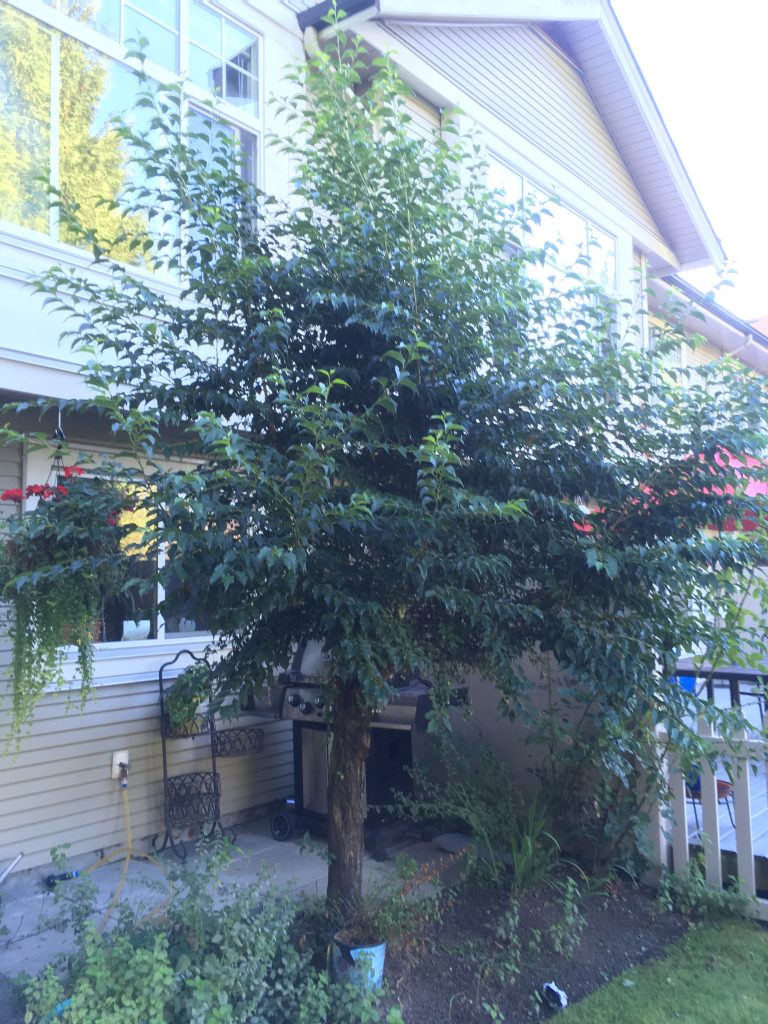
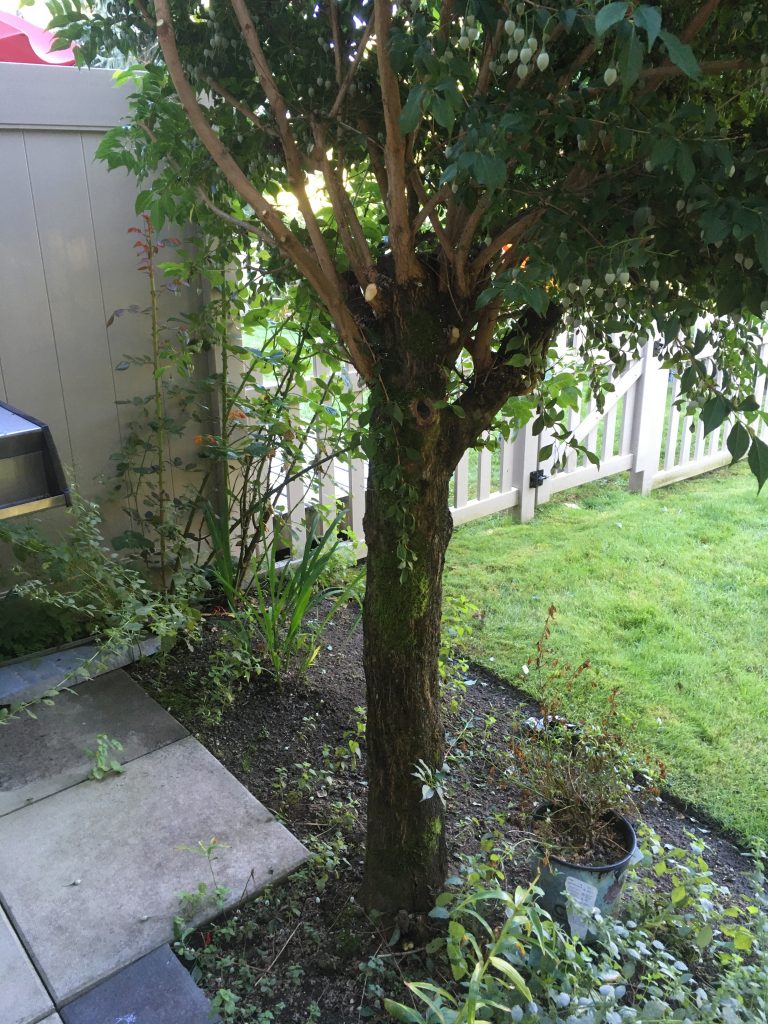
The owner’s solution didn’t go far enough. She cut the tree at 4-5 feet so only the trunk was left. Which looks weird. It also removes whatever food was stored in the branches.

When over half of a tree goes missing, the tree notices it and pushes out many sprouts. After all, it will need leaves to feed itself. You can see the response in the picture below.

The response is furious, as the tree fights. The new sprouts mature into poorly attached branches and the owner is back to square one. Now you have a choice: remove the sprouts every year, remove the tree or rehabilitate it.

You can see the original cut at roughly 4 feet.

You can rehabilitate topped trees by keeping a few leaders, subordinating a few more sprouts, and completely removing the others. But here it wouldn’t make sense because there is not enough room for this Styrax.

ISA certified arborist Vas recommends complete removal!

Who was Karl Foerster?

By | Education, gardening, Species | No Comments

One stunning grass

I first learned about the Feather reed grass when I worked for the City of Coquitlam. My then gardener-boss was a fantastic teacher and, luckily, the gardens we maintained contained many Feather reed grasses.

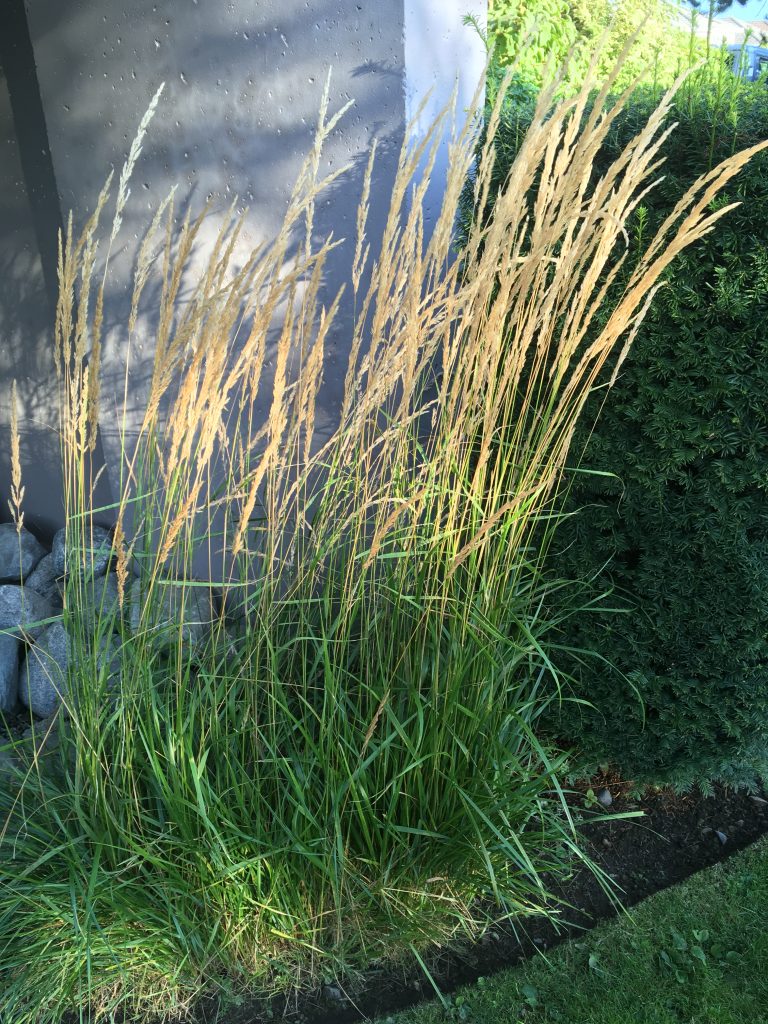
Feather reed grass (Calamagrostis x acutiflora ‘Karl Foerster’) is a beautiful ornamental grass. I love the way the large seed heads sway in the wind; and I have one specimen in a pot on my humble patio. I rescued it from a work project which would have horrified Mr. Foerster; the grass that bears his name, unwanted!

Calamagrostis is a clump forming perennial grass, it’s hardy and fast growing. Its soft feathery green plumes mature into wheat-colored spikes. Poor Mr. Foerster would be horrified if he saw the way his grass gets machine gunned by landscapers in early fall into lifeless mounds. It’s as if the grass reminded them of wheat harvests. I leave my patio specimen alone and it’s totally fine.

Not too long ago, while reading a UK gardening magazine, I came across an obvious question: who was Karl Foerster? (See Blade Runner, The English Garden, March 2021, p.81) That’s what so fascinating about many plants: they have their own stories. But to get there, you must know the botanical name. Feather reed grass alone would never let you discover Karl Foerster. Always learn botanical names.

Who was Karl Foerster?

Karl Foerster (1874-1970) discovered the Feather reed grass hybrid species along a railway line in Germany in the 1930s. He ran his parents’ plant nursery which specialized in hardy perennials. He also lectured and wrote about hardy perennials.

He bred close to 370 crosses, mainly clumping grasses, Delphiniums and Phlox.

His key contributions to garden design were:

  1. popularizing the use of grasses
  2. using plants as the most important element in the garden
  3. seeing plants as individuals, not something to dispose of with the seasons

Check out these two beauties from my picture collection.

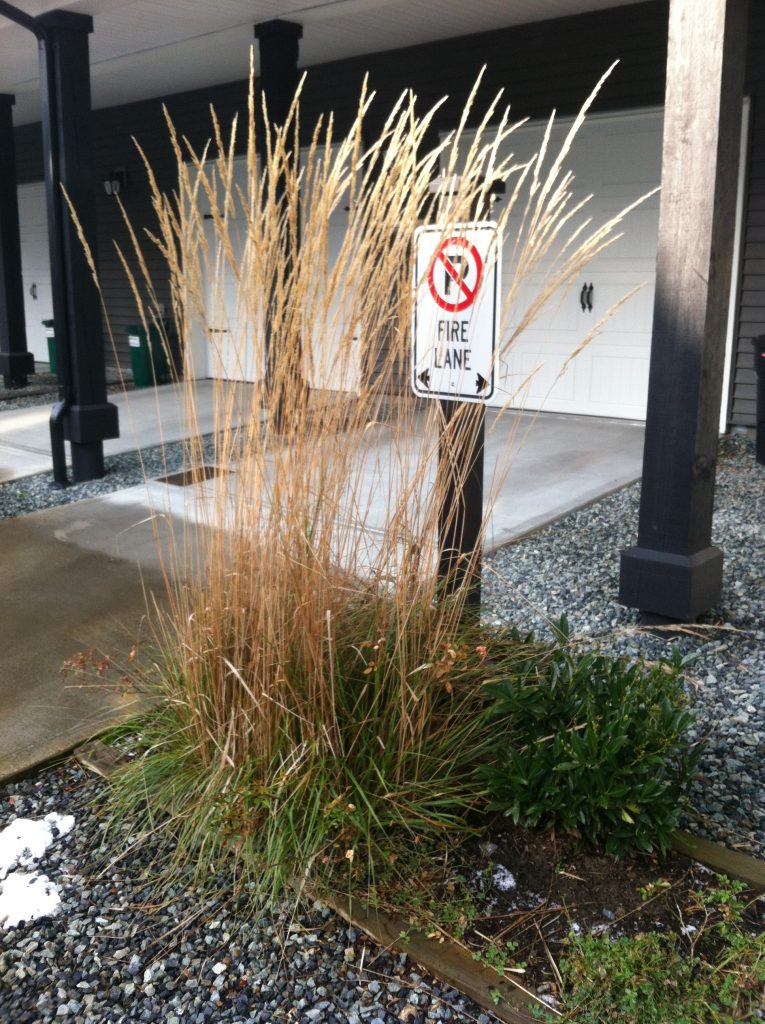
The specimen below looks great but I question its placement. At its best, the Feather reed grass covers up a laurel and obscures a sign. That’s all the excuse landscapers need to cut it down.

The grass is great but I question the placement.

Conclusion

I love grasses. They’re low maintenance and usually perennial; and they look awesome when they sway in gentle breezes. Thanks Karl!

Always learning about trees

By | Arborist Insights, Pruning | No Comments

Learning never stops

Learning never stops! Which is why I love the green industry and feel like I will never run out of topics to write about. Especially about trees. There is so much to learn.

Lee Valley

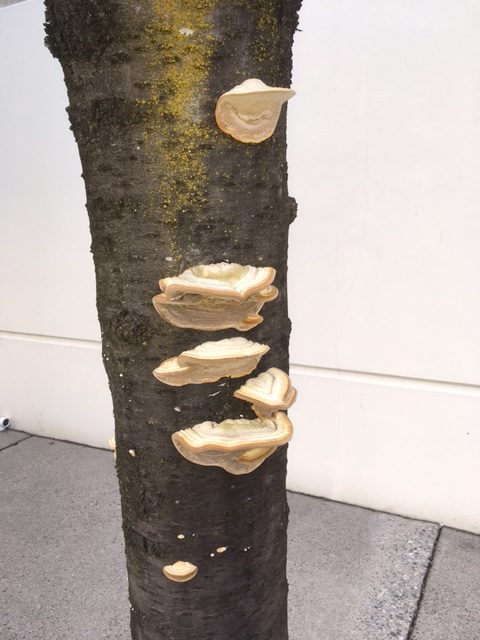
Take my shopping visit to Lee Valley as an example. I was there to buy new blades and springs for my Felcos ( Visit again on March 6, 2021, to read my Felco blog post). As soon as left my car, I noticed a cherry tree, planted in the middle of the sidewalk. Fungal fruiting bodies were screaming at me to notice them. And bang, as soon as I saw them, I knew the cherry tree was dead. That’s the rule. Fungus inside your tree is a disaster.

I love how the fungus-tree death connection automatically clicked in my head.

Healthy trees don’t sport fungal fruiting bodies.

Ray cells

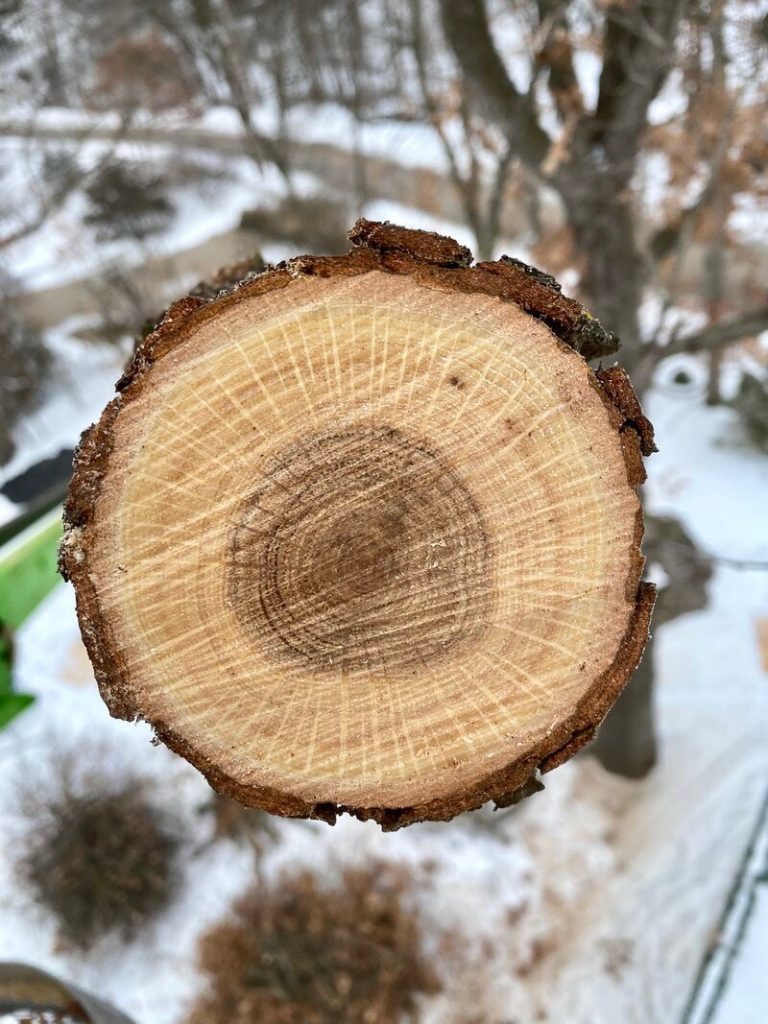
Ray cells.

It pays to be connected to people on LinkedIn. I got this picture from a contact who marveled at seeing ray cells so clearly. Allegedly, ray cells are clearly seen in oaks.

Now, in keeping with the continuing education theme of this blog post, I went home and looked up ray cells on the internet. And I found out they’re pretty amazing.

The two main functions of ray cells in trees are:

  1. ray cells keep the growth rings together
  2. ray cells help shuttle water and nutrients in the xylem

They also look cool in cross-section.

Heading cuts

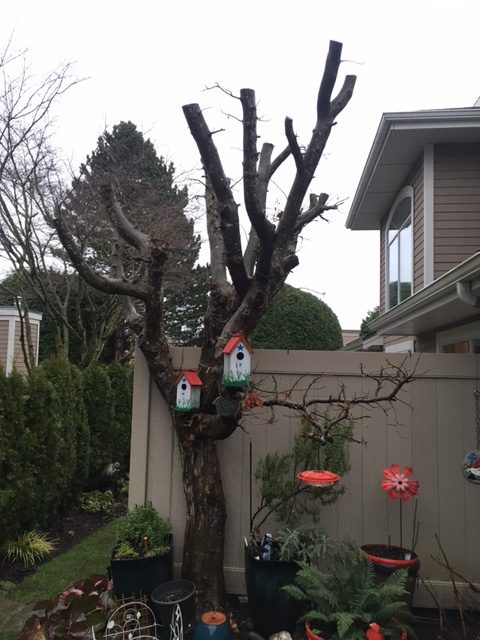
One of my private clients received a letter from her municipality, asking her to clear Japanese maple (Acer palmatum) branches off their city lamp. So they hired an arborist to do the jobs. And when I was on site to do finesse work (a nice way to say weeding), I took pictures of his heading cuts.

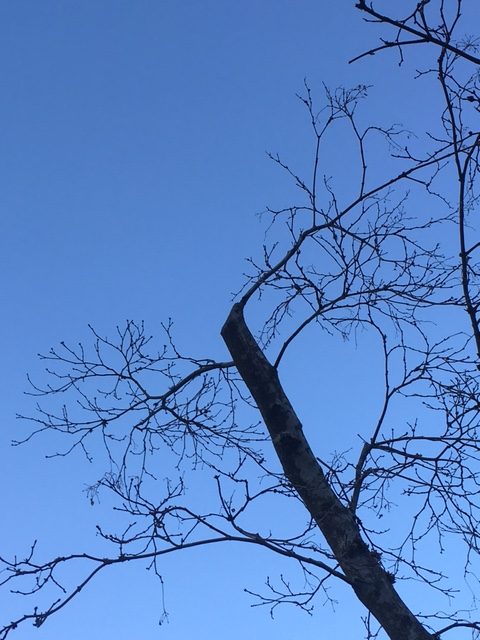
A heading cut.

Heading cuts are made to discourage main stem growth and promote side growth. In this case, we want to keep the maple from reaching the city lamp. The cut is made just above a branchlet or bud. And we can expect any new growth to happen sideways, not straight to the top.

Then I put my iPhone away and went back to weeding, mumbling something like “I could have made those cuts!”.

Never stop learning!

Tree topping disaster

By | Arborist Insights, Pruning | No Comments

Don’t do it!

Tree topping rules are straight forward: don’t do it! I was stunned recently at a site in White Rock, British Columbia, when I saw a topped Persian ironwood (Parottia persica) tree.

Persian ironwood trees are bulletproof. They don’t suffer from any diseases, the branches have interesting look and their fall color is spectacular. You can’t do much better when deciding on a landscape tree. But this owner had his own ideas; and it helped that he was the strata council president. That’s how it works. If you’re not on council, you won’t get approval.

If you’re feeling crowded, then take out the whole tree. But that’s very complicated nowadays because municipalities now care about tree canopy cover percentages. Unless your tree is dangerous, it’s difficult to get a removal permit.

I suspect, if the municipality knew about this tree topping, they might issue a ticket. It’s a nasty procedure. So nasty, I had to compose this blog post about it. So nasty, the International Society of Arboriculture (ISA) publishes a handout about tree topping.

Future growth

The tree will now push out new sprouts and the president will have to hack them down every year to keep the tree at the same height. If you don’t remove the sprouts, they will develop into poorly attached shoots.

Another drawback is that it no longer looks like a Persian ironwood tree while the other specimens nearby still look great. It’s a weird effect.

Trees also store food in their branches and heavy removal can cause serious shortages for the tree. They also need lots of leaves to produce food and topping removes huge chunks of the tree crown where leaves would have developed.

Also, large wounds like these may not heal and could potentially invite insects and diseases in. Generally speaking, three inch diameter is your rule. Any cut bigger than that, may be slow to heal.

With huge sections of the crown missing, the bark can also get injured by heavy sun exposure.

Conclusion

Don’t top your trees!

Winter brush cutting

By | landscape maintenance | No Comments

Ready for some labor?

This isn’t the first time I’m mentioning brush cutting in winter. It’s a perfect cold-weather task and it shows how labor-heavy landscaping can be. We might as well say it: landscapers get sweaty. If generating sweat spooks you, I would suggest a less-strenuous career path.

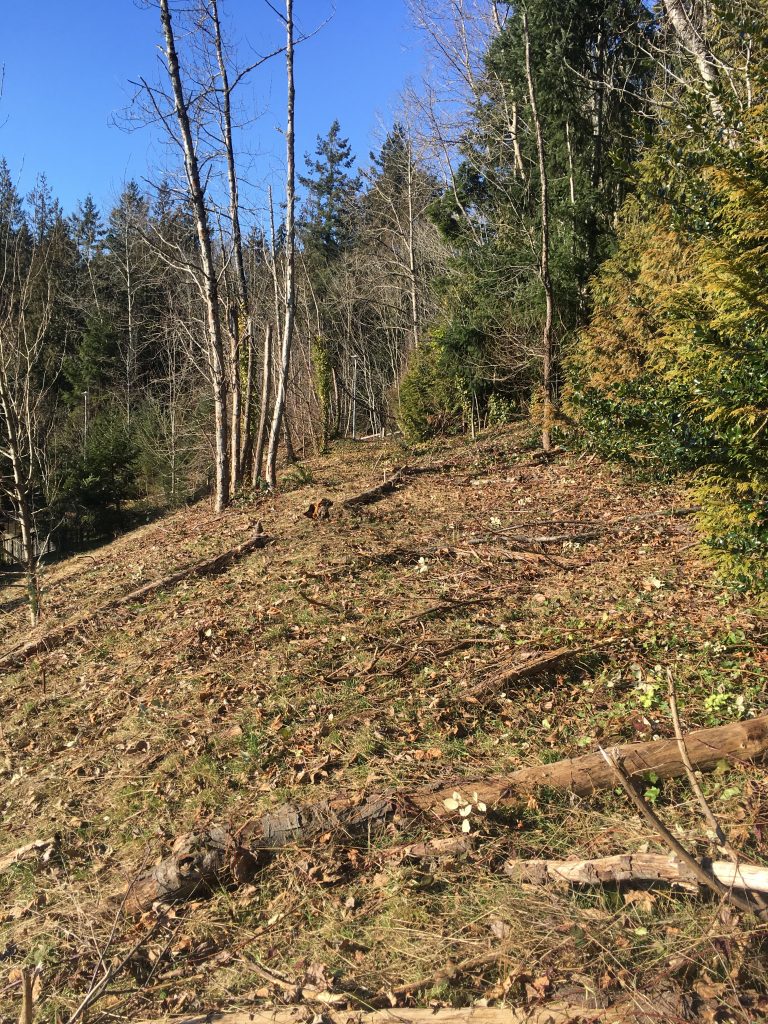
The day we went out brush cutting, it was nice and sunny and the goal was to level masses of prickly bramble. It’s done once a year and it’s nice to put in a full day’s work in winter.

Safety first!

The brush-cutting task itself is fairly easy. All you need is some mixed fuel (gas and oil) and protective gear. Do not skip this part. Gloves, steel-toe boots, goggles and a helmet system with face shield and ear protection are all standard equipment. Leave your shorts at home. Don’t take any chances.

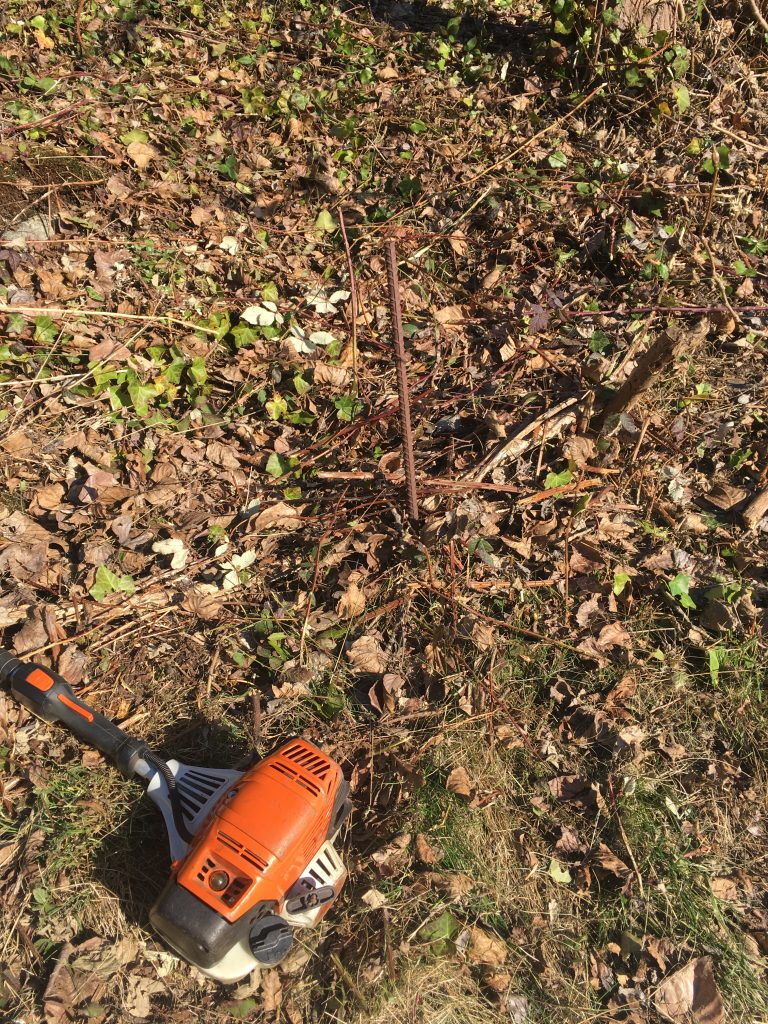
Since you’re working in a wild zone, take a good look around. I spotted rebar sticking out of the ground before I even started. Sadly, the rebar ran all the way along, with gaps in-between, so I had to look out for it all day. Next year I will try to remove it or at least bend it. As it is right now, one slip could really mess you up. See the picture below.

Always identify hazards in the landscape.

Depending on how low you brush cut, you can expect rocks and wood to fly out. For this reason the three of us separated; and later, when got close to passersby, we paused to let them go. Safety first! Never play around.

The rest of the day was fairly monotonous. We leveled prickly bramble all day and managed to finish the entire wild bank. Given the size of the bank, bramble removal isn’t practical. We just left the shredded canes on the ground. We’ll be back in twelve months to do it again, unless the boss delegates this task to someone else. But, considering the physical nature and safety aspect of this project, this isn’t a good gig for new employees.

What I hope you take away from this blog post is the physical nature of landscaping work, the occasional monotony and the importance of safety.

When we reassembled at the back of the truck, it was clear the dudes were happy to get the bank done. They worked hard brush cutting on a winter day when not too much else could be done on site.

All done!