
All Posts By

Vas Sladek

How to plant Styrax japonicus

By | Trees | No Comments

Planting with Vas

My last blog post from March 30 showed my small tree removal and encouraged home owners to give it a shot, if they got a chance. Today’s blog post shows my tree planting using the same hole.

Recall that I removed a dead Amur maple (Acer ginnala) and, while I advised people to cover up the hole to avoid accidents, I did no such thing. I got in my work truck and I drove to Golden Spruce nursery. There, I picked up a Styrax japonicus (Japanese snowbell) specimen. I note the botanical name first on purpose; that’s how you buy trees at a nursery. Common names are useless.

Logistics

Since I worked solo, I had to improvise. I parked my truck over a curb to make off-loading the tree easier. I then gently lowered it onto my wheelbarrow.

Since the backyard was accessed by a slight incline, I had to struggle to get the tree up there. It’s only at times like these that I wish I was more than a chess player with weak arms.

Now I had to make a critical decision.

Yes or no to wire and burlap?

Do you keep the wire cage and burlap or do you remove them before planting? This question used to have a straight answer. My mentor, Dr. Linda Chalker-Scott says remove everything; only the tree goes in the planting hole.

But then I opened up my October, 2022 issue of Arborist News. The article, good for one education credit, says that the answer depends on personal preferences or client wishes.

Now, since I had zero input from the clients, I did what I always do. I removed everything, wire cage and burlap before planting. One argument against this removal is that it disrupts the root ball. So, I dropped it in the hole very gently, keeping the clay root ball intact as much as possible.

The article says there is no conclusive evidence showing harm to the tree by keeping the wire cage and burlap. So, it’s up to you. If you’re planting trees with me, we take everything off. If you’re planting at home, you decide.

Pro tip: make sure the strings are cut no matter what.

Planting hole

The planting hole should be wide and deep enough so the root flare is at grade. The root flare is where the trunk turns into roots and it’s visible once you remove the burlap and peel off the clay.

You can’t plant the root flare too deep or too high. Once you identify the zone, drop the root ball in the hole and put a shovel handle over top: the shovel should be straight across so the root flare and planting hole edges are in line.

My tree was planted slightly higher because I expect some settling to happen with watering.

Backfill

Always backfill your planting hole with the native soil. You can amend it a little bit with better soil but don’t try to substitute it. That’s because water will find it easier to penetrate new fluffy soil and your tree could “joystick” on you.

I used new soil only to top-dress the planted tree.

Watering

New trees need water. Obviously, don’t suffocate them by overwatering. But add some water regularly, even in winter. If everything goes well, the roots will push out into the surrounding soil and the tree will get established in its new environment.

Sometimes I stress about the trees I plant.

All done!

The ugly sister of landscape plants

By | Plant Species Information | No Comments

Say my name

I feel like Leucothoe is the ugly sister of landscape plants because nobody seems to remember its name. Incredibly, this includes experienced foremen who see the evergreen shrubs on their sites all year. As soon as I come to help, they ask me what the shrub is called. Thus the ugly sister label.

Its common name ‘dog hobble’ is so bad, sticking with Leucothoe makes more sense.

And Leucothoe is hardly an ugly plant. It’s a native of the Appalachian mountains where it grows in moist forests. I like that it’s evergreen and forms nice clumps. It’s a shade plant but it can survive in semi-shade. The specimen below is planted, incorrectly, out in the open so no wonder it isn’t forming a full mound.
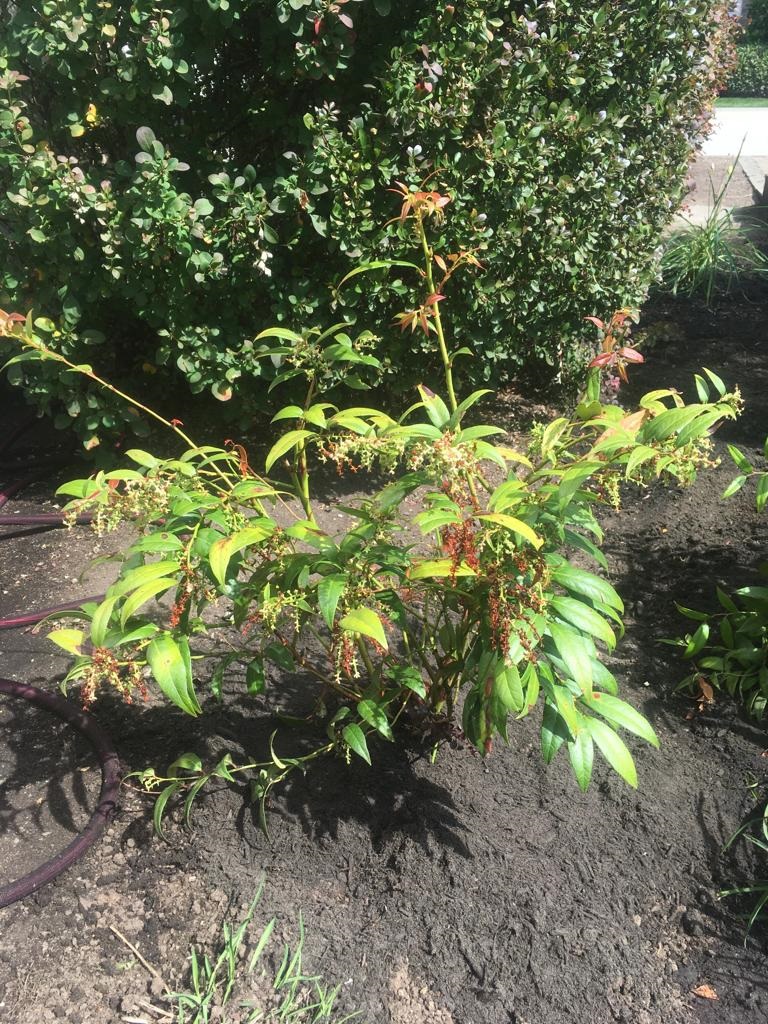
Not much shade for this Leucothoe.

Details

Leucothoe is best mass-planted in the shade, under your trees. In May it pushes out flowers; and it has great winter interest. Depending on the species or variety, Leucothoe changes color in winter, usually into something maroon.

Occasionally I shear the shrub to keep it off lawn edges but, overall, it’s a low maintenance shrub. It also doesn’t have any serious insect or disease problems. When air circulation is bad around the shrub, it can suffer from leaf spots.

Leucothoe works well as a hedge or a woodland garden shrub. You can also let it naturalize.

Most strata complexes have a few groupings of Leucothoe but people don’t seem to remember its name. Perhaps because it’s a shade plant, usually parked under tree canopies. I feel like people asked me to identify it in the field more than any other plant. When I refer to it as an ugly sister, I do it jokingly. I like the way the shrub cascades and clumps up nicely with its laurel-like glossy evergreen leaves. It totally fits in a moist forest.

So, please say the name Leucothoe and practice it. It sounds better than dog hobble.
How to take down a small tree

By | Company News | No Comments

You can do it!

Yes, ISA certified arborist Vas says you can take down a small dead tree in your backyard. If you have deep pockets and lots of fears, then hire a tree company. But this blog post will show how you can have some fun and save money by doing the work yourself. Just don’t tell your local tree companies.

Disclaimer: tree work is dangerous so please note that I’m talking about small trees. Giants require permits and professionals.

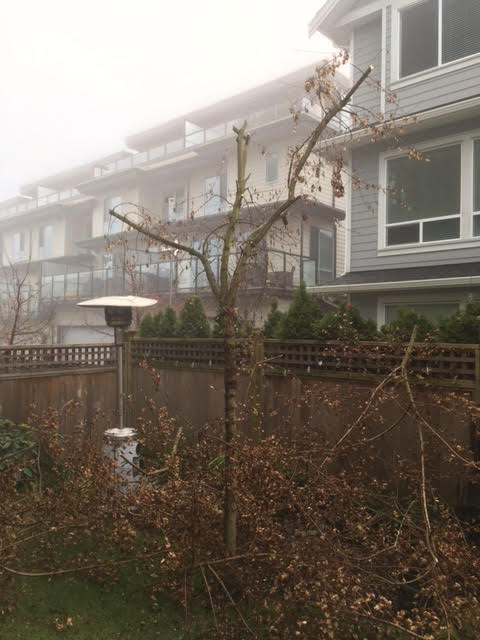
Dead Amur maple (Acer ginnala).

This dead Amur maple is a breeze to take down. The key is to do it in sections; we’re not loggers, dropping trees in one piece. See the picture sequence below. But, first, safety.

Safety first

You will need a hard hat, gloves, goggles, and ear protection. Don’t fake it. I used a pole chainsaw which allowed me to stand back and slowly reduce the tree to a stump. But you may not have access to a pole chainsaw so using a pole saw or just a sharp hand saw with a small ladder would suffice. It just means you will get sweatier and your arms will burn. However, you won’t have to worry about noise and air pollution, nor any rental costs.

Make sure your kids, seniors in wheelchairs and pets are inside and eliminate any other potential targets. In this yard, I had to move garden lights.

Step 1.

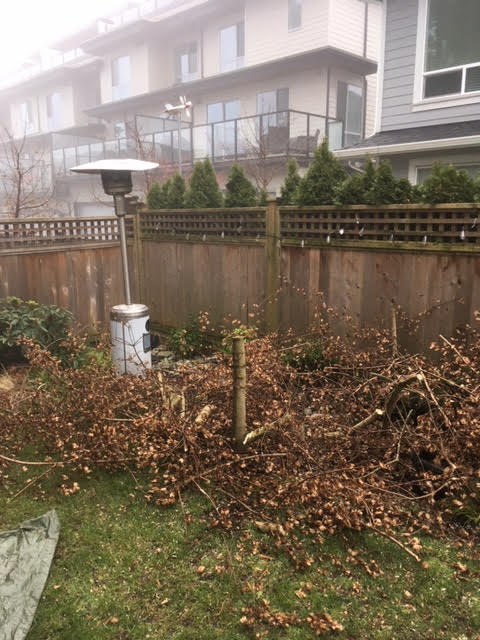
Easy does it! Start at the top, slowly, and work your way down.

Step 2.

Leave the tall stump alone because we need it later to extract the root ball.

Step 3, root ball out.

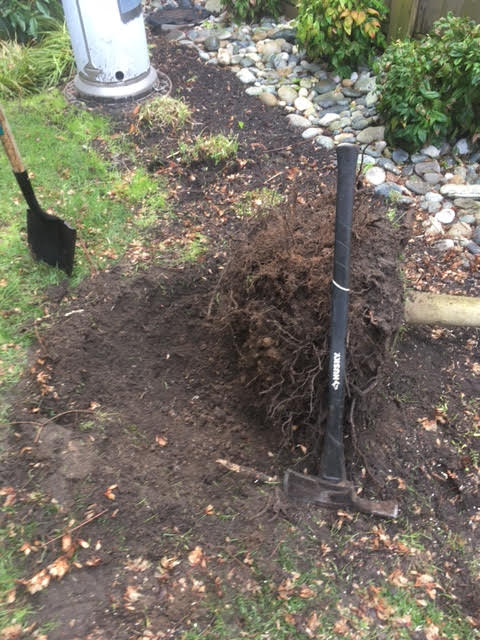
Note the tools. A shovel is a given, two work best because they tend to snap. The black pulaski tool is very handy for digging and severing roots. The tall stump section allowed me to move the root ball and dislodge it.

Clean up

Remove all debris and get help with the heavy stump. If you’re not planting anything in the hole, cover it up with soil. Then rake over the yard to leave it looking decent. A blower is faster.

I had a lot of fun taking down this Amur maple. I’m not sure why it died. I used a pole chain saw, shovel and a pulaski. As usual, I started at the top of the tree and worked down, until a had a tall stump. I kept the stump because it made the root ball removal easier.

To eliminate accidents, you must backfill the hole, preferably with native soil from the excavation.

There, you just saved a lot of cash and got some (safe) exercise. The green waste might cost a bit of cash.

“Damnation spring” book review

By | Books | No Comments

My kind of novel

Ash Davidson’s book “Damnation spring” is my kind of novel. It’s set in the 1970s in Redwoods country, specifically in northern California’s Del Norte county. It’s a 15 hour listen in audio format and it works better than a physical book because the narration uses four different voices.

It’s my kind of novel because it’s set in the woods, we meet loggers making a living from the woods, and there are hippie protestors. Also mentioned are greedy forestry companies and herbicide sprays used to keep competing deciduous trees and shrubs from growing.

Of course, when the chemicals wash down into people’s drinking water, there are problems. Animals suffer, and women, too, through miscarriages and babies born with birth defects.

This creates tension between the protagonists, a married couple with one child. The husband is a tree-topper with a dream of owning his own tree operation; the wife wants more kids.

Alert!

Then, one day, a local resident returns to Del Norte county armed with a Ph.D. and lots of data on drinking water quality. Of course, this was the 1970s and not as much was known about chemicals. Today we know better.

Now it’s 2022, and Dr. Suzanne Simard argues that free-to-grow regulations are bad because they prioritize timber production over ecosystems. Companies are required to keep out non-coniferous species such as aspen and birch with herbicides. This mindset has to go, says Simard, in today’s Vancouver Sun newspaper (January 29, 2022, section A13).

What we need is a healthy mix of species because this is what gives the forests resilience.

Simard also argues that clear-cuts should be off the books going forward. No more than 25% of a watershed should be removed.

Resolution

In the book the tension between protestors and the forestry company gets resolved; and our married couple also make up. I can’t give you the ending, obviously. Go get the book and enjoy it like I did. I listened to it as I worked in the landscape.

International day of forests

By | Forests | No Comments

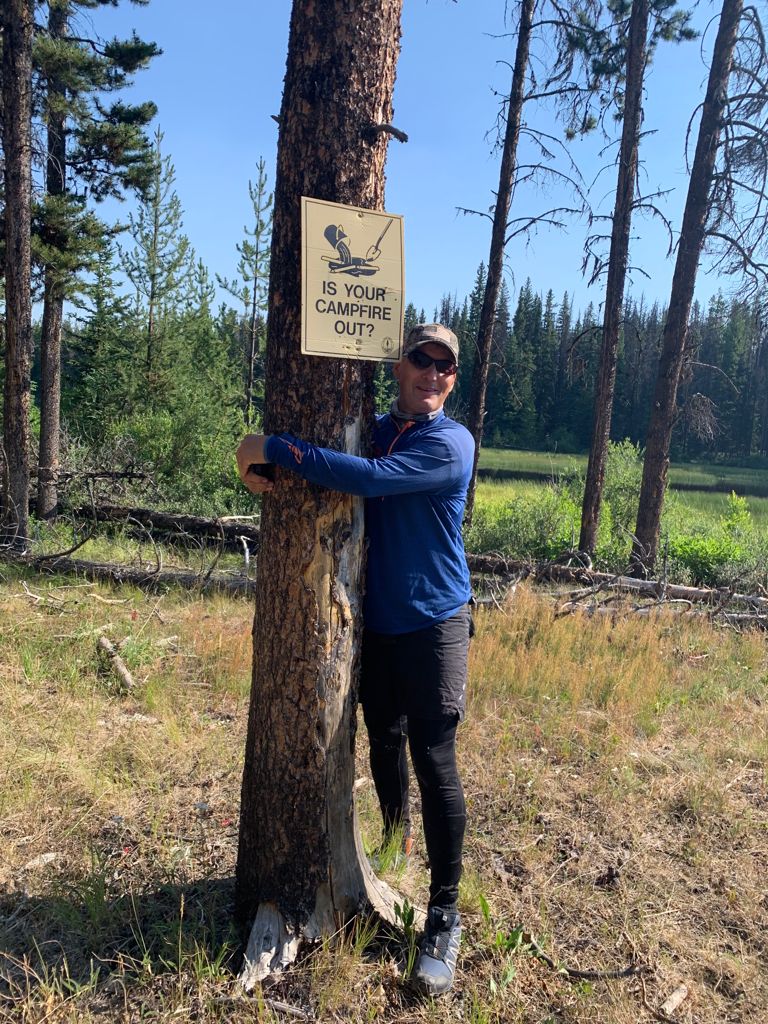
Tree hugger Red Seal Vas, Surrey Lake, BC, summer 2021

March 21

Today is a big day as we celebrate the International Day of Forests. I’m lucky to live very close to forests in British Columbia and I often run or mountain bike through them. And while the forests around my home are in good shape, many forests around the world are in trouble.
Which is bad news because we need forests for their free ecosystem services like oxygen; and we also need their help with global warming since they absorb carbon dioxide.

Amazon rainforest

Just today, the Sunday New York Times published a story from Brazil where rainforest areas previously set aside for native tribes are being clear-cut anyway. The current president in Brazil is openly promoting the development of Amazonian rainforests. Which doesn’t make sense because nutrients in the rainforest are tied up in the vegetation; they don’t stay in the soils. Thus the need to eventually move on to other forest areas and the vicious cycle continues. Nobody seems to care that the Amazon is a huge lung of the world.

Boreal forest

An even bigger lung of the world is the boreal forest which is burning at its southern edges and moving north. Ben Rawlence explores this in his excellent new book, “The Treeline: The Last Forest and the Future of Life on Earth“. Just be warned, it’s a sobering account of another forest under pressure. Don’t expect a fuzzy tree book like I did. This is a serious work and well-worth reading. After all, Canada has its own chapter in the book.

Even Santa will be pissed because when snow melts in reindeer country, it re-freezes and covers everything with ice. And reindeer aren’t used to travelling on ice; getting to food is also a nightmare when it’s under ice.

Get out

March 21 is a Monday but if you get a chance, get out into the forest. I am currently nursing a sprained knee so I will stick to blogging, making a donation to the Ancient Forest Alliance and reading about forests.

What are you doing today to celebrate International Forests Day?

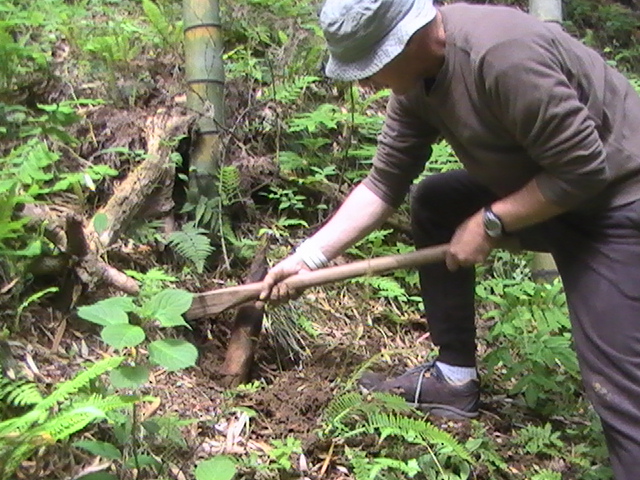
Forests feed us! Vas digging up bamboo shoots in Western Japan.

Spring is here!!

By | gardening | No Comments
Doronicum

Spring is here, officially, and I’m really happy about it. Bulbs are pushing out, gardeners are getting busy in their gardens, and people are calling about spring garden work.

But the best is the warmer weather and colour in the landscape. My favourite early spring Doronicums aren’t popping up yet but the plants are now noticeable. And I can’t wait for shorts and t-shirts.
Spring projects

If you live in a strata complex maintained by Proper Landscaping then, chances are, your landscaping is ready for mowing season. I suspect we are one to two weeks away from the first mow.

Privately, I’ve set up a few mow gigs and I’m planning to use a new battery-operated mower. Not just because the price of gas has gone up; the model I want is light and the handles can be folded. Plus I won’t have to suck exhaust after hours.

Sidewalks

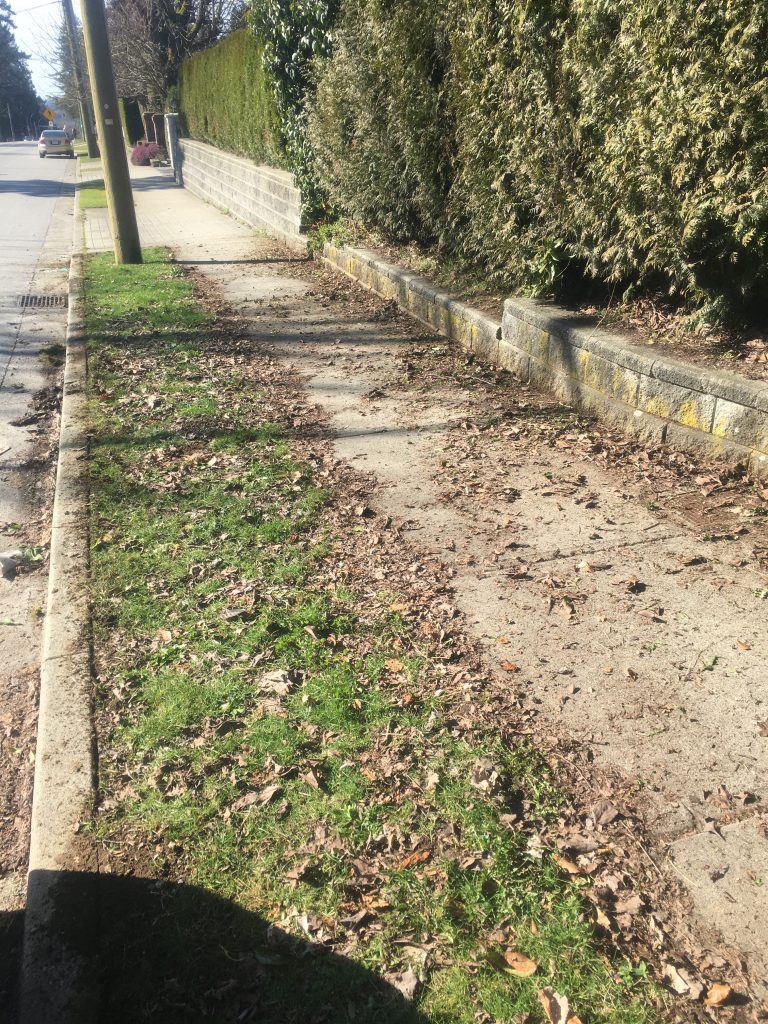
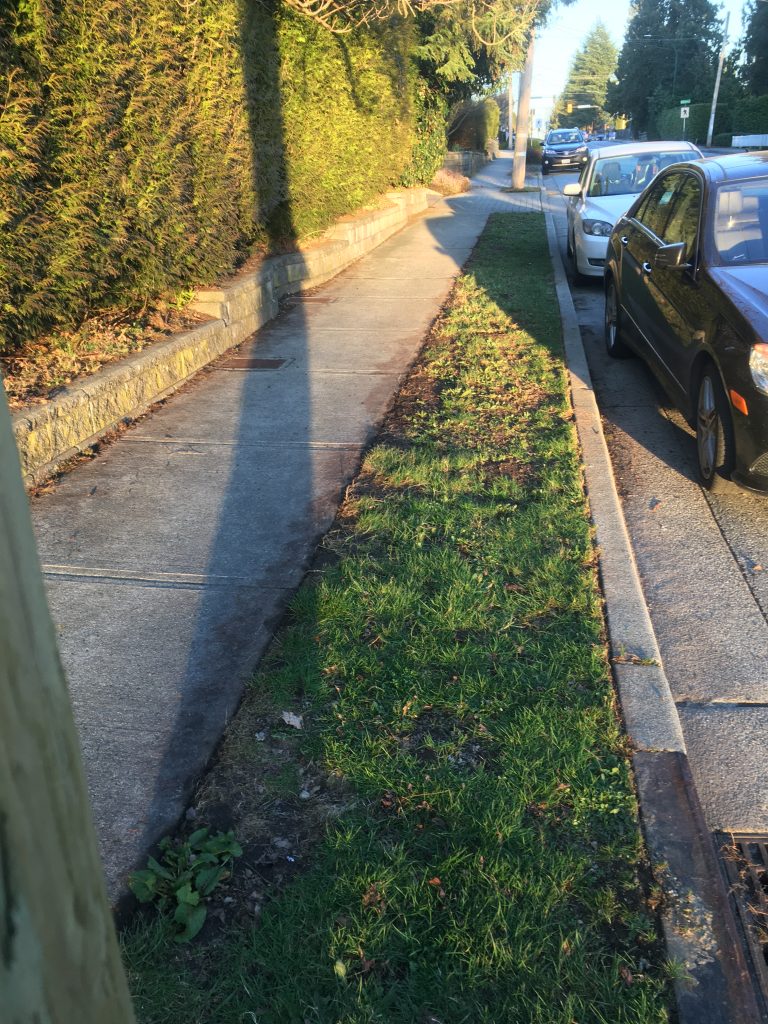
Sometimes spring clean-up can mean just blowing off your sidewalk and blade edging it. You get instant results and your neighbours thank you for not lowering neighbourhood property values.

No wonder your neighbours send you hate mail.
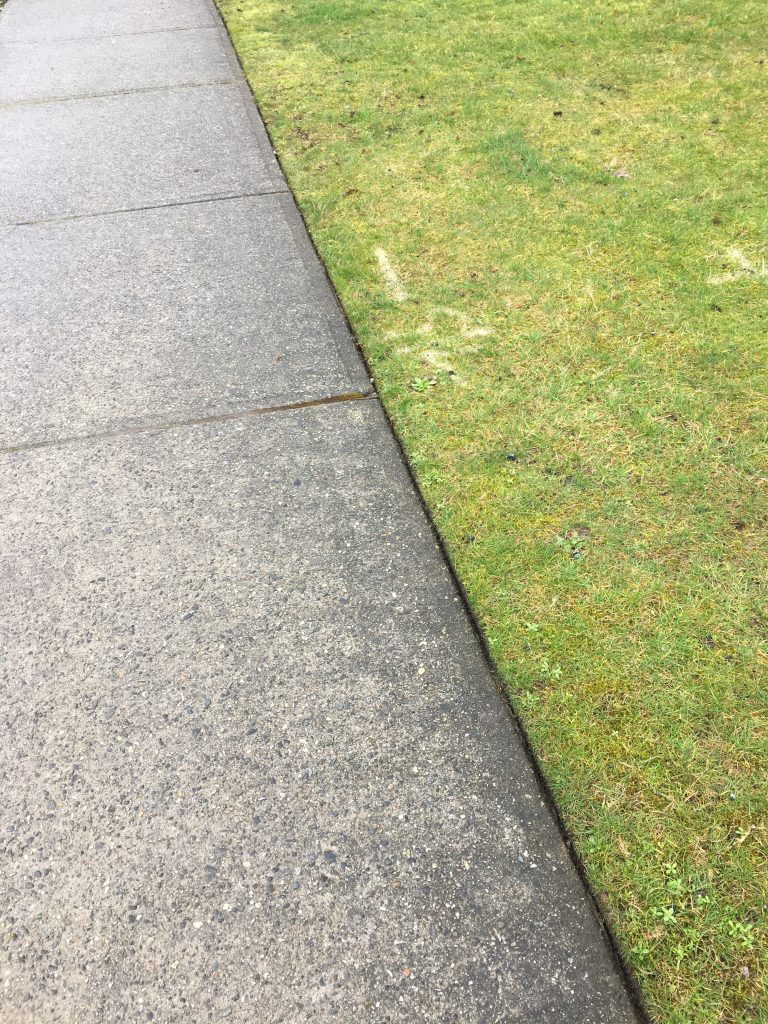
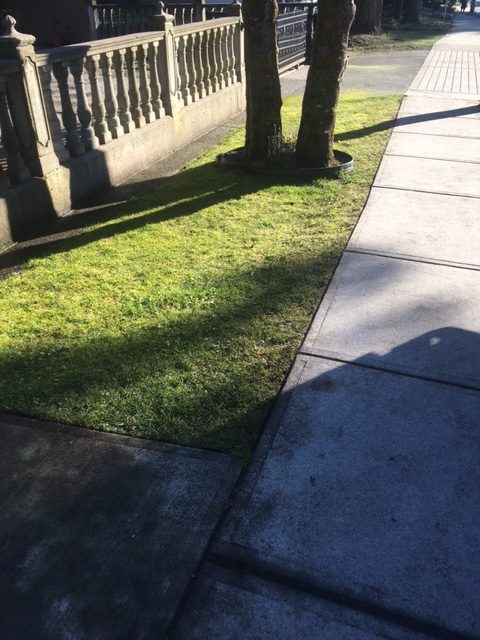
Blow, blade edge and lime application.

This is a quick fix. I love sharp lawn edges.

Lime and aerate

If you don’t do anything to your lawn all year, at least aerate it and put down lime. Lime should help with lowering the pH of your lawn from acidic to alkaline. But you will need to good heavy.
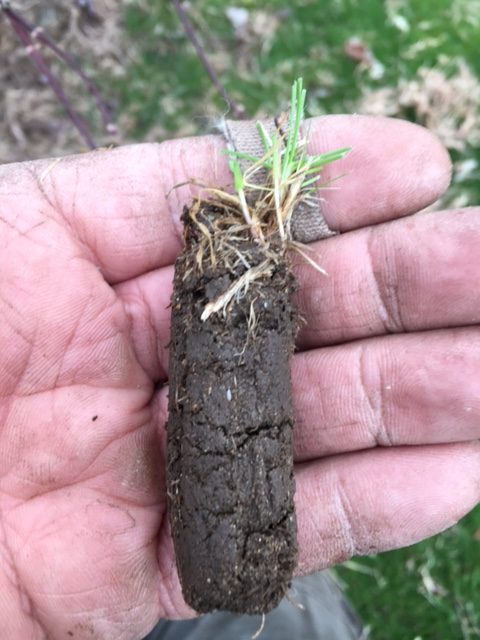
Aeration can be done with a hand tool on small lawn patches or with a machine on bigger patches. Extracting core plugs from your lawn allows water and oxygen to enter the root zone. It’s also a great chance to examine your grass. Pick up a core sample and see how good the roots are.

Weeds

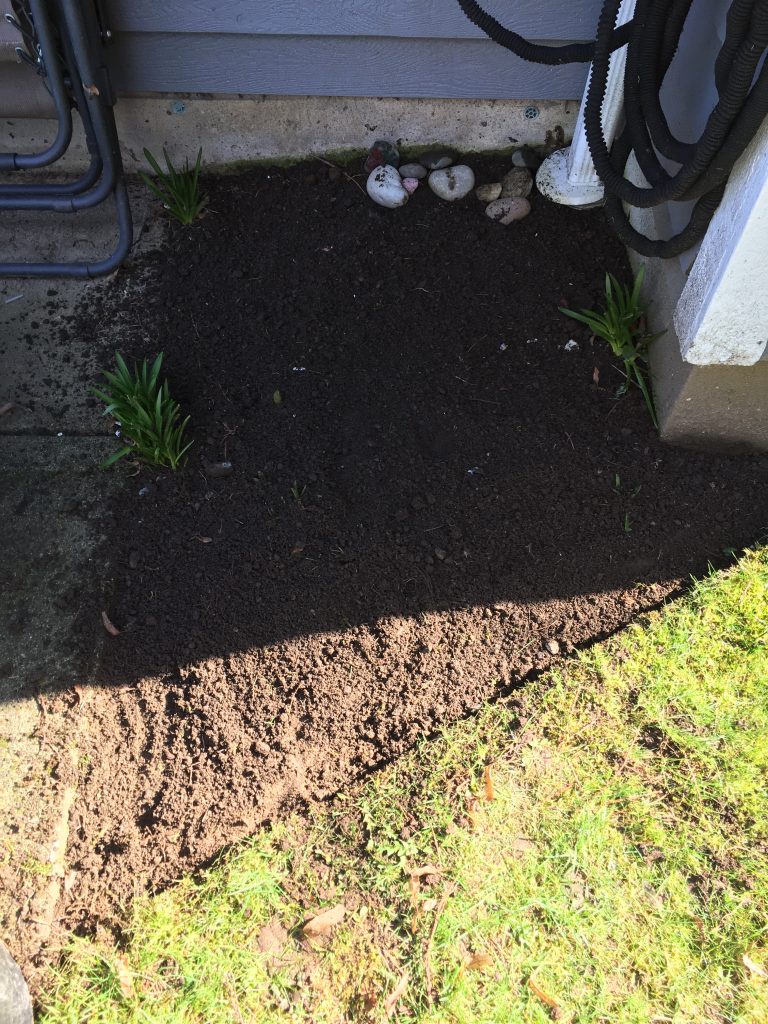
Small corners are easy to weed.

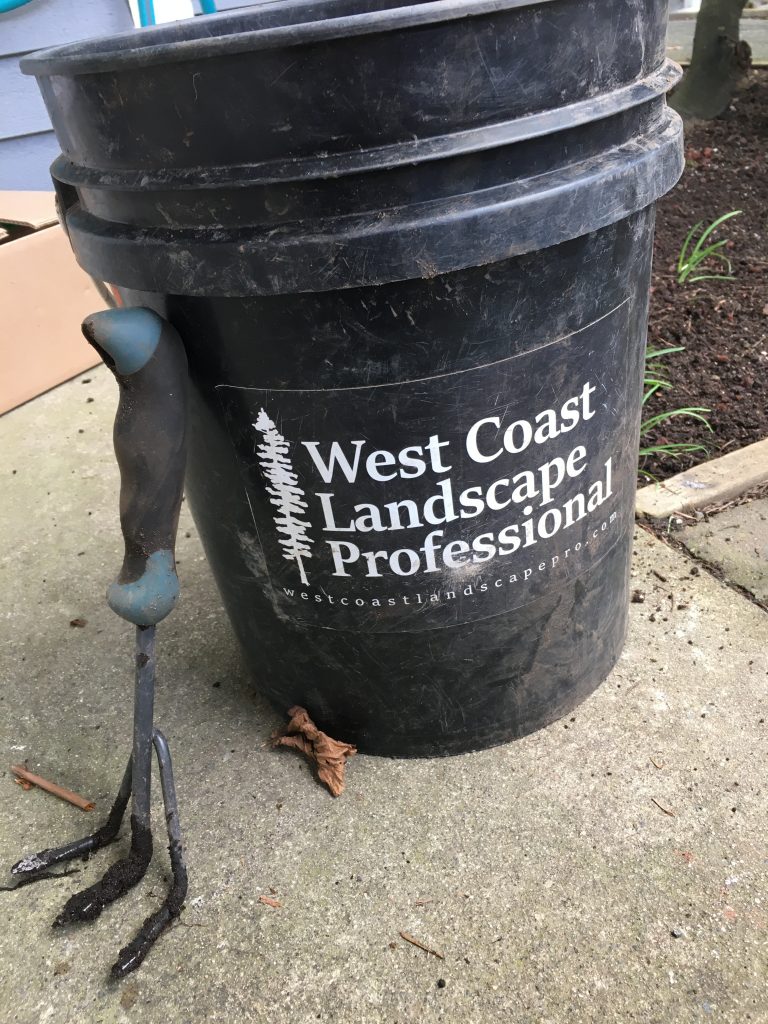
A trowel and bucket is all you need!

If you’re not up to weeding, you can always bury your garden with new mulch to keep the weeds down by depriving them of sunlight.

Fresh mulch means these clients won’t have to see me for a while!

Enjoy the colour

Enjoy the spring

Spring 2022 is full of bad news, from COVID, inflation and interest rates to wars waged by maniac dictators. Beautiful spring gardens are exactly what we need to escape the bad news.

Enjoy the spring!

Winter time adjustments to your landscape tress

By | Trees | No Comments

Minor adjustments

Winter is a great time to make little adjustments to your landscape trees. Since the foliage is long gone, we can see exactly what’s going on. So, check your landscape trees before spring hits. Like I did this winter.

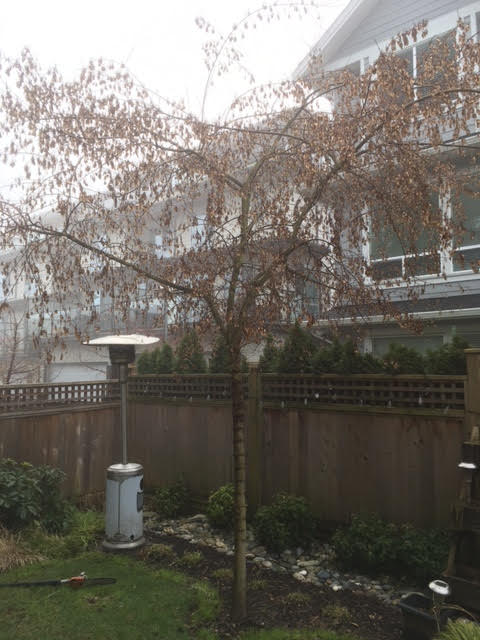
A weird branch

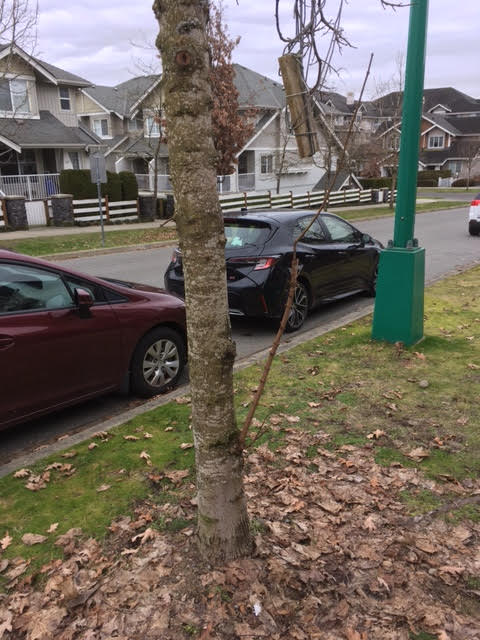
Once or twice a year I walk past this boulevard tree to buy unhealthy stuff at a nearby 7-11, and I’m surprised this lower branch is still growing. It looks weird and should be removed so the tree crown looks natural. We don’t really want branches growing this low on the trunk. Plus, it makes lawn care awkward.

A new baby tree

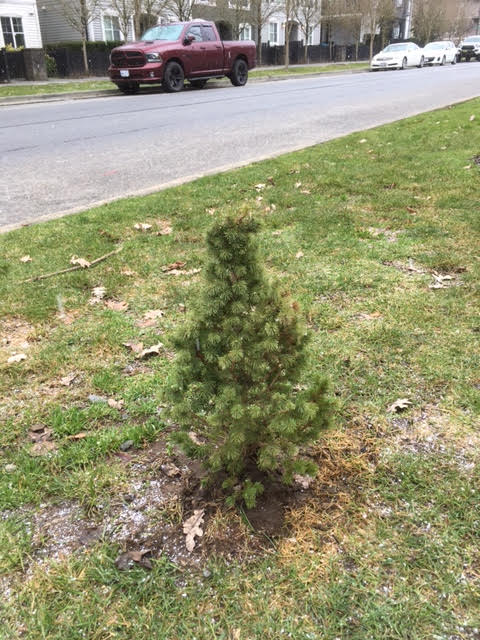
I love trees and I love planting them. The more the better. But, this specimen just popped up in a boulevard lawn, like one of those trees you get for free on Earth Day. And I’m worried about it because it doesn’t have a clearly defined tree well.

I would bet my after-tax dollars that it will eventually be involved in a nasty collision with a lawn care machine; and the machine will win. Unless we build a tree well to give the machines space to operate.

We also know that lawn grasses are tough competitors, so this evergreen isn’t likely to take off.

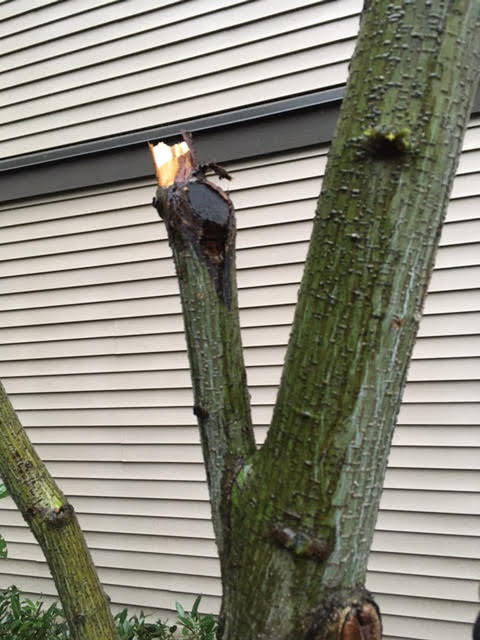
A broken branch

Broken branches must be removed as soon as you notice them because they can allow diseases to enter the tree; and they look awful. I cut out this snake bark maple branch soon after I took the photo. Be like me. Don’t tolerate broken branches.

A dead branch

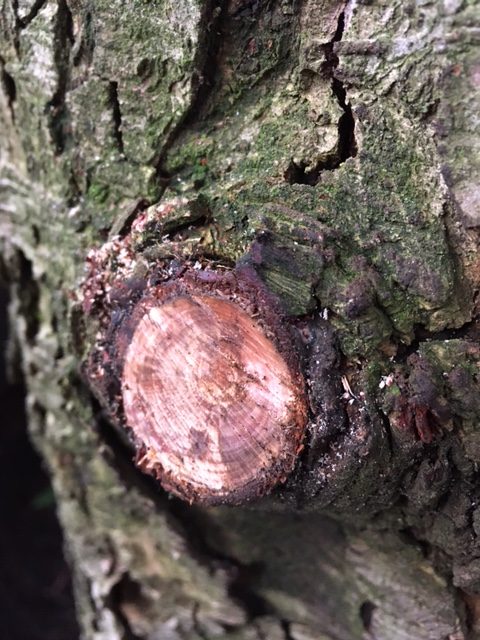
This close up shows the spot where a dead branch went missing. It’s important to note that a third year apprentice in landscape horticulture made the cut. Sadly, he isn’t continuing with his studies after struggling in level three.

But the cut looks fine. There is no stub poking out, waiting to die off and potentially allow disease into the tree. Also, the cut isn’t too close to the bark branch collar. When this zone is damaged, the tree struggles to close up the wound.

When you remove branches, get it just right.

Conclusion

Winter is very slow compared to spring, so take advantage of it by checking your landscape trees. It’s easy to spot and make adjustments when you can see the crowns; and there is plenty of time.

Take good care of your landscape trees. Ask for help, if you need it.

A daring cedar top rescue

By | Company News | No Comments

Tight tops

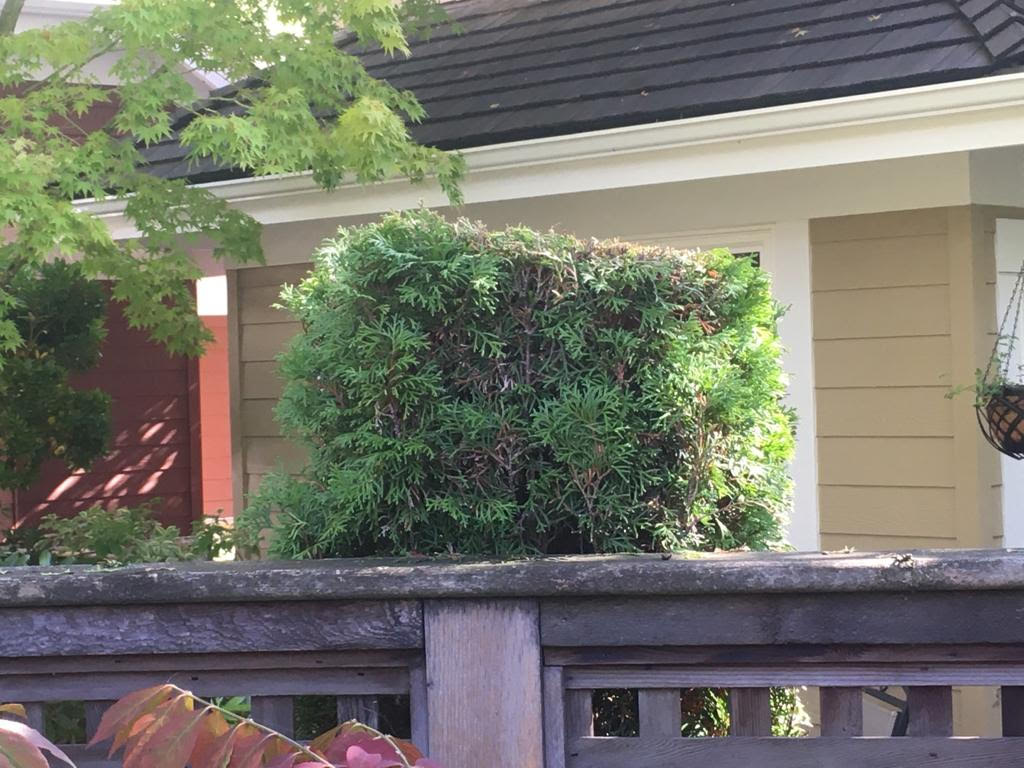
Ok, so the main headline is a bit dramatic. It’s about cedar tops, not about a real rescue. The point of this blog post is that, unless it’s requested, all cedar hedge tops should have straight, tight tops. That’s it.

Now, there are exceptions, like my friend Anthony. He shears the top of his cedar hedge into a wave because he is a musician and the hedge top flows like a melody. I guess. I don’t really know. It’s definitely playful but an exception nonetheless.

Why I lose sleep

The finished product.

Sadly, this is the finished product of experienced landscapers. I suspect they ran in with articulating shears and buzzed down the tops with one or maybe two strokes without using a ladder. That just screams “I don’t care!”.

Cedar tops should have tight, straight lines on top. The top should match the fence line and run parallel with it. When I see the angled top, I lose sleep over it. What happened to producing world-class work?

The fix

I knew I’d have to fix this mess because sleeping well is important for landscape professionals. The cedars also look awful from the road. When I walked by, I noticed it right away.

Unfortunately, between the time this shoddy work happened and my fix date, new owners moved in. Now, I had to fix the tops and explain the horrendous duplication. Obviously, it takes time and effort to fix the tops. It didn’t help that the new owners had their backyard stuffed full of outdoor furniture; and the owner had a list of requests, most of which would have reduced his deciduous trees by fifty percent. It was a nightmare.

Use a ladder so you see the top and run your shears over the top back and forth, several times. If you’re lucky, you’ll see last year’s level clearly. Don’t rush it. Let the shears do the work as you pass over several times. This gives you the straight, laser-like look on top.

Note that only the cedar tops are done this way. The sides are pruned lightly so they stay nice and green, not brown and full of hole.

After the fix.

Now, after the fix I can sleep at night. It’s not perfect but it will do, considering the condition of the cedars and the sharpness of my shears. The key difference is that I care. I always make an attempt at diligence. I can’t just buzz it down without seeing the top properly, and walk away. That’s not me. That’s not Red Seal journeyman work.

Always make sure your cedar hedge tops are tight and straight.

Delegate, don’t micro-manage

By | landscape maintenance, Training | No Comments

Easy delegation

Delegation can be super easy, if you do it right. In this blog post I obviously use a landscaping example, but it applies to other industries as well. The key is avoiding micro-management. But first, let’s consider my situation.

I had an open, leafy field and planted beds with a high-profile walkway running through it. Now, with the snow gone, it looked awful. It needed a quick blow but I had other, more pressing tasks to attend to. Backpack leaf blowing doesn’t have to be done by managers. We can easily delegate tasks like this.

The helper

Since I didn’t ask my helper for permission to talk about him, I will have to disguise it a little bit. If you read this, and think it’s about you, you’re mistaken. It’s just coincidence.

So, my helper isn’t a star on staff. He does his job at barely acceptable speeds, doesn’t stress and therefore, rarely looks like he’s out of breath. Think of him as a reliable drone. He shows up on time and does his job.

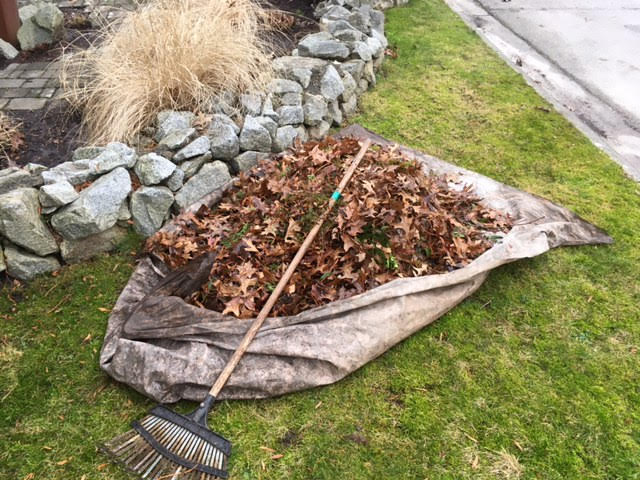
Knowing all this, I walked him over to my leafy park section and went over his task. Since the leaf pick-up afterwards would be up to him, we brought a tarp and a rake. Walking back and forth is inefficient so don’t do it.

I explained what I needed him to do: blow the entire area and make one or two piles for pick up. I also showed him the boundaries to avoid blowing neighbourhoods we don’t maintain.

Then, I let it go and walked away.

Don’t micro-manage

Avoid micro-management at all costs. Standing there and pointing to every leaf he missed wouldn’t make sense. Good or bad, the worker needs to do his work and learn from the feedback he gets. My worker isn’t a new landscaper; he has experience. But, sometimes, he gets treated like a new guy.

And to provide feedback, I had to go back later to check his work. And I’m happy to report, it was totally fine. Which is what I told him. The park was blown clean and the tarp was full of leaves, ready for pick-up by the road. Case closed.

All done!

Conclusion

Don’t be afraid to delegate tasks to others. When I show up on sites to help my foremen, they’re never shy about delegating the worst tasks to their manager.

Explain the task, show them the area, give them time parameters and walk away. Let it go. Trust them to do their job. If they mess it up, they will learn from it. If they do it well, they will appreciate the autonomy and extra fun. That’s why we have to give feedback.

Micro-management would just suck the life out of their work day. Avoid it.

Debris tarped up and positioned by the road for easy pick-up.

Instant plant ID!

By | Plants | No Comments

Under 1 minute

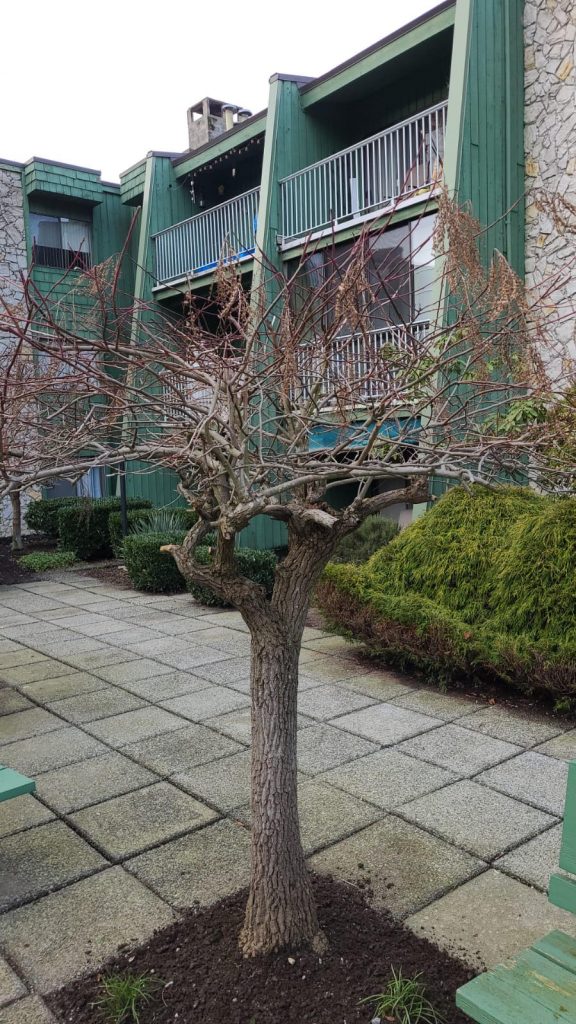
I love this! It took me less than a minute to reply to a message on WhatsApp asking what the tree species name was. Take a look. Do you know it?

What’s the tree species?

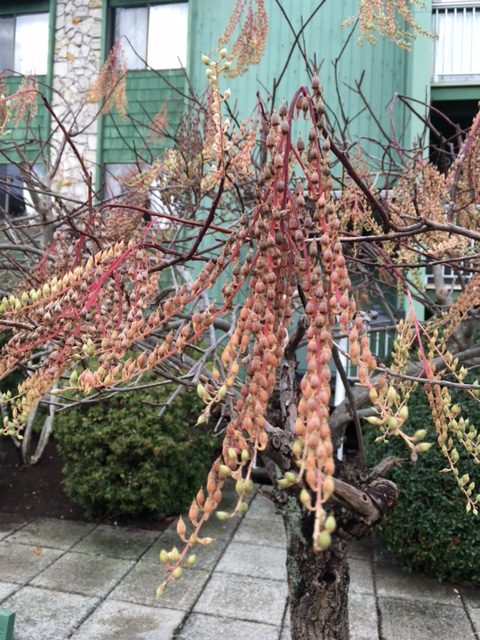
Does this close up shot help?

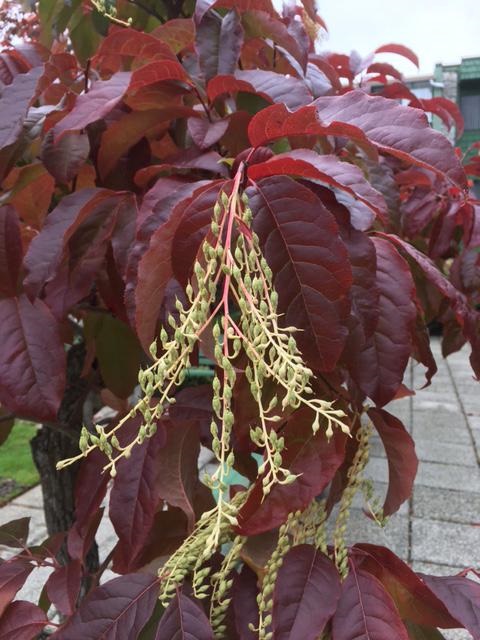
The answer is Sourwood (Oxydendrum arboreum). Now, I know this site really well and it also happens to be the only site in our portfolio planted with Sourwood. That’s why it’s easy to remember.

Of course, the fall colors are also stunning.

And while it looks good to answer the question quickly, it’s not a contest with prizes. Plant identification skills are important because to properly care for our landscape plants, we first have to know what they are. It’s our starting point.

Imagine how stunned I was when a fourth level apprentice in landscape horticulture told me he didn’t care about the plants I named nearby. It didn’t do anything for him. What? Horticulture is about plants. I would love it if someone would show me all of the plant species on site. Sadly, I’m the go-to guy and, as it turns out, it’s not really appreciated. It pains to write these lines.

First encounter

I remember my first encounter with Sourwood as if it was yesterday. It actually happened in 2014, when I worked for the City of Coquitlam parks department. My city gardener boss pulled up to a small city park and the only tree in the parking lot was a huge Sourwood specimen.

As was her habit, my boss quizzed me immediately, but I drew a blank. Now I have the city gardener boss-failure-Sourwood association burned into my brain. And that also frees me to learn other plant names; and there are many more to learn about. Recall that gardening starts with plants!

To have success in horticulture and gardening, you will have to learn about plants. That’s obvious. If you’re interested in one or both, it’s probably because you love plants. So, keep going and feel free to share your discoveries in the comments section.

My goal is to ace every plant ID inquiry on WhatsApp in under a minute!