
All Posts By

Vas Sladek

Watering will save your new cedars!

By | Planting | No Comments

Water is the key

It’s pretty sad but I have to say it, newly planted cedars (Thuja occidentalis) require frequent watering after planting. That’s the only way they can establish and thrive. And it sounds so simple and obvious you could be forgiven for thinking I’m wasting your time with this blog post.

And yet, it happens over and over. Every season I’m sent in to catalog and remove dead cedars from multi-family (strata) sites. Then, once the rejects are hauled off to the dump and turned into soil, I visit nurseries to buy new specimens. More time, more labour and more money.

Then comes the hole digging and planting. Obviously, not every site is easy to dig up so the labour involved in this step can be huge. Also, Red Seal Vas doesn’t come cheap but this isn’t about me. I want you to think about watering.

Proper planting

Every time cedars I planted die, I second-guess my planting technique. I always remove burlap before planting but people don’t like that because it voids nursery return agreements. Potted cedars are easier but you still have check the roots, planting depth and water each tree in properly.

Once I’m done, I beg the owners to please water the cedars. After all, you wouldn’t breast feed your baby for just a few days. My wife breast fed for years. Unfortunately, people are busy. And it shows when I show up on site months later.

Night and day

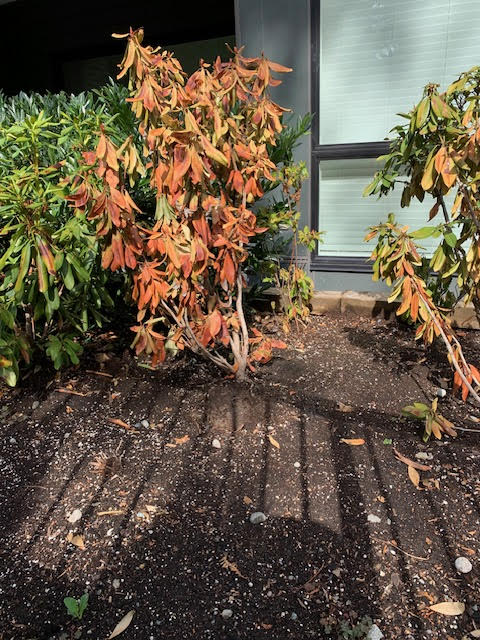
It’s clear what happened here and, shockingly, this is the owner’s patio where they play with their kids and legally smoke copious amounts of marijuana.

Other people on the same site try harder. These specimens look decent so obviously they listened to me. This gives me some hope and stops me from second-guessing my planting technique. It was always about proper, frequent watering. Young cedars are thirsty so water them for at least one year. But don’t drown them. If you’re not sure about moisture levels, stick your finger in the planting hole.

Conclusion

Water your newly planted cedars well and frequently!

Are you still stressing over fallen leaves?

By | gardening, Mulch, Tips | No Comments

David Hobson’s opinion

This past October I travelled to Waterloo, Ontario to cheer on my son’s soccer team. They played in the youth U15 nationals, representing British Columbia.

Now, since they only played one match a day and the team didn’t hang out with parents, I had plenty of time to hang out.

I visited the St. Jacob’s farmer’s market, Canada’s largest outdoor farmer’s market. Safely absorbed by the market crowds, I bought a copy of the Waterloo Region Record newspaper. In it David Hobson wrote about fall leaves and how he deals with them “How about those leafs?” (Waterloo Region Record, October 7, 2023, section C8). Inevitably, this topic comes up every year so let’s see what David does in his own garden.

Easy does it!

David recommends bagging your leaves and leaving them outside exposed to the elements. By spring you should have layers of soggy, decomposing leaves you can add to your garden beds. He has done it for years and suggests you do the same. Start small. Even one bag of leaves is fine.

David doesn’t spread the leaves around in his own garden, except around shrubs where they get trapped and don’t blow away. Normally he makes a large pile of leaves, sometimes two metres across and just as high. The leaves should be wet for best results.

As the leaves begin to decompose, the pile shrinks by half. By early June he peels of compacted layers and adds them to his garden and vegetable beds. They stay there all summer and by fall those leaves are almost gone. They were used to build up soil just the way it happens in nature.

This is one reason I enjoy blowing leaves off multi-family complexes into woodland buffer zones. It’s good ecology and I cut down on green waste dumping charges.

If you like David Hobson’s ideas, try them out; and follow David online.
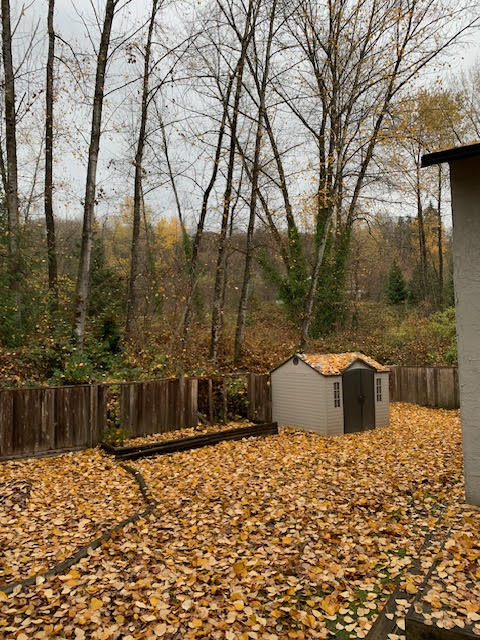
Stop stressing: blow it into one big pile and let it decompose!

Hedge screens: Prunus vs Thuja

By | Planting, Plants | No Comments

Ask Red Seal Vas

I won’t lie to you, not every client follows my suggestion. But it does happen on occasion. Like when a young couple approached me about creating a screen along their front sidewalk. I was at their house to cut their neglected lawn; more weeds than lawn. So they asked me about potential plants for their sidewalk edge.

Now, cedar hedging is very common. The neighbours on both sides have cedar hedges (Thuja occidentalis); and I’ve seen studies from the UK showing how hard they work keeping pollution away from the house.

But given our warming climate, many plantings are now struggling to establish and survive. (See also my blog from December 11 about cedars and proper watering.) That’s why I hesitated when the young mother asked me for a good suggestion.

Portuguese laurels

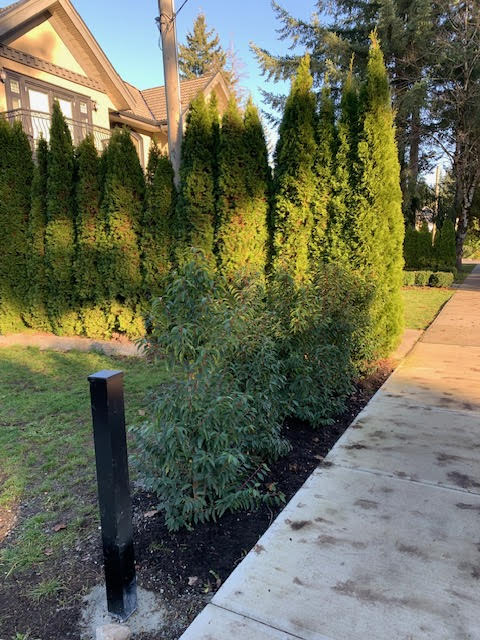
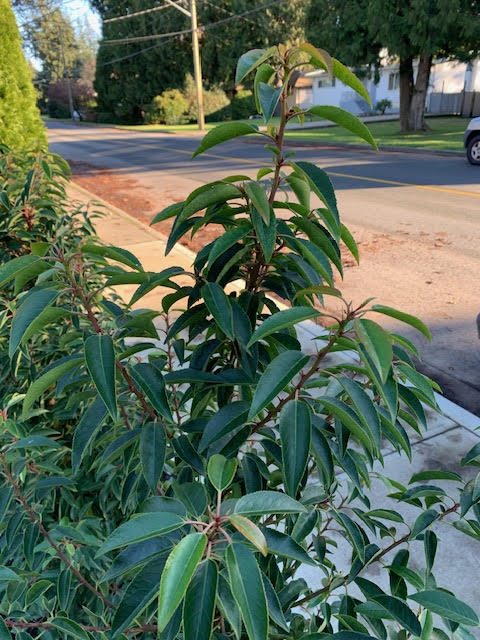
Prunus lusitanica are very nice laurels with glossy leaves; they grow fairly fast and tolerate shearing. What we’re finding on our multi-family (strata) sites is that they tolerate summer heat much better; and establish better than cedars.

They also cost much more than cedars. Luckily, this young couple has the means to pimp out their newly built house. They paid and had the laurels installed. Obviously, the screen isn’t as tight as with cedars but that might be a good safety feature. There is an obvious screen but it will be difficult for pedophiles to hide behind it.

Next spring I will establish a deep edge between the laurels and the lawn for easier lawn care work and for nicer definition. As it is right now, I really like the laurels. I’m glad the owners went with my suggestion. I’m always happy to help!

Prunus lusitanica in front, neighbour’s cedars in the background.

Prunus lusitanica

Conclusion

If you need a hedging screen, definitely consider Portuguese laurels. They’re nice and glossy and they tolerate shearing and summer heat. But they will cost you more than cedars.

People love trees on YouTube

By | Training, Trees, Videos | No Comments

Closest thing to viral

People love watching tree videos on YouTube! I found that out recently through my humble YouTube channel: West Coast Landscape Pro. Normally I post short videos of my work and things I see in the landscape; and I’m lucky to get one hundred views. So, imagine my surprise when one of my tree posts hit 4.6 thousand views and generated seven subscribers. That’s like Christmas for my channel.

Don’t leave stubs

The message is clear: don’t leave stubs on trees. Make nice cuts at the branch collar. In the video, the branch collar is a clearly visible raised section between the branch and trunk. Just beware that not every tree shows clear branch collars.

When you leave stubs the tree can’t cover up the wound. Eventually, the stub dies and it can act as a vector for disease to enter the tree. Once it’s inside, it’s hard to save the tree.

Also, always use a sharp saw to do your tree pruning work. In the video I’m using a brand new Silky Big Boy hand saw and it’s super sharp. It’s so sharp, it puts a smile on my face. Thank you Japan.

Impact

Not only did I get 4.6 thousand views, I also got comments. So I did what you are supposed to do: I replied to all of them. One especially was interesting, showing how even one short video can have slight impact on people.

After watching the video, one viewer promised to treat trees better when she goes camping and scours the area for firewood. She can now make decent cuts that the tree can over time cover up. I can only imagine what really goes on around camp sites.

Clear upsell

You can support my channel by viewing and subscribing; and by purchasing merchandise through my companion website: redsealvas.com. I appreciate your support. Also, remember to leave your comments so we can all learn something.

A Christmas gift for homeowners and landscapers

By | Education | No Comments

Holidays!!

With barely three weeks away from Christmas, I feel like all homeowners and landscapers should be rewarded. To thank you for reading this blog, I’ve dropped the price of my online course to just $5 until January 1, 2024.

If you don’t know the background, I will share a little bit here. In my twenty-five seasons in the landscape industry, I’ve seen my share of lawn care mistakes. I’ve made them; and I’ve tried to correct them in others. Then it hit me: why not assemble the biggest mistakes in one course and make it available to a wider audience.

Learn from other people’s mistakes

Obviously, landscape apprentices work with me all year and they learn from their mistakes. But why not learn quickly from other people’s mistakes? My Lawn Care Mastery 101 online course covers the biggest mistakes people make. And sadly, some experienced workers could benefit from a refresher.

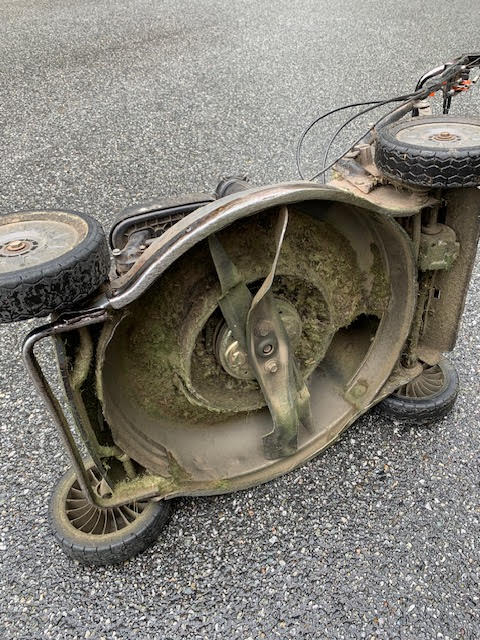
Colliding with fixed objects kills your blade and bends the shaft.

Biggest mistakes

My course covers the biggest mistakes. Some are horrific like bending your mower shaft or scalping your lawn down to dirt. Other mistakes aren’t as critical because grass grows back in one week or so. If you cross your mow lines one week, you will get a chance to make corrections the week after. If you run through my course you won’t have to worry about mistakes. And it will only cost you $5. Check it out and get ready for next year’s lawn care season.

Happy holidays!! I appreciate every single reader of this blog. And check back soon because I will be giving away copies of my latest e-book in January 2024.

In the garden: simple summer tasks

By | gardening, landscape maintenance | No Comments

Feeling the heat?

There was a hot, dry and dusty stretch in July and August and many landscapers had difficulty finding work. Since their lawns were short and brown, they had extra time on their hands. And finding work on site shows experience.

To find work you have to look closely at your landscape or garden. The work is there. I know because I have done it. When people cry there is no work, I rush in to help them. That is what good landscape managers do. Let us take a look.

Work examples

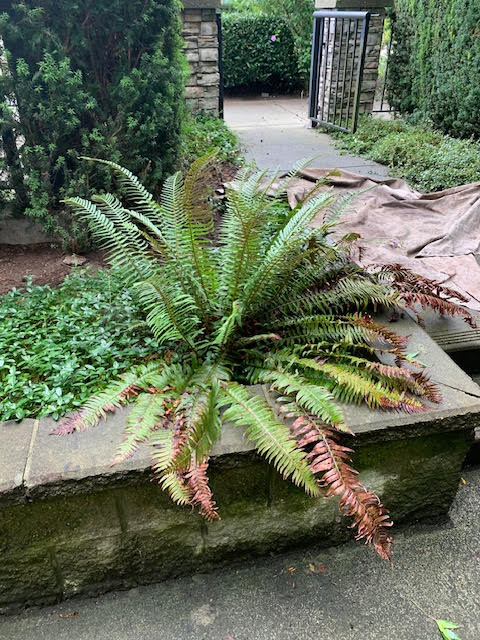
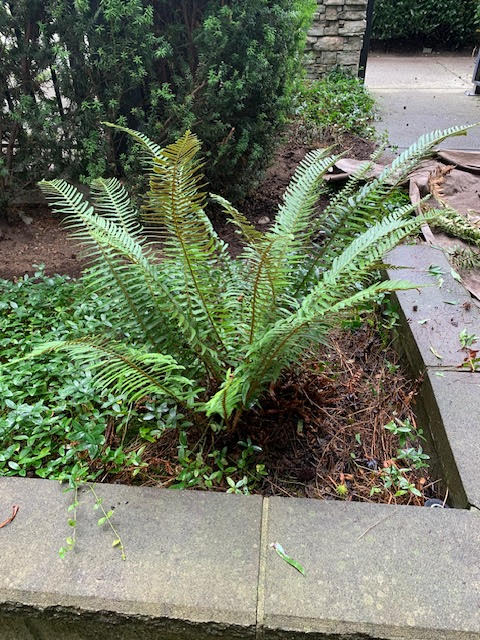
Any ferns that have not been clipped in spring, like this native sword fern (Polystichum munitum), can be done in summer.

Dead out

Dead plants and dead branches look awful. We want everything to look great: healthy and beautiful. So do not be afraid to cut dead stuff out.

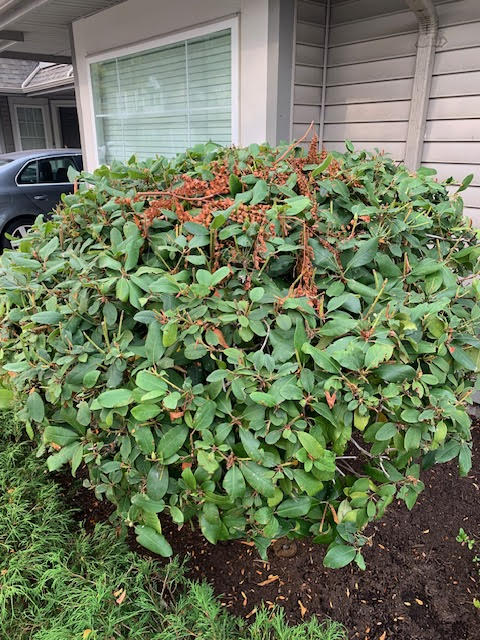
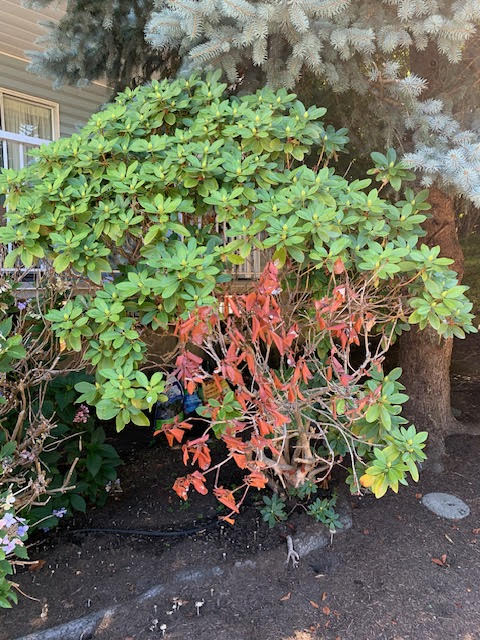
Easy hand pick: dead branch on top of this rhododendron

This dead rhododendron branch really bothered me. One cut and I could sleep well at night.

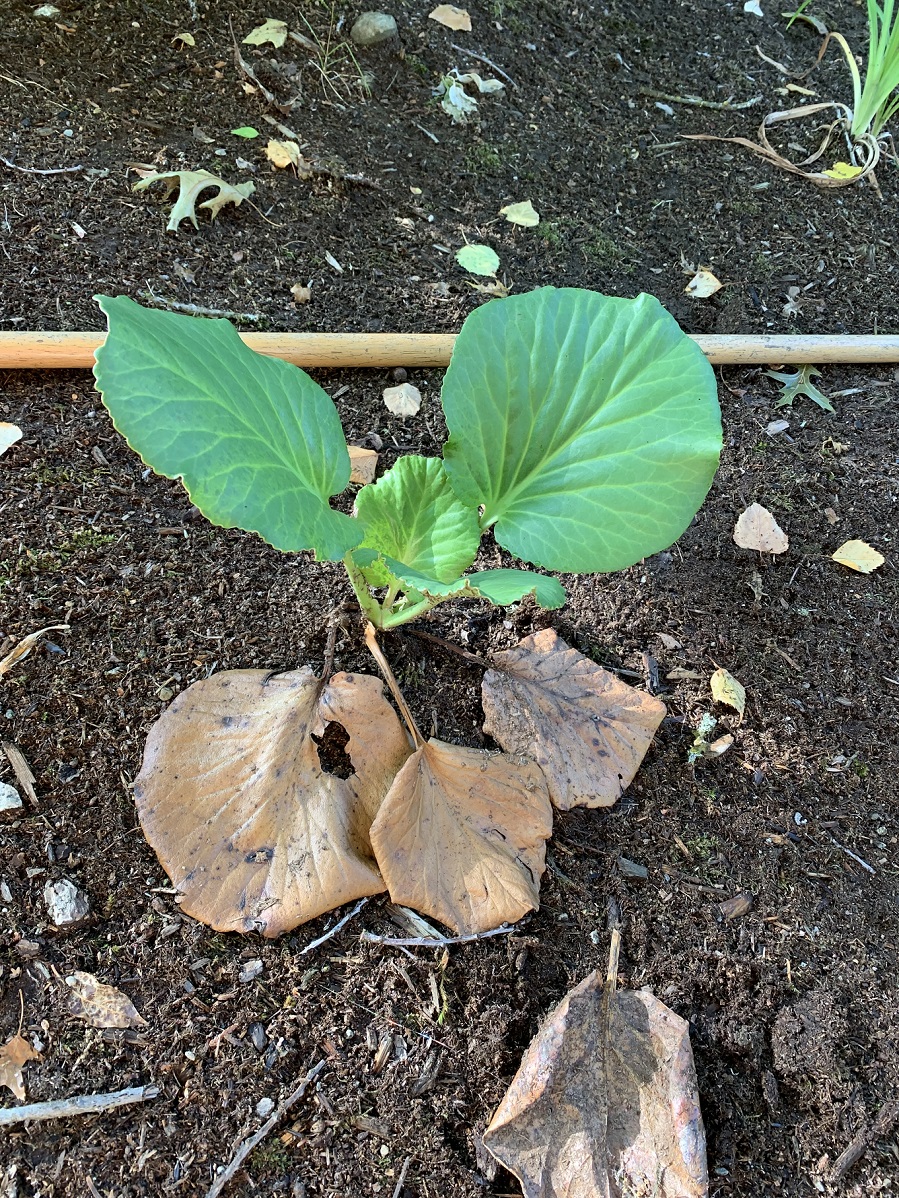
Cut back the brown Bergenia leaves
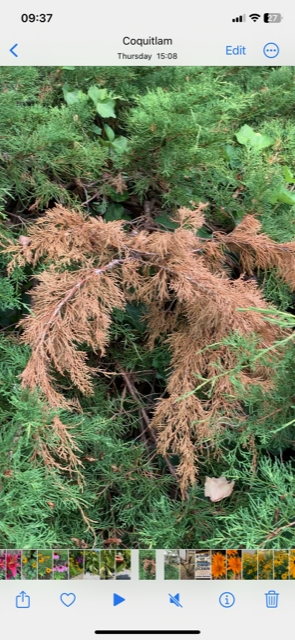
Snip out dead out of junipers.

Hydrangea

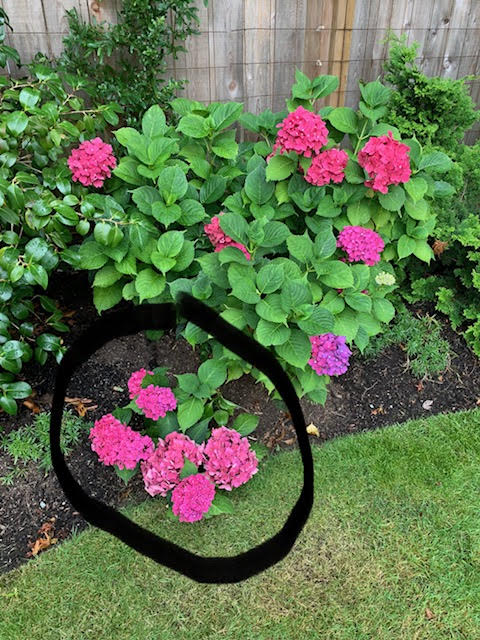
This low branch looks terrible; we need a nice upright look. When the branches touch the ground you can make them disappear.

Groundcover

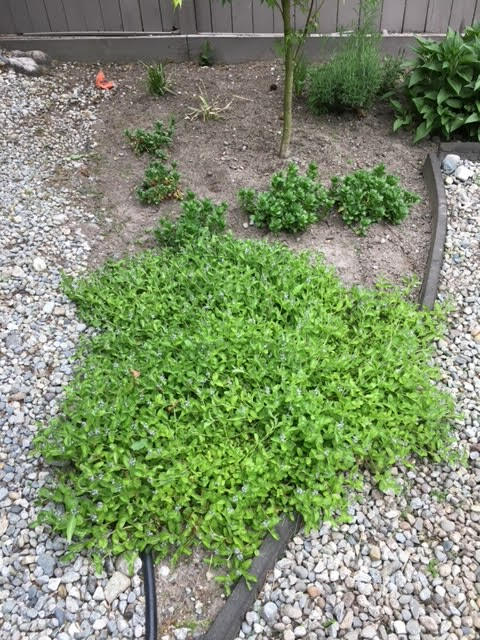
I planted this groundcover to compete with weeds and it’s doing really well. Almost too well. So, clip it back inside the triangle borders.

Sweetgum

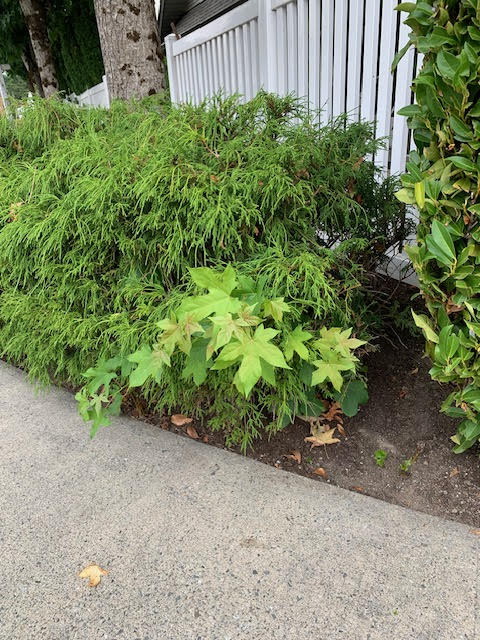
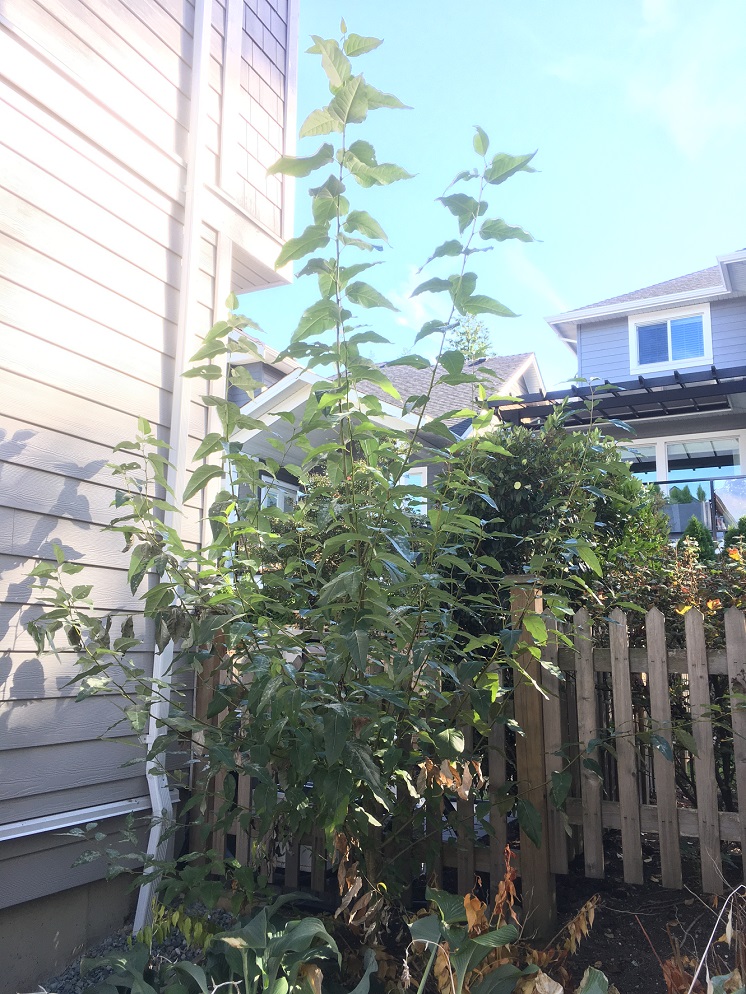
This sweetgum tree is sending out suckers from its roots right through a juniper. So, I snipped it at ground level to create the separation we need. It wouldn’t make sense to let the sweetgum get bigger inside the juniper.

It has taken two seasons for this invading cottonwood tree to grow back to annoying size. I actually cut it back myself because the foreman on site thought it was planted on purpose. It wasn’t. Cottonwoods get quite large and this site is small.

I did my best to remove all roots but there is one buried deep in the soil and I didn’t have the time to excavate it, which means I will be back in two years to humble the invader once again.

Conclusion

Take a good look around your home garden or strata landscape. Even during summer when conditions are dry, there is plenty of work. You just have to look for it. Looks for details that get missed during the busy months. Check every corner, every raised bed and every back exit area.

Chainsaw attachment 101

By | Tools | No Comments

The basics

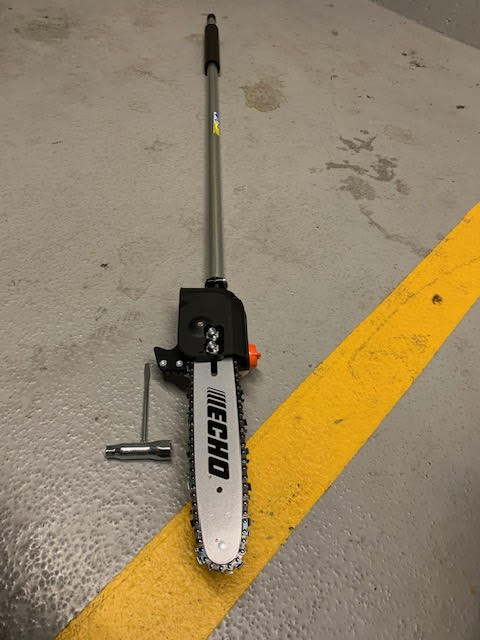
Recently I purchased a chainsaw attachment for around $300 which fits onto my ECHO PAS engine. Since I mostly do pruning, not logging, I opted for this attachment instead of a regular dedicated chainsaw. If you take down trees and cut them into firewood then definitely get one of those.

Yesterday I had to remove six dead cedars so I used this chainsaw attachment to take down the tops in sections, leaving a three foot “joystick”. The joystick gives you nice leverage when you try to take out the root ball.

The new, sharp chain sliced through the dead stems nicely. And that is the point: chainsaws speed things up, especially when you are getting paid by project, not by the hour.

Another job I have lined up involves lifting pine branches growing from a neighbouring property off my client’s maple trees. It’s time for some separation and the chainsaw attachment is perfect for this work because it gives me some space between me and the branches. With a dedicated chainsaw I would require a ladder which would be awkward.

Before you start

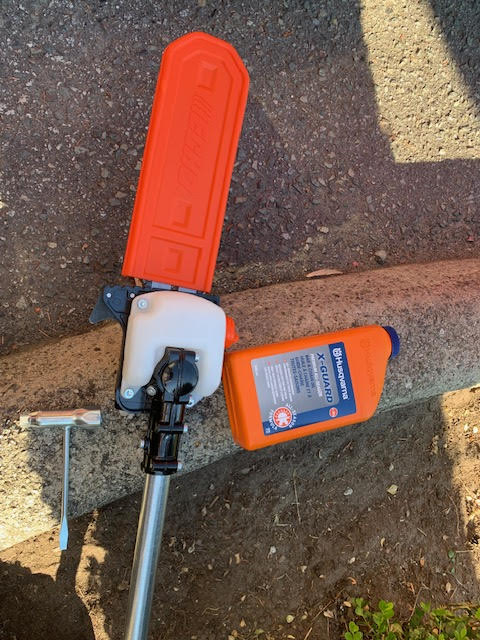
Always read the manual and consider your safety before firing up the chainsaw attachment. Make sure you have bar and chain oil in the chamber and always keep your hand tool close by. You will need it if the chain slips off the bar, gets loose or the unit requires cleaning. One optional purchase is a spare chain. I fully intend to learn how to sharpen my chain to save money and learn a new skill. I am an ISA certified arborist but I have never sharpened a chain.

My fear is working out in the field and having the chain break on me. It is nice to have a spare chain.

Put in bar and chain oil and keep the hand tool close by!

Safety is important in the field. Every. Day. So, make sure you have a helmet and eye and ear protection. I have a helmet with earmuffs and a shield. Having the long bar between you and the chainsaw makes this set-up safer than with a regular chainsaw which is closer to your body.

A note on pruning quality

Here is a pro tip: chainsaw attachments are great for taking down trees in sections but not for making awesome, precision cuts close to the main stem. It is very easy to slip and cut into the bark when making a finishing cut at the branch collar. I prefer to make these cuts with a handsaw.

One of my clients has a dead tree in front of his house and he needs to remove it. So, I will take it down slowly in firewood chunks. Note how there are not any precision pruning cuts to make here.

Rating

If you own an Echo PAS engine then this chainsaw attachment is a great buy. Visit Foreshore Equipment in Burnaby and tell them Red Seal Vas sent you.

Why I love my Japanese hori-hori knife

By | Tools | No Comments

From Japan, with love

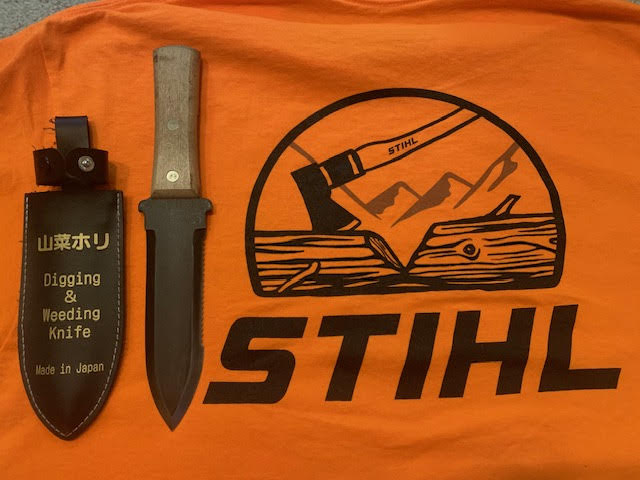
It used to be that only my trusted Felco 2 hand snips would hang on my belt. But now my belt also supports the Japanese hori-hori knife. It’s very sturdy so you feel its weight a little bit, it has a sharp tip like most knives and one side is serrated. This comes in handy when you are dividing perennials in the fall.

The knife also bailed me out yesterday when I was taking out dead cedar trees. Since I forgot to bring a shovel (don’t ask!) I was able to stick the knife in the ground and find the roots, which I then severed with my hand snips. I hate to do this with my hand snips because they get dull quickly. The hori-hori knife is designed for dirty work. It’s also sharp enough to slice through thin roots.

Who needs a shovel? I used the knife to stab a circle around each cedar and the extraction went well after that. All six trees were dead and fairly easy to extract.

Pro tip: leave the bottom portion of the cedar stem standing so you can use it as a joystick during removal.

Extras

This project sounds super easy, and it was. But it also highlights the importance of extras. Normally I only maintain the front of this eight unit complex, once a month. And if you stick around long enough, do a good job and get to know people, they will give you extra work.

No, I didn’t get rich from this side project but it did pay off a portion of my recent chainsaw attachment purchase.

Other uses

The hori-hori knife is labelled as a digging and weeding knife. It’s a huge gift if you work with freaks who insist on weeding with their fingers. That’s because we need to uproot the weeds and the sharp hori-hori knife is perfect for this work.

I get involved in this debate every season: weeding requires tools, unless you’re only hand picking massive trophy weeds. Professionals use tools! And as soon as I say it, people get sidetracked wondering if Red Seal Vas is a professional instead of focusing on weeds.

Personally I find hand weeding with my fingers very taxing on my fifty-something hands. Why abuse myself when I can uproot the weeds with my beautiful $30 hori-hori knife.

Sheath

You will need a sheath for your hori-hori knife because it’s sharp and you’re less likely to lose it. The Japanese got it right by making a closed belt loop sheath. Lee Valley got it wrong by making a button belt loop. It took me literally five minutes in the field to lose the knife because the button closure is too flimsy for non-stop landscape activity. Don’t buy this belt loop; get one that’s closed.

Conclusion

For $30 the hori-hori Japanese digging and weeding knife is a great tool to hang on your belt right next to your snips. You can use it for weeding, dividing perennials, digging and to keep degenerates away.

Why is my Dawn Redwood tree browning?

By | Company News | No Comments

Do we have a problem?

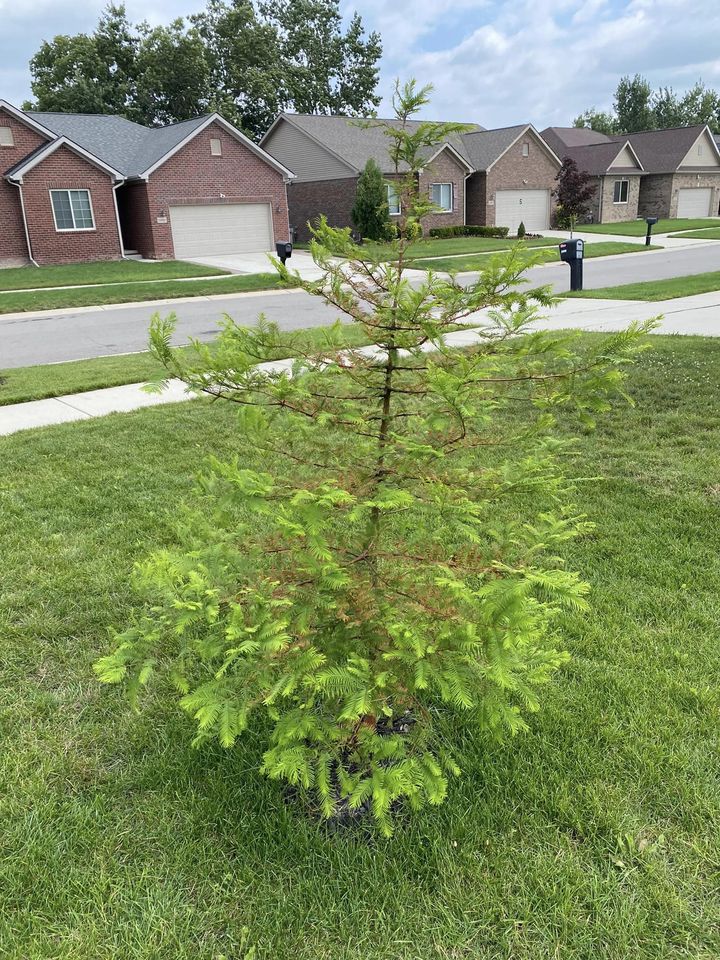
The owner of this young Dawn redwood tree (Metasequoia glyptostroboides) started panicking when his prized tree showed signs of browning. Now what? People on Facebook offered lots of advice, as they often do.

My own comments were about the tree well. I would enlarge it to keep lawn care machines away from the tree; and to allow the tree to collect water and nutrients. It’s good to keep grass away from your tree because it’s a tough competitor. Sometimes trees planted in lawns don’t thrive; all you get is status quo.

Another obvious issue is water and proper planting. Was the tree planted properly at grade and watered in? Is it getting enough water right now? Or too much?

Since the owner cuts his own grass he’s confident there hasn’t been any damage done to the tree by lawn care machines. Of course, we know well that even professionals can make mistakes.

The key?

Then one lady correctly observed that Dawn redwoods are deciduous so you can expect their needles to turn orange before dropping to the ground. Bald cypress is another evergreen that loses its needles. Which means that the owner shouldn’t be panicking. The tree is doing its thing: as fall approaches its needles start to change color. If the tree pushes out new needles next year, life is good.

Dawn redwood

According to my internet search, Dawn redwoods were first identified from fossil records. But then in the 1940s, live specimens were found in China. Today we see the trees planted in our British Columbia landscapes.

Early into my stint at my current day job company, the boss took me into a strata section and asked me to identify beautiful evergreen specimens. I didn’t skip a beat: Metasequioa glyptostroboides! Impressed, my boss and co-workers didn’t know that, purely by coincidence, I had read an article about the trees the night before. Now whenever I encounter these trees I think of this day and laugh.

If you have lots of space in your garden you can’t go wrong by planting one of these trees. The bark is beautiful. And remember, when the needles turn orange and fall to the ground you don’t have a problem. Dawn redwoods are deciduous.

Garden professor takes on myths

By | Education, gardening | No Comments

Link of gold

Usually, surfing online is an awful time-waster but not today. While checking my Facebook feed I came across a recent video recording of a presentation given by my mentor Dr. Linda Chalker-Scott. You might have read my earlier blog about Linda. In it, I call her my hero because she covers gardening as a scientist. This means that her findings and writings are based in science, not gardening hearsay. When I read about her experiments with mulch flammability I was extremely jealous. I would love to torch different mulches in the name of science.

Linda uses science to bust persistant gardening myths. You can listen to her presentation below. I can almost guarantee you that you will learn something new. It’s also possible that you too are holding on to gardening myths. Let Linda dispel it for you.

My mentor

Before the pandemic hit, I almost got to see Linda at a trade show in Abbotsford. I have several of her books -highly recommended-and I follow her because she writes on topics that apply to my everyday work as a landscape professional.

Let’s see some examples. I know a strata site where one of the residents buys lady beetles every year with after-tax dollars to deal with aphids. It sounds like a plausible idea until you realize that the lady has no way of keeping the lady beetles on her tree. There are more trees on her site. Linda has an extension paper that deals with this topic. (Spoiler alert: don’t do it!)

Now, what about landscape fabric? It’s sounds great! Put it down, cover it with soil or mulch and never weed again. Not so fast. The fabric clogs up and doesn’t let water through; and when the soil decomposes, thin layers can actually make life very cosy for weeds. Landscape fabric is a waste of money. (Now you know!)

Get to know Linda

Gardening is fascinating. There is always something new to learn and I have a lot of respect for garden professionals. But there are many opinions that aren’t backed up by science so why not let Linda show you the way. You can thank me later. She’s an awesome lady and she lives in our corner of the world, in the Pacific Northwest. That’s a huge bonus.