
Dry riverbed
Every year, I get to work in a dry riverbed, which gets serviced once a year, in winter. That means it’s overgrown and weedy, and requires weeks of heavy work. And it generates lots of green waste.
Many of the shrubs and roses need hard pruning, especially elderberry (Sambucus). Most of the elderberry shrubs have overmature, and very dead, canes. So this season we tried to renovate many of them by flush cutting them at ground level.
Most of the roses were huge, too, so we hit them hard. Overgrown willows and native Indian plums got the same treatment. Because willows have thick stems, we used hand saws and loppers. Always have sharp tools ready for action.
Indian plums are smaller, but the wood is surprisingly tough to cut through.
Dogwood shrub
Now, imagine the great feeling I got, when I saw the dogwood shrub pictured below.
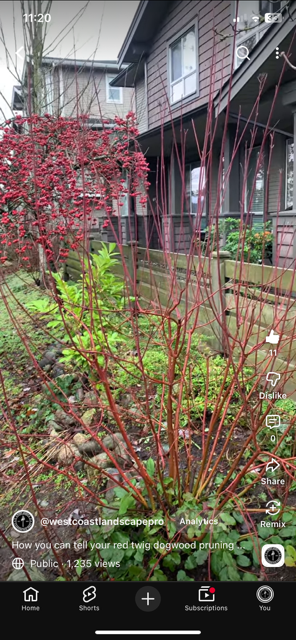
After hacking my way through overgrown shrubs and removing weeds, this dogwood shrub was a revelation because it didn’t require any pruning. Evidently, we did a great job last year, by removing the biggest, dark canes. You can still see the nice gaps we created in the dogwood.
The remaining canes are young and red, which is how it’s supposed to be. It’s a Red twig dogwood (Cornus sericea). Red twig, but only if you maintain it nicely. All I did was snip some of the tops lightly, and then I moved on to other pressing business. Like removing a dead tree, and raking up piles of Big leaf maple drop still sitting on top of ivy.
The loneliest task by far was removing weeds from the rocky bottom of the riverbed. I used my hand tool to remove the weeds, and smiled at the thought of our dogwood shrub. When you do a good job, your task should be easier twelve months later.
If you want to learn more about pruning, check out my YouTube channel, like the videos and subscribe. Then encourage your Proper Landscaping crew to do the same, when you see them.