
Category

Plants

Learn to love your new Oakleaf Hydrangea

By | Plants | No Comments

This blog post is about oakleaf hydrangeas but I have to set it up a bit. It will make sense shortly.

Professional landscapers are more likely to hear a complaint than “thank you”. Sadly, that’s how it is. But there are exceptions. For example, one beautiful and large site treats its landscapers to a monthly lunch. Nice! In July it was a barbecue.

Smoke and fire!

Walking back to refuel my power shears, I noticed smoke between shrubs and assumed the barbecue was already on. I was wrong. A rebel worker was breaking WCB regulations by smoking on the job so I explained it to him in stronger language that doesn’t belong on this blog.

At lunch both crews assembled for the barbecue and minutes later one owner burst through the gate yelling “fire”. That would have been strange: ten people sitting around a table making small talk while a fire rages on.

What? No flowers?

The barbecue hosts eventually ran out of small talk and asked me why their new Oak leaf hydrangea wasn’t flowering. Well, like most hydrangeas they flower on the prior year’s wood. Since this was a new plant without flowers I told them to stay patient and wait for next season.

The owner replied that at 66 years of age, she didn’t have much time to wait for flowers. She has no choice.


IMG_2083

Brand new Oakleaf hydrangea. It will flower next season on the wood from this season, assuming the owners don’t prune it.
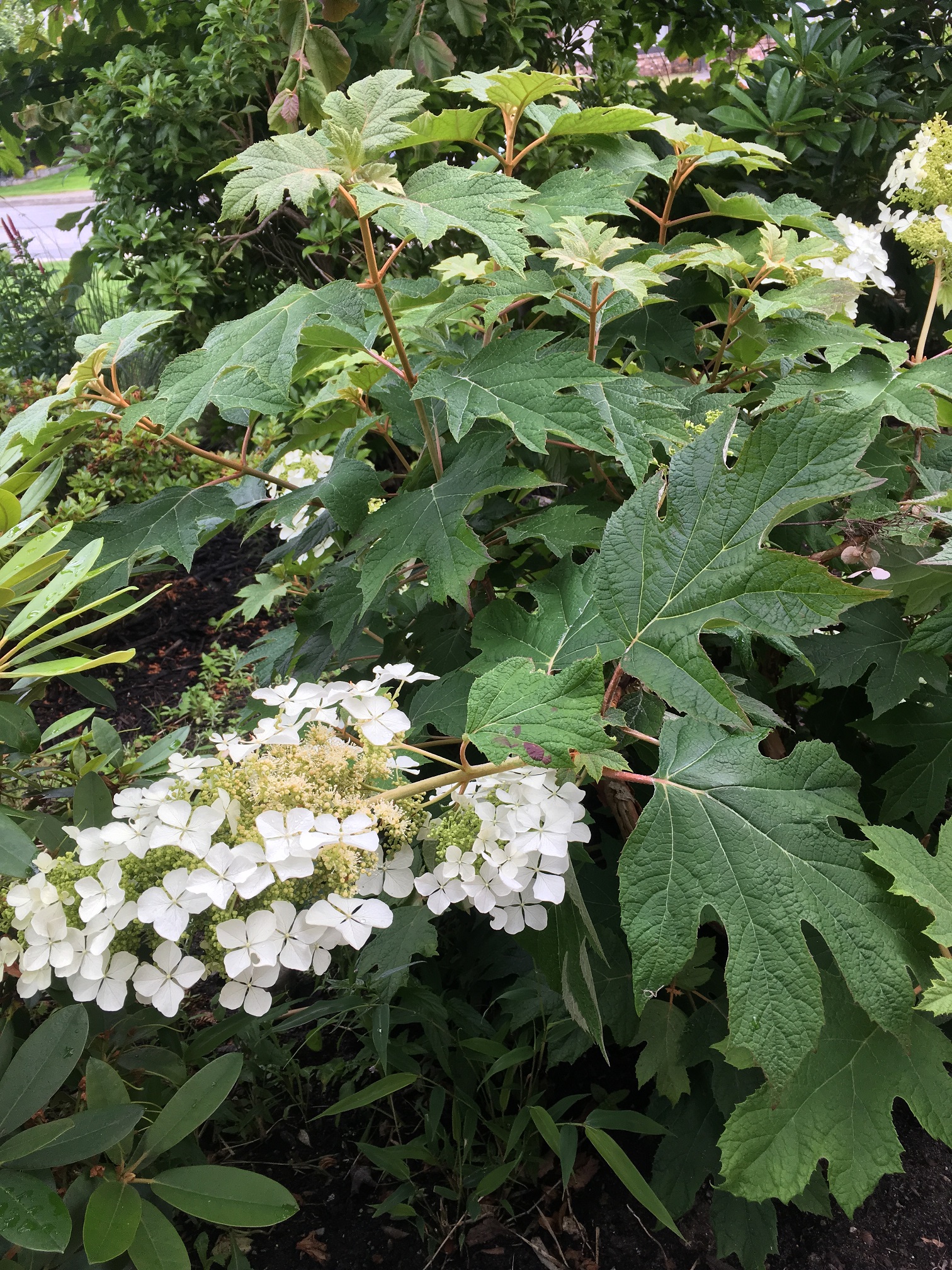
 

IMG_2146

This specimen was planted last year so the flowers are growing on last year’s wood. This is a common hydrangea habit.


LOVE IT!


Oak leaf hydrangeas are beautiful. I find the oak shaped leaves a nice break from regular hydrangea leaves. If you want some change, get one Oak leaf hydrangea for your garden. And if it doesn’t have any flowers, stay patient and don’t prune it.
Bonsai response in plants

By | Plants | No Comments

Bonsai” response is a term I learned from my mentor Dr. Linda Chalker-Scott. It happens when plants are under stress. In this blog post the stressor is lack of water but it could be something else.

The plant sends out new shoots from the base, trying to bonsai itself in response to the stress.  I learned this while going through Dr. Linda Chalker-Scott‘s new Great Courses course “The Science of Gardening“. You can read my blog post review of the course. All I will say here is that it’s highly recommended, if you can get it on sale. The regular price is brutal so forget it, unless you have deep pockets.

Site example

As soon as finished the course, I ran into a perfect example from one of my work sites. I normally float around amongst our work crews, helping and training. But, in 2018, we needed someone to take care of a small site so I did it once a week.

In spring we installed new beds on opposite corners. We planted Berberis thunbergii, Sedums, Pennisetums, Carex, Spireas and Japanese willows (Salix integra); and everything got mulched with river rock.

All of the plants developed nicely and the river rock kept weeds in check. But then summer hit and the differences were clearly visible. On the left corner lives a home gardener who waters regularly. On the right corner lives a busy family. Both have garden hoses close by. Let’s talk about the right side.

The tips of the Japanese willow shoots were turning brown so I watered the bed every week. My boss doesn’t normally like to do this but, hey, he wasn’t there and I have research to do for my blog posts.

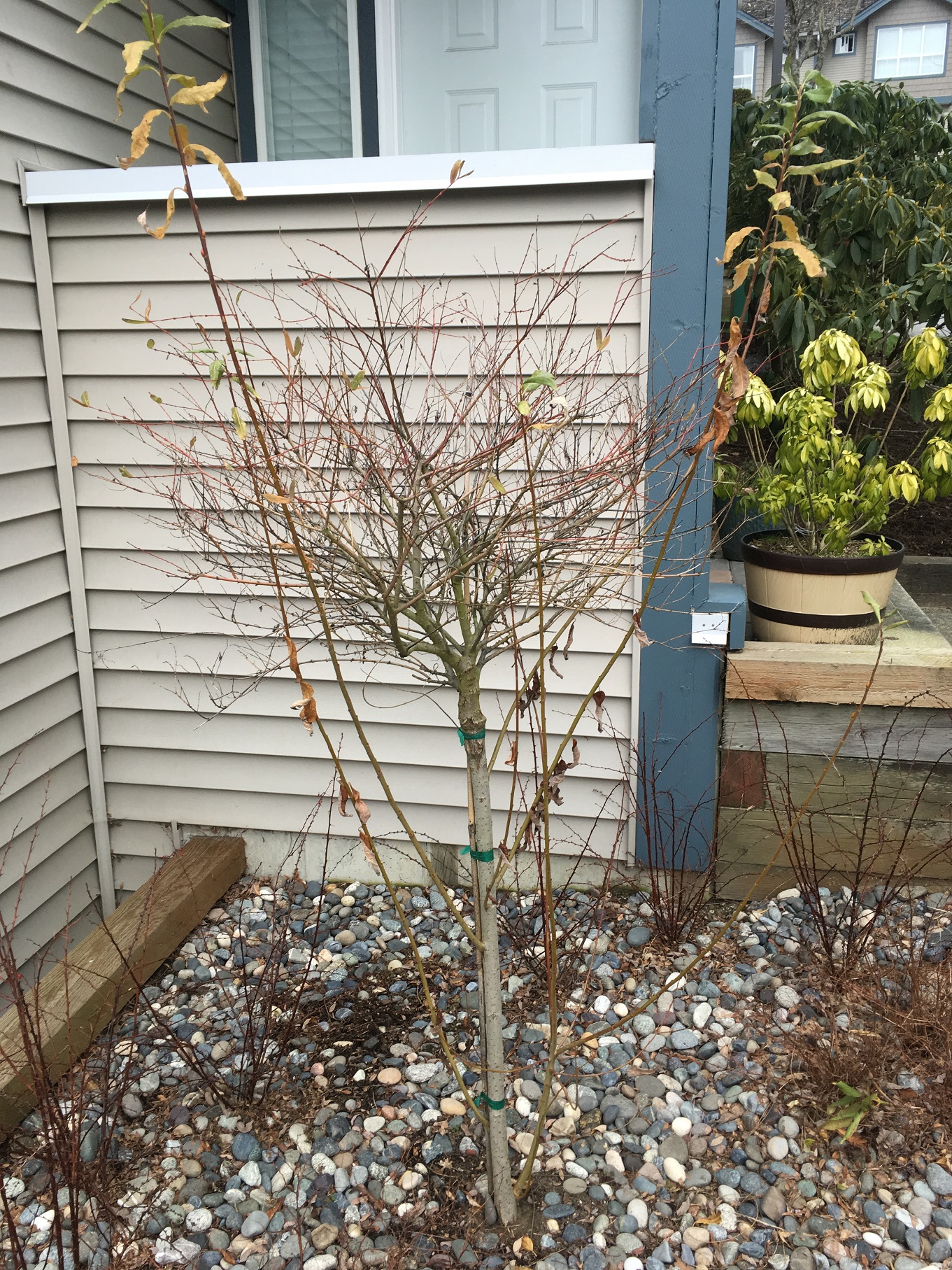
Then I started noticing new shoots developing lower on the main stem. This was clearly the plant’s bonsai response to water stress. The left bed specimen didn’t do this because the home gardener watered regularly

I didn’t prune off the bonsai shoots until winter 2019. We will see what happens in spring.


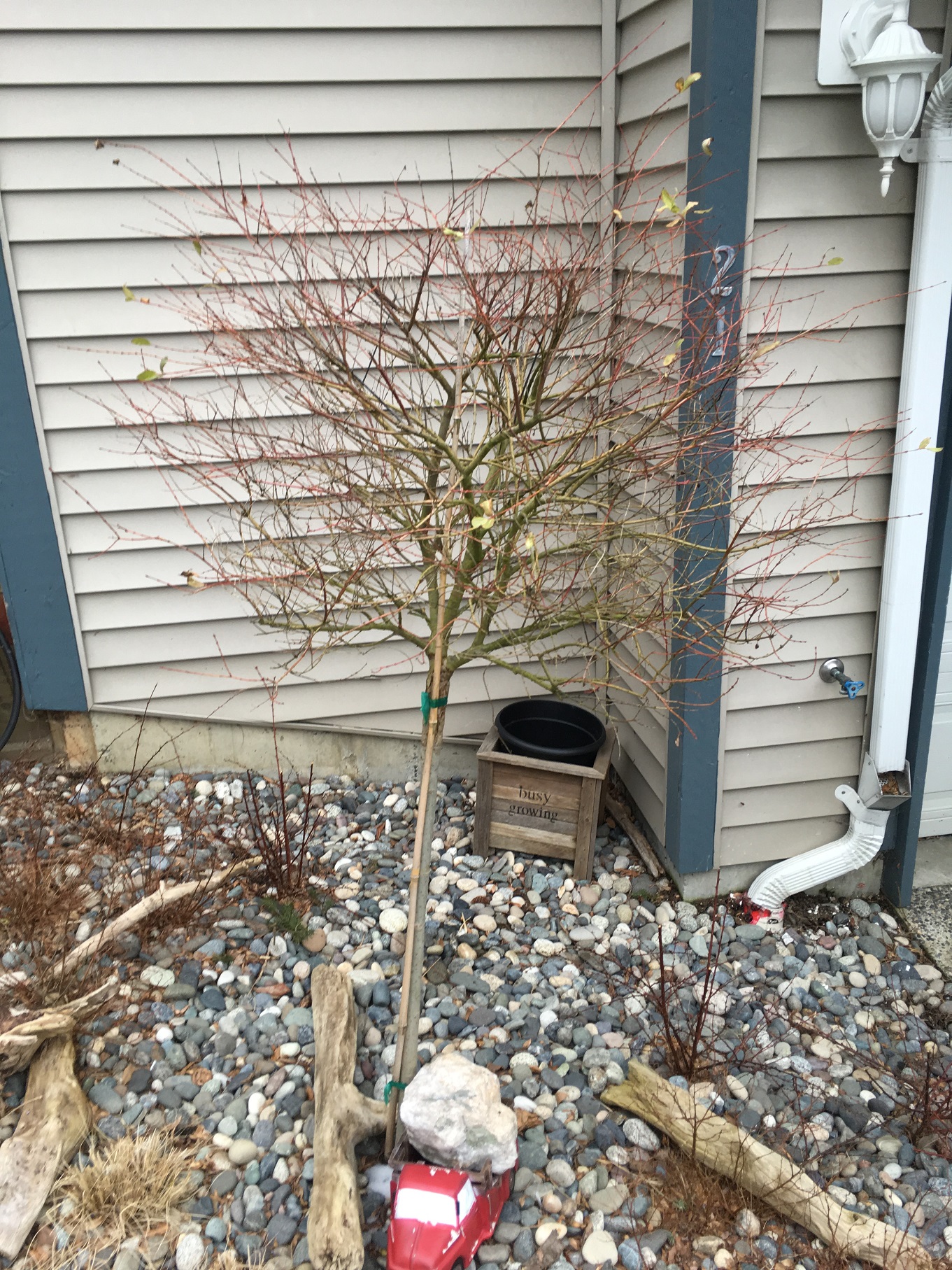
IMG_7451

Salix integra watered by home owner. Stem and crown look normal.


IMG_7450

Salix integra ignored by home owner. Note the stem growth in response to water stress.