
All Posts By

Vas Sladek

How to have fun with annual tasks

By | landscape maintenance, Seasonal | No Comments

In this blog post I will show that working on annual tasks can be fun. First of all, it gives us a nice break from routine maintenance schedules and, second, it’s only done once a year. And for me, that was a new experience.

Municipal

My first encounter with annual jobs was while working for a municipal parks department. At first, I couldn’t believe that some areas were only cut once a year. But it was a nice break from the usual routine. Since my job was to line trim, I loaded up on spare line (always do this!) and I made sure my jerry car with mixed fuel was close by for quick re-fuelling (another good habit).

Day one was near a mountain top and I couldn’t think of a prettier place to line trim. I just had to take some extra care because I couldn’t always see into the tall grass. This is why new workers are always encouraged to get familiar with their new lawns and identify any potential hazards.
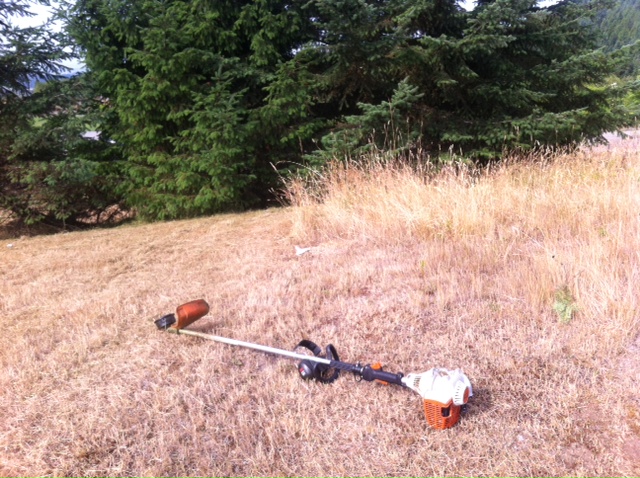
 

photo 1

I line trimmed zones where the ride-on mower couldn’t reach safely.


On day two we worked at a section of the famous Coquitlam Crunch. Here it was the human scenery that was very pretty and I had to make sure passersby didn’t get hit. So here the work was a bit slower but just as fun.

Of course, the work isn’t very difficult; you just need some resolve. I was so excited about doing something new that the hours just flew by. This is why landscape workers report having good days after learning a new machine or task.

After I accidentally beheaded a small snake, the novelty wore off.


Strata

I mentioned strata “wild zones” in a previous blog. Here the issue is site size and low profile. It simply doesn’t make sense to spend a lot of time in some far corner not many people see. But, I still think that all strata sites should be maintained without discrimination, that is, all areas should be maintained regularly.
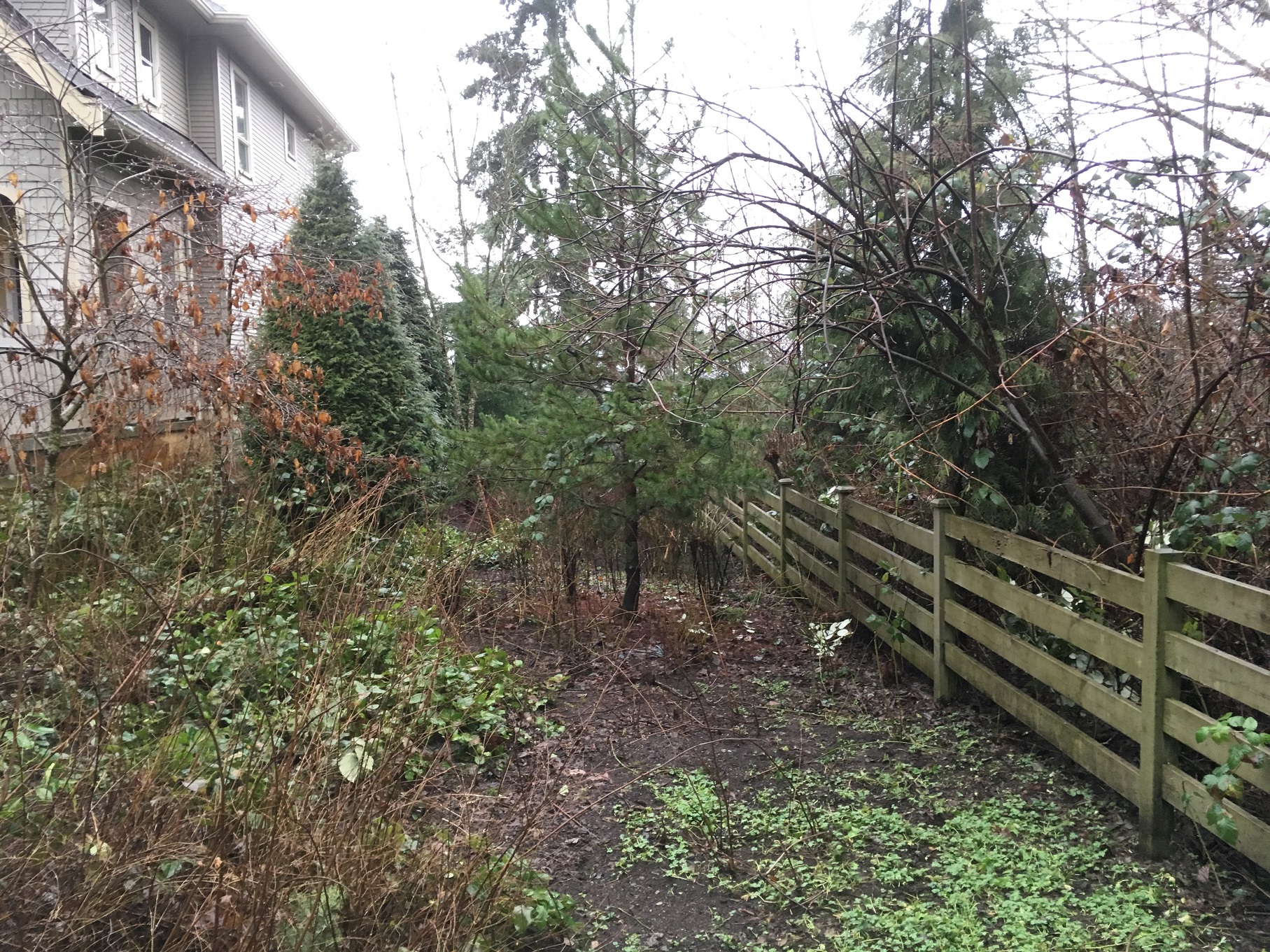
 

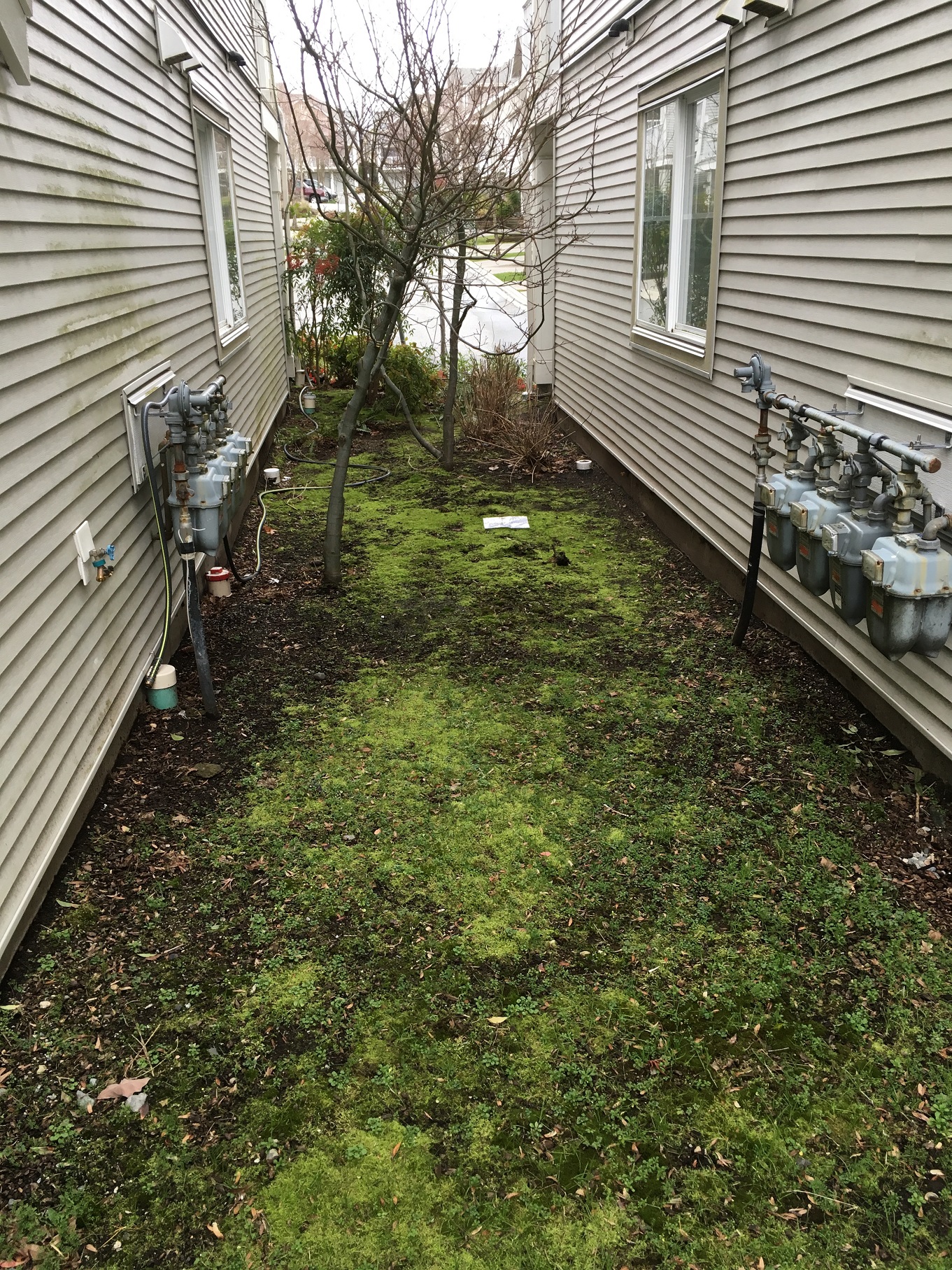
IMG_4112ed


So you survey the “wild zone” and note the obvious tasks:

  1. weeding: the visible green mats are creeping buttercup (Ranunculus repens), this perennial weed is a tough weed to defeat. When you pull it out you will see many fibrous roots. I bring up buttercup when people tell me to weed with my hands. Not likely.
  2. prickly bramble:  invading from next door and growing through trees, we can’t tolerate this because it will just get worse
  3. roses out of control, both size and spread
  4. dogwood (Cornus) shrubs require pruning and thinning, since thinning requires more time it obviously hasn’t been done in a long time
  5. salal (Gaultheria shallon) pruning off the top, it’s an indestructible native so bring down to normal size
  6. Elderberry (Sambucus racemosa) invading from next door, be ruthless, Sambucus grows like a weed
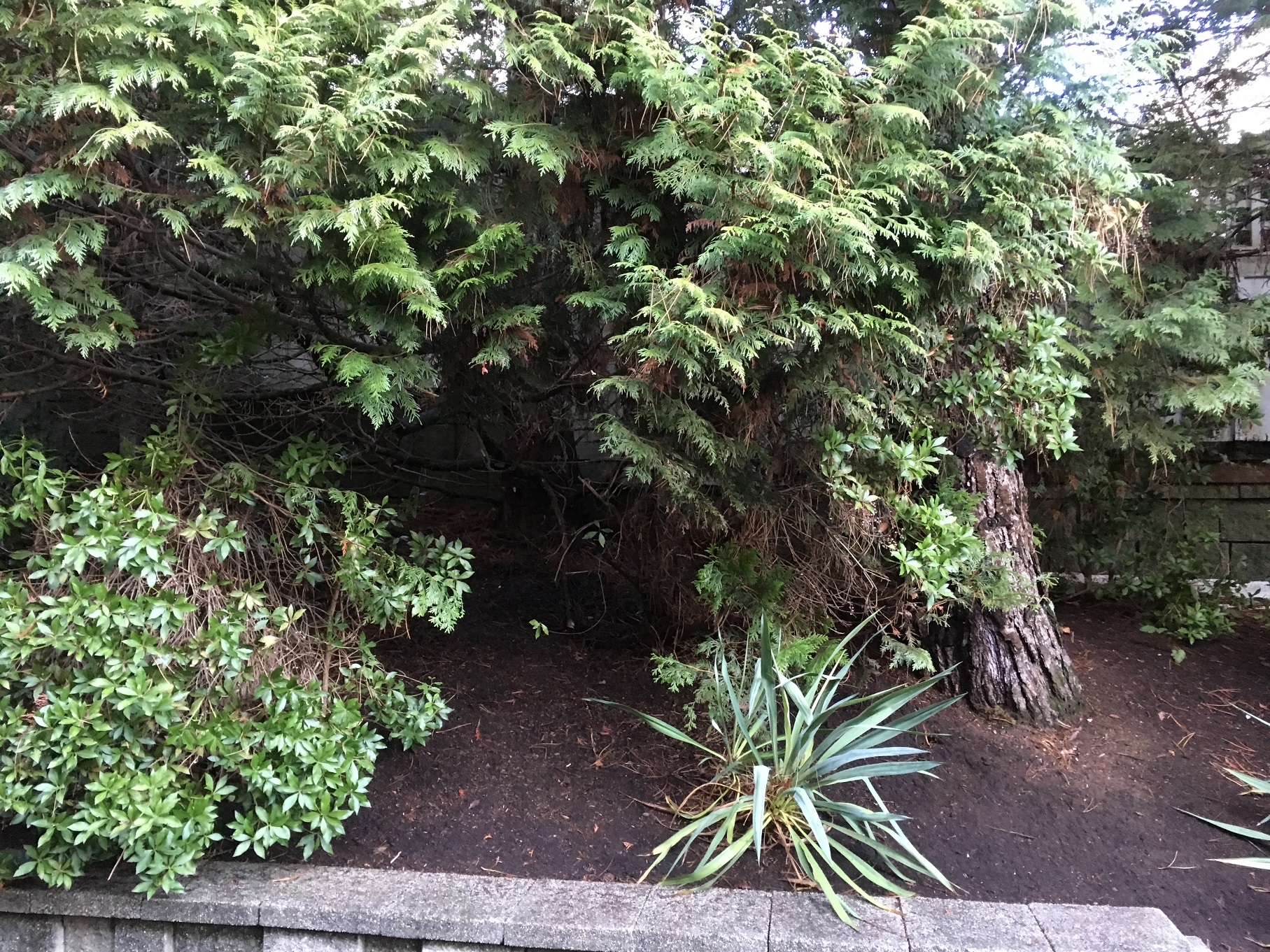
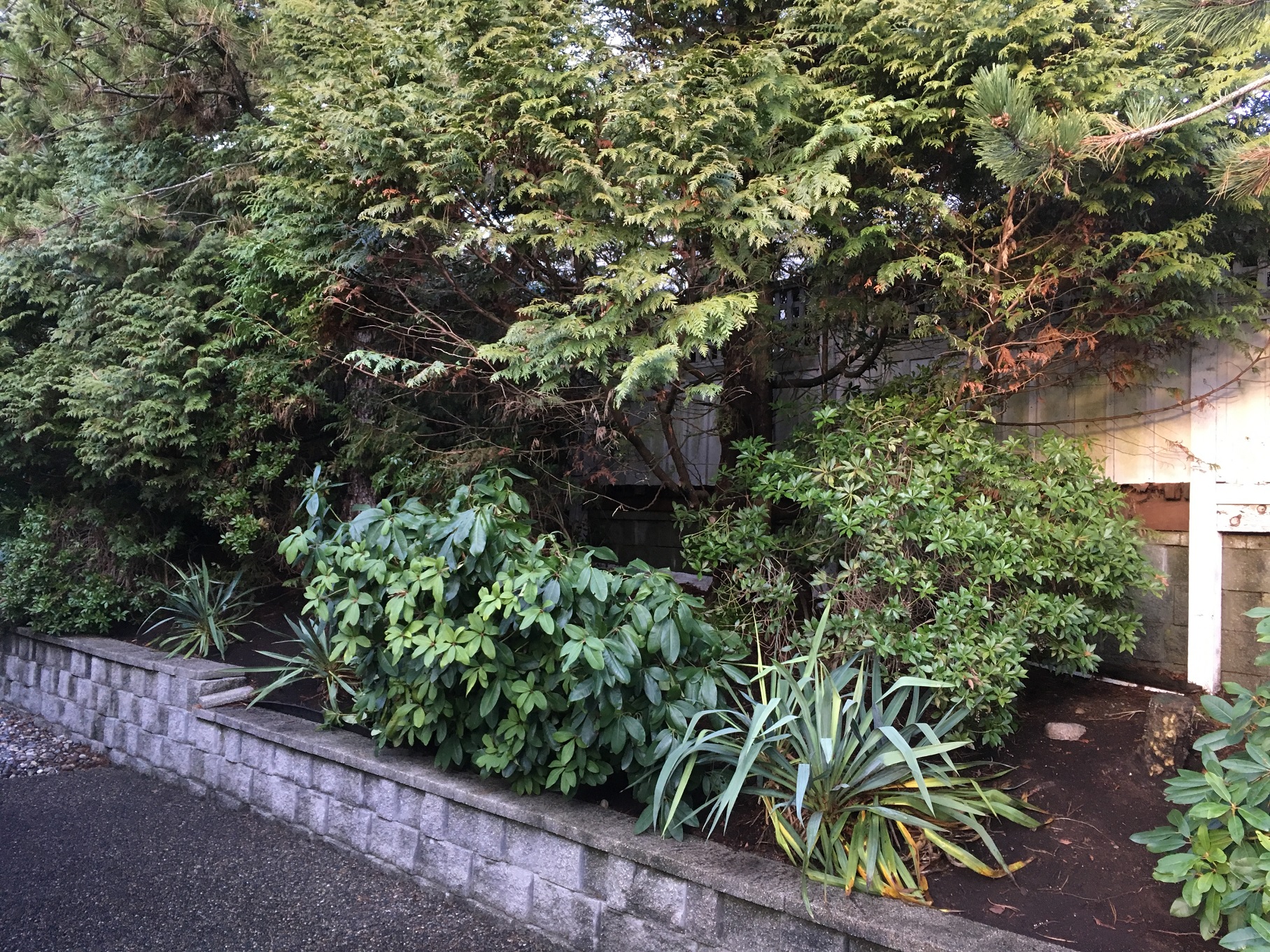
  7. cedar pruning (Thuja plicata), one annual shearing will suffice here


Once you complete the above list the whole place will look transformed. And then you can concentrate on other work knowing that you will be back in twelve months. Hopefully sooner.
 

Why pollarding trees gives me a rash

By | Arborist Insights, Pruning | No Comments

I’m kidding, of course, I don’t suffer from rashes after tree pruning. But I do find pollarding too forced and ugly immediately after. In summer, when the tree crowns are full of foliage the trees look fine.

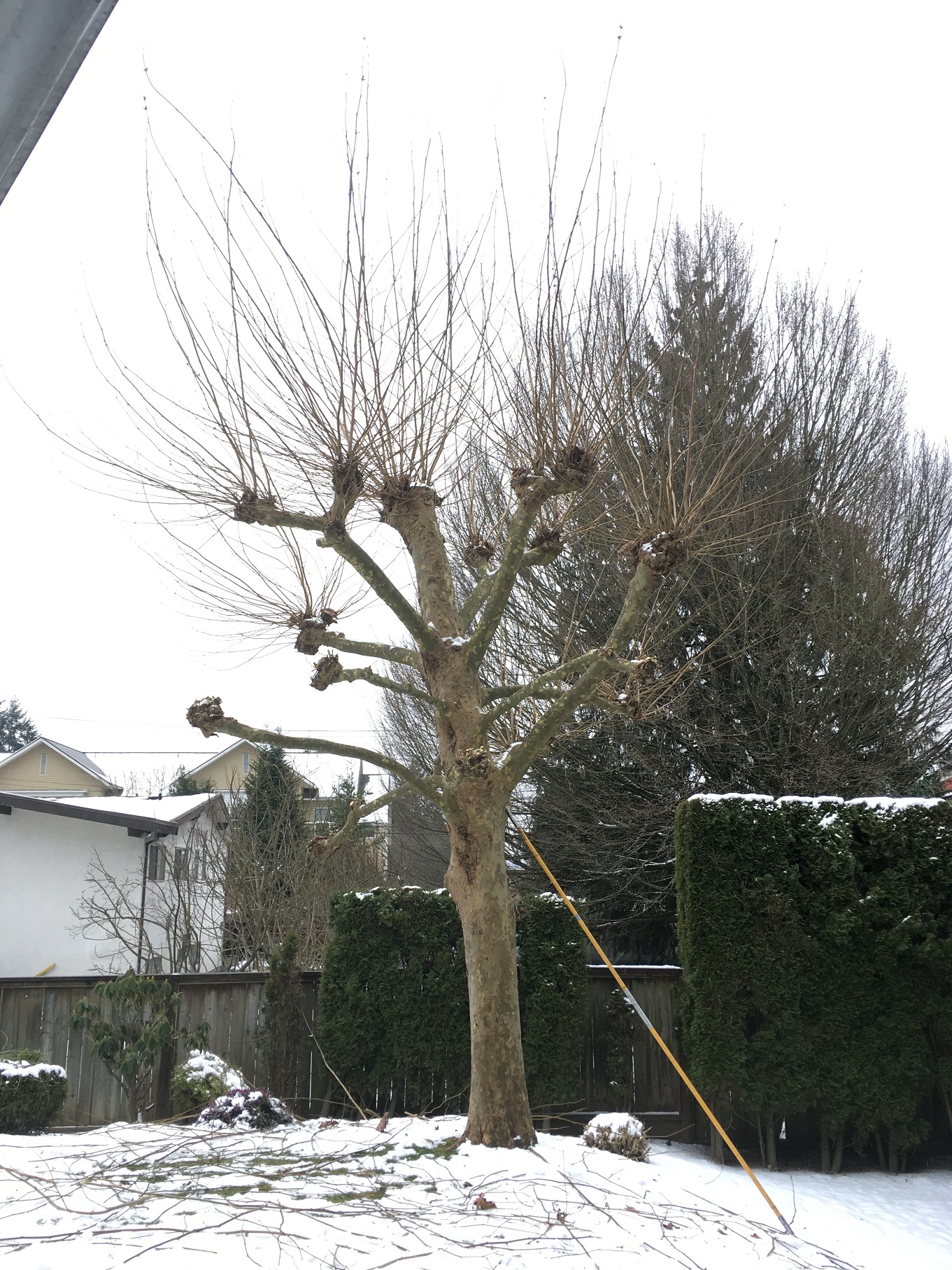
Incredibly, I’ve been an ISA certified arborist since 2006 but last week was my first-ever pollarding session. Since our site was all snowy, it was a great time to prune trees.

Why pollarding?

So why do we resort to pollarding? In the very old days, people understood that cutting down all of their trees for firewood was short-sighted. So instead they pollarded their trees and then used the wood. But times have changed.

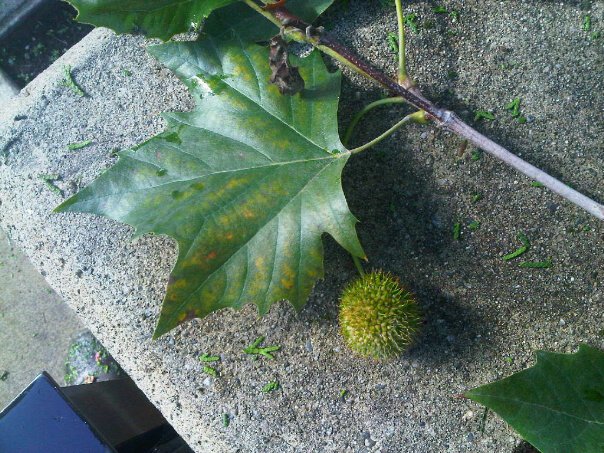
Now we pollard trees to keep them at a smaller size then they would otherwise reach. It makes sense at our site where three London plane trees (Platanus x acerifolia) are located close to the pool. See the picture below taken from my Kindle e-book: Common Strata Plants: A Guide for West Coast Landscapers, available for download from Amazon.


Platanus x acerifolia

Platanus x acerifolia


Pollarding involves the removal of the upper branches of a tree which then promotes a dense head of foliage and branches. It just looks like hell right after you do it. In a perfect world, the London plane trees could be let go to grow as big as they wished. I wish!

The trick, then, is to pick a height and pollard the trees annually. The actual work is very simple because you’re simply beheading skinny branches that shot up from the previous pruning cuts. Staying safe while you prune is more demanding.

My arborist technician apprentice climbed the tree while I stayed on the ground and used a ladder with pole pruners. Once in a while I would steal a big-brother glance at my eager apprentice to make sure his ropes were still supporting him.


IMG_4425ed

My work in progress. The gnarly ends of the branches don’t exactly inspire me.


Timing

Late winter or early spring are best for pollarding. One exception are maple (Acer species) which bleed sap when cut at these times. The pruning rule for maples is before Christmas.

If you have trees that are outgrowing their space and you don’t want to lose them or can’t afford to replace them, then by all means pollard your trees annually. The trees look horrific immediately after pruning but in summer they’re fine. Personally, I would prefer not to pollard anything.


51NTPMQ0wOL

Things to consider before you “skirt” Thuja plicata trees

By | Pruning | No Comments

Raising tree crowns by “skirting” is a common pruning job. It basically means removing the lowest branches so the crown above looks raised up. This is usually necessary when cedar trees (Thuja plicata) haven’t been pruned for a while.

Two potential problems

When you do this kind of work, don’t forget about two common pitfalls. One is not stopping and removing too many branches so that the tree looks like a lollipop. It’s unnatural and should be avoided. It’s a common problem with other tree species, not just Thuja plicata. So by all means, raise up the tree crown but know when to stop.

Two, privacy. Unless you know the site well and your directions are very specific, don’t forget to consider people’s privacy.

True story

I wish it wasn’t true but I’ve heard of a gung-ho landscaper who was servicing a new site for the first time. He walked by a double line of Thuja plicata trees separated by a wooden fence. At one corner the trees were especially low so he skirted them right up. Great. Except the owner of the unit loved every single branch and he was livid. His comments can’t be printed in a clean, family blog like mine. Suffice it to say that he failed to express himself intelligently.

But I feel for him a little bit. The tree was fine the way it was and now he has the view of a wooden fence. So when you take over a new site, get to know it well first.

Privacy

Recently we made our way around a large complex that had been neglected for many seasons. I noticed several low-hanging Thuja plicata branches and almost reached for my trusted Japanese hand-saw.

Of course, I am a Red Seal professional with many seasons under my belt. My instinct told me that the low-hanging branches were probably providing a privacy screen for the residents. If I had removed the branches they would be looking at a residential tower and its car ramp. So unless I hear otherwise from the strata council, the low hanging branches will stay. Always consider privacy issues.

Residential request

It’s very easy when your clients actually request the crown raising. In these cases it’s just a matter of knowing when to stop. And in this one residential example, the client clearly  told me to “rescue” her overwhelmed patio and plants.

So I made nice cuts until all Pieris japonica, Rhododendron and Yucca plants were no longer obstructed by the cedar trees. Remember to make three-point cuts where the weight is taken off first and then the cut completed nicely. Cedar branches are heavy.

The pruning also solved the same problem for her patio where she entertains guests in summer. She was absolutely thrilled to get some breathing room on her back patio. And happy clients are the best clients.


IMG_3987ed

Before pruning, the Pieris and Yucca plants were covered by cedar branches.


IMG_3985ed

Not only are the cedar branches off the plants, the patio is also unobstructed.


Raising Thuja plicata tree crowns is an easy pruning job but always consider owner privacy issues and know when to stop.

Vas on grass

By | landscape maintenance, Lawn Care | No Comments

I love people who fight for new lush lawns. I admire their tenacity and envy their deep pockets. But often they get defeated by the site conditions, like available light, good soil and proper seed.


Promise


IMG_4122ed


This is awesome. I found this sign in between two units on a strata complex we have taken over recently. Now that the key beauty strip areas are cleaned-up, we start hitting the low key zones. Like this space between two units.

The sign is full of hope and promise but when you look around, you know it didn’t really work. Why not? Why can’t strata owners plant some grass seed and enjoy a green buffer zone?


Assessment


IMG_4124ed


Shade

Guaranteed, this is the number one problem here. It looks OK in winter but by spring, as the trees flush out with new growth, they add more shade. The buildings do the rest.

Plants need light and water for photosynthesis. Pruning the trees would help but it wouldn’t be enough. If you remove too many branches, the tree won’t be able to feed itself. Like grass, trees also struggle to reach light so they can manufacture food.


Soil

I wonder about the soil depth and quality in a buffer zone like this. In addition, this rectangular patch is a small ecosystem. One idea would be to top-dress the area to help the new shade mix seed. But I am still not convinced that there would be enough light for the grass to thrive. Owners with deep pockets are free to attempt it. Top-dressing is actually a very pleasant landscape job.

Moss

What’s wrong with moss anyway? It’s prized in Japan. I’ve seen it in beautiful Japanese gardens. I would plant moss and let it go. But people love their lawns. It’s an addiction. Until site conditions cure them.

Vents

It’s also possible that the vents on both buildings affect the grass. Assuming the vents are from driers and considering that in my own place they get used daily, it could adversely affect the grass seedlings. We don’t even know if the new seed got watered and if the watering took into account the effect of the drier vents.


Conclusion

Always consider your site conditions when your lawn struggles. It could be more than just lack of fertilizer. Shade is always a huge issue and the same goes for soil conditions and proper watering. Seek professional advice. Call Proper Landscaping for professional help.

Winter landscape edits: be brave!

By | Company News | No Comments

Yes, winter weather can be a challenge for West Coast landscapers but I love winter because I have time to take care of details. Once spring hits, the days get longer and busier and all of a sudden it’s hard to stop for minor adjustments.

Landscape editing

Rescued Rhodos

Just this past week as my helper and I were searching for missed corners, I discovered two Rhododendrons under the foliage of Viburnum tinus and Abelia x grandiflora. Now what? You can prune both shrubs to expose the rhododendrons or you can move the rhodos. I chose to move the Rhododendrons because the shrubs will grow back eventually. So be brave and edit your gardens and landscapes as required.


IMG_4145ed


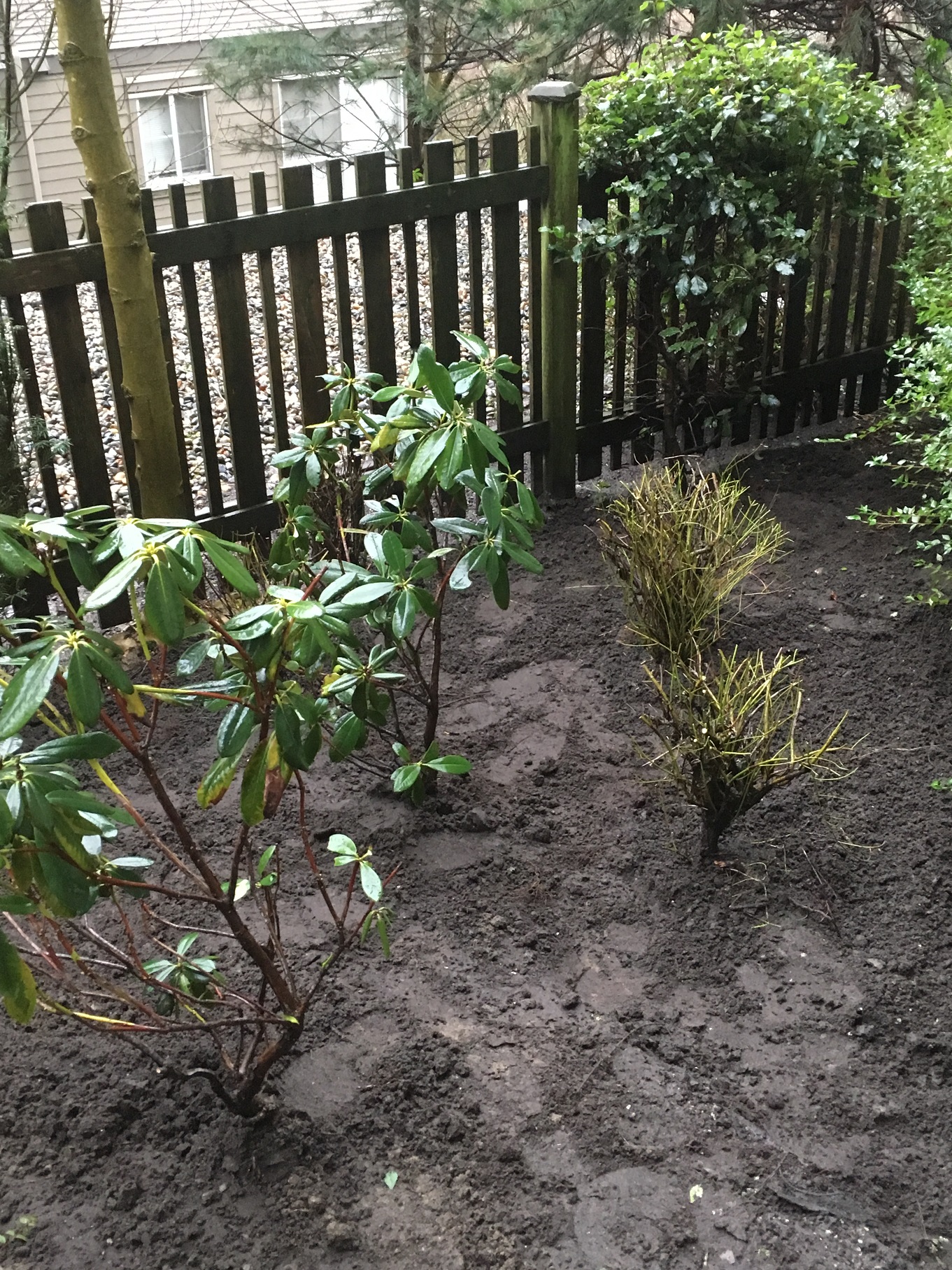
Both Rhododendrons were stuck by the fence in the far right corner. They will have more light in their new location; and we covered up dead space in the landscape.


Shuffled entrance plants


IMG_4147ed


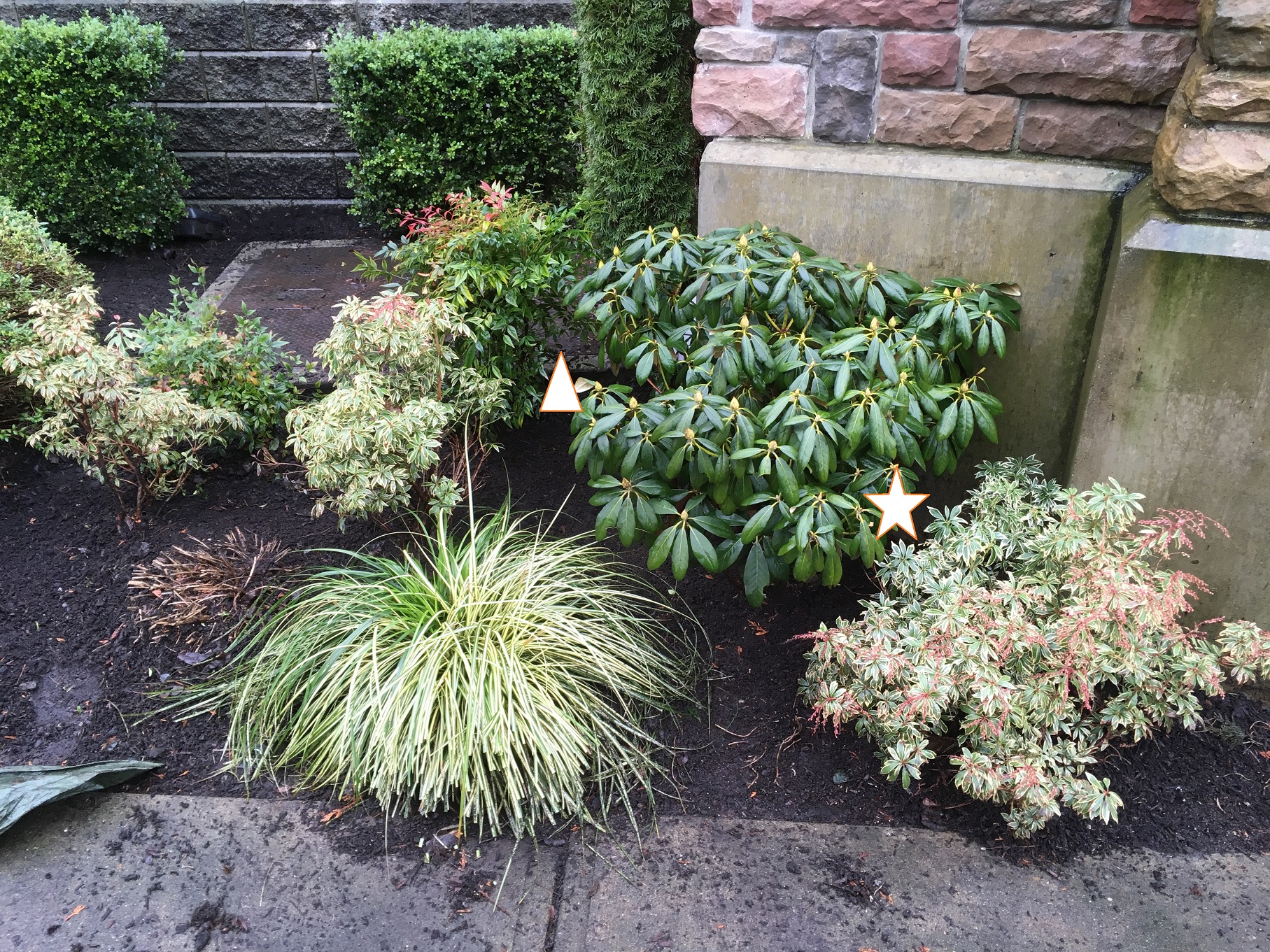
This is the after shot so it looks normal. Where the triangle is now, the back Nandina domestica was squeezed in between the Pieris japonica and the Rhodo. So I moved the heavenly bamboo shrub back a little to create much-needed plant separation.

Where the star is now, there were Rhododendron branches covering up the Pieris japonica on the right. So I snipped a few branches off the Rhodendron to create more plant separation. And the Rhododendron still looks normal.


Nandina


IMG_4121ed


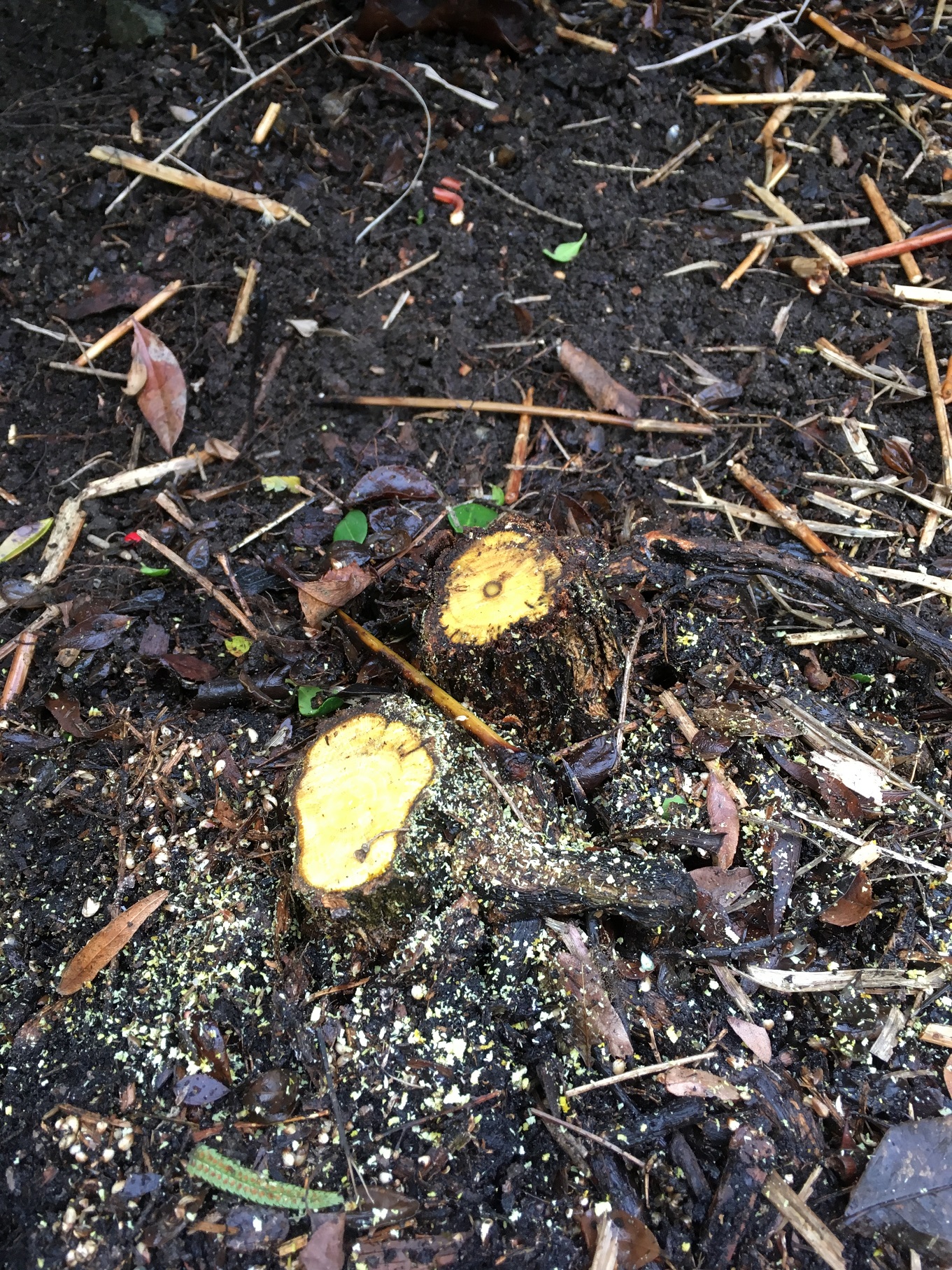
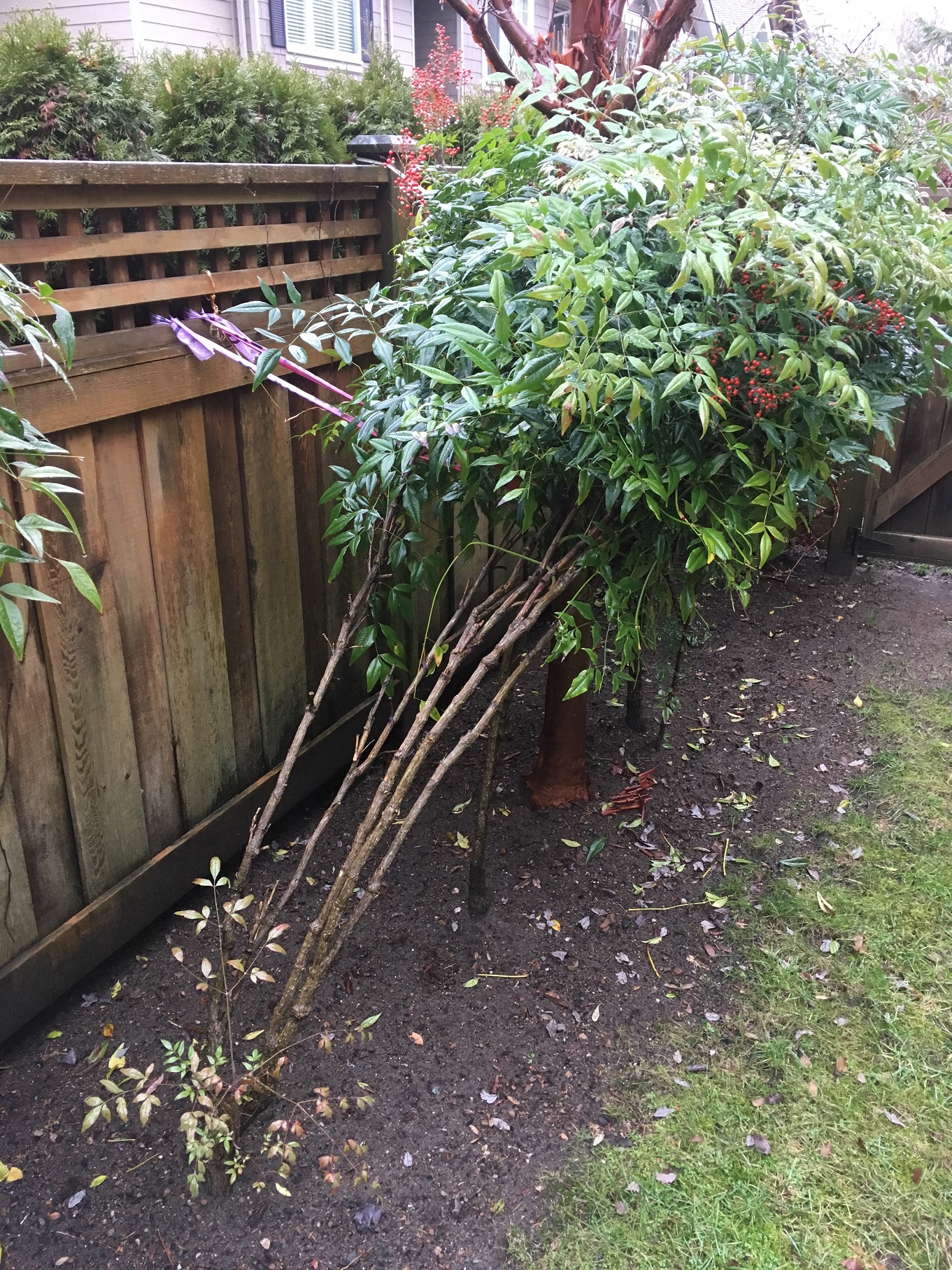
This Nandina domestica was very leggy, not the bushy little shrub we want. It was also jammed right against a Japanese holly (Ilex crenata) hedge. We already know that Nandina domestica doesn’t regrow from pruning points. It’s best to flush cut it and let it regrow. So we have a little experiment here.

If it regrows, it will match its bushy cousins nearby. And if it doesn’t, well, then the Ilex crenata hedge will thank us. Either way, don’t be afraid to edit your gardens and landscapes.

Many strata complexes look great when they are first installed but over time, as plants mature, we can’t forget about plant separation. Often, complete editing is required. We move what we can. Some plants go missing altogether.
Have some fun with your landscape editing.

Winter is perfect for checking your deciduous trees

By | Company News | No Comments

Winter is perfect for checking your deciduous trees. Since the leaves are gone you can clearly see the branches. Ideally, you can do this work annually, making a few cuts each season. This should leave you with healthy, good-looking trees you know well.

No man’s land

Some strata sites have out-of-the-way semi wild zones that don’t get regular maintenance. Normally the idea is not to discriminate and, instead, attend to all areas equally. But on large complexes that’s not easy to accomplish. So some areas away from the beauty strip get slightly short-changed.

This, then, was my mission. Taking advantage of the slower winter season I got to attack one of these wild zones. I will cover the maintenance work in a future blog post. Here I wish to mention a tree I ran into.

Since time was short, I did the obvious work in just a few minutes:

I removed stubs, dead branches and one crossing and rubbing branch which also reached into the road.


Stubs

IMG_4106ed


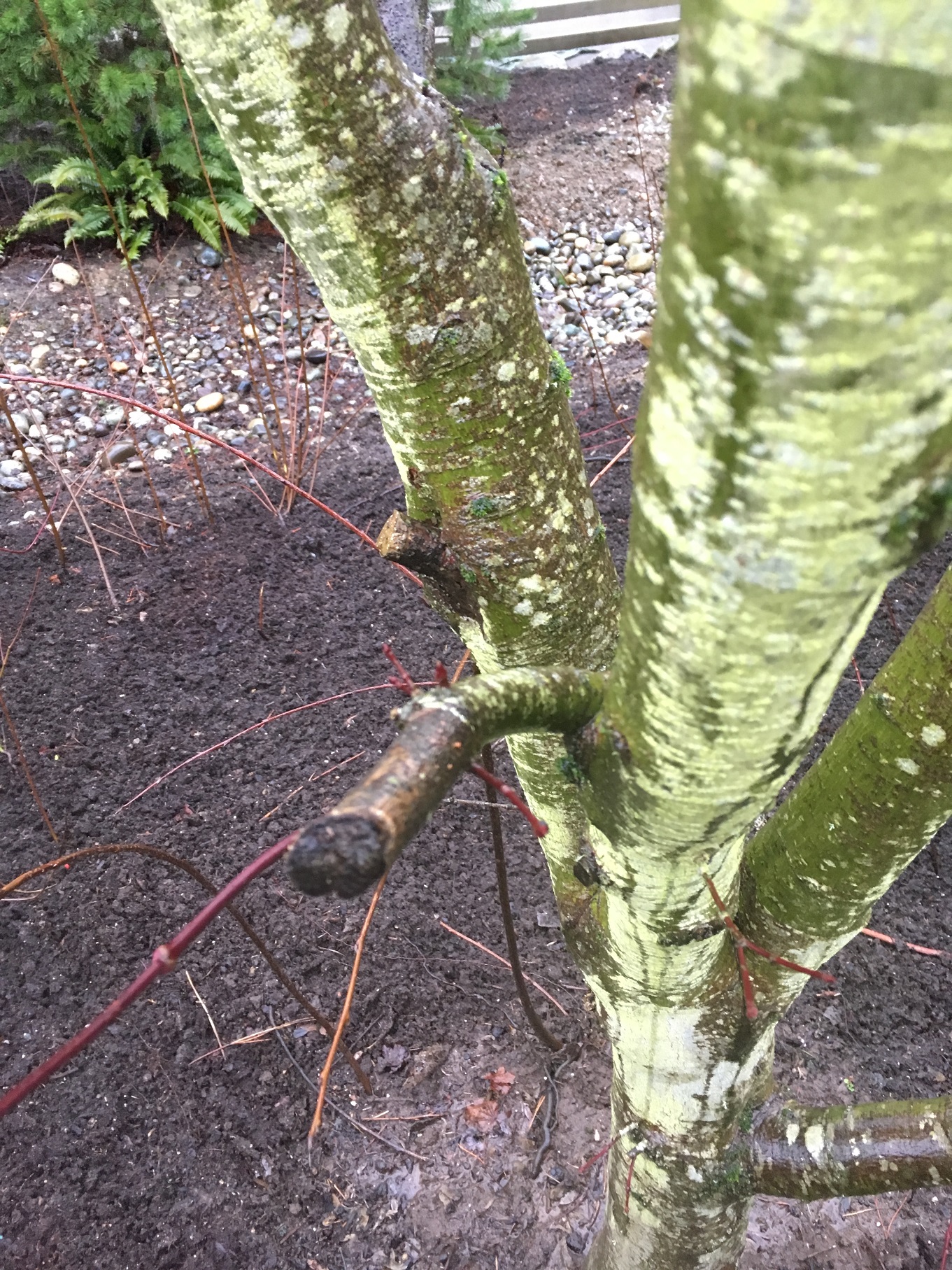
These are ugly cuts. Don’t forget to make your cuts at the branch collar so the tree can cover up the wound. Otherwise the stubs eventually die, like the smaller one visible in the back.


IMG_5816edit

Much better, no stub, and the tree can heal itself.


Dead branches


Dead branches are dead so they are to be eliminated as soon as possible. They will most likely break off anyway.


IMG_4108ed


Crossing branches


IMG_4107edit2


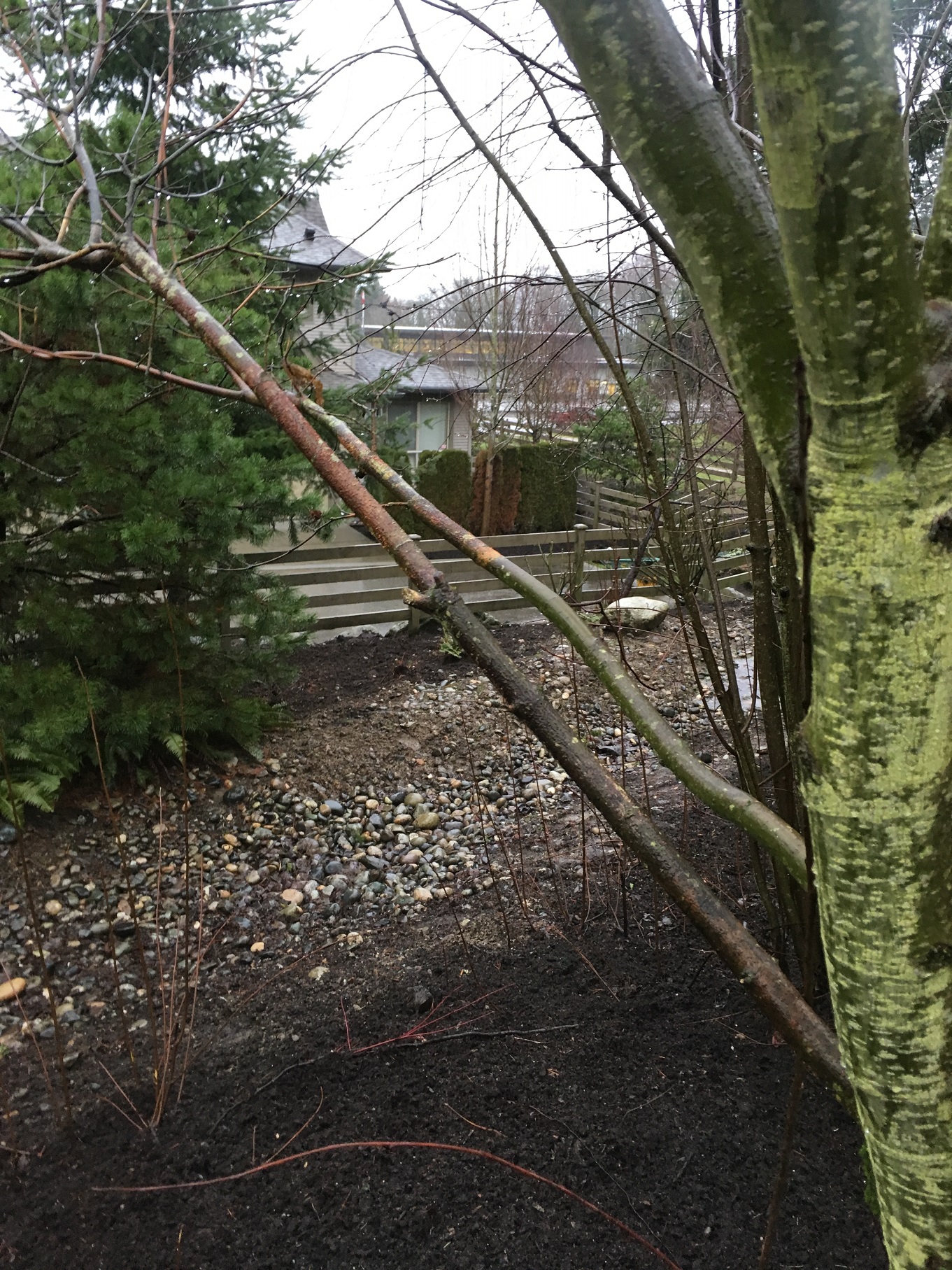
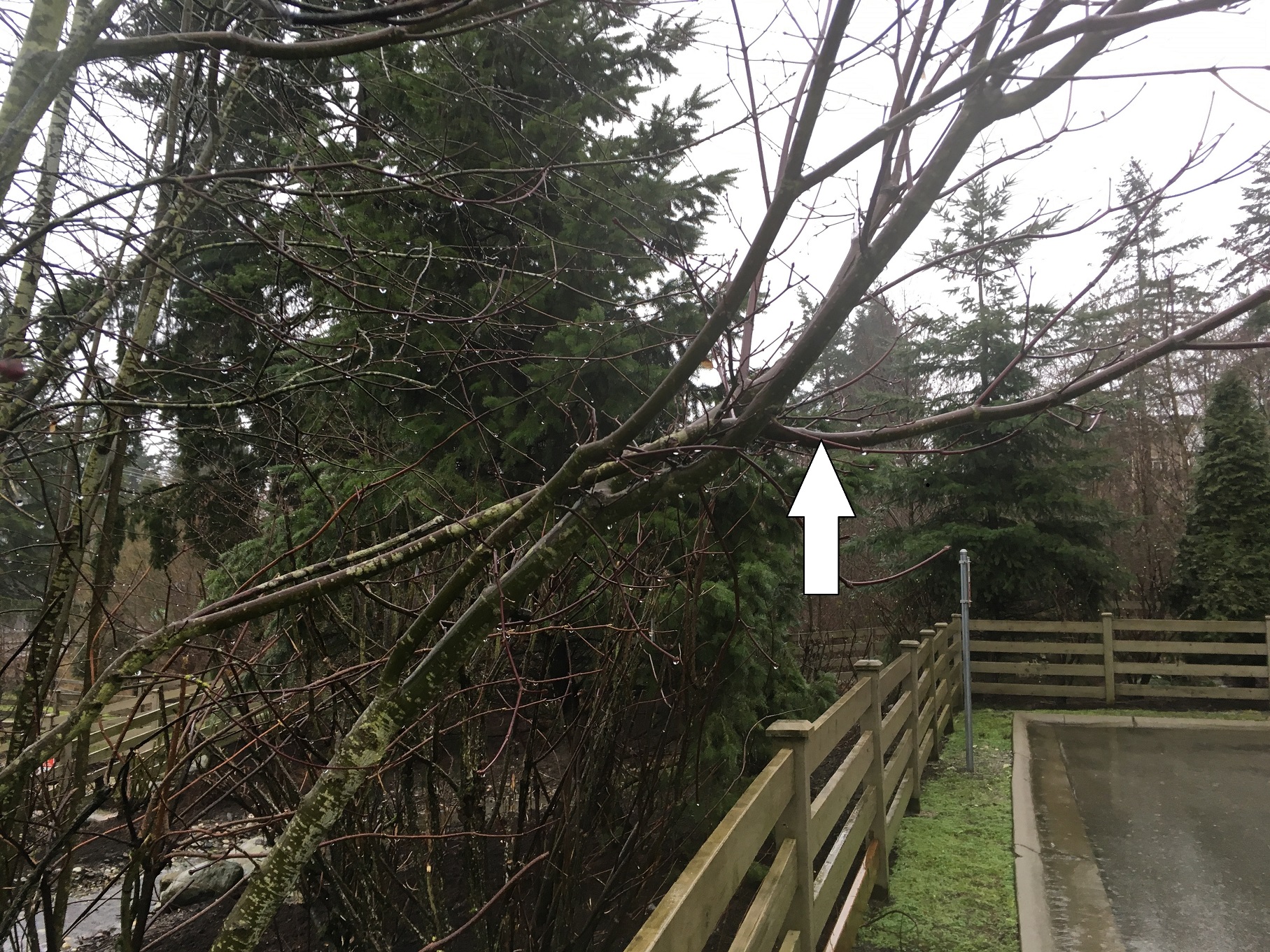
The branch with the pointer is a good candidate for removal because it crosses through other branches where it rubs; and it’s growing into the street where it’s likely to interfere with delivery trucks.


The final product


IMG_4109ed


This is the final product with ugly stubs removed, dead branches gone and one crossing and rubbing branch that interfered with local traffic eliminated. And it took me a few minutes with my Japanese hand saw.

Is the tree perfect? No, far from it but why stress? I will be back in twelve months to do more work on it.

And if you need help with your trees, call Proper Landscaping. You can also learn more about tree maintenance from my inexpensive Kindle e-book. Landscape Tree Miantenance by Vas Sladek. Please leave a review.


Space considerations on BC strata landscapes

By | Company News, Strata Maintenance | No Comments

There is only so much space available for plants on strata properties. When the complexes are first built they look great but over time, as plants mature, we start to run into problems. This blog post explores some common examples from my work sites.


Driveways

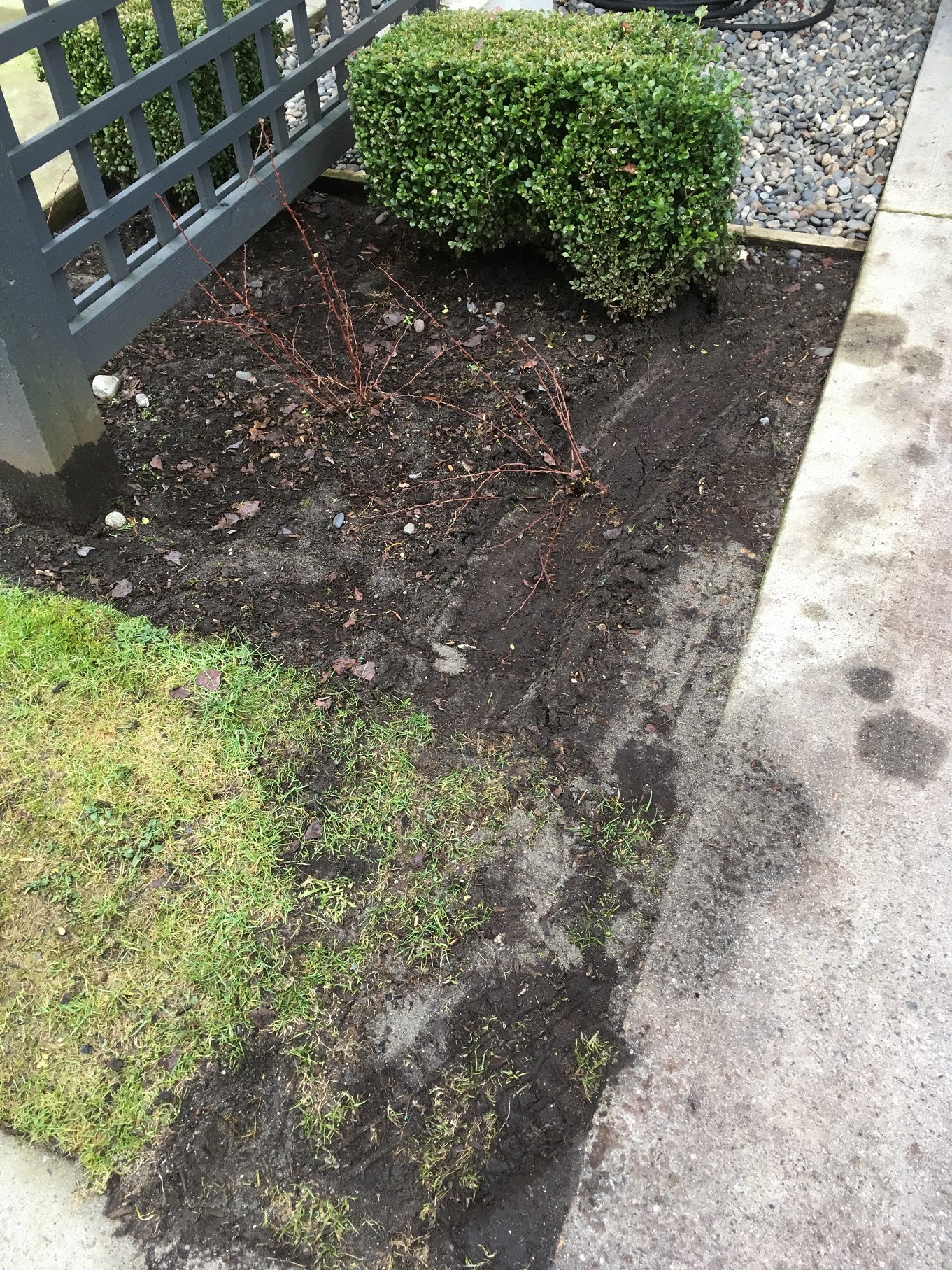
Some driveways are way too tight. Of course, this isn’t obvious at first because we landscapers don’t live on site. In the picture below there are two Berberis thunbergii specimens planted in front of boxwood (Buxus). Dead space just gets invaded by weeds and landscapers hate dead space. So we plant it up.

And then the owners come home……There is very little sense in replanting because the owners are bound to reoffend.


IMG_3765ed

Berberis thunbergii crushed by a car.


Holly


IMG_3747ed


It’s not clear whether this holly was planted by the owners or just simply invaded the space. Whatever the case, it’s way too close to the building. And that gets insurance companies very excited.

The holly could be pruned but that wouldn’t solve the problem. There simply isn’t enough space for this plant. My suggestion was complete removal and replanting with something smaller. There are many shrubs available that won’t overwhelm this space.


Plant separation


IMG_3887ed


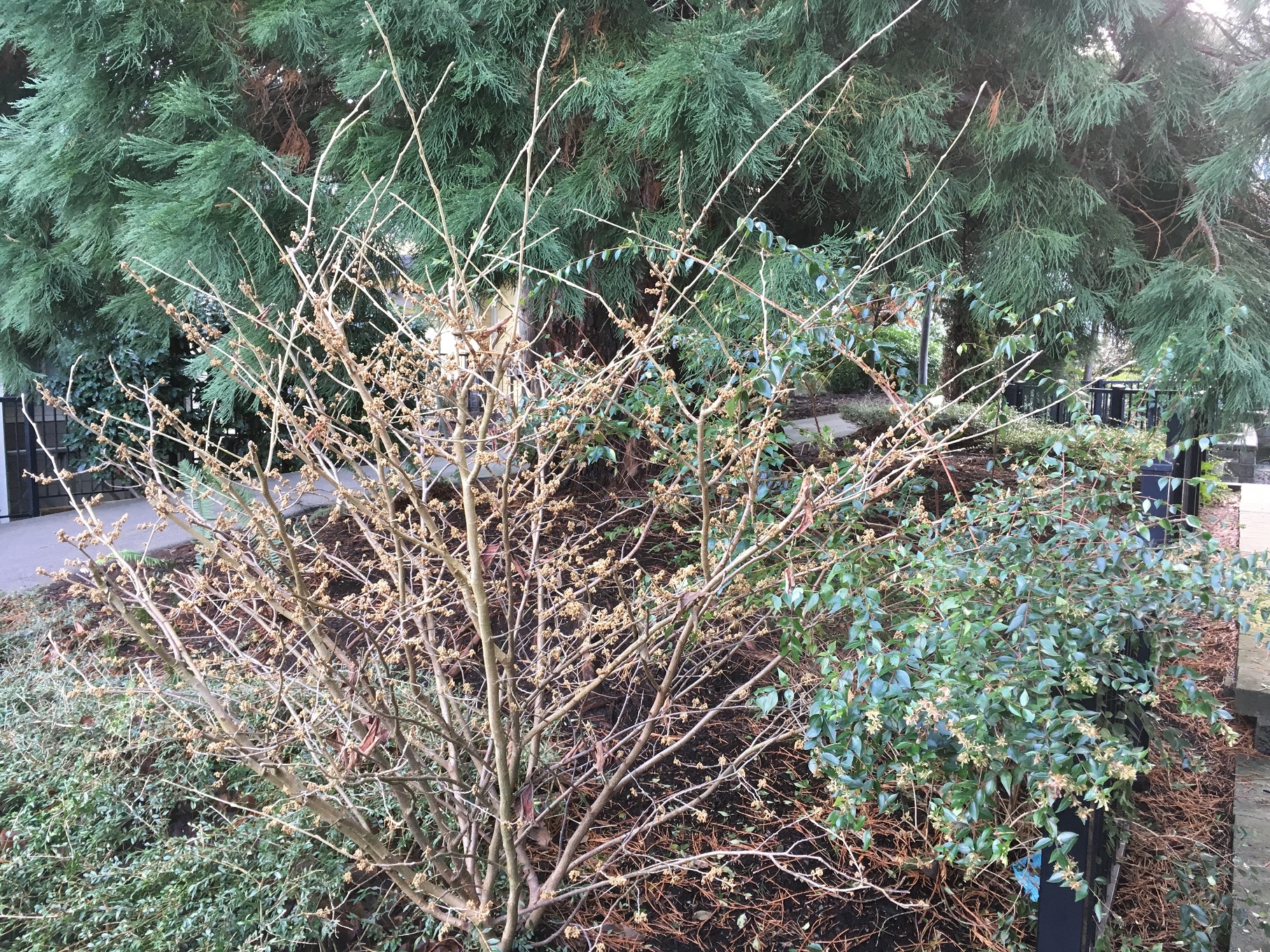
I really like this one corner. The Hamamelis mollis shrub is blooming right under a giant sequoia (Sequoiadendron giganteum). The only blemish is the Abelia (Abelia x grandiflora) shrub that’s growing into the witch hazel and through the fencing. So I gave it a little hand-pruning to achieve a bit of separation.

As the landscape matures, there is more and more of this type of work. Sometimes, it’s necessary to edit out plants completely.


Trees


The idea that trees need room to grow seems obvious but people often forget to look into the future. Do you know the mature size of your landscape trees? Sure they look beautiful when they’re installed but without room to grow they inevitably get abused. Mainly by harsh pruning.

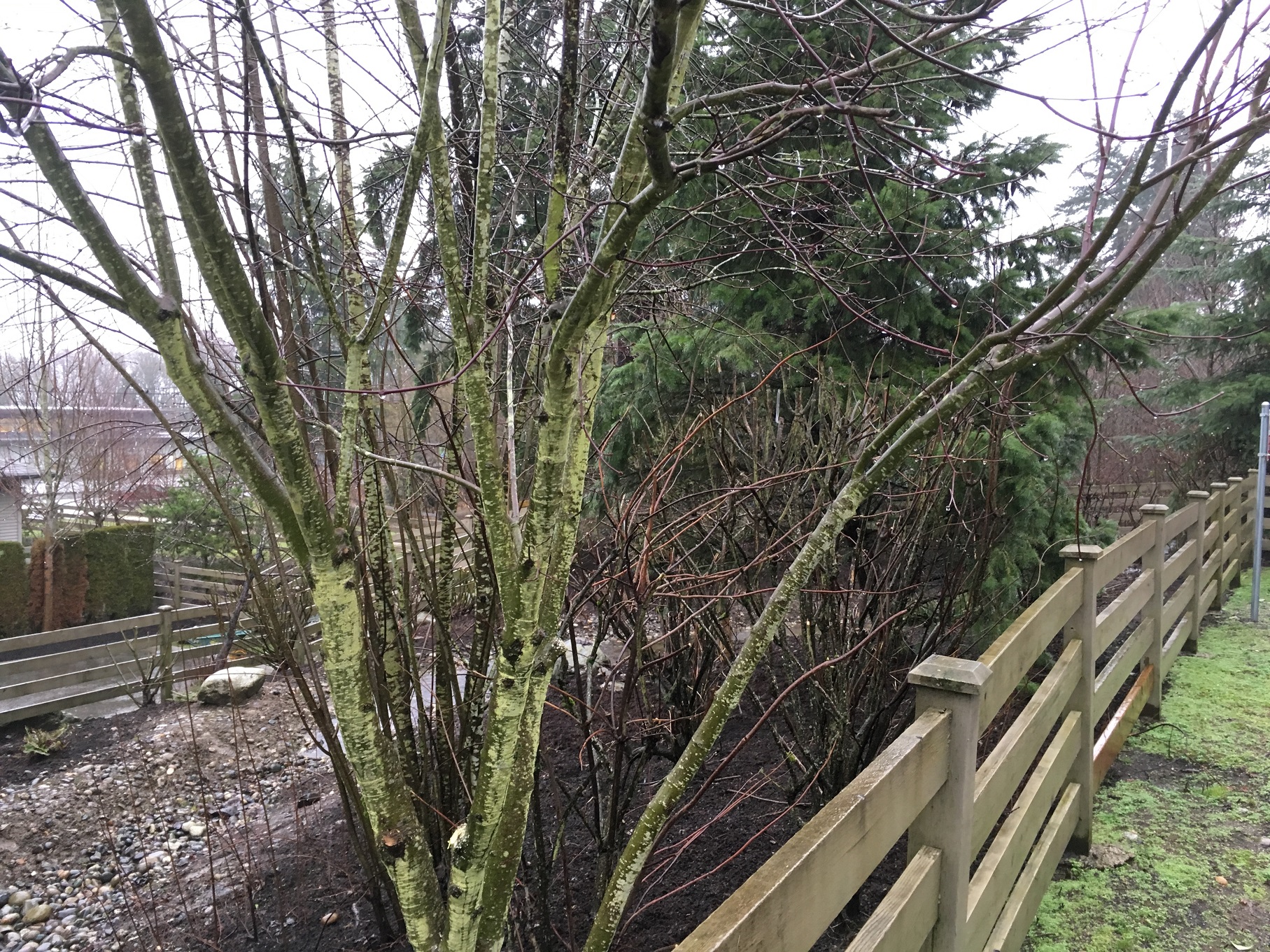
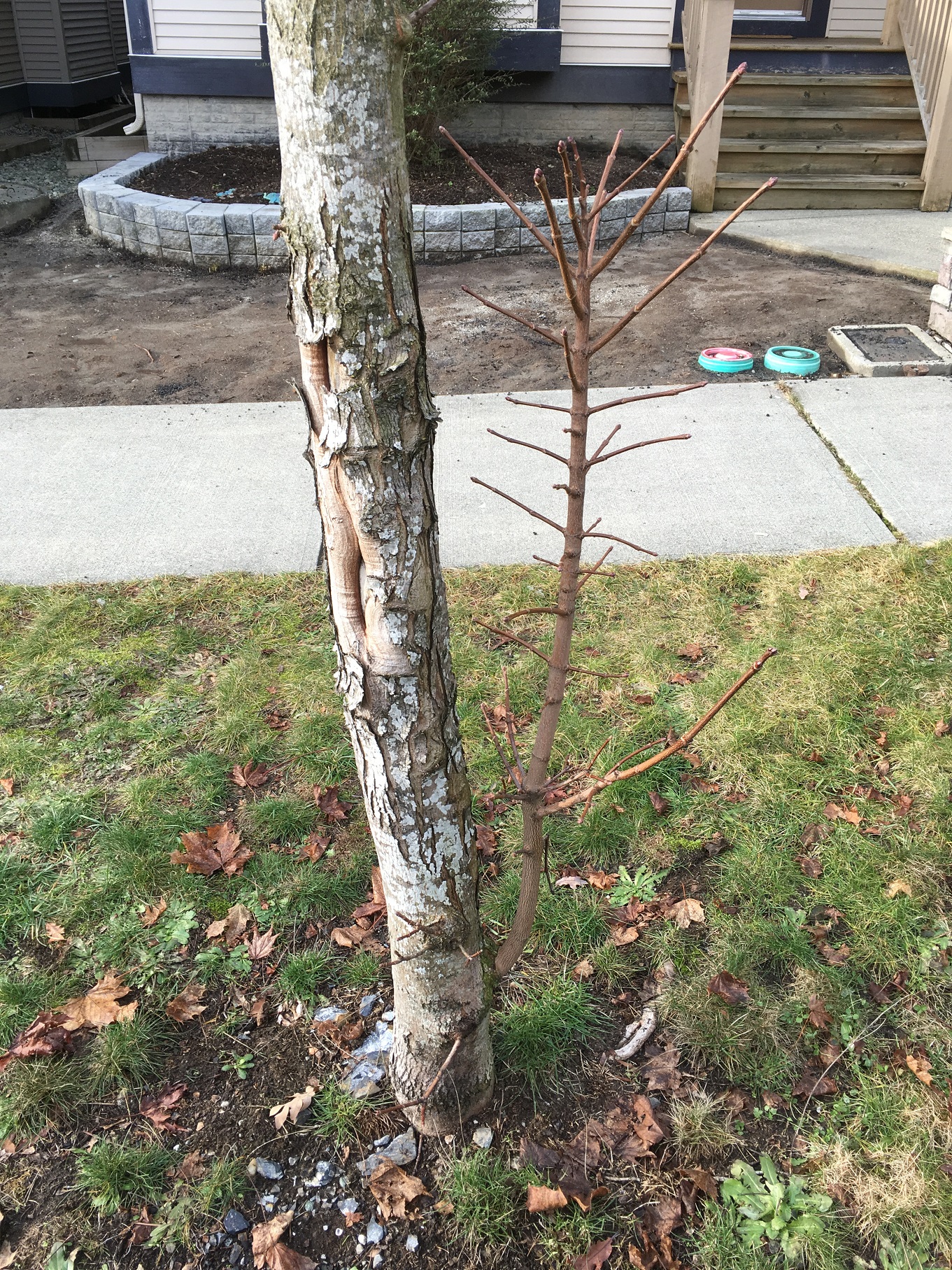
I have selected two examples from many. The first maple (Acer palmatum) is the saddest maple I know! The other maple is even worse off. So please remember to consider the mature size of your landscape trees. As an arborist I prefer complete removal to annual hacking.

Trees are resilient. They will push out new growth. Except we don’t have the required space for them.


IMG_3975ed

The saddest maple I know. It was planted too close to the unit so it gets hacked up periodically. I would almost prefer complete removal.


IMG_4068ed

This is nuts! A maple tree requires room for growth. Here it’s too close to a narrow pathway. It also shades out the cedars on the right.


Space considerations are a big deal on strata title properties. Remember to give plants room to grow and separate them when you can.

What’s so special about Heavenly bamboo?

By | Plant Species Information | No Comments

First visits on new contract sites are exciting because you never know what you will find. Chances are only the big boss has seen them. But as far as plants go, you shouldn’t expect too much because strata complex plants in British Columbia’s Lower Mainland tend to repeat.

So when I recently worked on a new site I was surprised to find many heavenly bamboos (Nandina domestica). And I mean many. I almost feel like the shrubs were on sale when the site was built. Which bring me to a question. What’s so special about Nandinas?


Red Berries

Nandina domestica is an upright, suckering evergreen shrub for moist, free-draining soil and full sun in a sheltered position. On strata sites there is definitely sheltering. Except I guess for boulevard corner beds.

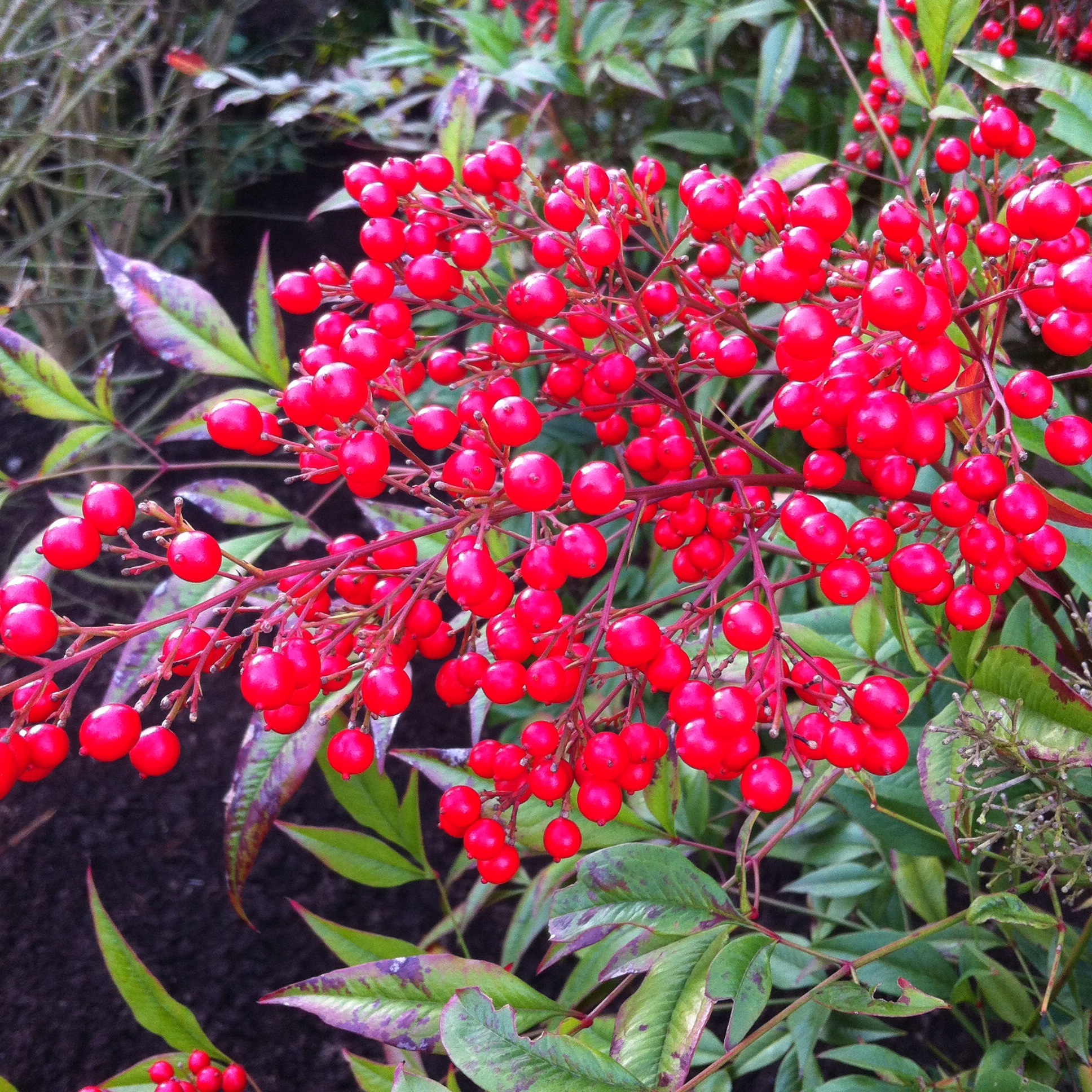
Now for the obvious ornamental features: summer white flowers turn into red berries. The plant is grown for its red berries. Also, note the pinnate leaves.


IMG_8041ed

Summer flowers


IMG_0853

Red berries


Bushiness

Vigorous growth is produced from the base. This explains the suckering that goes on. Newly planted shrubs branch freely and this bushiness should be encouraged.


IMG_3770ed

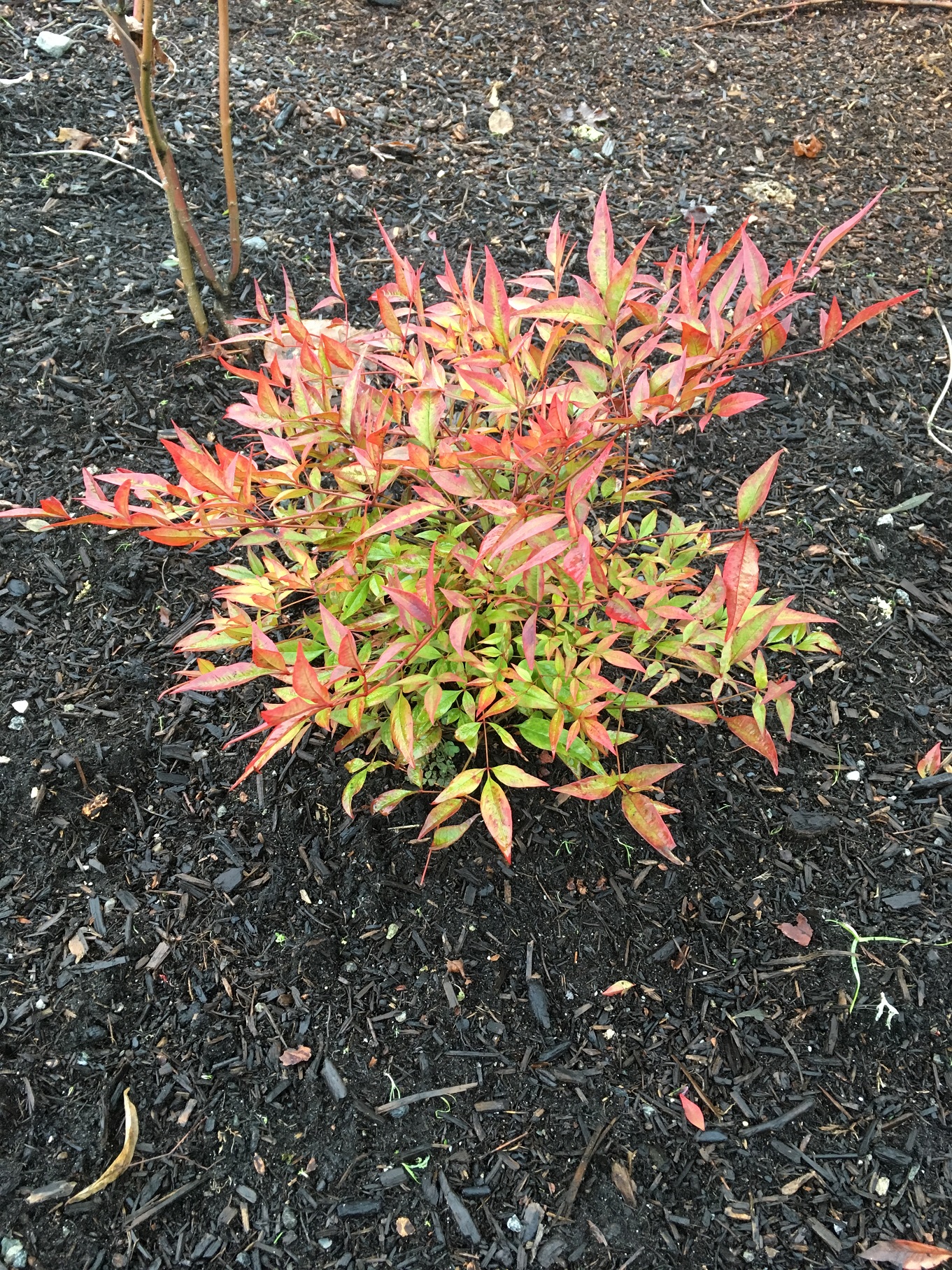
Freshly planted baby Nandina.


IMG_3832ed

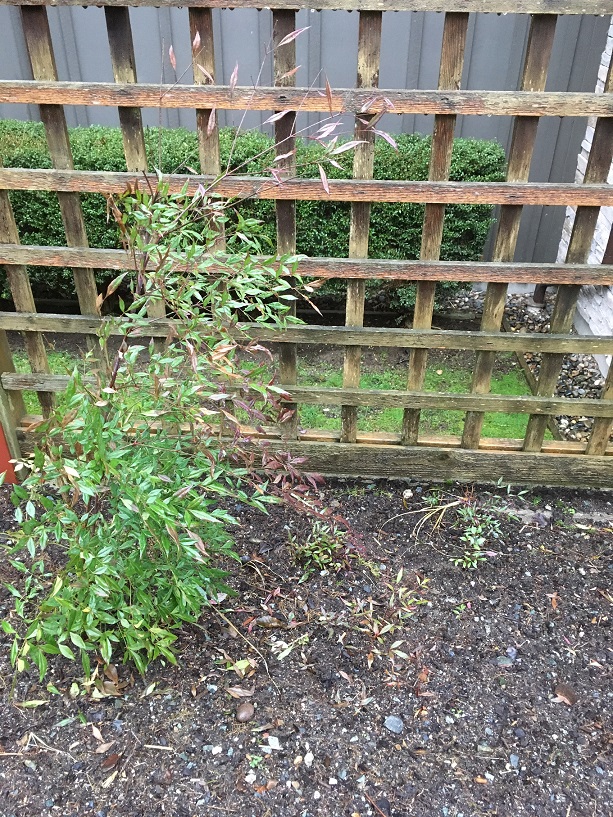
Note the suckering that’s going on to the right of this Nandina.


Pruning

Pruning can be done after a harsh winter and for shape. I gently snip the tops to bring the height down and cut out any stems that go side-ways.

Sometimes, long, unbranched stems are also thrown up through the plant. The correct procedure is to cut them down at ground level. If you prune them down they won’t break from your pruning points.


IMG_3833ed

Note the growth at ground level. Cut down the stems there and start over.


IMG_3846ed


This pruning doesn’t work. Nandina won’t re-grow from the cut points. I cut these stumps right at ground level hoping they will re-grow from there. We will see in spring.

Nandinas are fairly common shrubs on strata sites. I think the pinnate leaf and red berry combination is nice. But on this particular site the planting was a bit overdone.

Common strata plants

If you’re curious about what grows on your strata site you can purchase my pictorial guide on Amazon.

Common strata plants.


51NTPMQ0wOL


—————————————————————————————————————–

References: “Essential Pruning Techniques” by George E. Brown, Timber Press, 2017, p.231


New Stihl toys for professional landscapers

By | machines, Reviews | No Comments

logo


If you read my blogs regularly you will know that I am not really a machine type dude. But testing new landscape “toys” is always exciting, even for a guy who prefers soft plant material.

Today was one of those days when I got to see a shiny new Kombi engine from Stihl. I always wonder what improvements have been made and how they will help my work in the field. The beauty of the Kombi system is that it allows professional landscapers to operate with one engine and several attachments.


KM 91R


IMG_4075ed

KM 91R Kombi engine


The new KM 91R Kombi engine weighs 4.4 kg and comes with a suggested retail price of $419.95. It’s always nice to get to know your local dealer so you can get a better deal or at least score some freebies.

Key points:

a) The KM 91R comes with a larger fuel tank which should result in 30% longer running times. Of course, you will pay for this as you shoulder the extra weight but frequent re-fuelling is annoying.

b) Stihl is promising improved handling and control

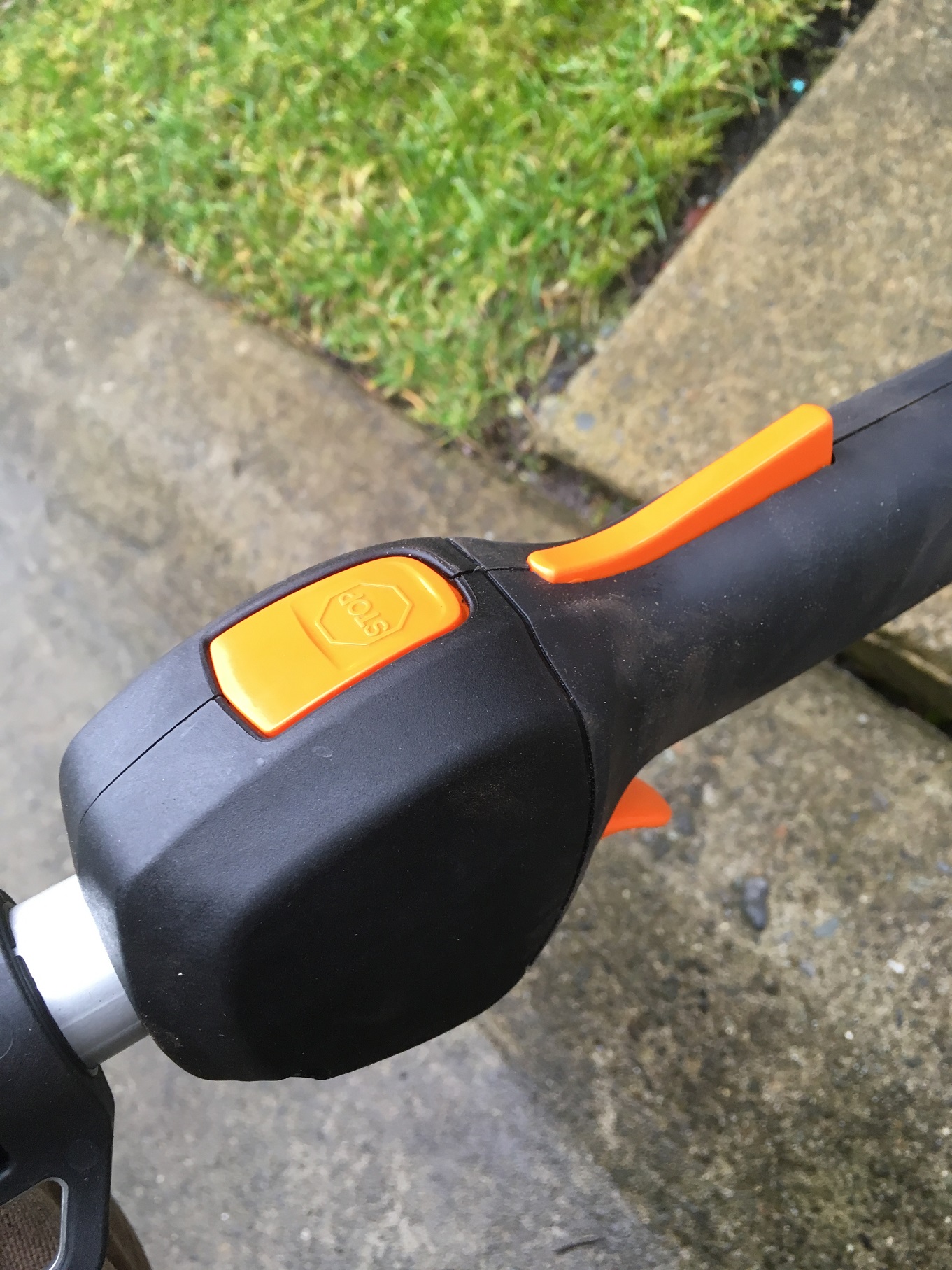
c) The new stop button must be depressed; one touch!

d) The choke button is also new. It must be depressed and then turned. I wonder how this will work once the engine is subjected to rain and dirt. Only time in the field will tell.


IMG_4078ed

One touch stop!


IMG_4076ed

The new choke. Depress and turn.


IMG_4080ed

All set with these new toys!


Power shear attachment


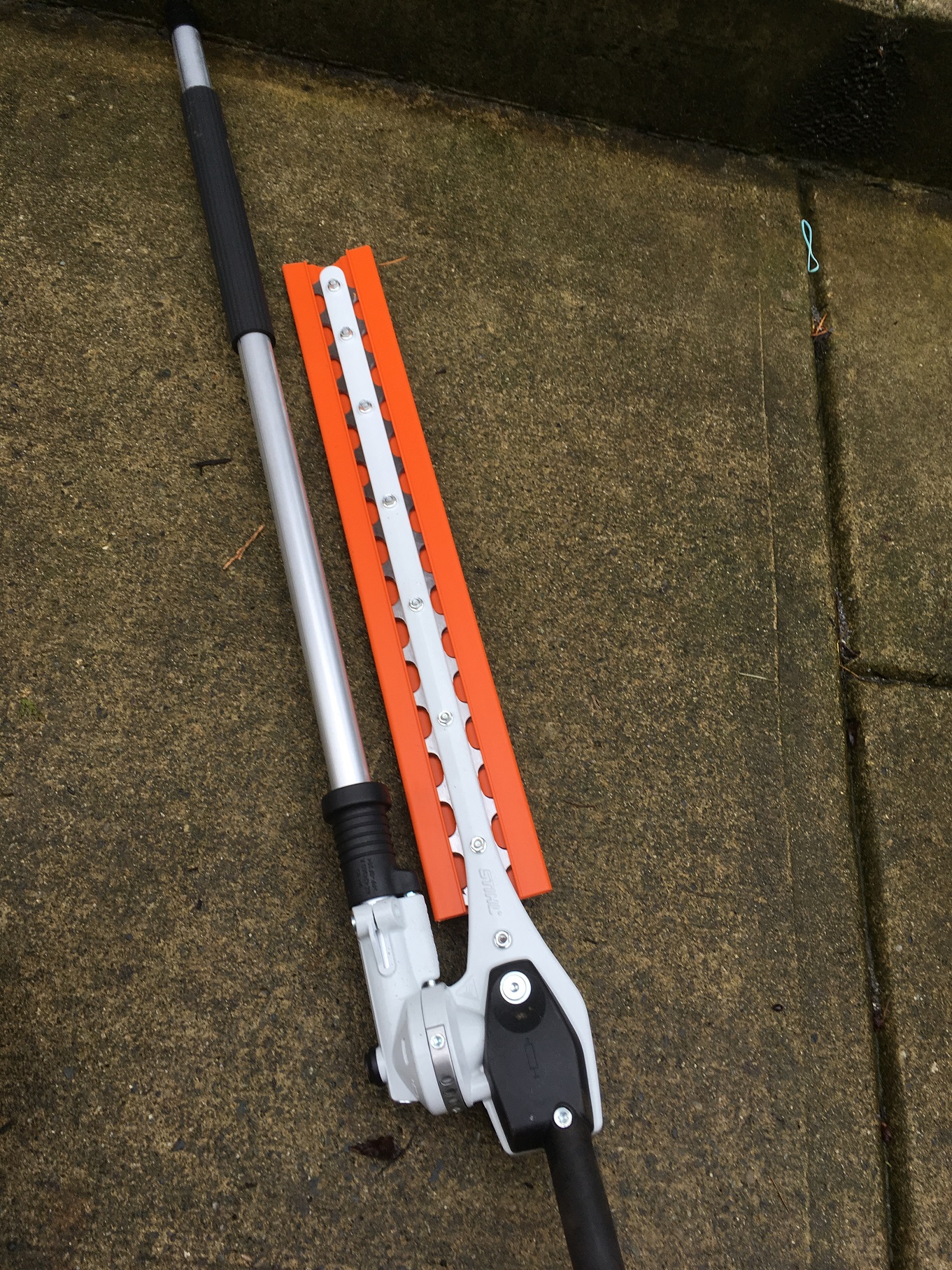
IMG_4071ed


Ok, so this articulating attachment has been out for a while but since I got to see the set I thought I’d write a few notes about it. I absolutely love the reinforced blades! They might add weight but the stiffness is spectacular. The older attachments would over time start to bend which made it awkward when you tried to cut the top of your cedar hedge straight.


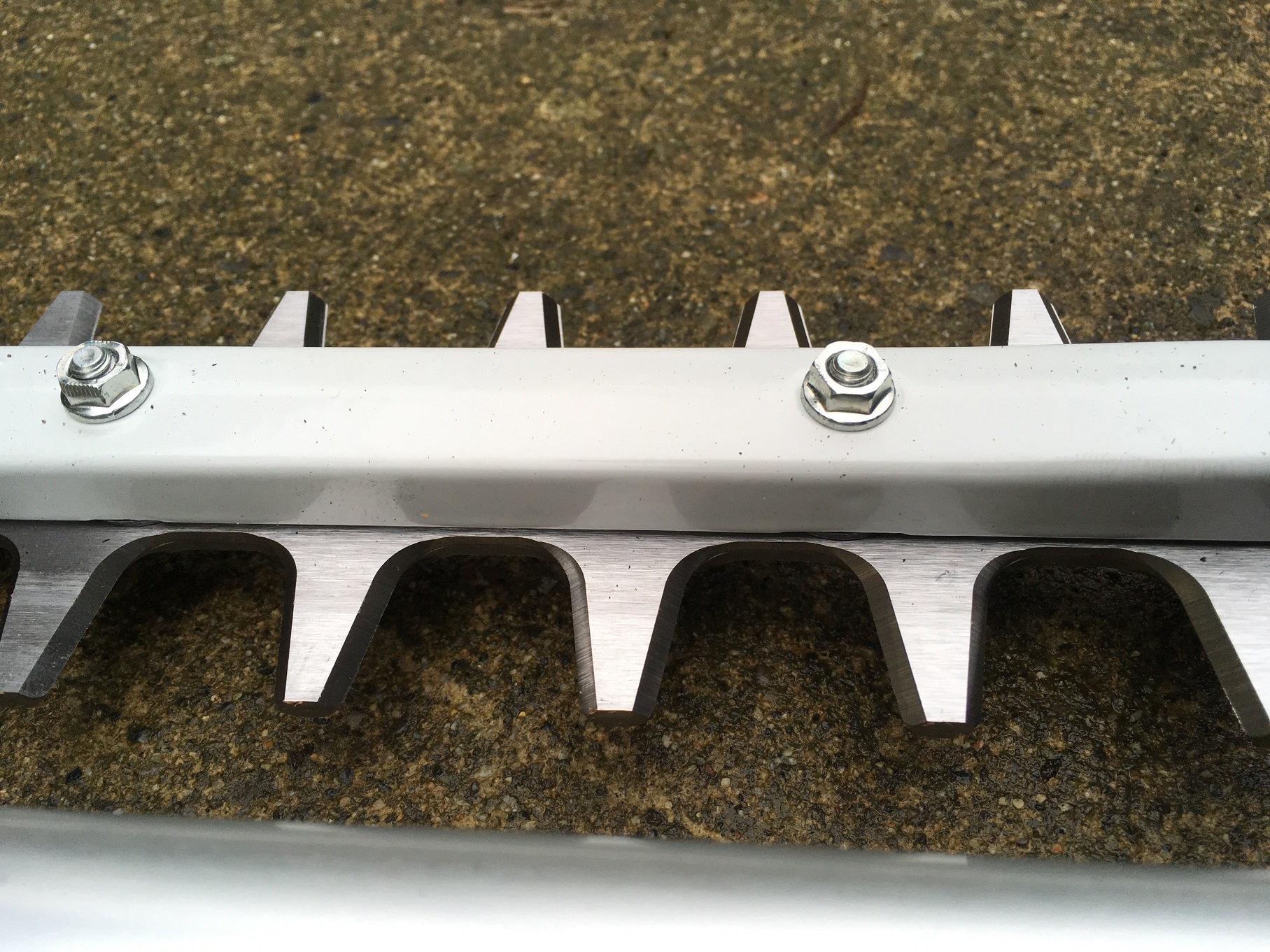
IMG_4072ed

The solid bar on top gives the attachment super stiffness.


Sometimes the tip of the shears would start vibrating which was annoying when you stood on top of a ladder trying to get a laser line on top of your cedar hedge. This new stiffer attachment eliminates the vibrations. It’s such a nice feeling! Using the old style attachments feels like punishment.

If you do a lot of shearing during the season, definitely consider upgrading to these new shear attachments. You’ll love it.

There are many dealers in the Lower Mainland so search for one closest to you. One dealer I love is Foreshore Equipment on Byrne Road in Burnaby. Go see their show room and ask the helpful, knowledgeable staff. Tell them Vas sent you. Also, grab some Stihl candy from the counter on your way out.


logo

How to rock the first service day of a new contract

By | landscape maintenance, Strata Maintenance | 2 Comments

It’s always exciting to take on a new strata landscape maintenance contract because the assumption is that your service will improve on the service of whoever did the site before. The fine print in your contract details exactly what will happen during the ten or twelve months to come.

First visit

I love the first visit. You get to walk the entire site and assess the highest priority sections to get hit first. This usually covers main entrances, clubhouses and mailboxes. When the site is especially large, you will have to develop a nice rotation so your service isn’t helter-skelter.

You also get to examine the dirty corners away from the main ‘beauty strip’ areas. Those corners that tend to get skipped or serviced very little. Previous pruning gets examined; and strata member introductions are made. No-go units must also be identified because some home-gardeners don’t want any service in their yards aside from lawn care. This is critical so we can avoid upsetting residents at the very beginning of our contract.

Recent example

Let’s take a look at what I saw on the first day of a new contract in Surrey.


Clean-ups


IMG_3737ed


This is an obvious task. Any leafiness from last fall must be cleaned-up. Dead plants are a huge problem so in January we catalogue them so we can deal with them in spring.


Plant separation


IMG_3848ed


It would be nice to get some plant separation by shearing both the Prunus laurocerasus and Euonymus alatus.


Ivy removal


IMG_3740ed


Left unchecked,  ivy (Hedera helix) will overwhelm the Euonymus alatus shrub. So I cut it away from the plant and cleared a circle around it. It will require attention periodically so the ivy doesn’t take too many liberties.


Nandina


IMG_3846ed


This doesn’t work because Nandina domestica doesn’t regenerate from pruning cuts. This plant requires a flush cut. It should send out shoots from the base, assuming it’s not dead.


Trees


IMG_3739ed


One quick hand saw cut will eliminate this unwanted branch. We don’t really want branches developing this low, except on very young trees where the branches protect new bark from sun rays.


No man’s land


IMG_3729ed


This is a classic no man’s land zone between units. It receives less attention so it’s weedy and full of garbage. Unless your landscape maintenance contract spells everything out, you can’t discriminate. You must cover the entire site.


Holly


IMG_3747ed


This holly was planted by the owners but long-term it will lead to problems because it’s already touching the building. This gets insurance companies very excited. I suggest complete removal and planting something more appropriate and less prickly.

There you have it. Not a bad first day. This site should be looking great twelve months from now.