

Tall ornamental grasses
This blog post is scheduled for April, so if you’re reading this, it’s already April, and your tall ornamental grasses should be nicely cutback by now. They’re probably pushing out and growing nicely. You get a gold star, if you let your tall ornamental grasses stand and ornament your winter landscape.
Every fall, I rage against those impatient landscapers who power shear their way through beautiful ornamental grasses, just as they’re flowering and looking awesome. It’s a sin. Leave them alone until late winter. Then cut them back.
If they’re slightly out of shape, like the skinnier Calamagrostis grasses, tie them up. You can also snip out any unruly stems and still keep the grass. If you get lucky and it gets frosty, they will reward you with a great show.
Smaller grasses
We also have smaller grasses, like the Mexican feather grass (Stipa tenuissima) or Blue oat grass (Helictotrichon sempervirens). All you have to do is massage them once a year. I did this recently, and I got tons of debris in my tarp. I’m not ashamed to admit that I enjoy this hands on task. It makes gardening fun.
If you’re doing it in your own garden, you should be good. But, if you’re massaging grasses in a public access garden, always check for needles before reaching in. Safety first!
Check out my video below. Don’t rush. Take out the spent bits carefully so it still looks like a grass after.
Here is the finished product. It’s nicely massaged and still looking like a grass.
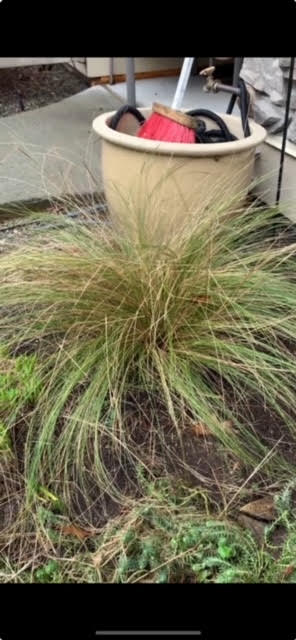
It’s important to treat your grasses well because they give your garden a nice, flowing, informal look. I love masses of grass mounds growing together; and I love the look of tall ornamental grasses moving in the breeze.
I even used Calamagrostis grasses in my YouTube channel welcome message!